
Carry Techniques and Optimization, CCW Awareness & Mindset
Off Body Carry Options and Why They’re Risky
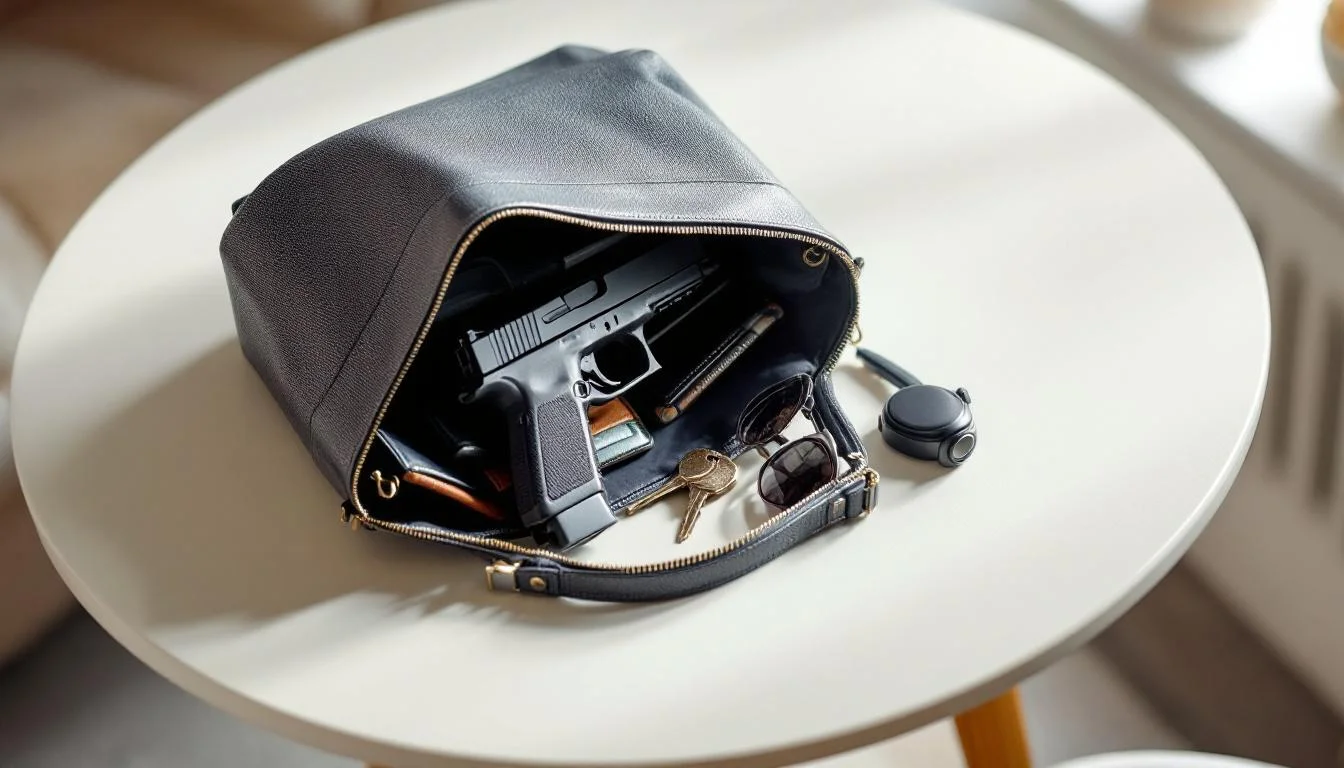
Off body carry seems like a convenient solution when on-body concealment feels impossible. Many carriers turn to purses, backpacks, or vehicle storage without fully understanding the risks.
We at Cloudster Pillow see too many people choosing convenience over safety. The statistics on firearm theft and accidents tell a different story than what most carriers expect.
What Exactly Is Off Body Carry
Off body carry means you store your firearm in a bag, purse, backpack, briefcase, or vehicle instead of wearing it on your person. Women represent a growing demographic in firearm ownership, with many choosing off body methods for their concealed carry needs.
Common methods include dedicated concealed carry purses with holster compartments, tactical backpacks with firearm storage, messenger bags, briefcases, fanny packs worn loosely, and vehicle storage in glove compartments or center consoles.
Popular Off Body Methods and Their Drawbacks
Concealed carry purses offer medium accessibility but create theft targets worth thousands of dollars to criminals. These specialized bags often cost $200-400 and signal their purpose to experienced thieves. Backpacks provide high comfort but require complete removal to access your firearm, which adds 3-5 seconds to your draw time according to firearms training data.
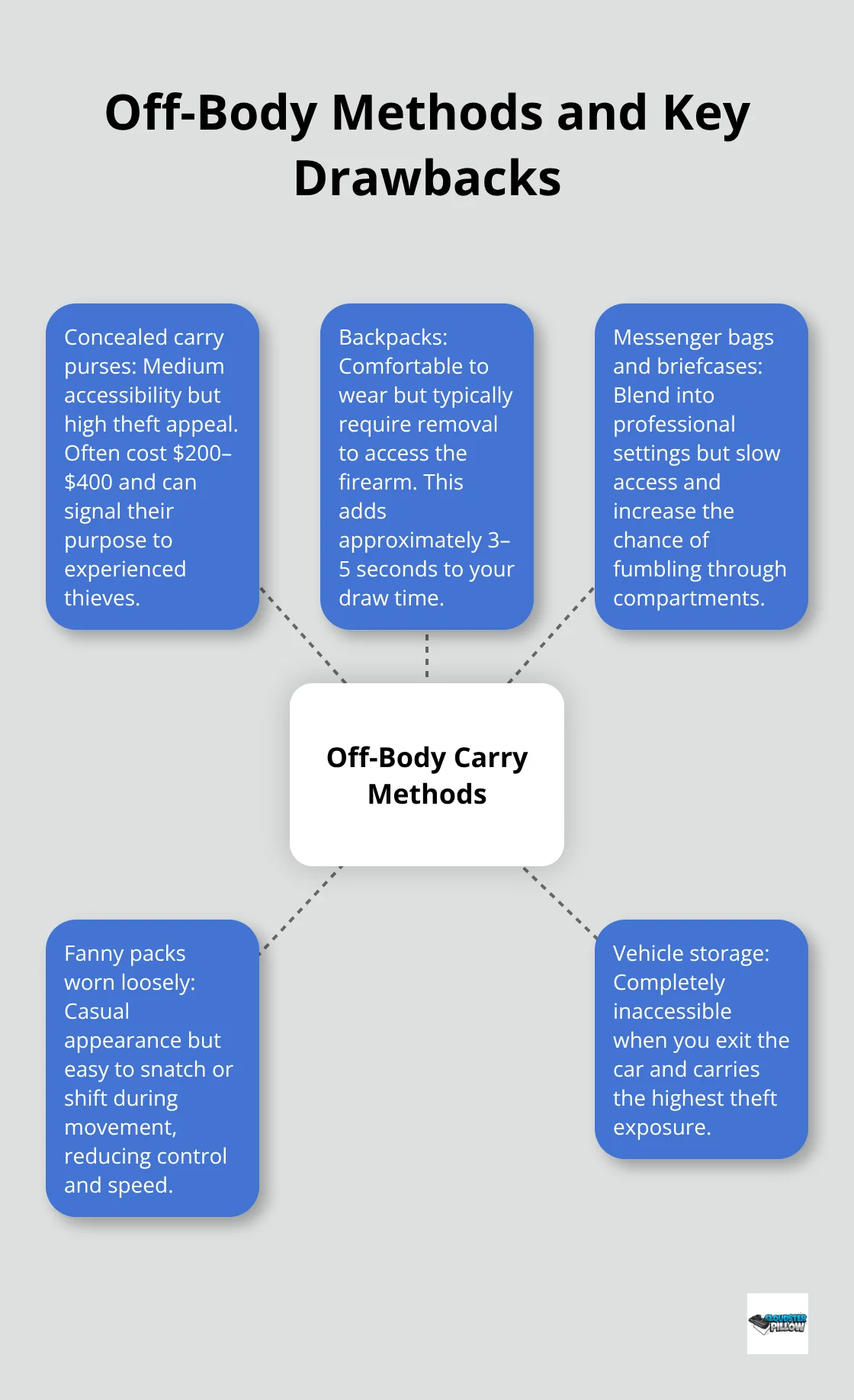
Vehicle storage presents the worst option because your firearm becomes completely inaccessible when you exit the car. Gun thefts from cars have tripled over the past decade across FBI-reporting cities. Gym bags and briefcases offer extreme discretion in professional settings but sacrifice speed and control entirely.
The Access Time Reality
Draw times from off body carry methods consistently exceed safe defensive standards. On-body holsters allow 1.5-2 second draws for trained carriers. Off body methods increase this to 4-8 seconds, assuming you maintain contact with your bag. These extra seconds matter when considering the Tueller Drill, which demonstrates the danger posed by attackers with melee weapons at close range.
Training facilities report that students struggle to achieve consistent draws from bags under stress. The fine motor skills required to open zippers, navigate compartments, and locate your firearm deteriorate rapidly during high-stress situations.
The Control Problem Nobody Discusses
Off body carry transforms your defensive tool into a liability through loss of immediate physical control. A retired sheriff deputy in Colorado lost his service weapon when his lunch box fell from his vehicle in a parking lot, requiring police response and public safety measures.
Your firearm becomes vulnerable to snatch-and-grab theft, accidental discovery by children or coworkers, and complete separation from you during physical confrontations. These risks multiply when you consider how often people set down bags, forget them in restaurants, or have them stolen in crowded areas. The next section examines these major safety risks in detail.
Why Off Body Carry Creates Dangerous Vulnerabilities
The Moment You Lose Physical Control
Off body carry breaks the fundamental rule of defensive firearm ownership: you must maintain immediate physical control. When your firearm sits in a bag rather than a holster on your body, you create a gap that criminals exploit daily. The National Crime Victimization Survey reports that purse theft occurs every 90 seconds in major US cities. This makes your concealed carry bag a prime target worth thousands to thieves who recognize the telltale signs of tactical bags.
Vehicle Storage Amplifies Risk
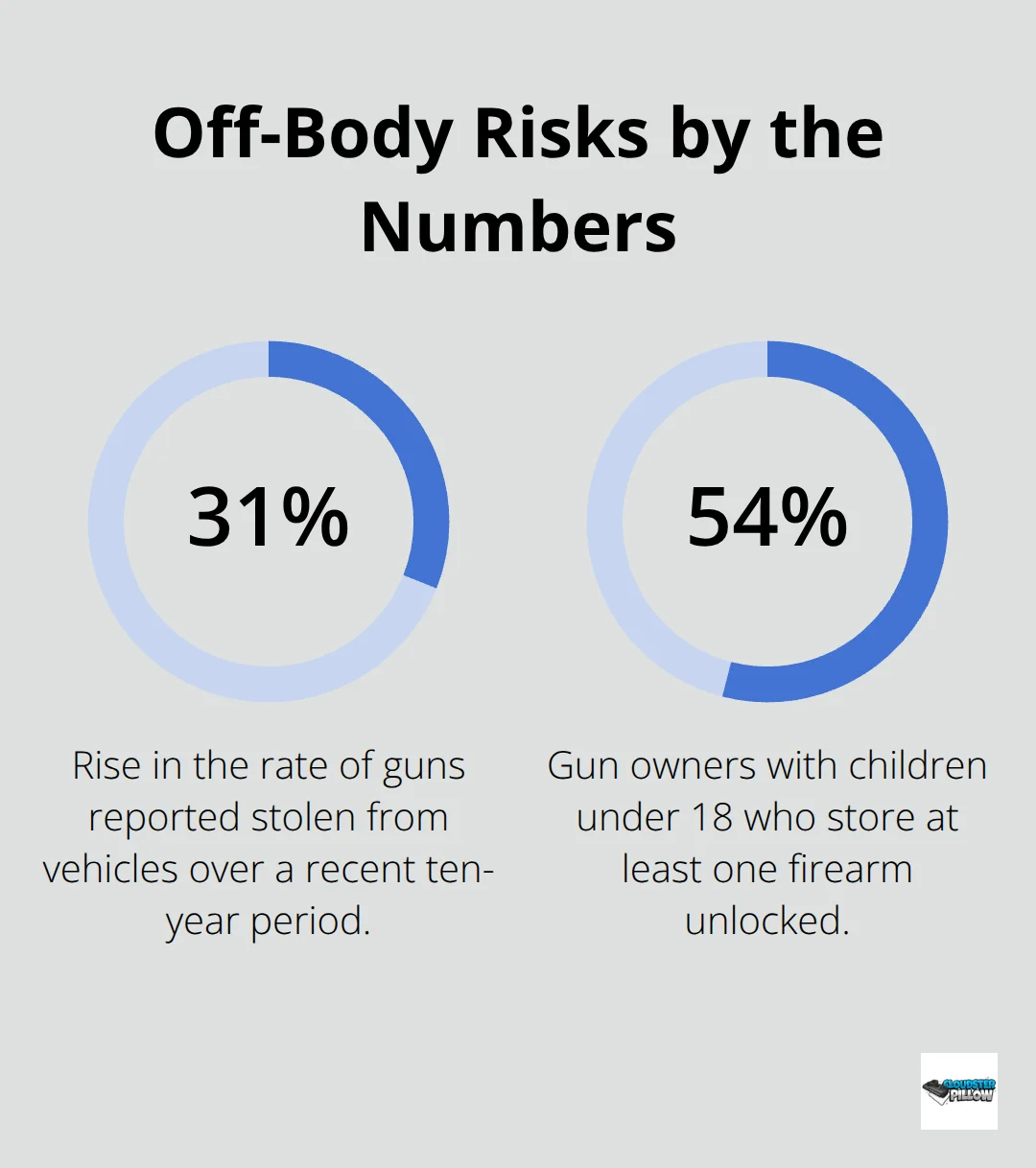
Vehicle storage multiplies these risks exponentially. Gun theft from motor vehicles has increased significantly, with the rate of guns reported stolen from vehicles rising by 31% over a recent ten-year period. Memphis police reported 2,267 guns stolen from vehicles in 2019 alone. These stolen firearms fuel street crime and gang violence. Your defensive tool becomes a criminal’s weapon.
Parking lots, gym facilities, and workplace garages become active zones where thieves watch for tactical bags and recognize concealed carry purses.

Accidental Discovery Creates Legal Nightmares
Coworkers, children, and family members regularly discover firearms in bags during routine interactions. A 2020 study by Johns Hopkins found that 54% of gun owners with children under 18 store at least one firearm in an unlocked location. Off body carry increases this risk because bags get borrowed, searched, and handled by others without your knowledge. TSA discovered 4,432 firearms in carry-on bags during 2019, averaging about 12.1 per day. These discoveries result in federal charges, job loss, and family trauma that on-body carry prevents entirely.
Despite these significant risks, some situations seem to demand off body solutions. Workplace restrictions and physical limitations create scenarios where carriers feel they have no other choice. Maintaining situational awareness becomes even more critical when your firearm isn’t immediately accessible on your person.
When Off Body Carry Becomes Unavoidable
Corporate Environments That Ban On-Body Carry
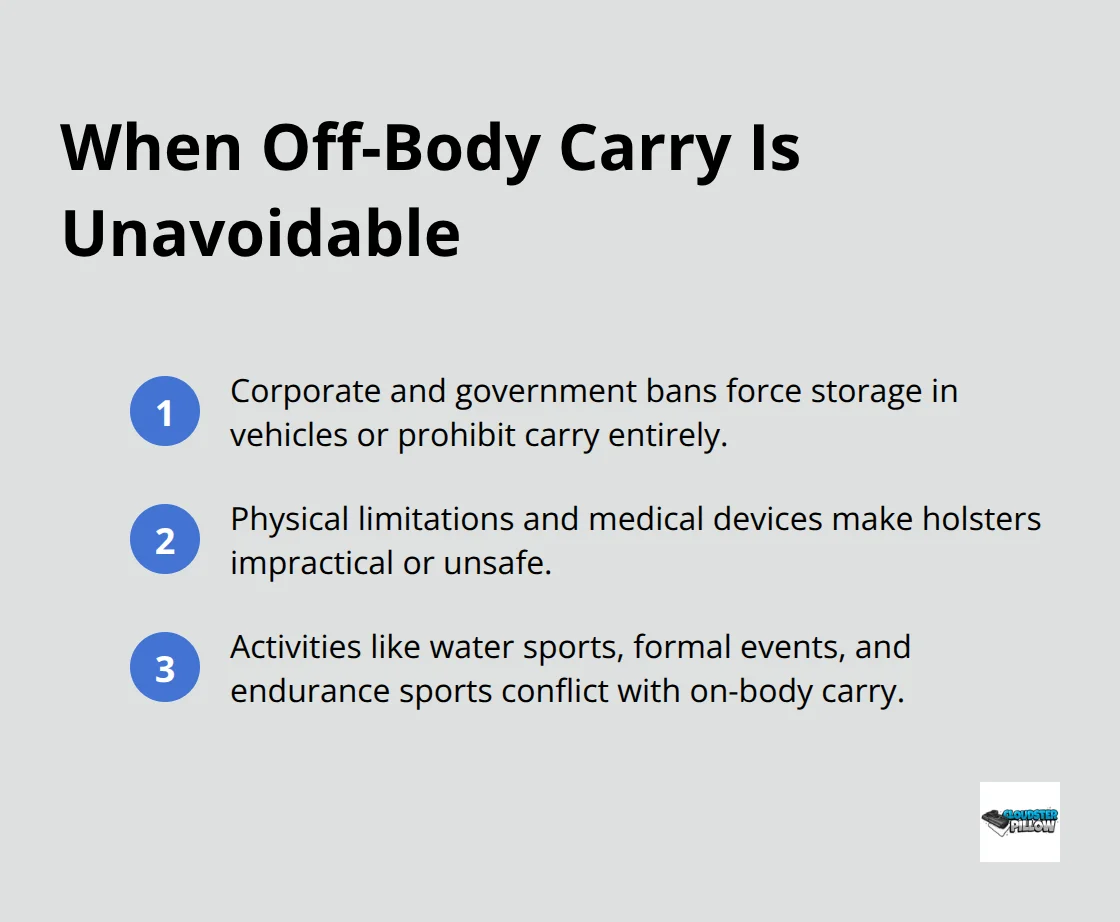
Federal buildings, courthouses, and many corporate offices prohibit firearms entirely. These facilities force carriers to store weapons in vehicles during work hours. Security checkpoints at government facilities and airports make on-body carry impossible for anyone who wants to enter.
Healthcare workers face strict policies that terminate employment for carrying firearms, even with valid permits. Teachers in most states cannot carry on school grounds, which creates eight-hour gaps in personal protection. Financial institutions often ban weapons for all employees, not just those who handle cash directly.
These workplace restrictions affect millions of permit holders. They must choose between employment and continuous protection every single day.
Physical Challenges That Prevent Holster Use
Wheelchair users often find traditional holsters inaccessible due to seated positions and transfer requirements. The mechanics of daily movement make standard carry positions impractical or dangerous.
Physical challenges like chronic back pain, arthritis, or recent surgeries cannot tolerate the weight and pressure of on-body carry. Holster pain creates temporary but significant challenges as body shape changes make standard holster positions uncomfortable or impossible.
Medical devices like insulin pumps, colostomy bags, or external monitors occupy prime holster real estate. Workers who wear safety harnesses, climbing gear, or protective equipment cannot accommodate additional weight around their waist or chest.
Activity-Specific Situations That Demand Alternatives
Water sports make on-body carry impossible without specialized waterproof solutions. Swimming, surfing, and beach activities expose holsters to sand, chlorine, and public view. Rock climbing and mountaineering require weight distribution that conflicts with holster placement.
Hospital patients who undergo procedures must remove all personal items (including holsters). Formal events with tight-fitting clothing or metal detectors force carriers to seek alternatives. Marathon runners and cyclists cannot manage the weight and movement restrictions of traditional carry methods.
These situations demand careful planning and often result in temporary disarmament rather than risky off-body storage. An EDC tray organizer helps ensure essential gear doesn’t get forgotten during these transitions.
Final Thoughts
On-body carry remains the gold standard for defensive firearm ownership because it maintains immediate physical control and consistent access times. The evidence shows that off body methods create vulnerabilities that compromise your safety and legal standing. Every second counts in defensive situations, and bags simply cannot match the 1.5-2 second draw times achievable with proper on-body carry.
Smart carriers recognize that comfort issues drive most off body decisions. Physical discomfort from holsters pushes people toward risky alternatives when better solutions exist. We at Cloudster Pillow understand this challenge because we’ve seen countless carriers struggle with uncomfortable setups.
The solution often lies in improvement of your current setup rather than abandonment of it entirely. A quality holster wedge can transform an uncomfortable carry experience into one that feels natural throughout your day (eliminating pressure points and concealment issues). Better comfort and reduced pressure points eliminate the primary reasons people choose off body methods. When carry feels comfortable and secure, the temptation to compromise safety disappears entirely.
