
CCW Gifts and Cool Stuff
Heavy Duty vs. Lightweight: Choosing the Right Dump Tray for Your Gear
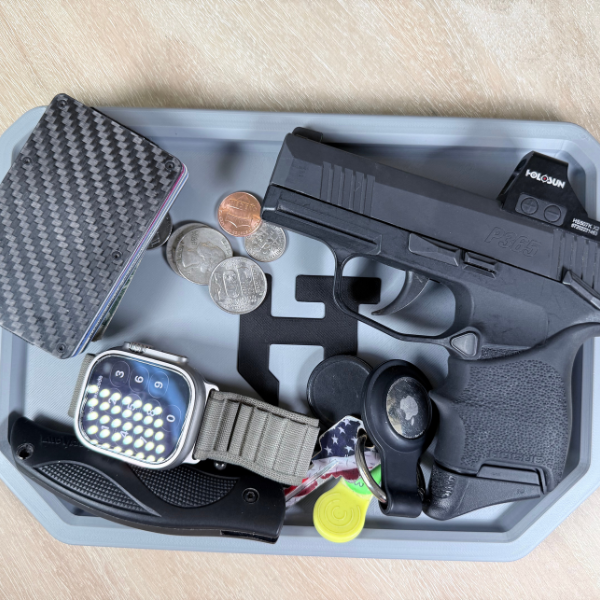

Organize Your Gear — Upgrade Your Comfort
Choosing the right Dump Tray keeps your EDC clean and controlled. Pair it with the
Cloudster Pillow holster wedge for unmatched AIWB comfort, concealment, and everyday consistency.
Choosing the right Dump Tray seems simple—until you buy the wrong one. Maybe it was too small to hold your phone and wallet together. Maybe it was so lightweight that it slid across your nightstand every time you dropped your keys. Or maybe it felt cheap and flimsy, unable to handle your knife, flashlight, or spare mag without flexing like a fast-food drink tray.
This happens because most people don’t match the tray to their gear. They buy based on looks instead of loadout. A Dump Tray is a foundational part of your EDC system, just like a holster wedge or belt. It sets the tone for how organized (or chaotic) your daily routine will be. At Cloudster Pillow, we’re obsessed with comfort and consistency—both in how you carry and where you store your gear at home.
Below, we break down the real differences between lightweight and heavy-duty trays, how to determine which category you fall into, and how to choose a tray that supports your lifestyle—whether you carry a four-item minimalist setup or a full tactical loadout with tools, knives, and defensive gear.
What Defines a Lightweight Dump Tray User?
A lightweight user is not someone who “carries less seriously.” Instead, they carry intentionally and efficiently. Their loadout is small because it’s been refined. They prioritize slim gear, minimal footprint, and clean surfaces. If that describes you, you’re likely a lightweight Dump Tray user.
You might fall in this category if your EDC looks like this:
- A slim cardholder or ultra-thin wallet
- A smartphone
- A single car key fob and one house key
- A smartwatch or small wearable
A compact lifestyle needs a compact tray. Choosing a big, industrial-looking slab of leather or wood doesn’t make sense when your loadout could literally sit inside a six-inch square. Your tray should match your gear—not swallow it.
The Ideal Lightweight Dump Tray
For a minimal carry style, the ideal Dump Tray usually measures 6″ × 6″ to 6″ × 8″. This footprint fits on virtually any nightstand without dominating the space. Since your items are mostly plastic, glass, and aluminum, you don’t need thick leather or heavy wood. Instead, look for:
- Slim leather trays with gentle sidewalls
- Minimalist Kydex trays
- Small ceramic or resin dishes
- Snap-corner foldable travel trays
These trays offer enough structure to contain your items while keeping your space clean and visually calm.
The Heavy Duty Dump Tray User
Now let’s flip to the other side: the heavy-duty EDC carrier. This user carries more items, heavier materials, and larger gear. Their EDC might include everything from multi-tools to pocket knives to full flashlights.
You might be a heavy-duty user if your typical loadout includes:
- A thick leather or metal wallet
- A big keyring with several tools
- One or two pocket knives
- A handheld flashlight
- A multi-tool like a Leatherman
- Pepper spray or defensive tools
- An AIWB holstered firearm staged nearby
This loadout puts real pressure on a tray. Thin plastic collapse under weight. Small trays overflow. Lightweight materials slide across surfaces easily. If you carry more than a few pounds of steel across multiple pockets, you need something sturdier—something that can handle impact and daily use.
The Ideal Heavy Duty Dump Tray
The ideal heavy-duty Dump Tray measures at least 8″ × 10″, and often more. A tray this size gives your items space to spread out according to the “No-Stack Rule” (we’ll get into that next).
Look for thick, premium materials like:
- Saddle-grade leather
- Solid hardwood
- Wood lined with felt or suede
- Rigid polymer trays with reinforced walls
Your tray should feel like a landing zone—not a plastic bowl. It must be able to absorb noise, weight, and impact from gear like steel flashlights, knives, or items that might carry oil or lint.
Why Tray Size Matters More Than You Think
Size mismatch is the number one reason people return trays. The problem is simple: product photos online distort scale. A 5″ tray can look huge when photographed up close, but in real life, it can’t even fit a phone—especially modern smartphones that exceed 6.5″ in length.
The “No-Stack” Rule
A simple formula determines whether your Dump Tray is correctly sized:
No item should sit on top of another.
Stacking causes two problems:
- Damage: Keys scratch phone screens and watch faces.
- Inefficiency: You have to move items just to reach others.
Your tray should let everything lie flat—wallet, phone, knife, keys, flashlight, and any defensive tools. If you must stack items, your tray is too small. Upgrade to a larger size before scratches, wear, or clutter become permanent issues.
Material Weight and Stability
Even the right size tray fails if it’s too lightweight. A tray should stay put when you grab your keys or drop your gear—not slide across the surface like an air-hockey puck.
Material weight contributes to:
- Stability (doesn’t move during use)
- Durability (doesn’t crack under impact)
- Noise control (absorbs sharp drops of metal gear)
Popular Dump Tray Materials
- Thick Leather: Quiet, weighty, and durable—ideal for both lightweight and heavy use.
- Hardwood: Stable, visually premium, and ideal for staging firearm accessories.
- Polymer / Kydex: Ribbed or rigid options for tactical setups.
- Ceramic: Stylish for minimalists, but not for heavy-duty use.
For heavy carriers, leather and wood offer the best mix of stability and protection. Polymer works too, but only if reinforced.
Dump Trays and Firearms: The Heavy-Duty Requirement
If you carry concealed, your tray often becomes your gear staging area. You unload your pockets, set down your holstered firearm, your spare mag, flashlight, and other accessories. A flimsy tray cannot safely hold this loadout.
A proper firearm-friendly Dump Tray offers:
- A wide, flat surface for holstered weapons
- A rigid structure that doesn’t tip
- Noise-dampening materials to prevent clatter
- Scratch protection for the slide or optics
Some premium trays come with separate wells or padded areas for pistol staging. Choose trays with reinforced cores and high walls for added stability, especially near bedside tables or dressers.
For professional guidance on safe storage zones, organizations like the USCCA and Safety Solutions Academy offer best practices on responsible staging and transitions.
Choosing a Tray Based on the Room
Matching your tray to your room matters. A tray that’s perfect in your workshop can overwhelm a small nightstand. A tiny desk tray won’t survive a busy entryway.
Nightstand
Space is limited. Choose a medium or compact tray unless you have a large bedside setup. This is also where firearm staging commonly happens—so prioritize stable materials.
Dresser
Ideal for large or heavy-duty trays. Dressers offer more surface area and work well for displaying or arranging full EDC loadouts.
Entryway
This area sees traffic and impact. Choose a heavy tray that won’t get knocked off by bags or movement. A rigid tray with felted feet protects the table from scratches.
For organization theory and home layout strategy, resources like Apartment Therapy offer helpful visuals on balancing function with decor.
The “Goldilocks” Dump Tray
If you’re unsure whether you’re a lightweight or heavy-duty user, there’s a sweet spot: 8″ × 8″ or 9″ × 7″.
This medium-sized Dump Tray offers:
- Enough room for a full basic loadout
- Stability without bulk
- A footprint that works on most nightstands
- Good long-term flexibility if your gear evolves
This size also complements most interiors, making it ideal for people who want both function and style.
Choosing the Best Dump Tray for Your Life
The key to choosing the right Dump Tray is honesty. What do you carry? Where will it live? How much weight does it need to support? Once you answer those questions, the right tray becomes obvious.
- Minimalist: Choose lightweight trays around 6″ × 6″.
- Heavy-duty: Go 8″ × 10″ or larger with thick materials.
- Medium / unsure: Choose a Goldilocks tray around 8″ × 8″.
Your tray is the foundation of your home EDC system. A strong foundation keeps your gear organized, safe, and ready for tomorrow. And when paired with optimized AIWB carry—like the Cloudster Pillow holster wedge—you get seamless comfort and structure from morning to night.
Frequently Asked Questions
1. How do I know if a Dump Tray is big enough for my phone?
Look up your phone’s dimensions, then add at least 1″ to the width and length. That ensures it lies flat without resting on the tray’s rim.
2. Does a heavy Dump Tray scratch furniture?
It can, but many high-quality trays include felted or leather bottoms. If yours doesn’t, adding felt pads protects surfaces. For durability insights, Popular Mechanics offers great material comparisons.
3. Are deeper trays better?
For heavy-duty gear, yes. Sidewalls around 1.5–2″ provide containment for heavy items. Minimalists may prefer shallower walls.
4. Can heavy-duty trays be used for travel?
Usually no. Heavy trays add weight to luggage and aren’t compact. For travel, choose a fold-flat snap tray.
5. What if my tray is too small?
Repurpose it for accessories like coins, batteries, or spare cables, then upgrade to a properly sized primary tray.
Related Cloudster Pillow Articles
- How to Streamline Your Morning Routine with an EDC Valet Tray
- Travel EDC: Why You Should Pack a Collapsible EDC Dump Tray
Complete Your EDC System with Cloudster Comfort
The right Dump Tray keeps your gear organized at home. The
Cloudster Pillow holster wedge keeps that gear comfortable and concealed all day. Upgrade your AIWB setup in minutes.
