
Concealed Carry Clothing
Weather Appropriate Carry Clothing: Layering And Fabric For Concealment
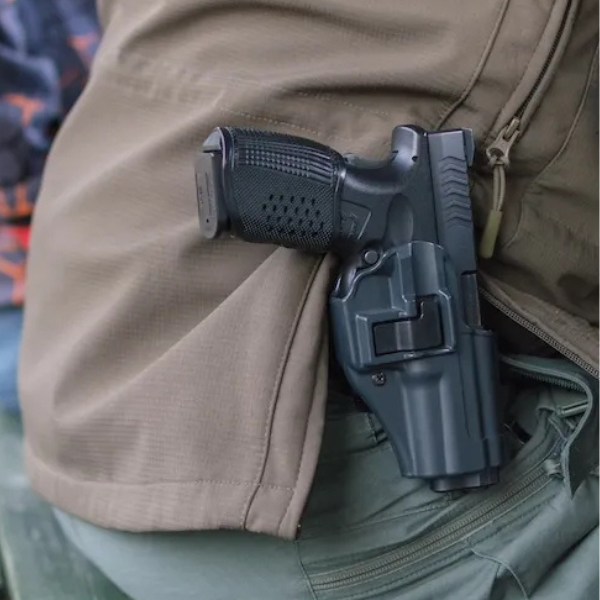
Choosing the right weather carry clothing makes the difference between a comfortable carry day and one where you’re constantly adjusting your holster. Most CCW carriers focus on the gun and holster but overlook how fabric and layering directly impact concealment and comfort.
At Cloudster Pillow, we’ve seen firsthand how the wrong clothing choices create printing, discomfort, and unnecessary stress. The good news is that with smart layering strategies and fabric selection, you can carry effectively year-round.
How to Layer Clothing Without Sacrificing Concealment
Start with the Right Base Layer
Your base layer is where concealment actually starts, and most carriers select cotton t-shirts that cling to their body and holster. Moisture-wicking synthetic fabrics like polyester and nylon move sweat away from your skin, reducing the wet fabric cling that prints your gun outline. Vertx has specialized in concealment-focused base layers since 2009, and their approach works: a tight-fitting moisture-wicking base hugs your body, then looser layers sit on top. This creates separation between your skin and your outer clothing, which breaks up the firearm silhouette. Avoid cotton entirely for your base layer if you carry AIWB or appendix position, where printing is most visible.
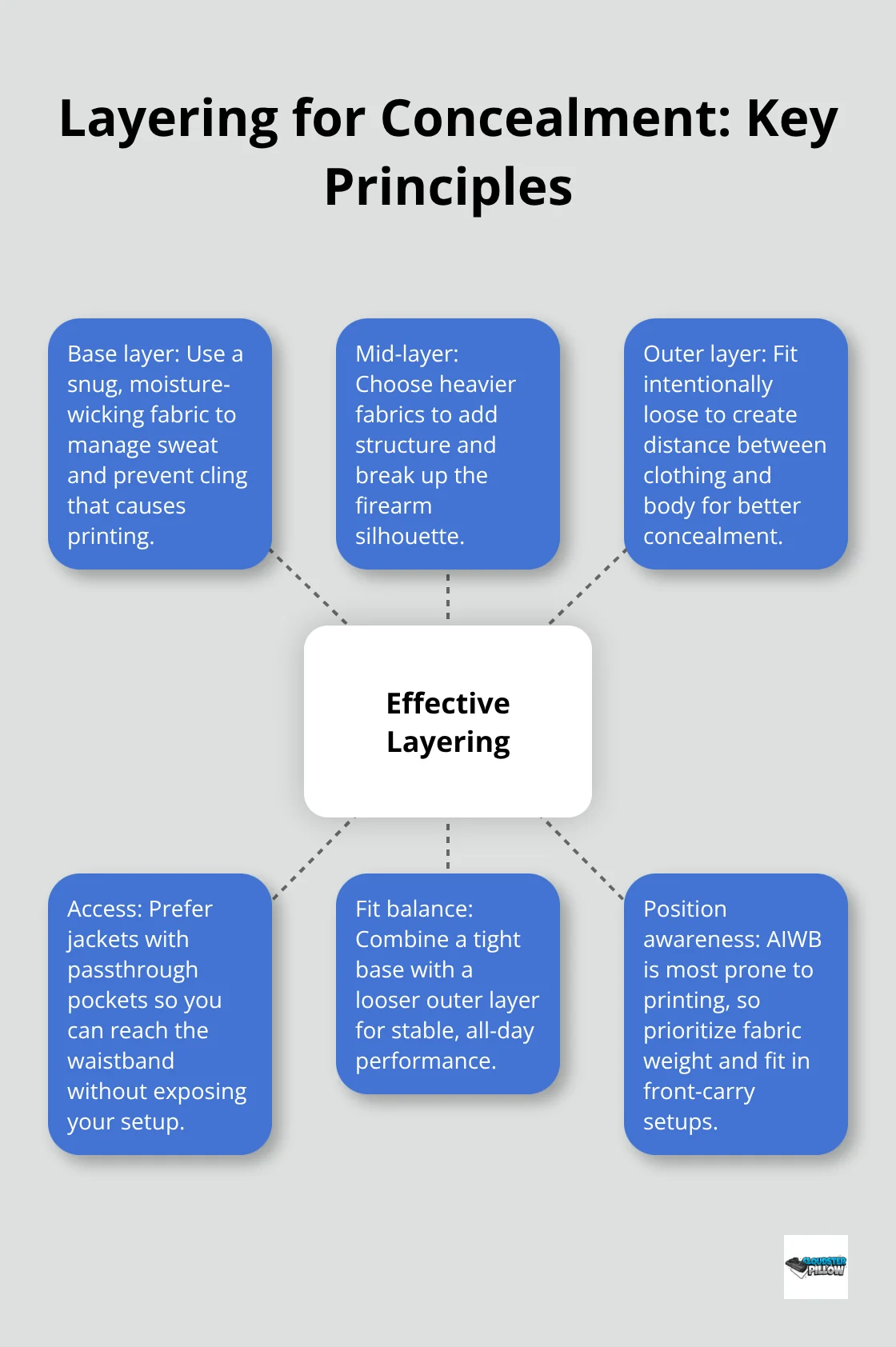
Your base layer should fit snugly, not loose, because the concealment magic happens when your mid-layer sits away from your body.
Choose Heavier Fabrics for Your Mid and Outer Layers
Your mid-layer and outer layer do the heavy lifting for actual concealment. Select fabrics heavier than your base layer-denim, canvas, or performance blends resist clinging and naturally mask the gun shape better than lightweight materials. Dark patterns like plaid or subtle prints hide the weapon outline far more effectively than solid light colors, which act like a spotlight for your holster. In cold weather, add an insulated mid-layer like fleece, then top it with a shell jacket designed with passthrough pockets so you can reach your waistband without pulling your jacket open. Vertx’s concealed carry jackets feature strategically placed pockets and compartments for quick access without exposing your firearm. For warm weather, skip the heavy layers and instead wear an oversized button-down shirt over your base layer-the loose fit provides concealment while staying breathable.
Fit Your Outer Layers Intentionally Loose
Your outer layer should never be so tight that it hugs your holster; if your clothing prints at the gym or while driving, try a size up. The goal is creating distance between your body and your clothing, and that distance only works when your outer layers are intentionally loose in the right areas. This approach (combining snug base layers with loose outer layers) transforms how your carry setup performs throughout the day. The fabric weight and fit of your outer layers determine whether your holster stays hidden or becomes obvious to everyone around you. Now that you understand how to layer effectively, fabric selection becomes your next critical decision for year-round comfort and concealment.
Which Fabrics Actually Work for Concealed Carry
Synthetic Fabrics Beat Natural Fibers for Moisture Control
Synthetic fabrics outperform natural fibers for CCW clothing, and the data backs this up. Polyester and nylon pull moisture away from your skin faster than cotton, which means less wet fabric clinging to your holster and less printing throughout the day. When you sweat, cotton absorbs moisture and expands, creating a perfect mold of your gun shape. Synthetics keep the fabric away from your body, breaking that silhouette. Vertx increased waist sizes by one inch in their concealed carry pants specifically to accommodate the holster and belt without forcing tight fits that print.
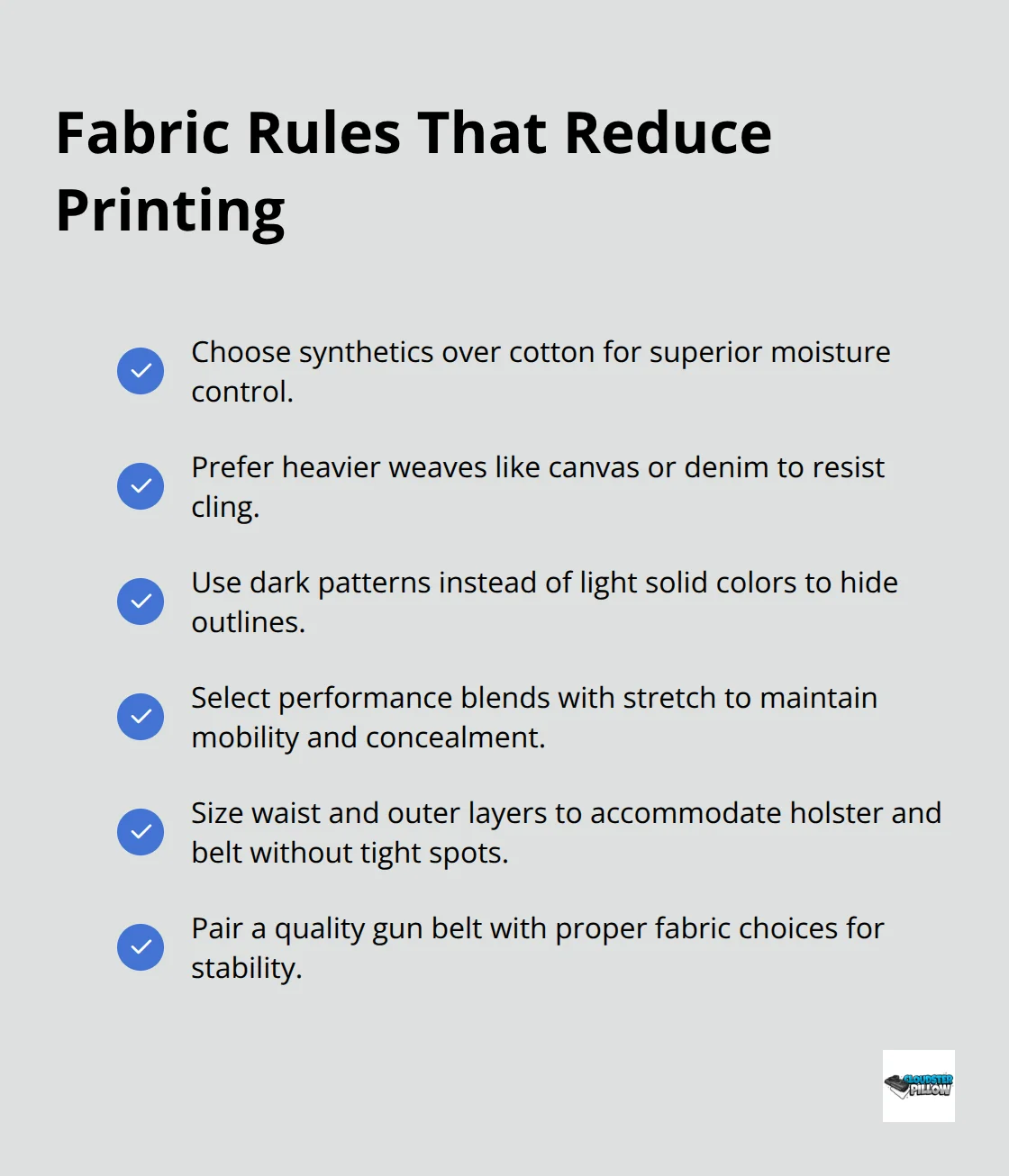
This single design choice shows how fabric and fit work together-you can’t solve a printing problem with just fabric alone.
Heavy Fabrics Deliver Superior Concealment for AIWB Carry
For AIWB carriers, heavier materials like canvas and denim are non-negotiable. These fabrics resist clinging even when wet, and their weight naturally drapes away from your body instead of conforming to every contour. Light cotton t-shirts and thin dress shirts fail at AIWB because they have zero resistance to body heat and moisture. Dark patterns like plaid or subtle prints hide weapon outlines better than solid colors, especially under inconsistent lighting. A solid black shirt can actually print worse than patterned fabric because it creates contrast with your holster outline. Lighter solid colors represent the worst choice for any carry position-they act as a spotlight for printing.
Performance Fabrics Support Active Carriers
Active carriers need moisture-wicking fabrics that maintain performance during physical exertion. Nylon blends with Lycra provide stretch without sacrificing concealment, allowing you to move freely at the gym or during training without your holster shifting. Modal and polyester blends offer breathability while keeping fabric away from your body, which matters when you sweat during a workout or outdoor activity. The mistake most carriers make is choosing between concealment and comfort, but smart fabric selection provides both. Performance fabrics designed for EDC use combine moisture-wicking properties with heavier weights that prevent printing. Vertx’s approach of using performance blends since 2009 demonstrates that specialized concealment clothing works better than adapting regular apparel.
Belt Quality Amplifies Fabric Performance
Your belt matters as much as your fabric choice-a reinforced gun belt with genuine Velcro backing keeps your holster stable and prevents the shifting that creates printing during movement. When your holster stays anchored to your belt, even thinner fabrics perform better because the gun isn’t moving against your clothing. Fabric selection without proper holster support and belt quality leaves you vulnerable to printing, especially during activities or position changes. The right combination of performance fabric, proper fit, and quality belt support transforms your carry setup into something that actually works throughout the day. With your fabrics and belt dialed in, the next step involves seasonal adjustments that keep your concealment consistent no matter what the weather throws at you. Comfort matters too-pairing quality clothing with the right holster support, like the Cloudster Pillow, ensures your setup stays comfortable and concealed all day long.
Carrying Through the Seasons
Summer Heat Demands Aggressive Fabric Choices
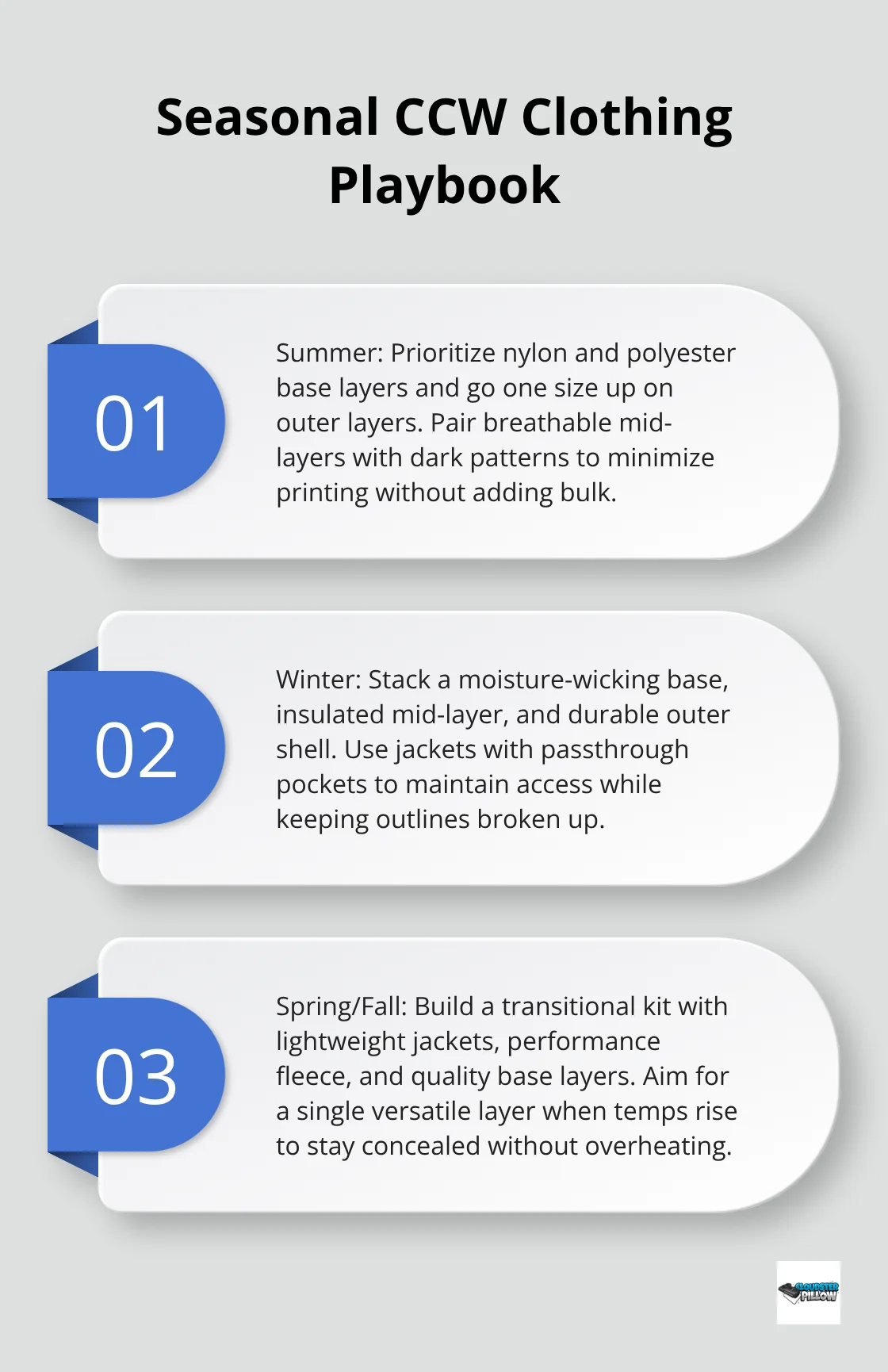
Summer heat exposes every mistake in your carry wardrobe. Lightweight cotton and thin dress shirts print badly in warm weather because moisture clings to your body and your holster becomes visible through wet fabric. Oversized button-down shirts work better, but only if you pair them with synthetic base layers that pull sweat away from your skin. The real issue is that loose outer layers create bulk around your midsection, making you look obviously armed rather than naturally dressed. Vertx’s approach of using moisture-wicking base layers combined with breathable mid-layers solves this without sacrificing concealment.
In summer, prioritize nylon and polyester blends over cotton entirely, choose dark patterns instead of solid colors, and accept that you need one size larger in your outer layer than your normal clothing. Many carriers attempt to wear their regular summer wardrobe while carrying and wonder why printing becomes obvious at every angle. The solution isn’t better holster design or more expensive gear-it’s accepting that summer carry requires intentional clothing adjustments.
Winter Layering Creates Natural Concealment
Cold weather allows you to layer aggressively, which gives you multiple opportunities to break up your firearm outline. A moisture-wicking base layer, insulated mid-layer like fleece, and a durable outer shell create enough distance between your body and your clothing that printing becomes nearly impossible. Concealed carry jackets demonstrate how outerwear can maintain warmth without adding the bulk that typically reveals your setup. Winter is when carriers with AIWB positions finally feel comfortable wearing fitted clothing because three or four layers of fabric effectively hide any outline.
The mistake winter carriers make is selecting jackets without passthrough pockets, forcing them to pull their jacket open to access their firearm. This defeats the entire purpose of layering for concealment. Passthrough pockets let you reach your waistband without exposing your setup to anyone nearby.
Spring and Fall Require Constant Adjustments
Spring and fall demand the most attention because temperature swings force constant wardrobe adjustments. A 50-degree morning becomes 70 degrees by afternoon, which means your layering strategy from 6 AM won’t work at 2 PM. Build a transitional wardrobe with lightweight jackets, performance fleece mid-layers, and quality base layers that work across temperature ranges. Instead of adding multiple layers, choose a single layer that keeps you comfortable in warm weather while providing concealment.
The practical reality is that you need at least two complete carry outfits-one for warm weather and one for cold weather-rather than forcing a single setup year-round. Carriers who maintain consistent concealment across seasons don’t own one perfect jacket or shirt; they own multiple pieces that work together across different weather conditions.
Final Thoughts
Smart layering and fabric selection transform concealed carry from a daily struggle into something that actually works. Your weather carry clothing strategy starts with a moisture-wicking base layer that prevents wet fabric from printing your holster, then builds outward with heavier mid-layers and intentionally loose outer layers that create distance between your body and your clothing. Fabric choice matters more than most carriers realize-synthetics outperform cotton, dark patterns hide outlines better than solid colors, and weight directly impacts how well your setup stays concealed throughout the day.
Winter gives you natural advantages through aggressive layering, while summer demands aggressive fabric choices and intentional sizing up. Spring and fall require flexibility, which is why experienced carriers maintain multiple outfits rather than forcing one setup year-round. Your belt quality, holster design, and clothing choices all interact-no single element solves the printing problem alone.
When your base layer pulls moisture away, your mid-layer provides concealment, and your outer layer fits intentionally loose, printing becomes nearly impossible regardless of your carry position. We at Cloudster Pillow understand that comfort matters as much as concealment, which is why adding support like a holster wedge ensures your setup stays comfortable and concealed all day long. Start with the layering and fabric principles outlined here, test what works for your situation, and adjust as needed.
