
EDC Gear
Night Vision Staging: Organizing Your EDC Dump Tray for Low-Light Indexing
Carry Comfortable, Stay Consistent
A staged nightstand helps at home—but comfort is what keeps you carrying daily. Upgrade your concealment setup with a Cloudster Pillow holster wedge to reduce hotspots and printing.
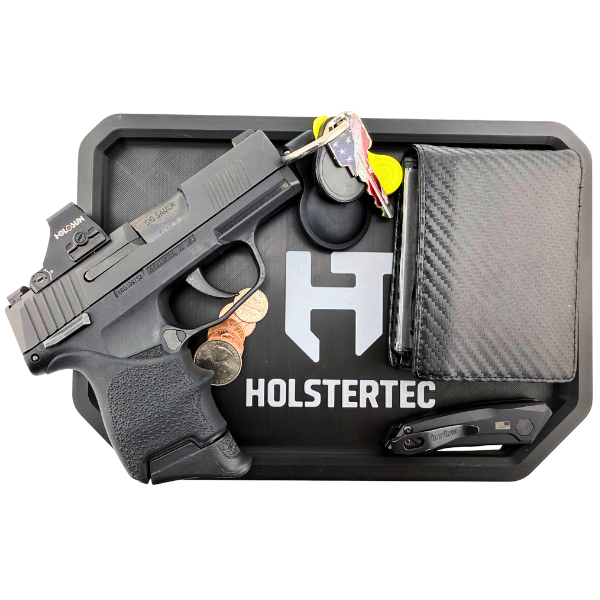
Night Vision Staging: Organizing Your EDC Dump Tray for Low-Light Indexing
Most people treat an edc dump tray like a glorified pocket-emptying station. Keys go here, wallet goes there, and spare change ends up wherever gravity decides. That’s fine for tidiness—but it’s not a system. For the serious concealed carrier or home defender, your tray isn’t just a place to “set stuff down.” In a power outage, a bump in the night, or any high-stress moment when you’re disoriented and the lights are off, your edc dump tray becomes your tactical home base.
That’s where the concept of low-light indexing comes in. Low-light indexing is the practice of arranging your everyday carry tools so you can identify and retrieve them by touch alone—quickly, consistently, and without fumbling. When done correctly, your edc dump tray transforms from a clutter catcher into a professional staging platform that supports a safer, calmer response under stress.
In this guide, you’ll learn how to build a “touch map” for your gear, why spacing and orientation matter, how an edc dump tray with gun holder can improve your master grip in the dark, and what small upgrades can improve your low-light performance without turning your nightstand into a science experiment.
Why Low-Light Indexing Matters More Than You Think
When the lights go out, your eyes become your least reliable tool. You may be groggy, your pupils may not be adjusted, and you may have only a sliver of ambient light from a hallway or streetlight. Under stress, your brain also narrows focus and loses fine detail. That’s why readiness at home is less about “what you own” and more about “how quickly you can access it safely.”
A properly organized edc dump tray solves a simple problem: it removes the need to search. Searching costs time. Searching creates noise. Searching creates mistakes. Indexing reduces all of that by turning your nightstand into a consistent, repeatable layout your hands can navigate instinctively.
The Science of Tactile Identification
In total darkness, your brain relies on haptic feedback—information from the sense of touch. Shape, texture, weight, and orientation become your identification cues. If your gear is piled together, those cues get scrambled. A flashlight feels like a knife. A set of keys feels like a pocket tool. A spare mag feels like… anything metal.
A structured edc dump tray makes tactile identification faster because it reduces overlap and builds predictable “boundaries” for your fingers to interpret. Your hand doesn’t have to interpret a pile. It only has to confirm a known object in a known location.
Create a “Touch Map” Inside Your EDC Dump Tray
The goal of night vision staging is to create a consistent “map” of your gear. Think of your edc dump tray like a dashboard: each tool has a dedicated home, with enough spacing that you can grab it cleanly and confidently.
Spacing Rule: Give Every Tool Breathing Room
A simple standard that works well: keep at least one inch of space between items. That spacing allows your fingers to wrap around an object without colliding with another tool. It also prevents “compound shapes” that confuse your sense of touch.
In a well-built edc dump tray, you should be able to reach in with your eyes closed, land on the correct item, and get a full grip the first time—without shifting other items around.
Assign Zones (Left-to-Right or Front-to-Back)
Choose a layout that stays the same every night. For example:
- Zone 1: Keys / small items
- Zone 2: Wallet / phone
- Zone 3: Handheld light
- Zone 4: Medical (tourniquet or compact kit)
- Zone 5: Firearm (preferably in an edc dump tray with gun holder)
This isn’t about being “tacticool.” It’s about building a layout your body can execute under stress—quietly and safely.
Staging for the Zero-Light Grab
A professional staging setup uses a few “cheats” to make your tools easier to find when you can’t see. These cheats don’t require expensive upgrades—just consistency.
1) Orientation Consistency
Orientation consistency means each tool is placed the same way, every night. Examples:
- Flashlight bezel always points away from you (so your thumb lands near the switch)
- Pocket knife clip always faces up (so you grab it the same way every time)
- Spare magazine always faces bullets-forward or bullets-back (pick one and stick with it)
This matters because in low light you don’t want to waste time flipping tools around. Your edc dump tray should present each tool in a “ready-to-use” orientation.
2) The Role of the Gun Holder
A flat nightstand is a bad place to “discover” a handgun in the dark. A pistol lying flat is harder to grab safely and consistently, especially when your fingers can’t easily form a full master grip.
That’s why an edc dump tray with gun holder is so valuable for low-light indexing: it keeps the firearm upright at a consistent angle so your hand naturally finds the grip the same way every time. You’re not pinching at a flat object. You’re wrapping into a master grip that’s already staged.
Important safety note: If you stage a firearm, do so responsibly. Many people prefer staging the firearm in its holster to keep the trigger covered. If children or unauthorized users are present, staged gear should be inside a rapid-access safe or otherwise secured.
Low-Light “Hacks” That Upgrade Your EDC Tray Organizer
If you want to take your low-light indexing further, a few small modifications can improve both touch-based and limited-vision retrieval—without adding clutter.
Glow Reference Points (Simple and Effective)
A tiny glow marker at a corner of your edc dump tray can function like a “north star.” You don’t need your whole tray glowing—just a reference point that helps you orient your hand in the dark.
Avoid anything that’s overly bright or distracting. The goal is a subtle anchor that helps you find the tray and confirm position, not a glowing sign that ruins your night vision.
Tactile Textures
Some users add different textures to different zones:
- Rough grip tape where the flashlight sits
- Smooth leather zone for wallet/phone
- Soft fabric zone for optics-sensitive items
This turns your edc tray organizer layout into a tactile “legend.” Your fingers identify the zone first, then the tool.
Sound Dampening: Quiet Matters
In low-light situations, noise can work against you—especially if you’re trying to move quietly or avoid waking your family. A soft-lined edc dump tray (leather, felt, or similar) reduces the “clack” of metal on hard surfaces.
That quiet retrieval is not just a comfort feature; it supports calm, controlled movement when you’re half awake and trying to stay oriented.
The “Cold Start” Ritual: Practice Your Setup (Safely)
A setup is only as good as your ability to use it. If you want your edc dump tray to function under stress, you need occasional practice. That doesn’t mean playing commando in your bedroom. It means verifying your indexing works.
A Simple Closed-Eyes Test
Occasionally, with your gear staged and your environment safe:
- Close your eyes.
- Reach to your tray and locate your handheld light by touch.
- Locate your medical item by touch.
- Confirm your layout is consistent and uncluttered.
This reinforces your “touch map.” If you consistently miss an item or bump other tools, adjust spacing or zone placement. Your edc dump tray should feel intuitive, not crowded.
If you’re building a home medical plan, consider learning hemorrhage control basics through reputable programs like
Stop the Bleed.
That kind of training pairs naturally with staging, because the whole point is quick access and correct tool selection under pressure.
Safety and Access Control: The Non-Negotiable Part of Staging
Staging tools for speed must never override safe storage practices. If you have children, frequent visitors, roommates, or any risk of unauthorized access, your staged setup should be inside a secured container (like a rapid-access safe) or otherwise locked away.
For general firearm safety and secure storage education, the
National Shooting Sports Foundation (NSSF)
offers safety resources that many households find useful.
A common “best of both worlds” approach is placing your edc dump tray inside a quick-access safe. You keep orientation consistency and indexing while adding access control.
How This Connects to Everyday Carry Comfort
Nightstand staging is one side of preparedness. The other side is carrying consistently when you’re out in the world. And consistency is largely driven by comfort—if your carry setup hurts, prints, or creates hotspots, you’ll start leaving it at home.
That’s where Cloudster Pillow fits into a complete system. A quality holster wedge reduces pressure points and improves concealment mechanics so you can actually wear your setup all day. If you’re dialing in concealment, these internal resources can help:
For broader concealed carry education, many carriers also reference resources like
USCCA
and practical learning articles from
Lucky Gunner Lounge.
Checklist: A Low-Light EDC Dump Tray Setup That Works
Use this checklist to build a clean, repeatable system:
- Choose one location for your edc dump tray and never move it.
- Set zones and keep them consistent (keys, wallet, light, medical, firearm).
- Maintain spacing so each tool can be grabbed cleanly.
- Lock in orientation so tools are ready-to-use when picked up.
- Use a soft-lined tray for quiet placement and finish protection.
- Practice occasionally with a closed-eyes test to confirm indexing works.
- Secure access if unauthorized users could reach staged gear.
When your edc dump tray follows these rules, it stops being “a place for stuff” and becomes a system you can trust in the dark.
Frequently Asked Questions
1) What is the best material for a low-light edc dump tray?
Leather or a soft-lined surface (felt, microfiber, or similar) is ideal because it’s quiet, protects finishes, and makes tactile retrieval more consistent. A stable, non-slip base also matters—your edc dump tray should not slide during a grab.
2) Should I keep my gun in its holster inside the edc tray organizer?
Many people choose to keep the firearm holstered to keep the trigger covered, especially when staging on a nightstand. If you use an edc dump tray with gun holder, it can be ideal when the holder is designed to accommodate a holstered firearm. Always prioritize safe storage and access control appropriate to your household.
3) How does haptic feedback help in a home defense situation?
Haptic feedback is the information your brain gets from touch—shape, texture, and orientation. A structured edc dump tray ensures you don’t have to guess or rummage. Your hand lands on a known tool in a known location and confirms it instantly.
4) Can I add glow features to my tray?
Yes. A small glow marker on a corner or divider can serve as a reference point. Keep it subtle—just enough to orient your hand without flooding your eyes with bright light.
5) Why is spacing important in an edc tray organizer?
If items touch, they become one confusing shape. Spacing ensures you can get a full grip on a single tool without bumping others. This is one of the simplest ways to make your edc dump tray work reliably in zero-light conditions.
Summary: Control the Dark with a System
You can’t control when the lights go out or when you’re jolted awake—but you can control your response. By organizing your edc dump tray for low-light indexing, you create a dependable touch map that reduces fumbling, supports calm movement, and makes tool access faster and more consistent.
With orientation consistency, smart spacing, and an edc dump tray with gun holder that supports a clean master grip, you aren’t just “organized.” You’re staged. And when staging becomes a nightly habit, your Ready-State becomes your default.
Make Carry Comfortable Enough to Do Daily
A staged home base is great—now make your on-body carry just as dialed. Cloudster Pillow holster wedges reduce hotspots and improve concealment so you actually carry every day.
