
IWB Holster Wedge, AIWB Holster Wedge, Holster Wedge
Solving AIWB Printing: How a Holster Wedge Foam Pillow Fixes Torque

Fix AIWB Printing Fast — Get Real Grip Tuck Without Pain
A Cloudster Pillow holster wedge is the comfort-first way to reduce printing, control torque, and make appendix carry feel natural all day.
Solving AIWB Printing: How a Holster Wedge Foam Pillow Fixes Torque
Primary Keyword: holster wedge foam pillow
Appendix inside-the-waistband (AIWB) carry is one of the most popular concealed carry positions for good reason: it’s fast to access, easy to protect in close contact, and often the most practical way to conceal a service-sized handgun. But if you’ve tried AIWB for more than five minutes, you’ve probably met the biggest enemy of everyday carry: printing.
Printing is that moment you catch your reflection and realize the grip of your pistol is pushing your shirt outward like it’s trying to introduce itself to the world. Some people respond by buying looser clothing. Others abandon AIWB entirely. The truth is, most printing problems aren’t “you problems.” They’re mechanics problems.
That’s why the simplest, most consistent fix is also a mechanical one: a holster wedge foam pillow. When installed correctly, it uses leverage and rotation to tuck the grip into your body, making your setup look flatter while also making it feel dramatically more comfortable—especially if you carry a larger pistol, an optic, or a weapon light.
In this guide, you’ll learn the physics behind printing, what the Keel Principle means for concealment, how torque causes the grip to “tip out,” and why a soft holster wedge foam pillow is often the best option for real-world carry comfort.
Why AIWB Prints: The Real Problem Is Torque
To understand how to fix printing, you have to understand why it happens. Most holsters and pistols are top-heavy. The grip sits above your beltline, and the weight of the pistol—especially with a loaded magazine—creates an outward rotation. Add a red dot optic, taller sights, or a weapon-mounted light, and the top-heavy tendency becomes even more pronounced.
Your belt acts like a pivot point. Gravity pulls the top of the gun outward. Your abdomen and pelvis push back. The result is a constant tug-of-war that frequently ends with the grip printing through a shirt.
This is torque in plain language: a twisting force that rotates the holster away from your body. And to beat torque, you need counter-torque—something that changes the rotation and forces the grip to tuck inward.
That “something” is a holster wedge foam pillow.
The Keel Principle: Concealment Borrowed from Boat Stability
A keel is the long stabilizing structure beneath a boat that prevents it from tipping under pressure. In concealed carry, the “pressure” is gravity and the “tipping” is your grip rotating out over the beltline.
The Keel Principle for AIWB is simple: you need enough controlled leverage below the beltline to counterbalance the weight above it. If the holster has no meaningful leverage point near the muzzle, the grip has nothing stopping it from flaring outward.
When you attach a holster wedge foam pillow to the muzzle end of your holster, you add thickness at the bottom. That thickness pushes the lower portion of the holster away from the body. Because the holster is anchored by belt tension, this creates a rotation that forces the grip inward.
In other words: the wedge makes the bottom move slightly out so the top (the grip) moves in. That’s concealment physics working in your favor.
How a Holster Wedge Creates Grip Tuck (Without a New Wardrobe)
Printing usually comes from the grip—not the slide, not the muzzle. A grip is tall, angular, and often textured. It’s the part most likely to “telegraph” through fabric. A proper holster wedge fixes that by creating consistent grip tuck.
Here’s what’s happening when you wear a holster wedge foam pillow:
- Wedge pressure gently pushes the muzzle end outward.
- Belt tension pins the holster in place and creates a stable pivot.
- Rotation pulls the grip inward toward your abdomen.
- Reduced printing happens because the largest “bump” (the grip) sits flatter.
This is especially important if you carry “bulky” setups like a Glock 19 with an optic, or a pistol with both a light and a red dot. Those additions increase top weight and increase the need for counter-torque.
If you want more background on safe carry considerations and best practices, organizations like the
USCCA
and the
NRA Family
publish broad educational content that many new carriers find helpful.
Why a Foam Pillow Beats a Hard Wedge for Everyday Comfort
There are hard wedges made from Kydex or dense rubber that can create concealment leverage. The problem is that concealment is only half the mission. The other half is comfort—and discomfort is what makes people stop carrying.
1) Foam Eliminates Hotspots
Hard wedges tend to create a “single point of pain.” When you sit down, bend over, or drive, that hard surface can dig into sensitive areas and create a hotspot that distracts you all day.
A holster wedge foam pillow spreads the same concealment force over a wider surface area. Instead of a sharp poke, you get a cushioned push. You still get the leverage you need for grip tuck, but you don’t pay for it with discomfort.
That pressure distribution is the reason many people can comfortably wear an appendix carry holster wedge pillow for long drives, desk work, and daily movement.
2) Foam Adapts to Real Body Types
Not everyone is built like a training dummy. Many concealed carriers have a larger frame, a “tactical midsection,” or a body shape that makes hard wedges sit at awkward angles.
A holster wedge foam pillow compresses and conforms. It fills small gaps, smooths out pressure points, and maintains enough structure to keep the muzzle leverage working. This adaptability matters a lot if you’re running a wider holster or sidecar setup, or if you carry a larger handgun that needs extra help tucking.
If you’re trying to dial in your concealment, you may also find the educational resources from concealment-focused trainers and companies useful—PHLster’s learning materials, for example, are widely referenced in the concealed carry community:
PHLster.
How to Install a Holster Wedge Foam Pillow for Maximum Results
Getting the most out of a holster wedge foam pillow requires a little experimentation. The goal is simple: maximize grip tuck while keeping movement comfortable.
Step 1: Start at the Muzzle End
Place the wedge near the bottom of the holster (muzzle end). This is where it creates the most leverage and the strongest grip tuck. In most cases, starting low is the fastest path to reducing printing.
Step 2: Adjust Height to Balance Comfort and Leverage
If the wedge sits too low, it can press uncomfortably when seated. If it sits too high, you lose the “keel” effect and the grip may start to tip out again. Small movements—sometimes less than an inch—can make a major difference.
Step 3: Confirm Rotation in the Mirror
Put on your normal shirt and check your profile from the front and at slight angles. If the grip is still printing, you may need more rotation. That can be achieved by shifting placement slightly or choosing a size that provides more leverage for your build and carry setup.
Step 4: Test Real Movement
The best test isn’t standing still—it’s living your day. Sit, squat, bend, and take a short drive. A well-placed appendix carry holster wedge pillow should reduce printing and also make the holster feel less “sharp” against your body.
For additional education on safe handling and training concepts, many carriers like the free guides and articles from
Lucky Gunner Lounge,
which focuses heavily on practical, responsible firearm topics.
Choosing the Right Wedge: Why Purpose-Built Matters
Some people try to DIY wedges using random foam blocks or craft materials. The issue is durability and consistency. Cheap foam often compresses permanently, shifts unpredictably, or breaks down fast—meaning the concealment benefits disappear.
A purpose-built holster wedge foam pillow is designed to compress and rebound repeatedly while staying comfortable against skin and clothing. It should also attach securely and remain stable through daily movement.
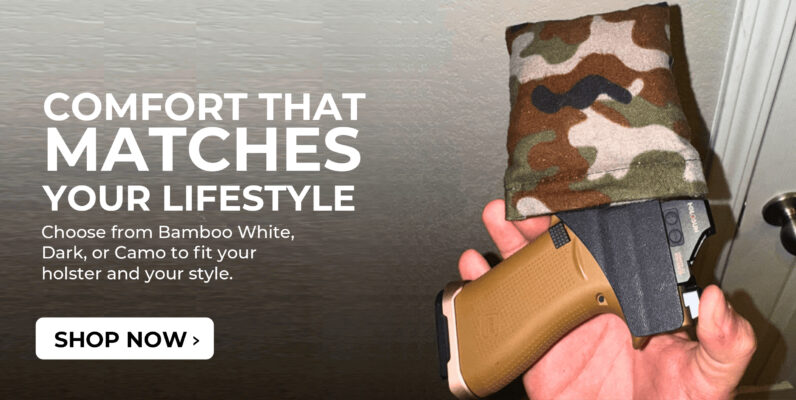
Cloudster Pillow wedges are designed specifically for this job: consistent leverage, comfortable materials, and an adjustable setup so you can dial in your concealment without turning carry into a science project every morning.
If you want more Cloudster-focused troubleshooting and setup tips, check out additional posts on the Cloudster Pillow blog:
Common Printing Scenarios (and How a Foam Pillow Solves Them)
Optic-Ready Pistols
Red dots add height and weight above the beltline. This increases outward rotation. A holster wedge foam pillow adds the counter-leverage needed to bring the grip back in line, reducing printing under light clothing.
Light-Bearing Holsters
Weapon lights often increase the overall bulk of the setup. That can change how the holster sits and how it rotates. A properly placed holster wedge foam pillow helps stabilize the holster and keeps the grip from tipping out.
Larger Frames / Curved Midsections
If your abdomen has natural curvature, hard wedges can feel harsh and inconsistent. A foam pillow conforms to your shape, keeps pressure comfortable, and still provides the leverage needed for concealment.
FAQ: Holster Wedge Foam Pillow
Does a holster wedge foam pillow work with any holster?
In most cases, yes. As long as the holster has a reasonably flat surface where hook-and-loop can adhere, a holster wedge foam pillow can be used on Kydex, leather, and many hybrid holsters.
Will a wedge make my holster feel bulkier?
It adds a small amount of thickness at the muzzle end, but the tradeoff is that the grip becomes dramatically flatter from the outside. Most people find their overall profile looks less bulky once grip tuck is working correctly.
How long will a foam wedge last?
A quality holster wedge foam pillow made from durable materials is designed to compress and rebound thousands of times. Cheap craft foam often fails early; purpose-built wedges are made for daily carry.
Can I use a wedge for strong-side carry (3 o’clock)?
Yes. While wedges are most common in AIWB, they can also reduce grip flare in strong-side carry by nudging the holster and encouraging the grip to sit closer to the body.
What if the wedge is too thick for my body type?
Placement changes the angle, and foam naturally compresses. Many people find that a holster wedge foam pillow feels “just right” after small adjustments—especially once the foam breaks in to their body shape.
Final Takeaway: Comfort + Concealment = Consistent Carry
Concealed carry is a long game. If your setup prints, hurts, or constantly needs fiddling, you won’t stick with it. When you understand torque and apply the Keel Principle, you stop guessing and start controlling the mechanics of concealment.
A holster wedge foam pillow is one of the simplest upgrades you can make because it tackles both sides of the problem: it reduces printing by fixing rotation, and it improves comfort by eliminating hotspots.
If you’re serious about AIWB—and you want a setup you’ll actually wear every day—adding a soft, purpose-built wedge isn’t optional. It’s essential.
Ready to Stop Printing and Carry All Day?
Get the comfort-first holster wedge that controls torque, boosts grip tuck, and helps your appendix carry setup disappear under a t-shirt.


Pingback: Front Carry Comfort Fixes: Achieving Appendix Carry Comfort
Pingback: Training Tactics For Carriers: Sharpen Your Everyday Readiness - Cloudster Pillow