
EDC Gear, Uncategorized
Urban EDC Gear for City Living and Commuting
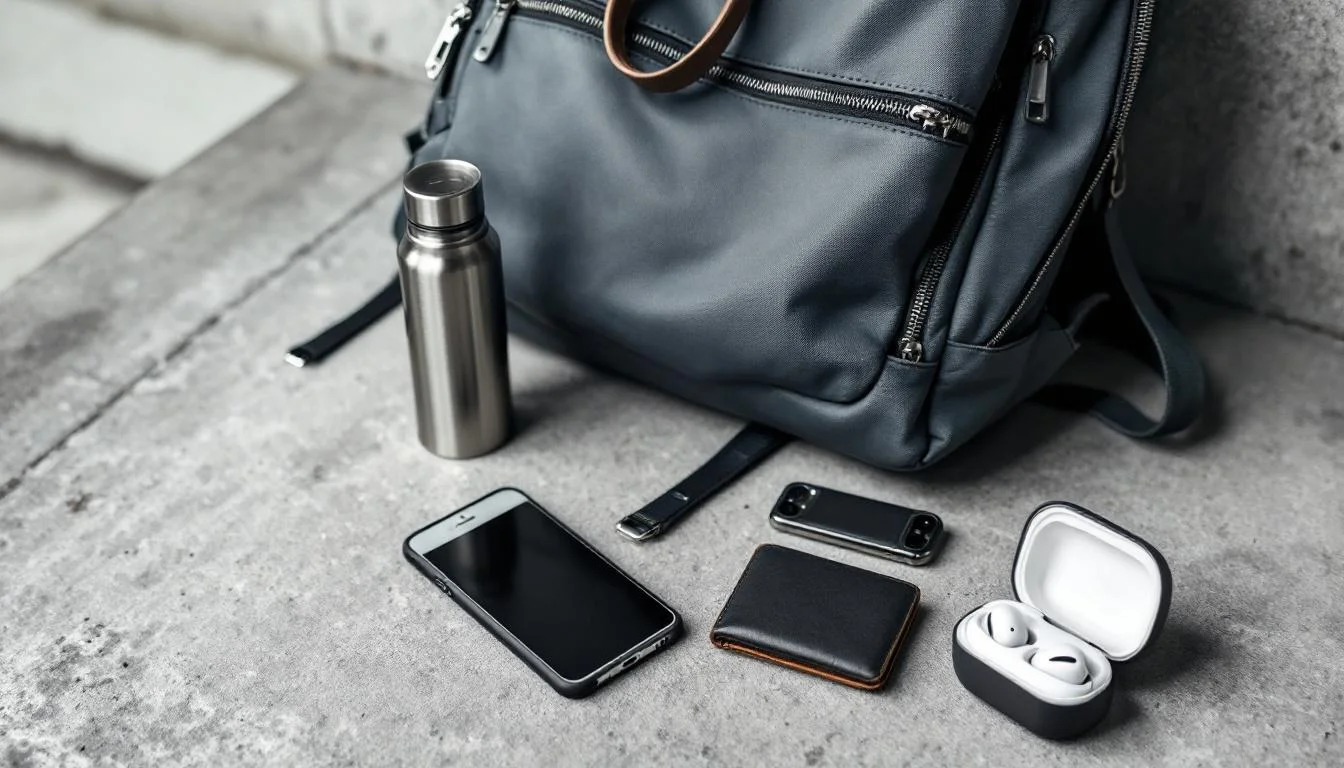
 City living demands a different approach to everyday carry. Your urban EDC gear needs to work seamlessly with tight spaces, professional environments, and constant movement.
At Cloudster Pillow, we know that comfort and concealment aren’t luxuries-they’re necessities for urban carriers. This guide breaks down what actually works when you’re navigating crowded commutes and confined living spaces.
What Gear Actually Works in the City
Prioritize What You Actually Use
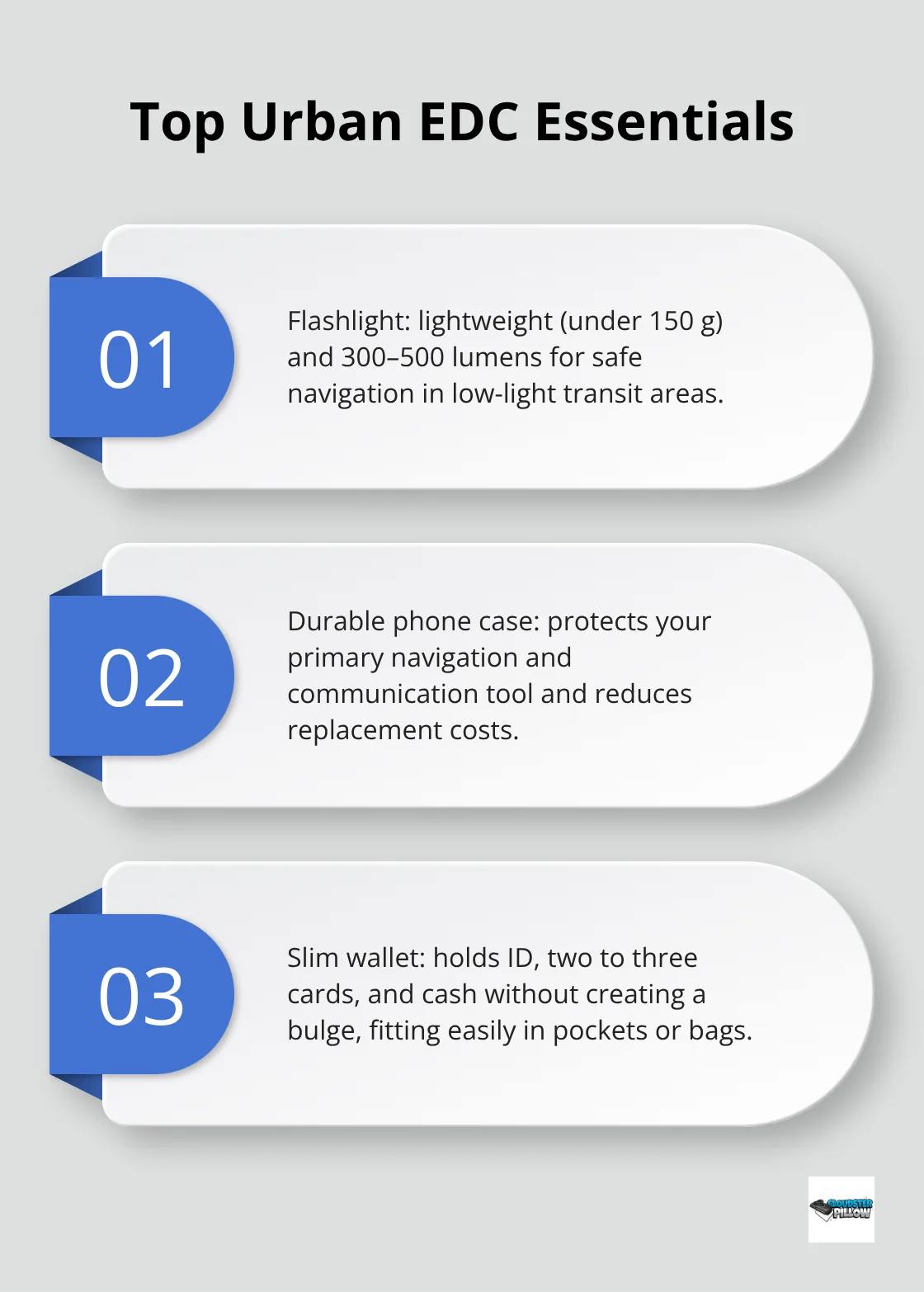
Urban carry demands ruthless prioritization. You’re not building a survival kit or a tactical loadout-you’re assembling tools that fit into a backpack, briefcase, or jacket pocket while blending into professional and social environments. The best urban EDC starts with a wallet that holds ID, two to three cards, and cash without creating a bulge. A compact flashlight matters far more than most carriers realize.
According to data from everyday carry communities, flashlights rank among the most-used items for urban carriers, particularly during early commutes and evening returns. A light under 150 grams that produces 300 to 500 lumens handles stairwells, parking garages, and low-light transit stations without drawing attention. Your phone needs protection-a durable case reduces replacement costs and protects your most essential navigation tool.
Manage Power and Tools Efficiently
A portable charger rated for at least 10,000 mAh keeps devices alive during full workdays, and a single cable that handles multiple device types eliminates the need for a cable bundle. A multi-tool or compact knife serves practical functions: it opens packages, adjusts gear, or handles minor repairs. Try to choose one that stays under 100 grams and fits comfortably in a pocket or bag without creating pressure points.
Carry Concealed Without Compromise
If you carry concealed, your setup must work with business casual or professional clothing without printing or shifting during subway rides and office hours. A quality belt rated for carry weight prevents sagging and maintains consistent holster positioning throughout the day. Compact pepper spray or a personal alarm fits into a jacket pocket or bag without adding bulk, and both comply with regulations in most major cities when you verify local laws.
Organize for Speed and Stress Relief
Organization matters intensely in urban environments-an EDC pouch or small organizer keeps items grouped and retrievable without fumbling through a bag during transitions. Many urban carriers report that compartmentalization reduces stress during commutes and improves access during genuine emergencies. For concealed carriers managing extended wear, comfort becomes inseparable from reliability. Discomfort leads to adjustment, printing, and inconsistent positioning-all problems that undermine your actual readiness.
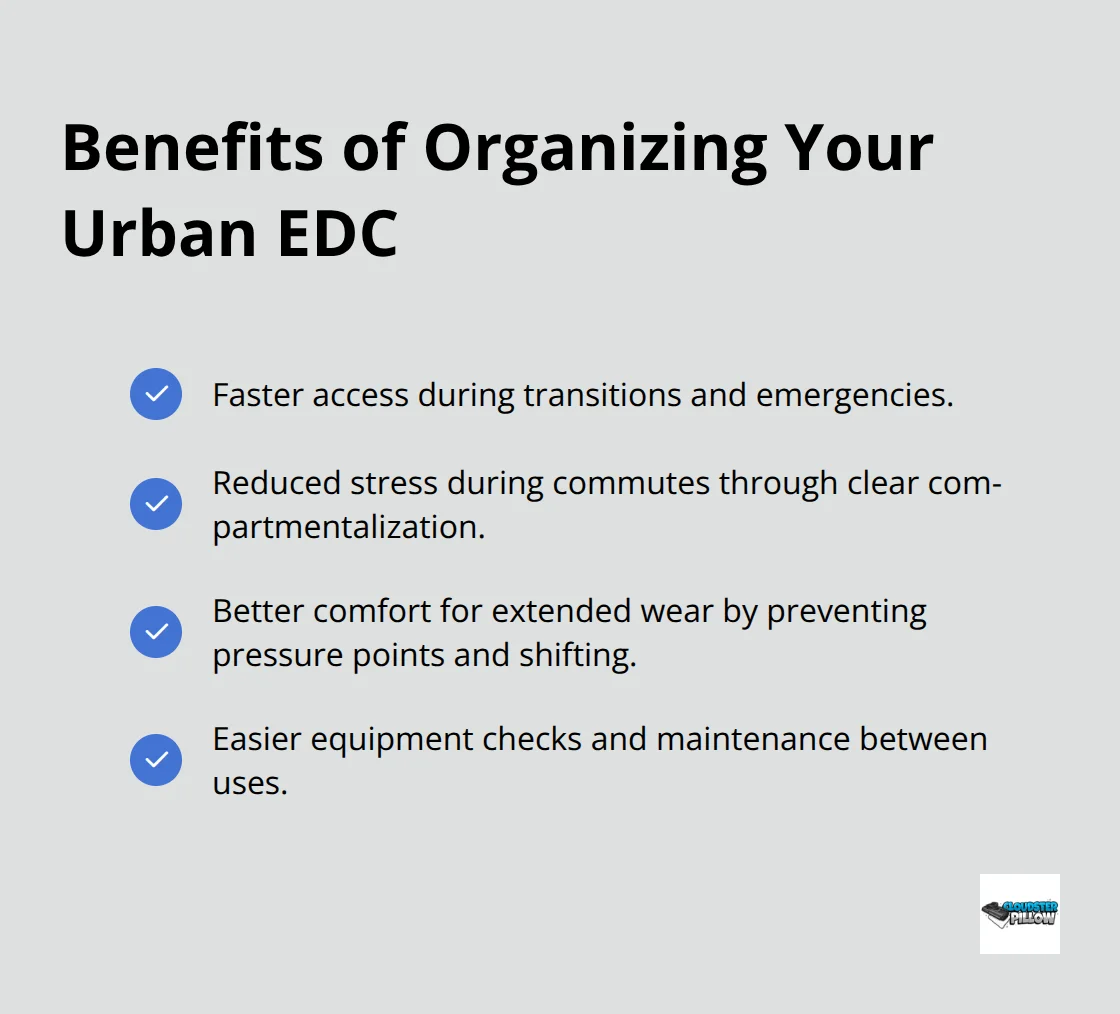
The weight of your complete EDC should never exceed what you can comfortably carry for eight to ten hours without shoulder, back, or hip strain. Test your full kit during a typical workday before committing to it permanently. Once you’ve validated your core items and confirmed they work with your daily routine, the real challenge emerges: managing the physical toll of all-day carry in tight urban spaces.
Comfort and Concealment Work Together
Why Discomfort Destroys Concealment
Comfort during urban carry isn’t about luxury-it’s about consistency. When your setup causes pain or printing, you adjust it constantly, and constant adjustment destroys concealment. A carrier experiencing hip discomfort from all-day AIWB wear will shift their holster position, hike their shirt, or avoid sitting normally, all of which create visible printing and undermine the entire concealed carry premise. Discomfort ranks as the primary reason carriers abandon their setups or skip carrying altogether on certain days. The solution isn’t accepting pain as the cost of carrying; the solution is recognizing that comfort enables the discipline required for actual readiness.
Professional Clothing Demands Precision
Professional clothing amplifies this challenge significantly. Business casual demands tucked shirts, fitted blazers, or structured jackets that leave zero margin for error. A holster positioned too high or too low prints immediately under a tailored shirt. Your belt must support carry weight without sagging-a standard dress belt fails completely under sustained carry load. The waistband itself matters: rigid waistbands with reinforced carry areas work significantly better than stretchy materials because they distribute pressure across a larger surface and prevent holster migration during transitions between sitting, standing, and moving through crowded transit.
Extended Wear Creates Physical Demands
Eight to ten hours of daily carry means your setup contacts your body continuously through commutes, office hours, and evening returns. Hip pressure from AIWB setups intensifies during seated work and transit rides, and traditional holster designs concentrate force on narrow contact points. A holster wedge redistributes that pressure across a larger area, reducing the discomfort that leads to adjustment and printing. The difference between a setup that causes noticeable soreness and one that feels natural determines whether you carry consistently or make exceptions.
Test Your Setup in Real Conditions
Test your complete setup during a full workday in your actual professional clothing and transit environment before finalizing it. Pay specific attention to how your holster feels during the first hour, midday after sitting for extended periods, and late afternoon when fatigue makes you more conscious of discomfort. If you experience pressure points, soreness, or consistent printing, the problem isn’t your commitment-it’s your equipment configuration. Professional carriers understand that comfort and concealment aren’t trade-offs; they’re prerequisites for the reliability that matters in genuine situations. Once you’ve addressed the physical demands of all-day carry, you face a different set of challenges: navigating the practical realities of urban environments where space constraints and public spaces test your entire system.
Urban Carry Works Differently in City Environments
Public Transportation Tests Your Entire Setup
Public transportation forces you to confront the actual mechanics of concealed carry in ways office environments never do. Subway cars, buses, and crowded platforms eliminate the controlled space of your workplace and replace it with constant physical contact from strangers, unpredictable movement patterns, and zero margin for printing errors. A holster that works fine at your desk fails immediately when you stand pressed against other passengers during rush hour. Your carry position matters intensely here-AIWB works better than strong-side IWB on transit because forward positioning keeps your firearm away from contact points where adjacent passengers might bump or apply pressure. Appendix carry also allows you to monitor your firearm position through subtle body awareness rather than relying on clothing to conceal a holster positioned where you cannot see it.
Test your setup on actual transit before committing to it. Spend a full commute standing in crowded conditions and pay attention to how your holster responds to external pressure and movement. The difference between a setup that prints under crowded conditions and one that remains secure and invisible often comes down to small details like holster cant, ride height, and how effectively your equipment distributes pressure across your torso rather than concentrating it on narrow contact points.
Space Constraints Demand Ruthless Minimalism
Space constraints in city living create a second layer of challenge that most suburban or rural carriers never encounter. Apartments and shared housing mean your carry setup must work in environments where you move constantly between tight hallways, small bathrooms, and living spaces where you interact closely with roommates or family members. Your holster cannot create visible printing when you bend to pick something up, sit on your couch, or move through doorways where your side contacts the frame.
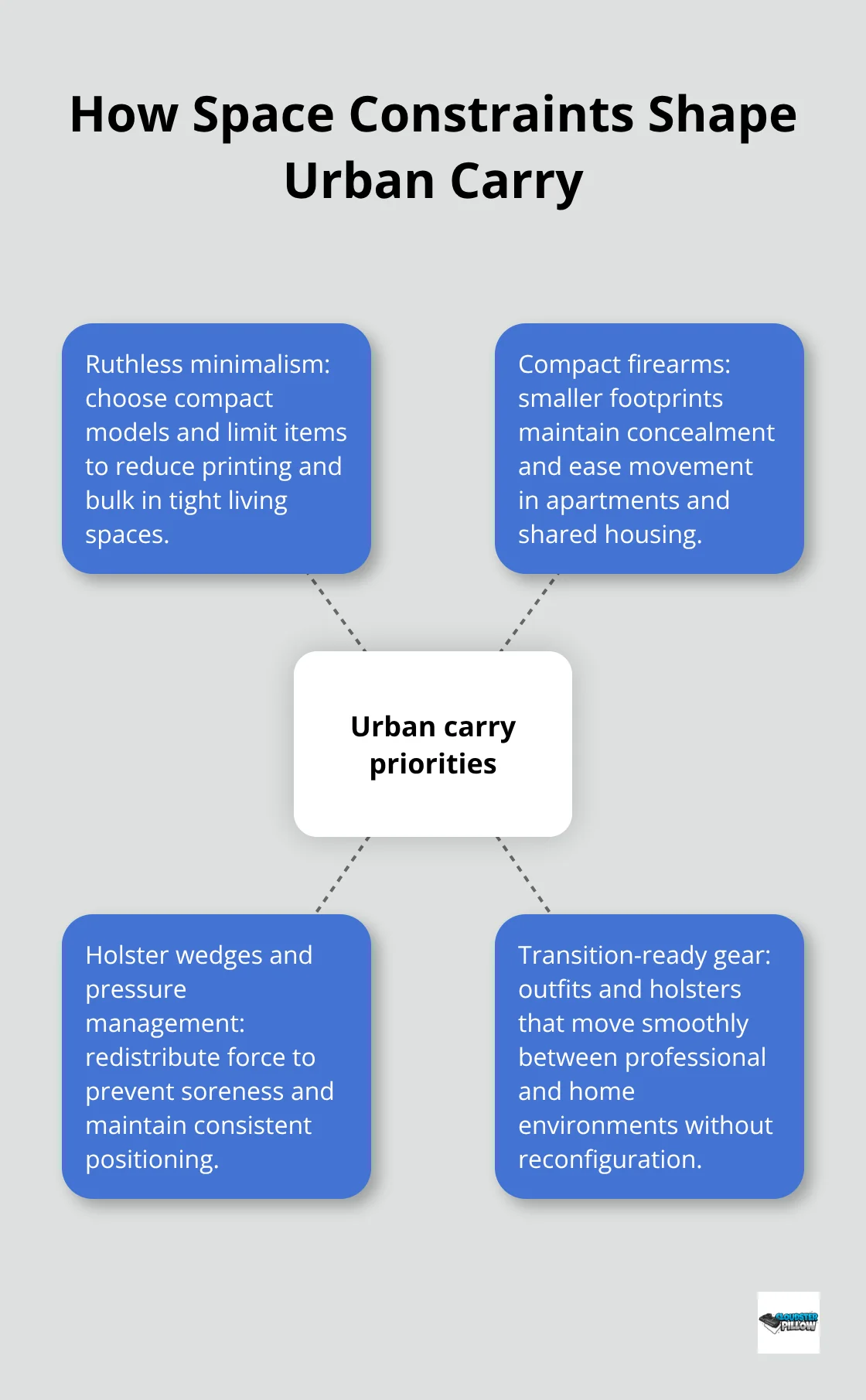
Your gear also needs to transition smoothly between professional environments and casual home settings without requiring constant reconfiguration.
This demands ruthless minimalism-you cannot carry a full-size pistol with a traditional holster and expect to maintain concealment and comfort in a studio apartment or shared space. Compact firearms or subcompact models work significantly better because they reduce the physical footprint your carry setup demands. Your holster also needs to handle extended wear in confined spaces where pressure points become intolerable after eight or ten hours. Holster wedges redistribute pressure across a larger contact area so that all-day concealment does not require you to choose between comfort and readiness.
Maintaining Readiness While Staying Discreet
Maintaining readiness while staying discreet means accepting that urban carry demands different equipment choices and positioning strategies than traditional concealed carry guidance suggests. Your firearm access cannot require you to stand up, move away from others, or create any visible adjustment that signals you carry. This means you should practice your draw in confined spaces and validate that your actual carry position allows you to access your firearm quickly and reliably while sitting on public transit, standing in crowded environments, or moving through narrow urban spaces.
Discreetness also means your carry method cannot create anxiety in others or violate the social contracts that govern public spaces. This is not about hiding your carry from law enforcement; it is about maintaining the professionalism and social awareness that defines responsible urban carrying. Urban environments reward carriers who blend seamlessly into their surroundings while remaining prepared for genuine threats.
Final Thoughts
Urban EDC gear works because it solves real problems that suburban and rural carriers never face. Comfort and concealment depend on each other, not on expensive gear replacements or complicated systems. Your setup succeeds when it handles eight-hour workdays without printing, transitions smoothly between professional and casual environments, and remains accessible during crowded transit without drawing attention.
The carriers who maintain consistency over months and years have stopped treating discomfort as an acceptable cost of carrying. They test their equipment in actual conditions, identify pressure points, and adjust their setup until it feels natural. This approach separates theoretical preparation from genuine readiness, and a holster wedge redistributes pressure across a larger contact area, transforming all-day carry from something that causes soreness into something that feels sustainable.
Urban EDC gear demands different choices than traditional concealed carry guidance suggests. Your compact firearm, your belt quality, your holster positioning, and your pressure management all matter more than following generic recommendations. Build your setup deliberately, test it thoroughly, and adjust it based on what actually works in your daily environment.
