
EDC Gear
Concealment For Larger Bodies: Strategies For Comfort And Coverage
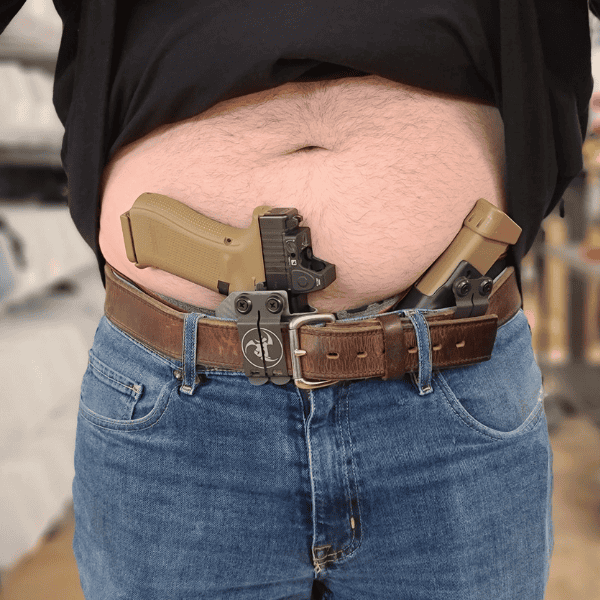
Carrying concealed with a larger body comes with unique challenges that most gear is simply not designed for. Finding the right holster, clothing, and accessories makes all the difference between a setup that works and one that leaves you uncomfortable and exposed.
At Cloudster Pillow, we’ve worked with countless carriers who thought plus size carry meant compromising on either comfort or concealment. The truth is that with the right strategies, you can have both.
Picking the Right Holster Setup for Your Frame
The holster you choose matters far more than most carriers realize, especially when you carry on a larger frame. A holster designed for average bodies will fight against your natural shape, printing visibly or digging into uncomfortable spots that make all-day carry impossible. Thousands of carriers discovered that swapping to a holster actually built for bigger frames transformed their entire carry experience. The first decision is whether you need inside-the-waistband (IWB) or appendix carry (AIWB).
Finding Your Ideal Carry Position
IWB at the 2 o’clock position works exceptionally well for larger bodies because the gun sits in the natural valley created by your midsection, offering solid concealment whether you stand or sit. This position keeps the grip tucked tight against your body without the printing problems that come from appendix carry on a rounder midsection. AIWB can still work, but it requires the gun positioned off your centerline-around 1 to 2 o’clock instead of directly at the front-to follow your natural waist curve and minimize grip exposure.
Adjusting Ride Height and Cant
The ride height of your holster directly impacts both comfort and concealment. A higher ride height works better when you sit because it keeps the muzzle from jabbing your thigh, but it tends to print more when you stand. A lower ride height improves concealment while standing but can create pressure points when seated. Start by wearing your holster in a seated position and identify exactly where the gun touches your thigh, then position the holster slightly above that point.
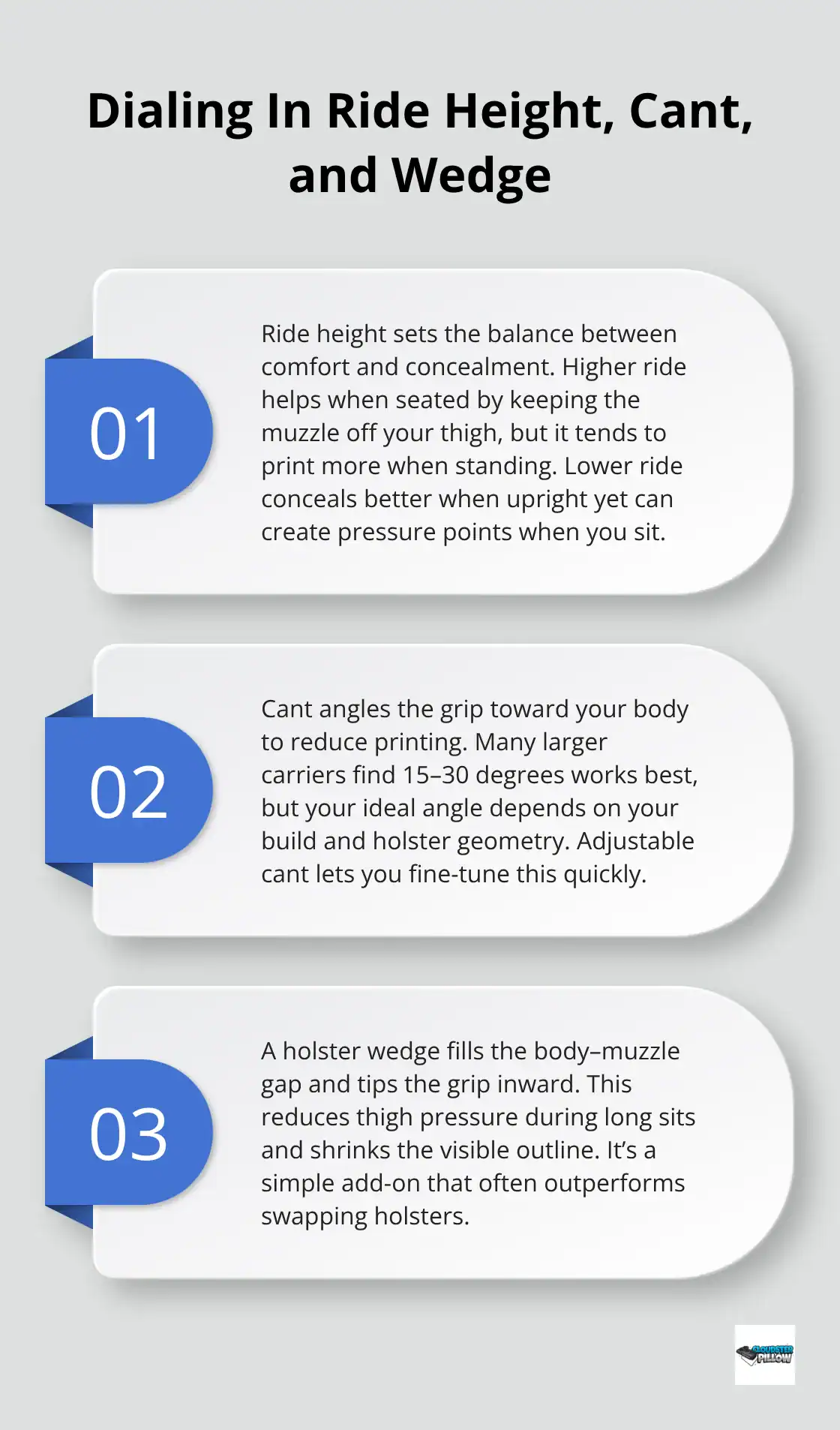
Cant, which is the angle at which your holster tilts the gun, makes an enormous difference for larger frames. A holster with adjustable cant lets you angle the grip inward, which pulls the weapon closer to your body and reduces printing significantly. Many carriers with bigger midsections find that 15 to 30 degrees of inward cant works best, though your ideal angle depends entirely on your body shape. A holster wedge fills the gap between your body and the muzzle, tilting the grip inward even further and dramatically improving concealment without replacing your entire holster.
Retention and Security Matter Most
Retention is non-negotiable when carrying on a larger body because movement, bending, and sitting create constant pressure changes around your holster. A holster with weak or inconsistent retention can shift during daily activity, creating uncomfortable repositioning or worse-unsafe situations. Look for holsters offering adjustable retention so you can dial in exactly how much tension you need to draw smoothly without the gun moving around.
Hybrid IWB holsters with neoprene or padded backing distribute pressure across a wider area of your body, preventing the hot spots that come from rigid kydex pressing directly into your midsection all day. The Cloak Tuck 3.5 uses dual clips to anchor the holster at two points on your belt, which is essential for larger bodies because a single-clip setup often sags under the weight of a gun and holster. Two-clip systems keep everything stable and prevent the holster from rotating throughout the day.
Building a Foundation With the Right Belt
A quality gun belt designed for concealed carry isn’t optional-it’s foundational. A standard belt simply cannot support the weight and movement of a holster and firearm without sagging, which throws off your entire carry geometry. A reinforced gun belt with a polymer core or leather backing keeps your holster positioned correctly and prevents the muzzle from pressing into your body as the belt shifts.
Your holster choice determines whether concealed carry feels like a burden or becomes second nature. Test any new holster through a full day of sitting, standing, walking, and driving before deciding it’s the right fit. What works perfectly for someone else might be completely wrong for your specific body shape, and that’s completely normal. Once you lock in the right holster setup, the next step is selecting clothing that works with your carry method rather than against it.
Clothing and Layering Strategies
Your clothing choices directly determine whether your holster setup succeeds or fails, regardless of how well you selected your gear. Fabric weight, color, fit, and layering all work together to either hide or expose your carry method. Most carriers focus heavily on their holster and belt but overlook the reality that a poor clothing strategy defeats even the best concealment hardware.
Selecting Fabrics and Colors That Hide Your Carry
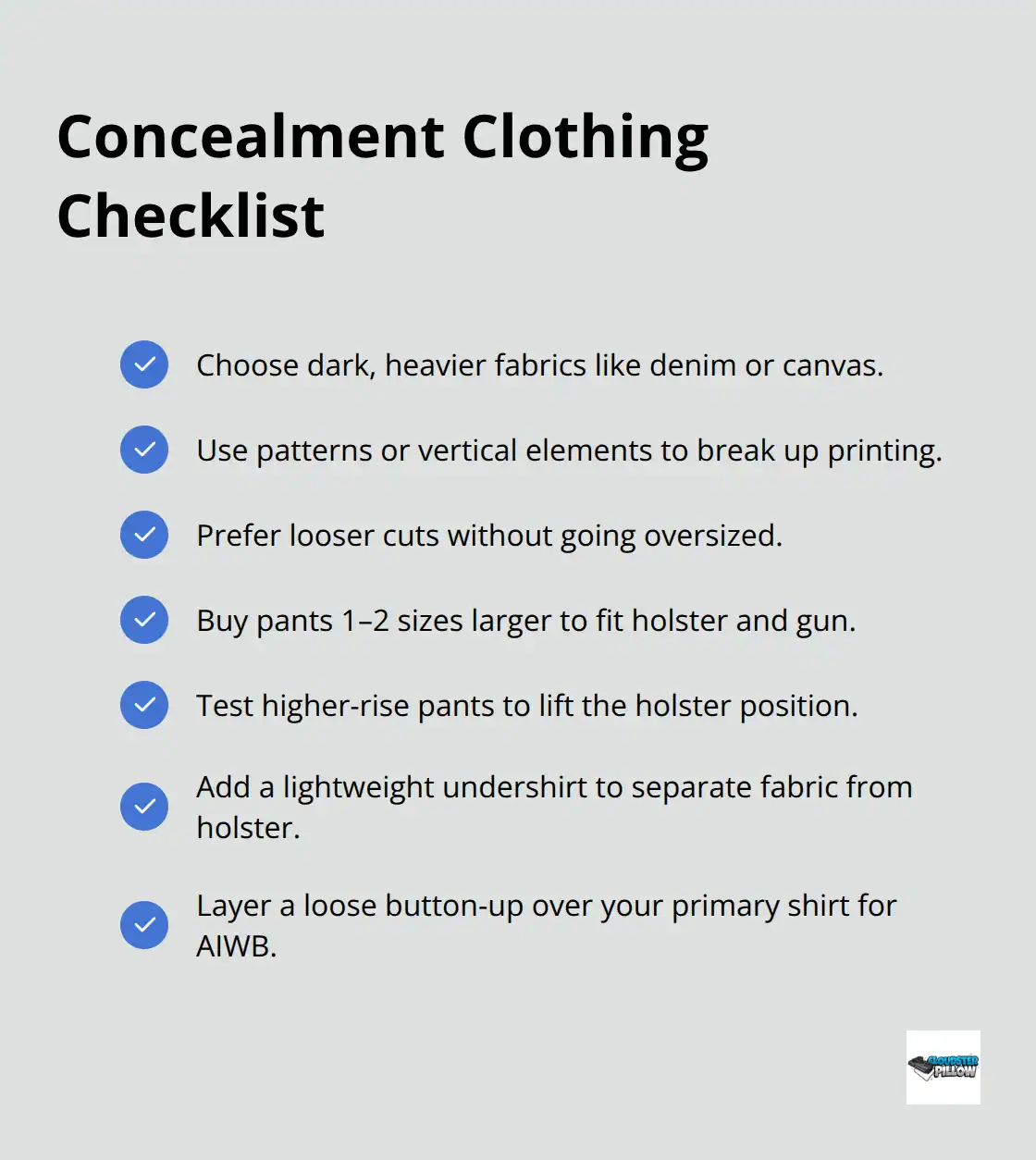
Dark, heavier fabrics like denim and canvas naturally hide the outline of a firearm far better than thin materials or light colors. Patterns and vertical elements break up the visual line of a holster print, making printed outlines less noticeable to casual observers. Looser cuts work better than fitted clothing, but oversized garments create their own problems by shifting around during movement and looking unnatural.
The sweet spot is buying pants one to two sizes larger than your normal fit to accommodate your holster and gun without excess fabric bunching at your waist. This simple change eliminates one of the biggest printing culprits that larger carriers face.
Positioning Your Waistband for Maximum Concealment
Higher-rise pants positioning your waistband above the natural crease where your abdomen projects forward changes where your holster sits on your body and dramatically improves concealment for many larger carriers. Test this adjustment before investing in new holsters or accessories-many carriers find that raising their waistband position solves printing issues immediately.
Layering Across Seasons
Layering is your most powerful concealment tool across seasons, and smart choices here let you carry the same setup year-round without compromise. A lightweight undershirt under your main garment creates subtle separation that breaks up holster printing, while a button-up shirt worn loose over your pants works exceptionally well for appendix carry because the fabric drapes naturally away from your body.
During warmer months when heavy jackets are impossible, Hawaiian shirts and camp shirts with vertical patterns provide outstanding concealment without looking out of place. Vests, cardigans, and flannel shirts add concealment depth for spring and fall without the bulk of winter coats. In cold weather, you have the luxury of heavier outerwear that completely hides your setup.
Maintaining Consistency Over Fashion
Instead of rotating your entire carry setup seasonally, invest in two or three versatile layering pieces that work across multiple seasons and match your normal wardrobe. This approach keeps your body adjusted to one carry position and holster configuration, which maintains your muscle memory and draw consistency.
Switching carry positions or holsters seasonally introduces risk because your hands and body have to relearn where your gun sits-exactly when negligent incidents happen. Consistency in your physical carry setup matters far more than fashion, so select clothing that supports your fixed holster position rather than forcing yourself to adapt your holster to your wardrobe. Once your clothing strategy locks in, the real game-changer for larger bodies comes down to one specific accessory that transforms both comfort and concealment overnight-the Cloudster Pillow holster wedge.
Fine-Tuning Your Carry Setup for All-Day Wear
The gap between a holster that technically works and one that keeps you comfortable for twelve hours straight comes down to modifications and accessories most carriers never consider. Larger bodies create pressure points that rigid holsters simply cannot accommodate without help, and adding padding or support to your existing setup often solves problems that seem to require new gear entirely.
Padding and Pressure Distribution
Neoprene or padded backing distributes pressure across a wider surface area instead of concentrating force on a few spots, which is why hybrid holsters outperform rigid kydex for all-day carry on bigger frames. If your current holster lacks padding, you can add a self-adhesive neoprene sheet to the back to soften contact points, though this works best as a temporary solution while you save for a properly designed hybrid option.
Belt and Waistband Positioning
Your belt configuration matters equally because a belt that shifts throughout the day throws off your entire carry geometry and forces your holster to compensate through rotation or sagging. A reinforced gun belt with a polymer core or leather backing keeps tension consistent, but the waistband position of your pants affects how that belt performs.
If your belt rides below the natural crease where your abdomen projects forward, your holster sits too low and the muzzle digs into your thigh when seated. Raising your waistband position by just two inches changes where the gun sits relative to your body and eliminates discomfort without any gear changes. Some carriers accomplish this through higher-rise pants, while others simply wear their existing pants higher on the waist and adjust their shirt to cover the extra waistband space. Test this adjustment for three days before assuming your current holster is uncomfortable-many carriers discover that repositioning their pants solves the problem immediately.
The Holster Wedge Advantage
The single most effective modification for larger bodies is a holster wedge, which sits between your body and the gun to fill the gap that creates muzzle pressure and printing. A wedge tips the muzzle outward and rotates the grip inward, reducing both discomfort during extended sitting and the visible outline that betrays your carry setup.
Wedge height varies dramatically depending on your body shape, and the best approach involves testing with a folded sock to estimate the height you need before investing in a permanent wedge. Start with a sock folded to roughly one inch thick and place it behind your holster at the muzzle end, then move through your normal day (including sitting and standing) to see if that height improves concealment and comfort. Increase the thickness by half-inch increments if the one-inch wedge doesn’t fully solve your printing, since some carriers need two or three inches of wedge height depending on how much their abdomen projects forward.
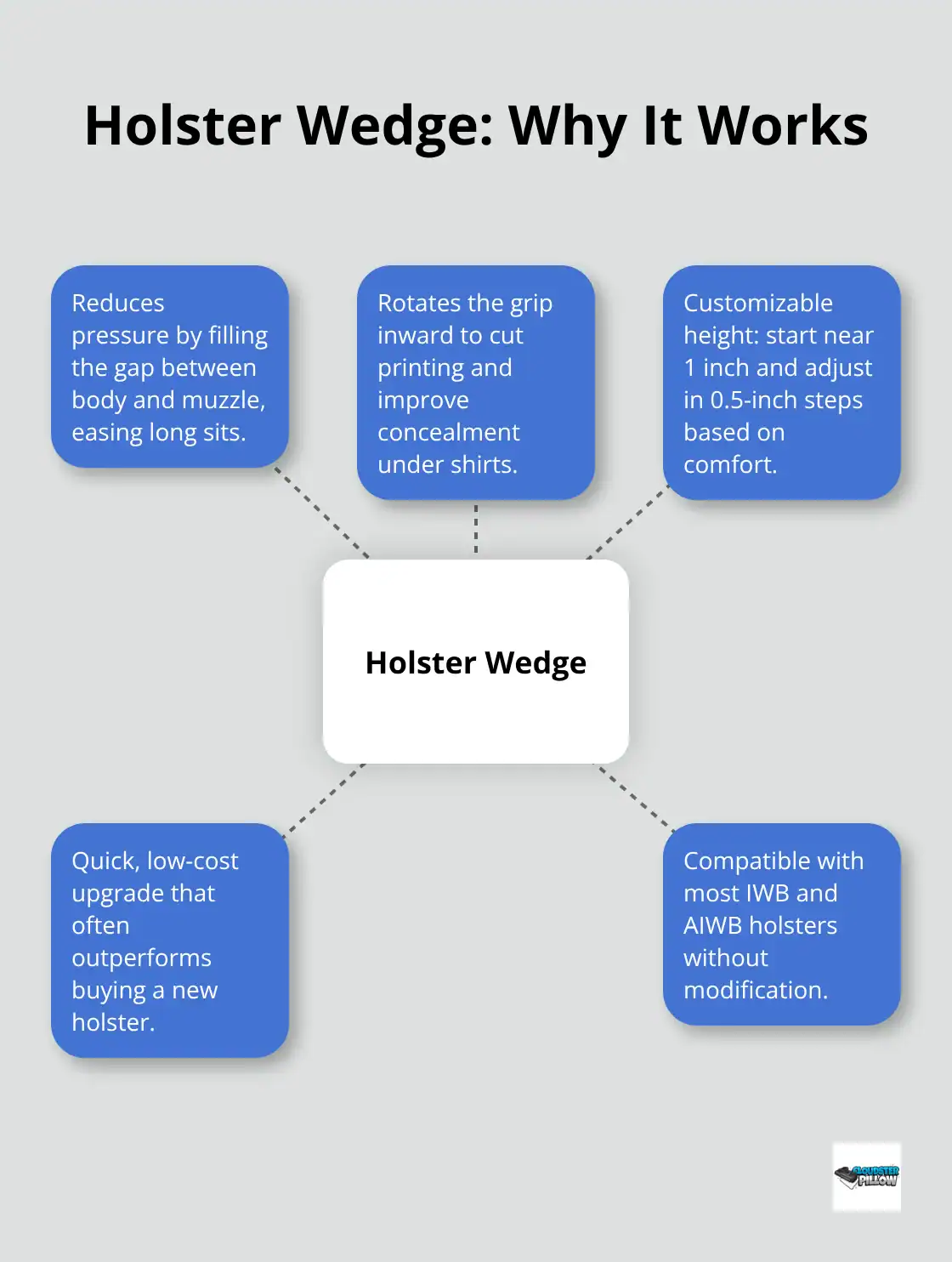
We at Cloudster Pillow designed our holster wedge specifically for concealed carriers, and it fits seamlessly with most IWB and AIWB holsters without modification. Once you identify the right wedge height through testing, the improvement in both comfort and concealment justifies the minimal cost and effort involved in adding this single accessory to your setup.
Final Thoughts
Concealed carry for larger bodies works when every component-holster position, ride height, cant, clothing fit, and accessories-functions together instead of fighting your natural shape. Start with one adjustment at a time rather than overhauling your entire setup at once. Test your holster position through a full day of sitting and standing before deciding it needs replacement, raise your waistband by two inches and wear it for three days to see if positioning alone solves your printing, or add a folded sock behind your holster to test wedge height before committing to permanent modifications.
Plus size carry becomes manageable when you stop comparing your setup to what works for someone else and instead focus on what your specific body needs. A carry position that feels perfect for your friend might create printing or discomfort for you, and that’s completely normal. Your job involves testing methodically, adjusting deliberately, and building confidence through repetition with the same holster and position.
The real breakthrough happens when you realize that comfort and concealment aren’t competing goals-they’re connected. A holster wedge that improves concealment by tilting your grip inward also reduces muzzle pressure when you sit, higher-rise pants that hide your carry better also position your holster more comfortably, and padding that softens pressure points also breaks up the visual outline that creates printing. Test your current setup thoroughly, make one adjustment at a time, and explore how a holster wedge can transform both your comfort and concealment.
Related Guides
- Cloudster Pillow Holster Wedge — IWB & Appendix Carry Comfort
- How to Get Your FFL 03 and COE in California (2026 Guide)
- Best Glock for Concealed Carry (2026): Top 5 Compact Picks
- Appendix Carry Pros & Cons: Honest Look at AIWB
- Best AIWB Holster 2026: Top 7 Tested for Comfort & Carry
- PHLSTER Enigma Review 2026: Worth the Hype?
- Best Holster for Fat Guys: IWB & AIWB Comfort Picks
- Best Holster Wedges & Pillows 2026: Cloudster vs Mastermind vs Tier1 vs Vedder
- Cloudster Pillow + Tenicor: Compatibility & Setup
- Cloudster Pillow + Vedder LightTuck: Compatibility Guide
- Cloudster Pillow + Tier 1 Concealed: Axis & Sidecar Fit
- Cloudster Pillow + T.Rex Arms Sidecar 2.0
- Cloudster Pillow + Werkz Custom Kydex
- Cloudster Pillow + We The People Holsters
- Cloudster Pillow + Crossbreed SuperTuck & Rogue
- Concealed Carry for Big Guys: Comfort, Concealment & Gear (2026)
- Concealed Carry for Big Guys: 5 Best Holster Wedge Tips
- Appendix Carry with Belly Fat: Setup That Actually Works
