
Uncategorized
Carry Permit Requirements 2026: What Every Gun Owner Should Know

Carry permit laws shifted dramatically across the country in 2026, and staying on top of these changes matters more than ever for gun owners.
Whether you’re new to concealed carry or renewing your permit, understanding your state’s specific requirements-from training hours to fees to reciprocity rules-keeps you legal and confident. Here at Cloudster Pillow, we know that responsible carry starts with knowing the rules in your state and beyond.
This guide breaks down everything you need to know about permit requirements this year.
Understanding Your Permit Options in 2026
Constitutional Carry vs. Permit Requirements
As of 2026, your permit landscape depends entirely on where you live and how you want to carry. Twenty-nine states now allow permitless or constitutional carry, meaning eligible citizens can carry without government approval. The remaining states require permits, but they fall into two distinct categories that dramatically affect your application process. Shall-issue states must approve your permit if you meet basic criteria like age, residency, and a clean background check. May-issue states, including California, New York, and a handful of others, give authorities discretion to deny permits even when you meet requirements. This distinction matters because a shall-issue permit takes weeks to months, while may-issue permits can take six months or longer, and approval isn’t guaranteed regardless of your qualifications. Understanding which category your state falls into shapes your entire timeline and strategy for legally carrying.
Concealed vs. Open Carry Rules
The difference between concealed and open carry creates another critical layer. Some states allow both under permitless carry, while others restrict you to concealed only, even without a permit requirement. Texas permits both open and concealed carry without a permit, but Florida requires a permit for concealed carry while prohibiting open carry entirely. North Carolina requires a permit for concealed carry but allows open carry without one.
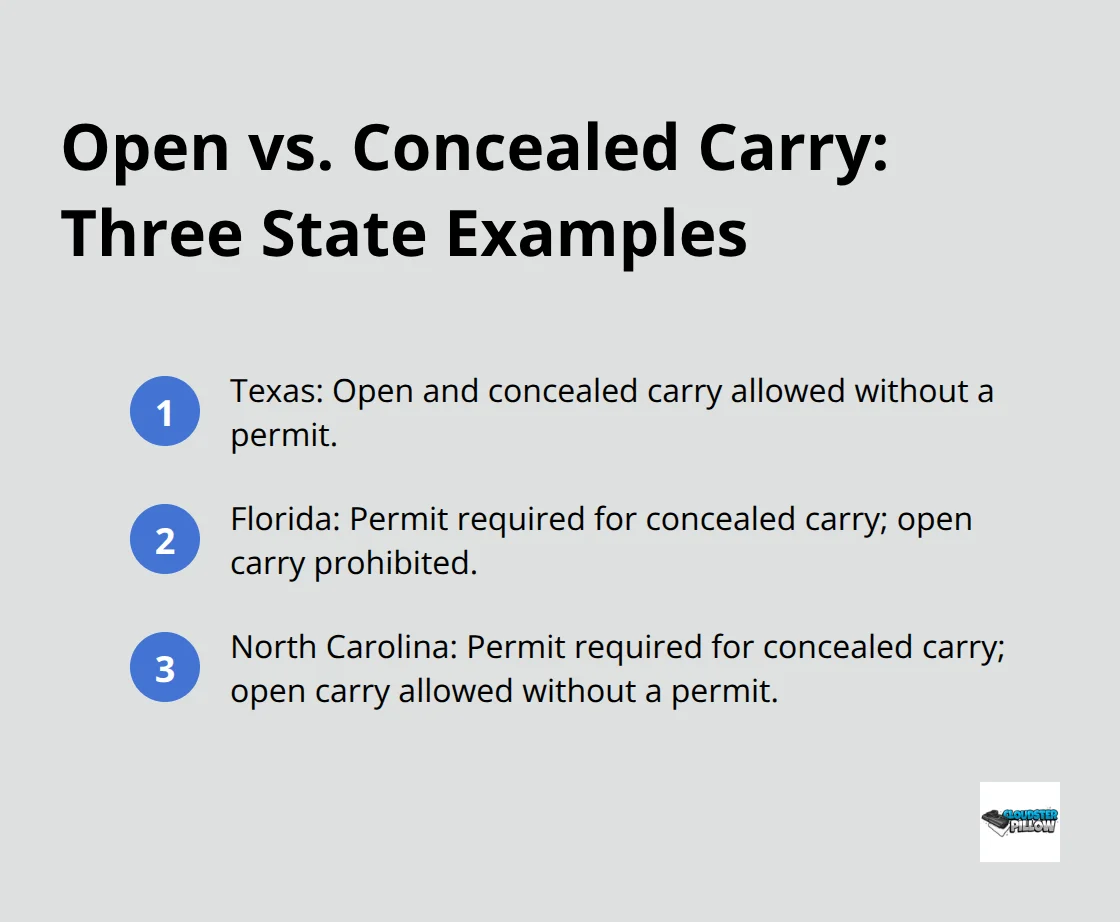
These distinctions aren’t academic-they affect what you can legally wear, how you position your holster, and whether you need to invest in a permit at all.
Interstate Reciprocity and Travel Considerations
If you plan to travel across state lines, interstate reciprocity for concealed carry permits only recognize permits, not permitless carry rights. This means carrying legally in one state doesn’t automatically make you legal in another, forcing many carriers to obtain permits specifically for interstate reciprocity. The practical solution involves checking your home state’s exact statute language and verifying reciprocity with any states you frequent before you carry, because assumptions about what’s legal in neighboring states often prove wrong. Your next step requires understanding exactly what documentation and training your specific state demands to move forward with an application.
What’s Actually Changed in Permit Laws for 2026
New Permitless Carry States and Reciprocity Implications
Alabama, Louisiana, and South Carolina joined the permitless carry movement after their laws took effect in mid-2024. If you live in one of these states, you no longer need government approval to carry concealed, but this doesn’t mean your application process disappeared entirely. Many carriers in these newly permitless states still obtain permits anyway because reciprocity agreements only recognize permits, not constitutional carry rights. When you cross state lines, your permitless carry status means nothing in states that require permits. A permit from your home state opens doors across multiple jurisdictions through reciprocity agreements, making it the practical choice for anyone who travels regularly or works across state boundaries.
Crime Data and Training Reality
The FBI Crime Data Explorer shows that 12 of the 20 states that adopted permitless carry before 2023 saw violent crime declines, while 8 did not, indicating that permit status alone doesn’t determine public safety outcomes. What matters more is your actual preparation and training, regardless of whether your state requires a permit. Your commitment to responsible carry depends far more on your actions than on your state’s legal framework.
Understanding Your State’s Specific Requirements
Fingerprinting remains standard in most jurisdictions as part of background checks, though some states now accept digital fingerprint submissions through authorized vendors rather than requiring in-person visits to sheriff offices. Training requirements vary dramatically: some states mandate 8 hours of instruction, others require live-fire demonstrations, while permitless states impose no training requirements at all. Processing times range from 7 days in shall-issue states to 6 months or longer in may-issue jurisdictions like California and New York.
Documentation and Application Checklist
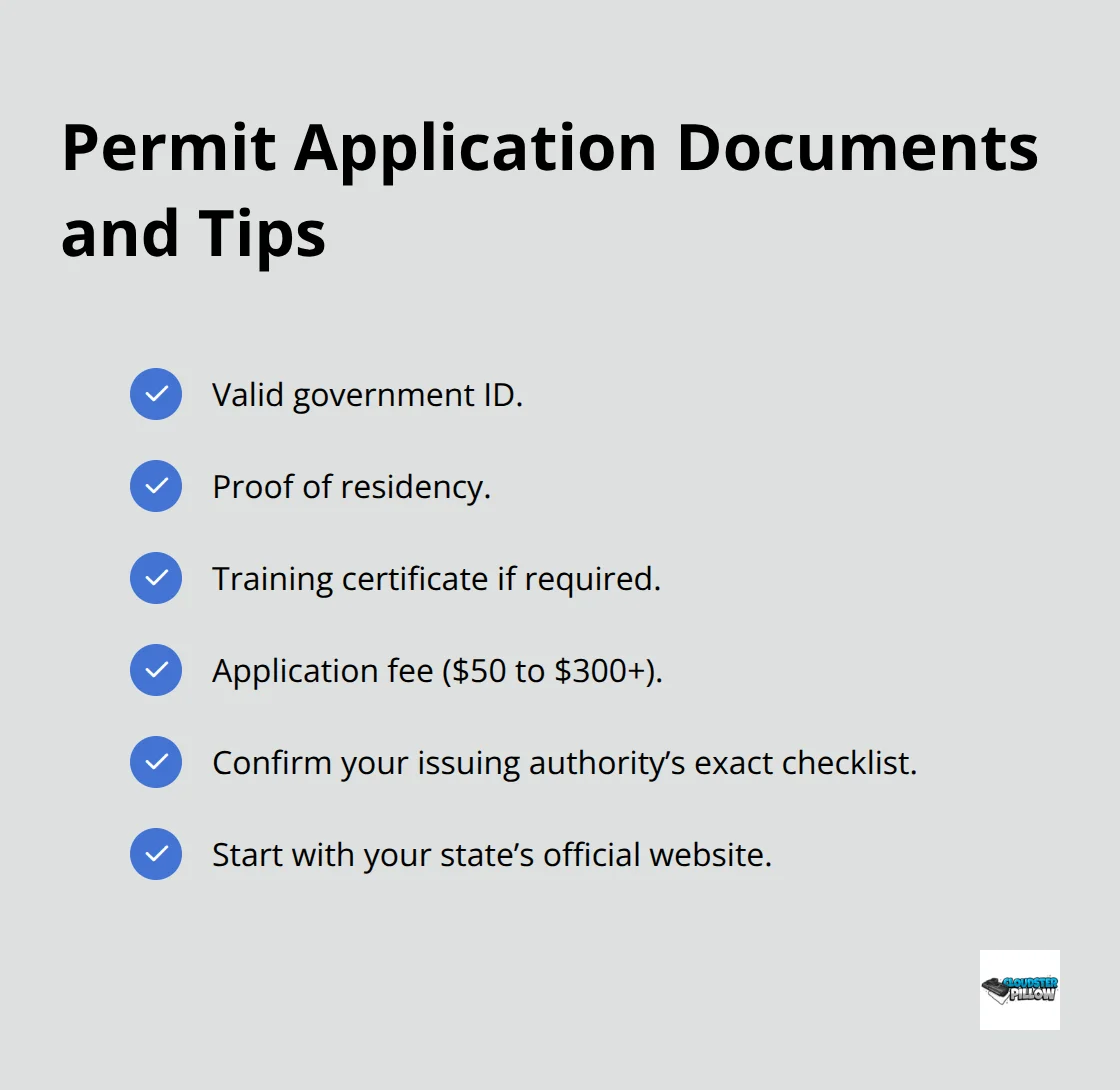
Start with your state’s official website to verify residency requirements, age restrictions, and whether you need character references, because assuming your neighbor’s process matches yours often leads to rejected applications and wasted fees. Documentation typically includes a valid government ID, proof of residency, training certificates if required, and the application fee, which ranges from $50 in some states to over $300 in others. The critical step happens before you submit anything: contact your issuing authority directly to confirm their exact checklist, because missing a single document can delay approval by weeks or restart your entire application timeline.
Next Steps for Your Permit Application
Once you understand your state’s requirements and gather your documentation, the actual application process begins. Your next move involves identifying which training courses your state accepts and scheduling your instruction before you submit your application, since many states require proof of training at the time of submission. Proper gear setup matters too-investing in quality equipment like the Cloudster Pillow holster wedge ensures your concealed carry remains comfortable and secure throughout your daily routine, supporting the responsible carry habits that define experienced CCW holders.
Keeping Your Permit Current Without Wasting Time or Money
Expiration Dates and Renewal Timelines
Permit renewal catches most carriers off guard because states handle expiration dates inconsistently. Some states issue permits valid for five years, others for three, and a handful for just two years, making a calendar reminder essential the moment you receive your license. Texas permits last five years and cost $40 for a new applicant, but renewal costs only $20 through their online system, saving you money if you plan ahead. New York permits expire every five years but cost $97.50 and require an in-person renewal at your local licensing officer’s office, consuming an afternoon you didn’t budget for. Set a phone reminder six months before expiration so you can start the renewal process early and avoid carrying with an expired permit, which creates legal liability regardless of whether your state technically allows you to carry during the grace period.
State-Specific Renewal Windows
States impose different renewal windows that catch unprepared carriers off guard. Around 90 days before your license expires, you should receive a renewal letter with instructions, so checking your state’s specific window prevents premature submissions that get rejected and restart your timeline. Many carriers miss this detail and reapply unnecessarily, paying full fees instead of reduced renewal rates. Contact your issuing authority to confirm your state’s renewal process, because submitting too soon wastes your application fee and delays your actual renewal start date.
Training Requirements for Renewal
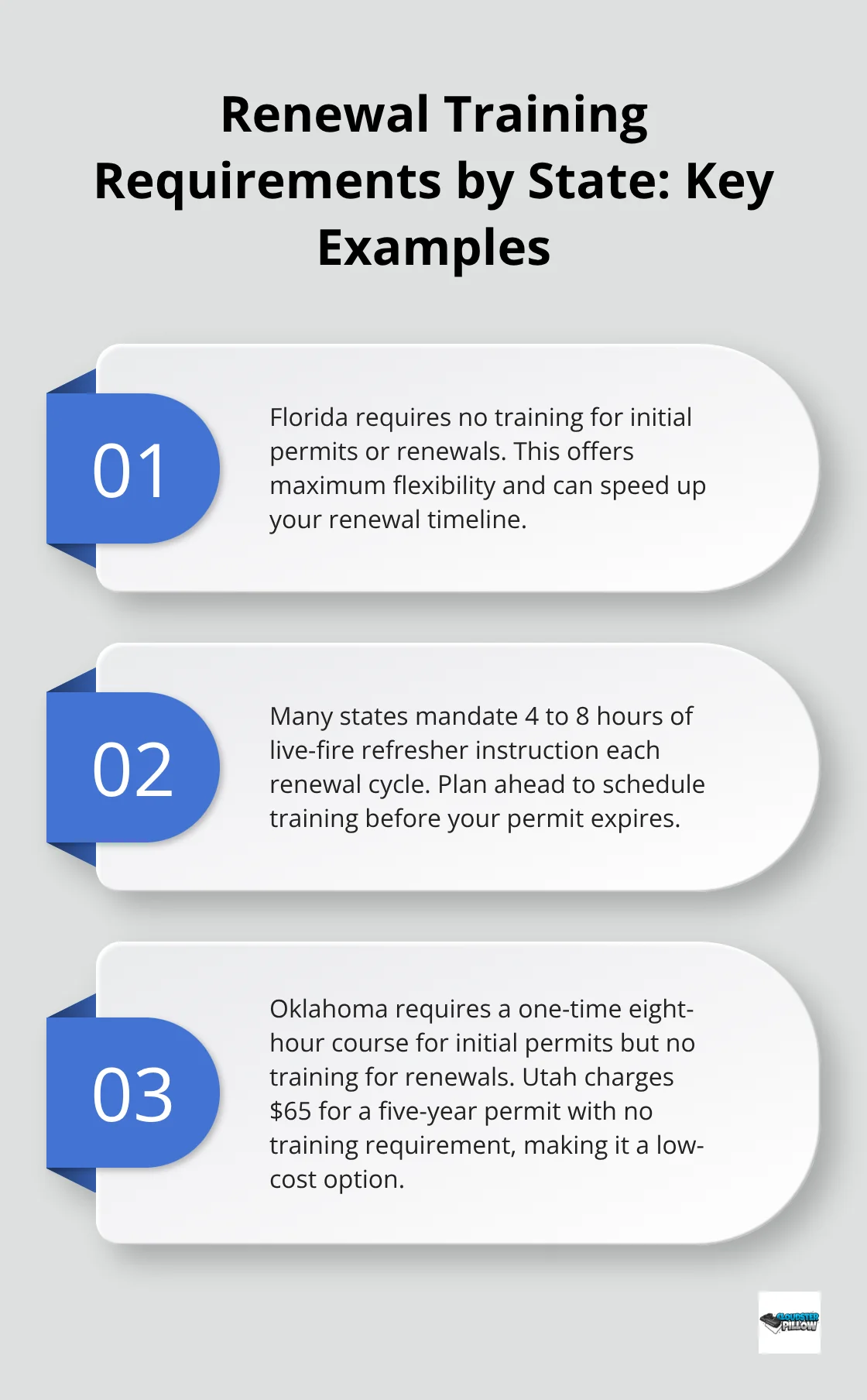
Training requirements directly impact your renewal timeline because some states mandate refresher instruction before you can renew your permit. Florida requires no training for initial permits or renewals, giving you maximum flexibility, while other states demand 4 to 8 hours of live-fire instruction every renewal cycle. Oklahoma requires a one-time eight-hour training course for initial permits but no training for renewals, reducing your ongoing costs significantly. Utah charges $65 for a five-year permit with no training requirement, making it one of the cheapest options nationwide.
The NRA-ILA tracks state-by-state training mandates, and checking their database prevents you from showing up to renew only to learn your state now requires proof of recent instruction.
Renewal Costs and Processing Methods
Costs vary dramatically across jurisdictions: Alabama charges $20 for a five-year permit while California costs over $300 in some counties plus training course fees that can exceed $200. Processing fees range from $50 to $300, but renewal fees often cost less than initial applications, so tracking your state’s specific renewal rate matters when budgeting. The key distinction involves understanding whether your state allows online renewals, mail-in submissions, or requires an in-person visit, because some states like Texas process online renewals in days while others like California demand lengthy in-person appointments at county offices. Starting your renewal process early and confirming training requirements before your permit expires keeps you legal without interruption and eliminates the stress of last-minute applications.
Staying Organized Throughout Your Permit Lifecycle
Maintain a simple spreadsheet or calendar entry that tracks your permit expiration date, renewal fee amount, required training hours, and your state’s renewal window. This approach prevents missed deadlines and ensures you never carry with an expired permit. Your state’s official website provides the most current renewal information, and contacting your issuing authority directly answers any questions about your specific situation. Responsible carry depends on staying current with your permit status, and organized renewal planning eliminates unnecessary stress and legal exposure. When you’re carrying daily, comfort matters just as much as compliance-the Cloudster Pillow holster wedge keeps your concealed carry comfortable throughout your permit lifecycle.
Final Thoughts
Permit requirements for 2026 boil down to three core facts: know your state’s specific rules, understand whether you live in a constitutional carry or permit-required state, and stay current with renewal deadlines. The landscape shifted significantly with Alabama, Louisiana, and South Carolina joining permitless carry in mid-2024, but even carriers in these states benefit from obtaining permits for interstate reciprocity. Your carry permit 2026 strategy depends on checking your state’s official website, confirming training requirements, and budgeting for fees that range from $20 to over $300 depending on your jurisdiction.
The most common mistake gun owners make involves assuming their neighbor’s process matches theirs. State requirements differ dramatically on fingerprinting methods, training hours, processing times, and renewal windows-so contact your issuing authority directly before submitting anything, because missing a single document restarts your entire timeline and wastes your application fee. Staying updated matters because permit laws change regularly, and your state’s official licensing website provides the most current information.
Responsible carry extends beyond legal compliance to daily comfort and confidence. When you carry consistently, your gear setup directly impacts whether you’ll actually carry every day, and the Cloudster Pillow holster wedge enhances all-day concealment for both AIWB and IWB holsters. Quality gear supports your commitment to responsible carry throughout 2026 and beyond.

Pingback: State Carry Reciprocity Map: CCW Laws by State