
EDC Gear
The Silent De-Kit: How EDC Dump Trays Build Low-Light Stealth, Safety, and Readiness at Home
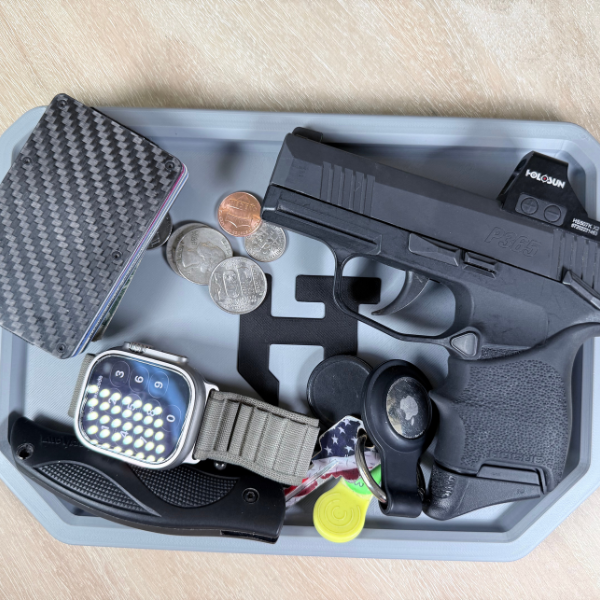
EDC dump trays
Make Carry Comfort “Forgettable” All Day—And Quiet at Night

Pair a disciplined de-kit routine with Zero-G comfort. The Cloudster Pillow holster wedge uses adjustable shredded cooling gel memory foam and breathable materials to smooth harsh Kydex edges and keep carry consistent from sunrise to lights-out.
For the modern concealed carrier, the day doesn’t end when you walk through the front door. It ends when you de-kit—holster off, belt loosened, pockets emptied, and your life-saving tools staged where they belong. Most of us learn the daytime habits first: consistent carry, consistent draw, consistent awareness. But the night routine is where many setups quietly fall apart.
If you’ve ever tried to de-kit at 2:00 a.m. after a late shift, a road trip, or a long day with the family, you already know the problem: your gear is loud. The hard clack of Kydex on a wood nightstand. The metallic tap of a slide or flashlight bezel. The jingle of keys that somehow sounds like you’re emptying a toolbox in a silent house.
That noise matters. It can wake a spouse, stir kids, or announce your movements when you would rather remain discreet. And beyond noise, there’s the bigger issue: once the gear hits the surface, it can migrate, pile up, or get buried. In a low-light emergency, disorganization turns into delay.
This is where EDC dump trays earn their keep. They aren’t just “nice organizers.” They are a quiet, repeatable system for staging critical tools, protecting your equipment, and building blind-reach consistency in the dark. Think of them as the off-body counterpart to a dialed-in holster setup: the same calm, controlled, professional approach—just moved from your belt line to your home base.
The Silent De-Kit: Why Noise Discipline Belongs at Home
In professional environments, noise discipline is treated as a real variable. It’s not theatrical. It’s practical: unnecessary sound is unnecessary information. At home, the stakes are usually different, but the principle still applies. Quiet transitions keep the household calm, reduce friction, and help you maintain a low profile when you want one.
Most daily carry gear is built for durability, not silence. Kydex holsters are rigid by design. Metal keys are metal. High-lumen flashlights often have hard anodized aluminum bodies. And many nightstands are bare wood, glass, or lacquered surfaces that amplify impact noise.
EDC dump trays solve this with one simple concept: controlled landing. A tray with a lined interior, a soft base, or a material that absorbs impact turns a harsh clack into a muted thump. That difference is huge at night. You can de-kit quietly, keep the peace, and avoid the awkward “Sorry, didn’t mean to wake you” moment that follows a loud gear dump.
Quiet matters for safety, too. When you’re tired, the risk of fumbling increases. A soft, bounded tray reduces dropped items and the scramble that follows. Fewer fumbles means fewer chances for mistakes.
Boundaries Beat Flat Surfaces
A bare nightstand is a flat, featureless plane. It doesn’t guide you. It doesn’t stop movement. And it doesn’t keep items separated. When your phone vibrates, it nudges your wallet. When you set a glass down, it bumps your light. When you reach for a charger cable, you sweep other items out of alignment.
EDC dump trays create physical boundaries—raised edges and compartments that keep items from migrating. Those edges do more than keep things tidy. They create a tactile index point you can find in the dark.
In a low-light situation, the first thing your hand needs isn’t the object—it’s the reference. A tray edge is a reference. Once your fingers touch it, you instantly know where you are. That’s the foundation of blind-reach capability.
Blind-Reach Capability: Finding Gear in Total Darkness
Stealth isn’t only about being quiet. It’s about being certain. In the middle of the night, you may wake disoriented. Your vision may be compromised. Your heart rate may spike. Your mind may be trying to catch up to what your ears just heard. This is not the time to play “search-and-feel” across a cluttered nightstand.
EDC dump trays enable blind-reach capability by standardizing placement. You use the same layout every night, so your hands can locate tools without visual confirmation.
A practical indexing layout looks like this:
- Phone: same corner every night, screen facing up, charging cable routed consistently.
- Flashlight: same slot, bezel-forward, so it’s oriented for immediate use.
- Spare magazine: a dedicated compartment away from keys and coins.
- Firearm: staged in the tray’s gun zone, grip-up, consistent angle for a clean acquisition.
This isn’t about turning your bedroom into a movie set. It’s about building repeatable habits. Under stress, your brain leans on the familiar. The USCCA’s training content consistently reinforces the concept that preparation and repetition drive performance when it matters. A disciplined staging routine is repetition you can maintain every night with minimal effort.
Once you’ve trained the habit, you don’t think. You reach. Your fingers hit the tray edge. Your hand finds the flashlight. Or the phone. Or the grip. That’s the point.
The Psychological Transition: Ending the Carry Phase
Carrying concealed is a responsibility that creates a low-level state of alertness. It’s not anxiety—it’s awareness. You manage retention. You manage concealment. You keep track of where your defensive tool is at all times. Even if you’re calm, your brain is doing work.
A structured de-kit routine creates a clean mental transition. When you place your gear into EDC dump trays, you’re telling your brain: the carry phase is over, the home phase begins. It’s a small ritual, but it matters.
That transition also reduces administrative errors. Many negligent discharges and close calls happen during tired, distracted handling—not during intentional practice. The more you can make your routine calm and repeatable, the less you rely on “being careful” when you’re exhausted.
Safety resources like the NRA firearm safety materials emphasize consistent safe handling and reducing opportunities for mistakes. A bounded, designated staging area helps by controlling where objects go and how they interact.
Quiet Staging Isn’t a Substitute for Secure Storage
It’s important to be clear: a tray is a staging tool, not a safe. If there are children, guests, or unauthorized individuals in the home, quick-access secure storage is the responsible standard. A tray shines when you have control over access and need a consistent, quiet landing zone within that secure environment.
In other words, use the right tool for the right job: a safe for security, EDC dump trays for consistency and staging.
Protecting Your Investment: Gear and Furniture
Quality EDC equipment is expensive. A dependable light, a solid folding knife, a good belt, an optic-ready pistol—these items represent thoughtful choices and real money. Tossing them onto bare surfaces every night is a fast way to accumulate wear.
A tray protects gear finishes by preventing metal-on-wood contact and reducing friction from sliding items. It also protects your furniture. Nightstands can develop “Kydex rash”—a grid of scratches and scuffs created by holsters dragged across the surface over months and years. It’s not a catastrophe, but it is avoidable.
EDC dump trays act as the sacrificial surface: the tray absorbs the wear, not your gear and not your furniture.
Material Choices: Lined, Leather, Kydex, and Hybrid Trays
Different trays achieve the same purpose in different ways. The best choice depends on your priorities: noise reduction, durability, cleaning ease, and how you stage your firearm.
- Lined trays: Excellent for noise reduction. Soft interiors dampen the impact of metal and polymer.
- Leather-lined organizers: Quiet and protective, with a premium feel. Great for optics and delicate finishes.
- Kydex-style trays: Extremely durable and easy to clean. While Kydex itself is rigid, many designs pair it with a softer base to reduce sound.
- Hybrid trays: Best of both worlds—structured compartments with softer contact surfaces.
Regardless of material, the functional goal remains the same: consistent placement, reduced movement, and a quiet landing zone.
Where Cloudster Pillow Fits in the System
Cloudster Pillow started with a mission centered on comfort—because comfort drives consistency, and consistency supports security. If your holster punishes you, your carry habits suffer. That’s why our holster wedge is built around adjustable shredded cooling gel memory foam and breathable materials designed to reduce harsh contact points and keep your setup stable.
That same “friction-free” philosophy applies at home. A good system doesn’t end when you remove your holster. Your on-body experience and your off-body organization should work together.
When your holster is more comfortable, you’re more likely to carry consistently. When your de-kit routine is quiet and standardized, you’re less likely to mishandle or misplace gear at night. The connection is simple: comfort supports discipline, and discipline supports readiness.
If you’re still dialing in comfort and concealment, start with the foundation. Our guide on making an IWB holster more comfortable breaks down practical adjustments and why they matter over long days.
Building Your Silent De-Kit Routine
The best systems are boring in the best way: they work every time. Here’s a practical approach to building a silent de-kit routine with EDC dump trays:
- Pick one primary location: nightstand, dresser, or a dedicated shelf. Keep it consistent.
- Stage the tray so you can index it: align it with the nightstand edge so your hand finds it instantly.
- Assign zones: phone zone, light zone, keys zone, and firearm zone.
- Route cables intentionally: keep charging cords outside of the firearm zone to prevent snagging.
- Practice the placement: do it the same way for a week. It becomes automatic.
Once established, the routine becomes faster and quieter than dumping your gear randomly—because you’re no longer thinking about where things should go. You already know.
Low-Light Readiness: Light First, Then Information
In a nighttime bump-in-the-dark scenario, light often becomes your first tool. A handheld light lets you identify what’s happening without immediately escalating to worst-case assumptions. Many training discussions emphasize positive identification and decision-making before action. The NSSF safety resources are a solid place to reinforce the broader idea that safe, responsible handling includes thoughtful processes, not impulsive reactions.
This is another reason EDC dump trays matter: you can stage your flashlight in a consistent, bezel-forward orientation so it’s immediately usable. You don’t want to fumble for the tail switch or grab it backwards when you’re half awake.
When the tray layout is consistent, your sequence becomes consistent too: locate tray edge, grab light, assess, then decide. That’s calm readiness instead of panicked searching.
FAQs
1. What are EDC dump trays?
They are structured organizers designed to stage everyday carry items—like phone, keys, flashlight, and a defensive tool—in a consistent, protected layout.
2. How do EDC dump trays help with quiet de-kitting?
They dampen impact noise by providing a controlled landing surface, often with softer interiors or bases that reduce the clack of metal and Kydex on hard furniture.
3. What is blind-reach capability?
It’s the ability to locate critical tools in total darkness using touch and muscle memory, supported by consistent placement within a bounded tray.
4. Are EDC dump trays a replacement for a safe?
No. They are staging tools. If unauthorized access is possible, secure storage remains the responsible option.
5. What should I stage closest to my dominant hand?
Typically your flashlight and phone, staged consistently. Your defensive tool should be staged intentionally and safely in its designated zone, without interference from other items.
6. Do trays prevent the “Nightstand Slide”?
Yes. Raised edges and compartments keep items from drifting, stacking, or getting buried under cables and clutter.
7. What’s the best way to route charging cables?
Keep cables outside the firearm zone and anchored along one side of the nightstand so they can’t drift into the tray and snag other items.
8. Can I use EDC dump trays outside the bedroom?
Absolutely. Many carriers use a second tray by the front door or at a desk to create a consistent de-kit and re-kit station.
9. Will a tray protect my gear finishes?
Yes. It reduces metal-on-wood contact, prevents sliding abrasion, and separates sharp items like keys from delicate surfaces like optics.
10. How does Cloudster Pillow connect to the silent de-kit concept?
Cloudster focuses on comfort that drives consistent carry. A quiet, organized staging routine complements that by maintaining a friction-free transition from on-body comfort to off-body organization.
Complete the Comfort-to-Readiness System

Make carry truly forgettable with Zero-G comfort. The Cloudster Pillow holster wedge features adjustable shredded cooling gel memory foam and breathable materials to keep your setup stable, comfortable, and consistent every day.
Gear Up Your Everyday Carry
Building the perfect EDC setup? What rides on you matters as much as the tray it lands on at night:
- Cloudster Pillow holster wedge — ends holster printing and all-day dig.
- Kore USA gun belt — keeps your holster and gear from sagging.
- Pocket Mag Carrier — a spare magazine, ready without a second holster.
