
EDC Gear
Gear Preservation: How an EDC Valet Tray Protects Your Optic and Finish
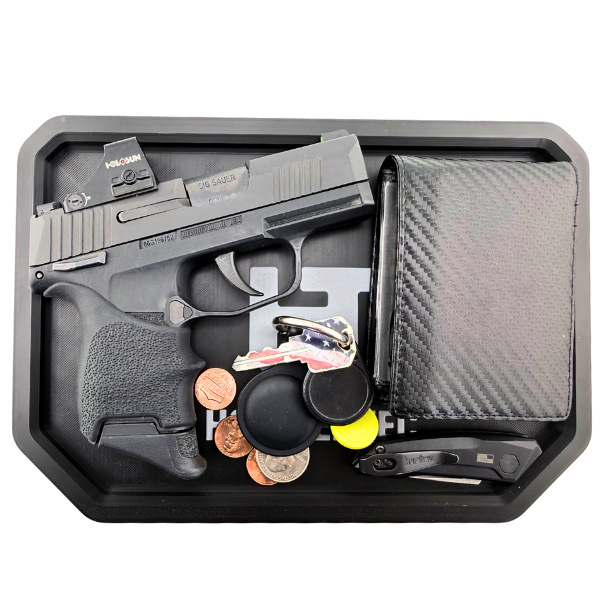
EDC valet tray
Protect Your Carry Setup with Zero-G Comfort

Keep carry consistent with a Cloudster Pillow holster wedge. Adjustable shredded cooling gel memory foam and breathable materials smooth harsh holster edges for truly forgettable carry—so your gear stays on you when it matters.
Every piece of gear you carry is an investment in your personal safety. Your firearm, optic, light, knife, and other essentials aren’t just “stuff”—they’re tools you’ve chosen because you trust them. Many carriers run upgraded slides, premium coatings, and red dot optics specifically because they want performance and reliability when it counts.
But there’s a quiet truth that doesn’t get talked about enough: most gear damage doesn’t happen on the range or in a hard-use scenario. It happens at home. It happens when you toss your pistol onto a granite countertop, drop your light next to your optic, or dump keys into a pile that slowly grinds away at finishes night after night.
An EDC valet tray is the simplest way to stop that slow, unnecessary wear. It isn’t “furniture.” It’s a protective dock for your tools—a soft landing zone that preserves your optic, protects your finish, and keeps your home staging predictable.
Why Off-Body Care Matters as Much as On-Body Carry
Carriers spend a lot of energy dialing in their on-body setup: holster choice, ride height, cant, belt tension, wedge tuning, concealment geometry. That’s the visible part of the system. But the off-body part—what happens when the holster comes off—can either support your habits or quietly undermine them.
A consistent staging solution reduces the chance of:
- Unnecessary optic scratches and lens damage.
- Finish wear from repeated contact with hard or abrasive surfaces.
- “Drawer chaos” where parts, coins, and keys become a sandpaper pile.
- Misplacement and slow retrieval during low-light moments.
An EDC valet tray turns your de-kit routine into a repeatable, professional habit: gear goes here, in this orientation, every time. That predictability is part of readiness.
Why Your Gear Needs a “Soft Landing”
Modern firearms and EDC tools often feature advanced surface treatments like Cerakote, nitride, and DLC. These coatings are tough, but they’re not magic. They resist corrosion and general wear, but repeated abrasion will still create visible marks—especially on high-contact edges like slide corners, muzzle ends, optic housings, and magazine baseplates.
Hard home surfaces accelerate that wear:
- Granite and stone: extremely hard, often with microscopic grit that scuffs coatings over time.
- Tile: unforgiving impact surface that can chip coatings and dent edges.
- Hardwood: may seem “soft,” but dust and grit can still grind into finishes with repeated movement.
An EDC valet tray provides a controlled surface—often lined, textured, or naturally non-marring—so your gear isn’t repeatedly contacting abrasive materials. In practical terms, it’s the difference between “resting” your tools and “dropping” them.
If you prefer a premium feel, a leather EDC tray is particularly effective because it’s naturally gentle on finishes and tends to age well over time. If you prefer maximum durability, polymer options can be excellent, especially when paired with a soft insert or base.
Protecting the Glass: Optic Safety Done Right
Red dot sights have become mainstream in the concealed carry world for a reason: faster target acquisition, easier tracking, and improved accuracy for many shooters. But optics are also one of the easiest upgrades to damage at home.
Most optic “incidents” happen in one of three ways:
- Lens contact: the glass gets scratched by keys, a flashlight bezel, or a knife clip.
- Impact bumps: the optic housing smacks a hard object when the pistol slides or tips.
- Clutter collisions: gear piles shift and settle, and the optic becomes a contact point without you realizing it.
An EDC valet tray solves this by creating a fixed, intentional home for the firearm. Instead of allowing the pistol to slide into other objects, the tray’s boundaries and compartments separate items. When staged correctly, the optic is suspended in open air above the tray’s surface or isolated in a dedicated area where nothing else can strike it.
This doesn’t just protect the lens. It protects your consistency. Your optic’s condition—and your confidence in it—shouldn’t depend on how carefully you managed a cluttered nightstand after a long day.
For responsible ownership and safe handling fundamentals, the NSSF safety resources are worth keeping in your rotation. Safe, consistent storage habits are part of the larger responsibility.
Preventing Chemical Migration: Protect Your Gear and Your Home
Firearm lubrication and cleaning products are great for corrosion resistance and function. They are not great for furniture.
Place a freshly oiled pistol directly on wood and you may get:
- Dark staining where oil seeps into the grain.
- Clouding or softening of finishes over time.
- Permanent marks that don’t wipe off.
An EDC valet tray creates a barrier between your tools and your home surfaces. Whether you choose polymer, leather, or a lined dump tray, the function is the same: keep lubricants where they belong and avoid slow, permanent damage to your nightstand, dresser, or entry table.
It also keeps your gear cleaner. Instead of setting a pistol on a dusty surface where grit can cling to oil and get pulled back into contact points, you’re using a dedicated staging area you can maintain easily.
Finish Wear Isn’t Only Cosmetic—It Can Affect Function
Some wear is purely cosmetic. Holster wear happens. Everyday carry creates marks. That’s life.
But there’s a difference between inevitable carry wear and unnecessary off-body abrasion. When a firearm slides across grit on a countertop or bounces against hard objects nightly, you can accumulate wear in places you didn’t intend—optic housings, lens coatings, and corners that may later snag or catch on other gear.
An EDC valet tray reduces that unnecessary abrasion so the wear you do get comes from normal use, not from avoidable home staging mistakes.
The Readiness Factor: Organization as a Safety Multiplier
Organization is a pillar of responsible ownership. A scattered pile of gear looks casual. A staged setup looks intentional. More importantly, it behaves intentional.
When you stage your tools in a consistent layout, you get:
- Predictable access: you know exactly where each item is in low light.
- Reduced handling: less fumbling means fewer chances of drops or mistakes.
- Trigger isolation: fewer random objects near your holstered firearm.
Training communities often emphasize that under stress you default to habit. That principle doesn’t only apply to shooting—it applies to retrieval and staging. The USCCA regularly reinforces preparedness and repeatability as part of responsible carry. Your nightstand routine is an extension of that mindset.
Where Cloudster Pillow Fits: Comfort That Keeps You Carrying
Cloudster Pillow is focused on one core idea: comfort drives consistency, and consistency supports security. If carry hurts, you’re less likely to do it daily. If comfort is solved, you stop negotiating with yourself.
That’s why the Cloudster Pillow holster wedge uses adjustable shredded cooling gel memory foam and breathable materials. It’s designed to soften the harsh edges of Kydex and create Zero-G comfort so carry becomes truly “forgettable.”
Gear preservation and carry comfort are connected. When you carry more consistently, you also de-kit more consistently—and that’s when staging matters. Pairing a comfortable on-body setup with an intentional off-body dock is how you keep your tools ready and protected around the clock.
If you want to refine on-body comfort alongside your overall system, our article on how to make your IWB holster more comfortable is a strong starting point, and our guide on why comfort matters for concealed carry explains the comfort-to-consistency-to-security chain in practical terms.
How to Set Up an EDC Valet Tray for Maximum Protection
To get the full benefit of an EDC valet tray, set it up with intention. The goal is separation and repeatability.
- Firearm zone: keep it isolated from keys, coins, and hard objects. If you stage it holstered, ensure nothing can enter the holster mouth.
- Optic clearance: position the gun so the optic isn’t the contact point against the tray edge.
- Light placement: keep flashlight bezels away from the pistol and optic.
- Keys and metal: put keys in their own compartment so they can’t migrate into the firearm area.
- Maintenance routine: wipe the tray occasionally—especially if you store gear with light oil on it.
Done right, your gear lands softly, stays separated, and remains in the same condition you left it—ready for the next day.
FAQs
1. What is the difference between an EDC valet tray and a regular tray?
An EDC valet tray is designed for daily carry gear, often featuring protective surfaces, compartmental separation, and layouts that reduce finish wear and gear collisions.
2. Can an EDC organizer tray protect my red dot optic?
Yes. By separating items and keeping the firearm staged consistently, it reduces the chance of lens contact or impacts from other hard gear.
3. Is a leather EDC tray better than a plastic one?
Leather is naturally gentle on finishes and offers a premium feel. Polymer is rugged and easy to clean if it gets oily. The best choice depends on your priorities.
4. How does an EDC tray with gun holder work?
Many designs include a dedicated slot or stabilizing section that helps keep the pistol oriented consistently, reducing movement and protecting the optic from collisions.
5. Will an EDC valet tray damage my table?
Most are designed with protective bottoms like rubber feet or felt to prevent surface damage, even when holding heavier gear.
6. What should I look for in a dump tray?
Look for appropriate size, non-marring contact surfaces, and compartments that separate metal items from your firearm and optic.
7. Can I wash my everyday carry dump tray?
Polymer trays typically wipe clean easily. Leather trays can be wiped carefully and conditioned occasionally to maintain softness and longevity.
8. Why is it called a “valet tray”?
The term comes from traditional valet service—collecting and staging personal items in one place—adapted today for modern daily carry tools.
9. Does an EDC tray help with safety?
Yes. It reduces clutter, keeps items from migrating, and supports consistent staging so your firearm isn’t buried under other objects.
10. Where is the best place to put an EDC valet tray?
Most people place one on a nightstand for consistent staging or near an entryway as a dedicated de-kit station when arriving home.
Zero-G Comfort That Keeps You Consistent


Protect your readiness by carrying every day—comfortably. Cloudster Pillow’s adjustable shredded cooling gel memory foam and breathable materials deliver forgettable carry so your setup stays on-body, stable, and secure.
Gear Up Your Everyday Carry
Building the perfect EDC setup? What rides on you matters as much as the tray it lands on at night:
- Cloudster Pillow holster wedge — ends holster printing and all-day dig.
- Kore USA gun belt — keeps your holster and gear from sagging.
- Pocket Mag Carrier — a spare magazine, ready without a second holster.
