AIWB Holster Wedge, Appendix Carry, Carry Techniques and Optimization, CCW Courses and Tips
All Day Carry Concealed Tips You Can Use With Confidence
All Day Carry Concealed Tips You Can Use With Confidence
 Carrying a firearm all day means finding the right balance between security, comfort, and concealment. Most CCW carriers struggle with pressure points, printing, or simply staying confident during long hours of wear.
At Cloudster Pillow, we’ve seen firsthand how the right setup transforms your daily carry experience. This guide covers all day concealment tips that work in real life, from holster selection to clothing strategies and the training habits that keep you ready.
Which Holster Position Works Best for All-Day Carry
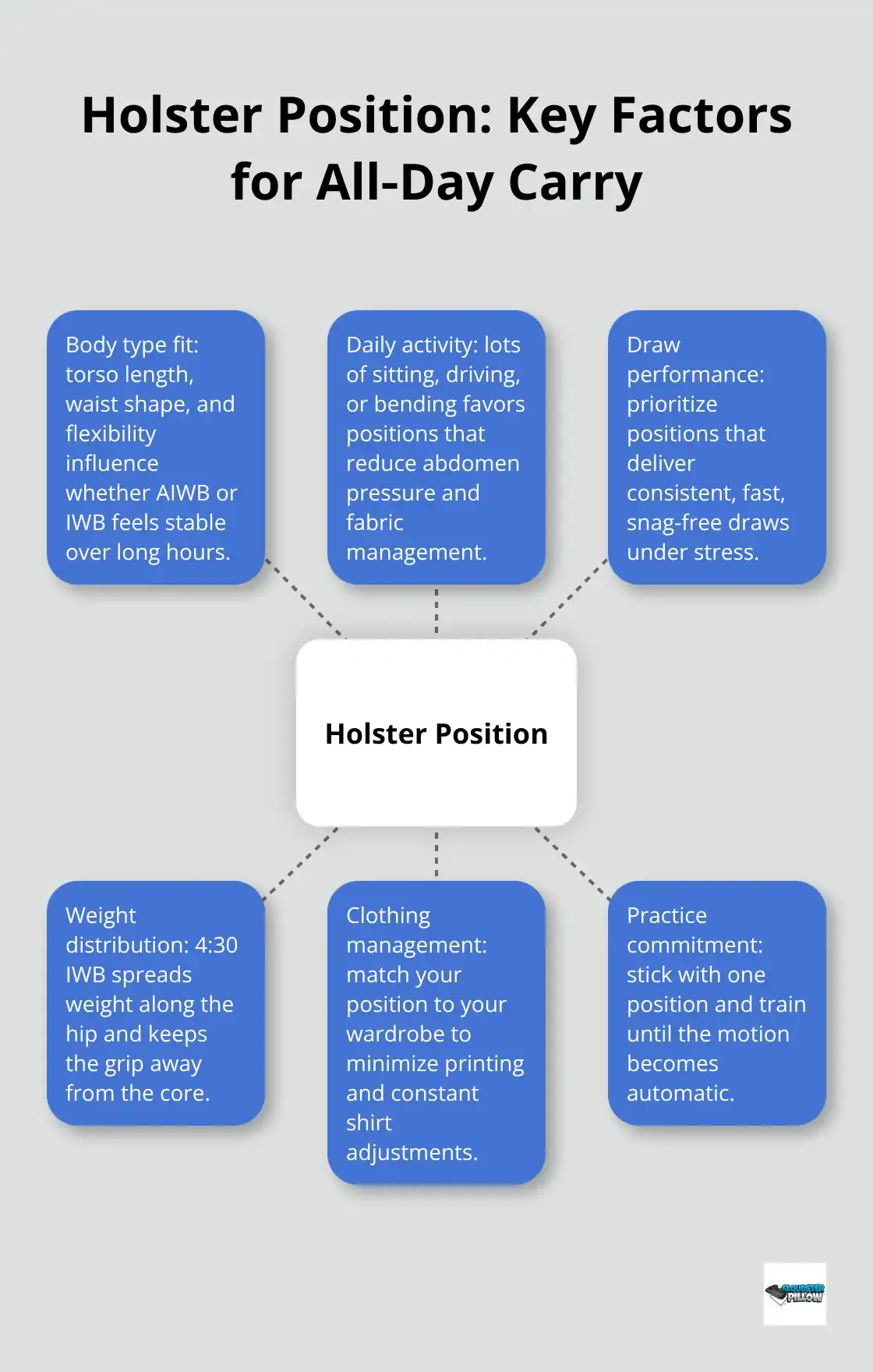
Your holster choice determines whether you’ll carry comfortably for eight hours or abandon your setup by noon. AIWB and IWB represent fundamentally different approaches, and the decision hinges on your body type, daily activities, and draw speed-not on what’s trendy. Appendix carry has gained popularity among content creators and trainers, but that doesn’t mean it’s superior for everyone. If you’re carrying a full-size 9mm and sit for most of your day, appendix positioning creates pressure against your abdomen and forces uncomfortable fabric management during seated work. IWB at 4:30 (strong side hip) remains the more practical choice for long office hours because it distributes weight across your hip and keeps the gun away from your core. The real test: can you draw quickly and accurately from your current position under stress? If you hit targets consistently from 4:30 with a quality holster, switching to AIWB won’t meaningfully improve your readiness. What matters is that you practice with whatever position you choose and that your holster supports a clean, snag-free draw every single time.
Material Quality Separates Comfort From Pain
Kydex holsters dominate the concealed carry market for good reason-they retain your firearm securely, they don’t absorb sweat, and they maintain their shape after thousands of draws. Soft holsters and belly bands feel comfortable initially but create retention problems and inconsistent draw angles that undermine your training progress. When you upgrade from a soft holster to rigid Kydex, you immediately notice improved draw consistency and reduced printing because the gun stays exactly where you positioned it. Durability matters for all-day wear because a holster that shifts, sags, or deforms will cause pressure points and force you to constantly adjust your clothing. Try holsters with reinforced stitching, quality hardware, and construction that’s been tested under real-world conditions rather than just theoretical scenarios. A sturdy belt rated for holster carry is equally critical-your regular leather belt won’t support the weight of a loaded firearm without sagging, which throws off your entire concealment geometry. Invest in a quality gun belt and a Kydex holster designed for your specific firearm, and you’ve eliminated two major sources of all-day discomfort.
Retention and Draw Speed Work Together
A holster must hold your firearm securely enough that it won’t fall out during normal movement, bending, or climbing stairs, but it also must release cleanly when you need access. Many carriers overlook this balance and choose holsters with retention that’s either too loose or too tight. Too loose, and your gun shifts throughout the day; too tight, and your draw becomes sluggish or inconsistent. Test your holster’s retention by holding it upside down and shaking it firmly-your gun shouldn’t move. Then practice your draw stroke at least fifty times dry to confirm the gun releases smoothly and returns to the holster without catching. This matters because pressure points and printing often result from a carrier constantly adjusting a holster that isn’t retaining properly. A well-designed holster with proper retention also reduces the mental burden of carrying because you stop wondering if your firearm is secure and start focusing on awareness and daily tasks.
Finding Your Comfort Edge
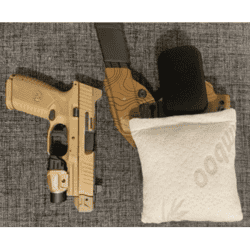
Even the best holster creates some pressure against your body during extended wear. The contact points where your holster digs into your hip, abdomen, or ribs accumulate discomfort over eight or ten hours. Holster wedges address pressure points by tilting the top of your firearm closer to your body without replacing your existing holster system. Designed by everyday CCW users, they enhance all-day concealment for both AIWB and IWB setups. This approach lets you keep the holster you’ve trained with while solving the comfort issues that force many carriers to abandon their carry routine. Your next step involves testing your current holster position and identifying which pressure points affect you most during a typical day.
How to Stay Comfortable During Long Carry Days
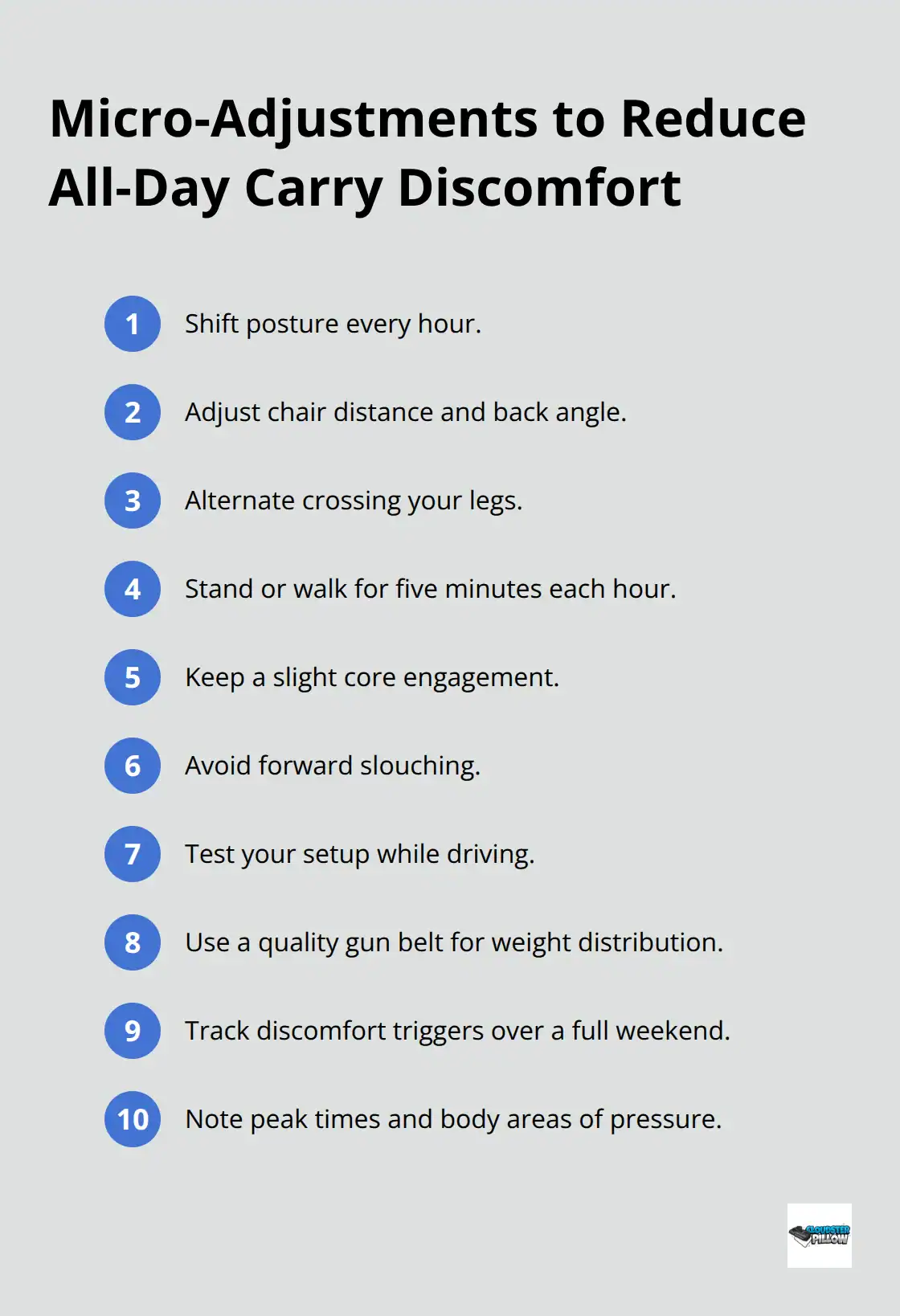
Your body position throughout the day directly impacts whether your holster creates pressure points or distributes weight evenly. Most carriers make the mistake of choosing a holster position and then keeping it static, but your comfort depends on adapting your posture to your carry setup. If you carry IWB at 4:30, sitting for eight hours with the same hip angle forces constant pressure against your lower ribs and hip bone. Shift your seated posture every hour-adjust how far back your chair sits, cross your legs periodically, or stand and walk for five minutes. These micro-movements prevent pressure from accumulating in one spot and reduce the mental fatigue that comes from fighting discomfort.
Test Your Position in Real Environments
When you drive, your body angle changes dramatically compared to sitting at a desk, so test your carry position in your car before committing to all-day wear. AIWB carriers face different challenges during seated work because forward bending compresses the holster against your abdomen. Sit further back in your chair, keep your core engaged slightly, and avoid slouching forward-this single postural adjustment eliminates most of the pressure AIWB carriers report during desk work. Your clothing strategy matters equally because the wrong fabric choices force you to adjust your position constantly to prevent printing.
Choose Fabrics That Support Concealment
Wear untucked shirts, oversized button-ups, or layered tops that add visual bulk without clinging to your gun’s outline. Avoid tight athletic wear, fitted t-shirts, or anything with stretch fabric that molds to your body shape. Many carriers underestimate how much a proper belt contributes to comfort-a quality gun belt distributes holster weight across your entire waist rather than concentrating it at one pressure point. Test your setup for a full weekend before declaring it ready for all-day work, and track which positions or activities cause discomfort so you can adjust your approach.
Identify Where Pressure Points Develop
Pressure points accumulate gradually, so what feels fine for two hours often becomes painful by hour six if your holster design or body position creates constant contact stress. Most carriers experience discomfort at their hip bone, lower ribs, or the top edge of their holster where it digs into soft tissue. A holster wedge redistributes pressure by tilting your firearm’s grip closer to your body, reducing the gap between the holster and your torso that causes pressure to concentrate in one spot. This approach works because it addresses the root cause of discomfort rather than asking you to simply tolerate pain throughout your day.
Track Your Pain Patterns for Three Days
Some carriers add a thin foam pad or athletic tape under their holster, but this creates a temporary fix that shifts with movement. Instead, invest in a holster wedge designed for your specific carry position-AIWB setups benefit from wedges that are 15-20mm thick at the muzzle end, while IWB wedges work best at 10-12mm. Your daily activities determine which pressure points develop, so a carrier who sits all day experiences different stress than someone on their feet constantly. Track your pain patterns for three days, noting the time of day when discomfort peaks and which body areas feel the most pressure. This data helps you diagnose whether your problem is holster position, body posture, clothing fit, or a combination of factors. Once you identify the real cause, solving it becomes straightforward instead of purchasing new gear repeatedly hoping something feels better. The next step involves building the training habits and mental framework that transform your carry setup from uncomfortable equipment into a natural part of your daily routine.
Building Real Carry Readiness
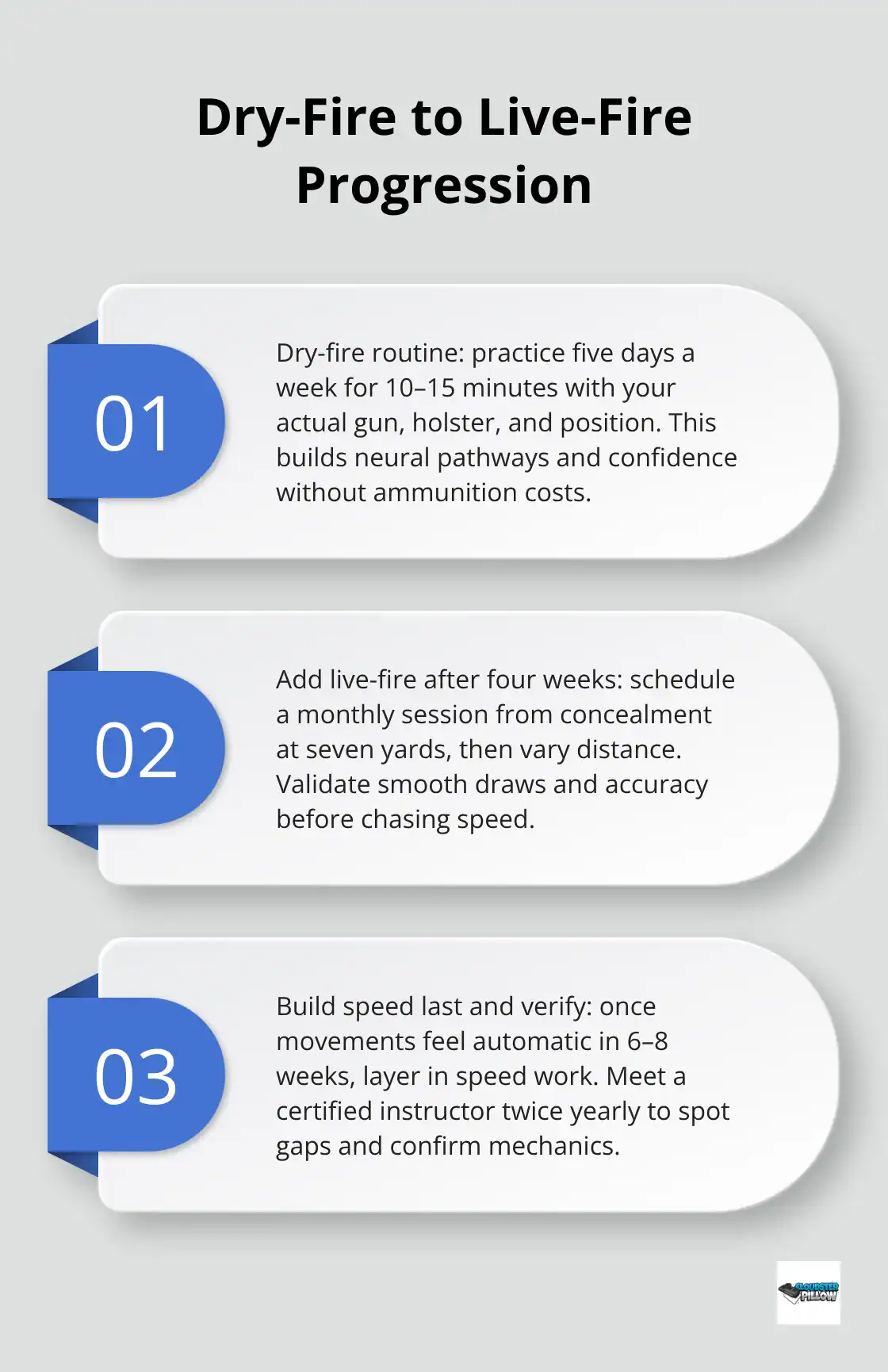
Carrying a firearm daily demands more than a comfortable holster-it requires deliberate training habits that transform your draw from occasional practice into reliable muscle memory. Most CCW carriers practice once or twice a year at a range, then expect their skills to hold up under stress. This approach fails because your nervous system forgets what your muscles learned months ago. Instead, commit to dry-fire practice consistency at home five days a week for ten to fifteen minutes, using your actual carry gun and holster in your actual carry position. Dry-fire drills cost nothing, require no ammunition, and build the neural pathways that matter most during a defensive encounter.
Master Dry-Fire Before Live Fire
Start with simple repetitions: draw from your holster, press the gun to target, and reholster smoothly fifty times without rushing. Track how your draw speed improves week to week, and you’ll notice your confidence growing alongside your physical consistency. After four weeks of regular dry-fire work, add a monthly live-fire session at a range where you shoot from your carry position, starting from a holstered draw at seven yards and working backward to understand your effective distance. Research from defensive shooting instructors shows that carriers who practice dry-fire consistently hit targets faster and more accurately under stress than those who only shoot at annual range trips.
Your training progression should follow a simple path: master dry-fire consistency first, add live-fire accuracy second, and build speed last. Many carriers reverse this and chase fast draws before they can hit targets reliably, which wastes ammunition and builds bad habits. Spend your first month focused purely on smooth, clean draws where your gun arrives at target level and you press the trigger with proper sight alignment. Speed comes naturally once the movement becomes automatic, usually within six to eight weeks of consistent practice. Work with a certified firearms instructor at least twice yearly to identify any gaps in your technique and verify that your carry position supports your actual draw mechanics.
Establish Your Daily Verification Routine
Your daily carry mindset matters equally because carrying responsibly means accepting that you’re responsible for every round that leaves your barrel and everything beyond it. This mental framework prevents complacency and keeps you focused on awareness rather than fixating on your gun. Establish a morning routine that takes ninety seconds: check your holster retention by shaking it firmly, verify your gun is loaded and chamber status is correct, confirm your belt is secure and your clothing conceals properly, and mentally visualize one scenario where you’d need to draw-maybe walking to your car in a parking lot or entering a crowded store. This routine trains your brain to carry with intention instead of just habit, and it catches equipment problems before they become dangerous. Carriers who establish this daily check develop genuine confidence because they’ve verified their gear is ready rather than assuming it is.
Adopt the Right Psychological Framework
The psychology of carrying all day requires mental shifts that most training programs ignore: you must accept that carrying makes you responsible for de-escalation and awareness rather than making you safer through firepower alone. Carriers who view their gun as a confidence boost often become overconfident and take unnecessary risks, while carriers who view it as a last resort focus on avoiding confrontation entirely. This mindset distinction changes how you move through your day, where you position yourself in public spaces, and whether you stay alert or zone out on your phone. Build your daily routine around this reality by scanning your environment when you enter a new space, noting exits and potential threats, and avoiding distractions that prevent you from noticing changes around you.
Combine Training With Practical Comfort Solutions
Carriers who combine consistent dry-fire practice with this mental framework develop genuine readiness-they carry without anxiety because they’ve trained properly and they think clearly about their responsibilities. When pressure points or discomfort interfere with your training consistency, address them directly so your practice routine stays uninterrupted. A holster wedge designed for your carry position (whether AIWB or IWB) redistributes pressure and allows you to focus on your training rather than fighting discomfort throughout your day. This approach lets you keep the holster you’ve trained with while solving the comfort issues that force many carriers to abandon their carry routine.
Final Thoughts
All day carry concealed tips work only when they match your actual lifestyle and training commitment. Your holster system, clothing choices, and practice routine must function together as one integrated approach rather than as separate decisions. Test your current setup for a full week and track which pressure points develop and when discomfort peaks during your day-this real-world data tells you whether you need a different holster position, better fabric selection, improved posture, or a combination of all three.
Your personal comfort setup emerges through deliberate testing, not through purchasing new equipment. Spend two weeks with your current holster before deciding it doesn’t work, because your body adapts to carry pressure as your muscles strengthen and your awareness improves. If pressure points persist after two weeks of consistent wear and postural adjustments, address them directly with a solution designed for your specific carry position.
We at Cloudster Pillow designed our holster wedge specifically for carriers who’ve already found a holster they trust but struggle with pressure points during extended wear. Our wedge redistributes contact stress across your torso, allowing you to maintain your training consistency without fighting discomfort throughout your day. Whether you carry AIWB or IWB, explore our holster wedge collection to find the solution that fits your carry position and lifestyle.