
AIWB, Appendix Carry
All Day CCW Comfort: Real-World Tips for All-Day Wear
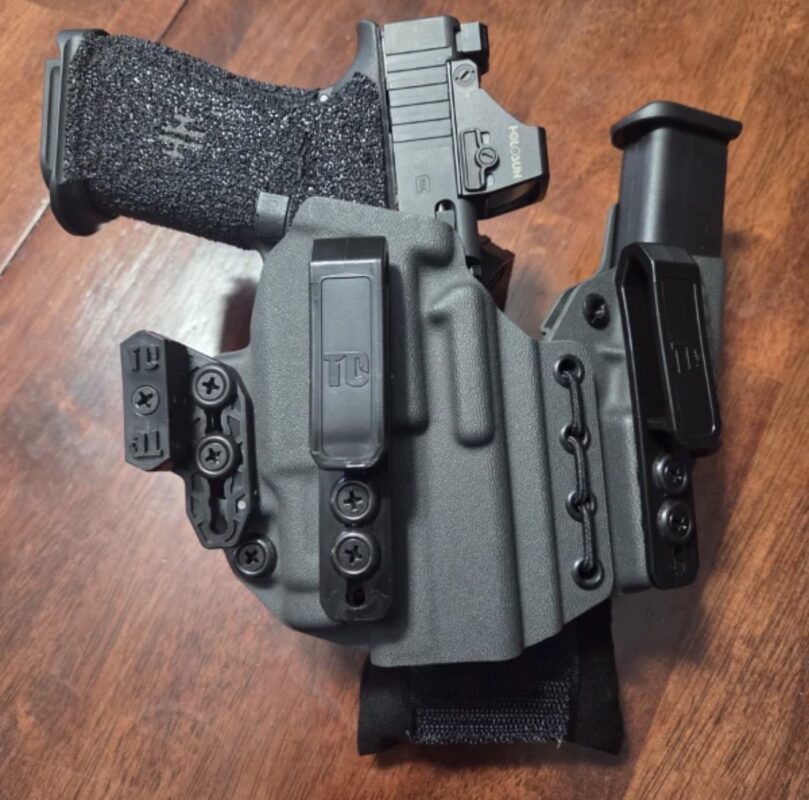
Carrying a concealed firearm every day is a commitment that most people underestimate. The physical strain of weight, pressure, and constant awareness can wear you down faster than you’d think.
At Cloudster Pillow, we’ve talked to hundreds of carriers who ditched their setups because discomfort made them inconsistent. The good news is that all day CCW comfort is absolutely achievable with the right approach and a few practical adjustments.
Why Comfort Fails for Most All-Day Carriers
The Physical Reality of Holster Strain
The moment you strap on a holster for eight, ten, or twelve hours straight, you discover what most carriers never admit: discomfort compounds. A holster that feels fine for an hour at the range becomes a pressure points by lunch. Your belt digs into your hip. The grip presses against your ribs when you sit. Sweat accumulates under the holster material.
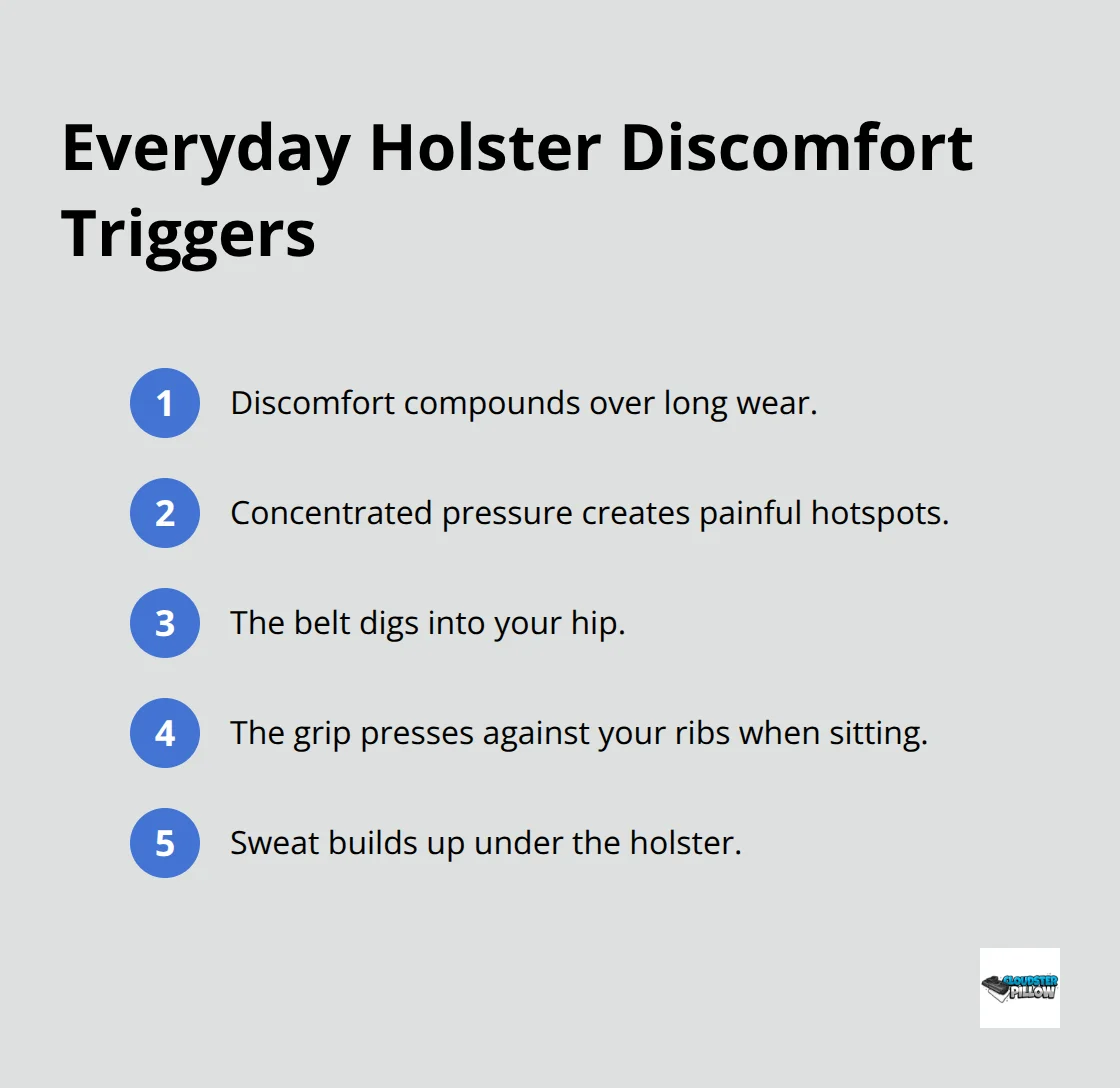
These aren’t minor annoyances-they’re the reason carriers quit.
Studies on occupational gear wear show that concentrated pressure in small areas creates measurable discomfort during continuous wear. Your body signals distress, and your mind shifts focus away from actual situational awareness and toward the gun itself. You become hyperaware of the holster’s presence, the weight distribution, whether it’s printing under your shirt.
Mental Fatigue Undermines Your Carry Habit
That mental fatigue from carrying is real and exhausting. It’s the difference between carrying naturally and carrying with constant tension. Poor comfort directly sabotages consistency because your brain associates carrying with pain, and your brain wins every time.
Carriers who struggle with all-day comfort don’t carry as often. They skip days. They leave the gun at home when they’re going to sit for hours. They choose lighter calibers that feel inadequate. They rotate between three different holster setups trying to find relief. This inconsistency undermines the entire purpose of carrying-readiness depends on habit, and habit depends on comfort being sustainable, not something you endure.
Your Body Type Determines Your Setup
The path forward isn’t accepting discomfort as the cost of carrying. It’s recognizing that your body type, your daily activities, and your specific setup determine whether all-day carry feels natural or feels like punishment. A person who sits in an office chair eight hours has completely different comfort needs than someone who moves constantly.
An appendix carry position works brilliantly for some bodies and creates unbearable pressure for others. Your clothing choices, belt quality, holster material, and even how you position the firearm in the waistband all contribute to whether you’ll actually carry every single day or just on days when you feel like tolerating the strain.
Consistency Comes From Matching Reality, Not Willpower
The carriers who maintain consistent routines don’t do it through willpower-they do it because they’ve invested time in dialing in their setup to match their real life, not some idealized version of it. This means testing different holster positions, evaluating how your body responds to pressure, and making adjustments based on what actually works for your schedule and activities. The next section covers the practical strategies that real carriers use to transform their setups from tolerable to genuinely comfortable.
Finding Your Comfort Formula
Test Your Carry Position Before Committing
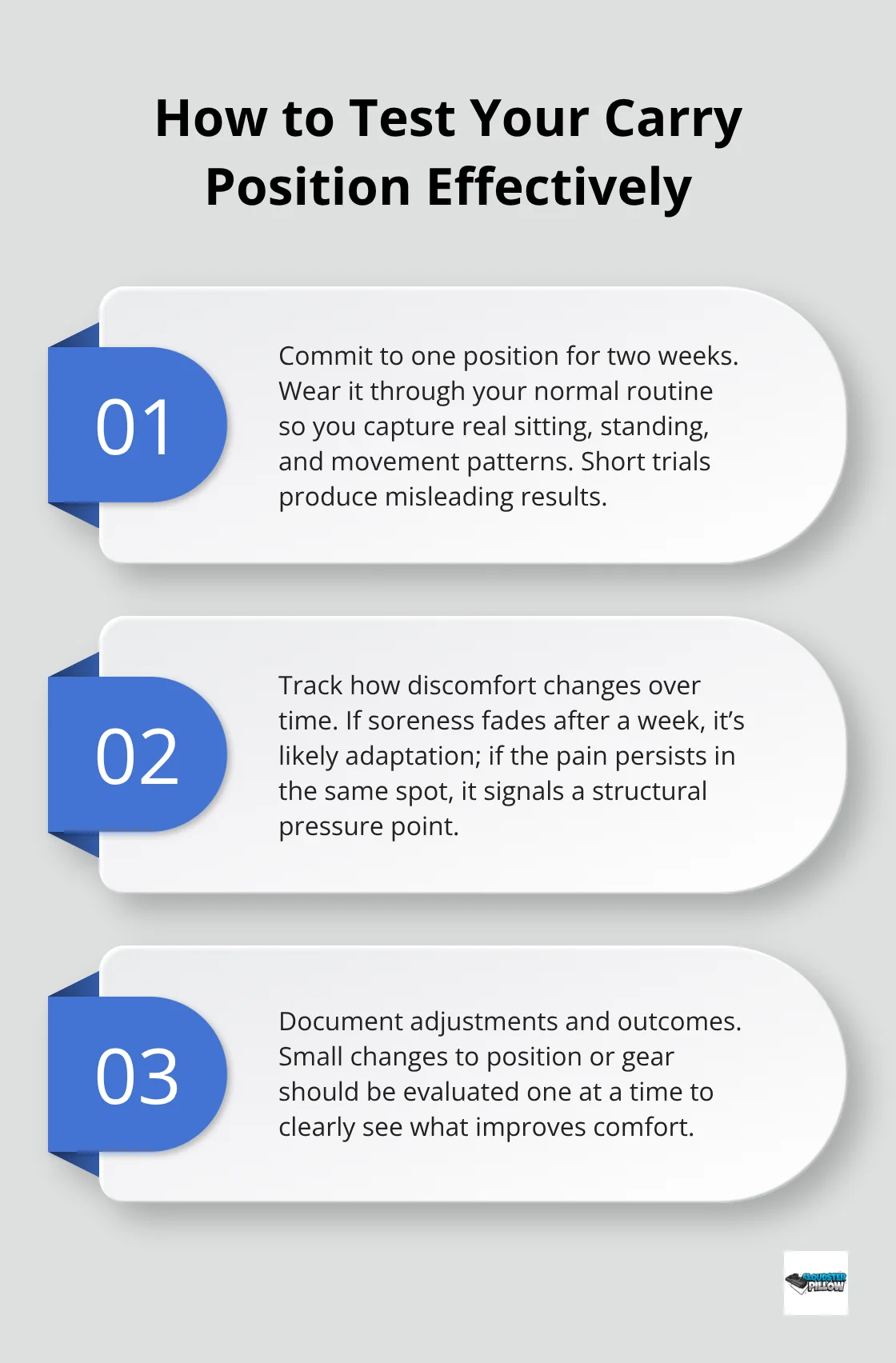
The most effective way to stop chasing comfort is to stop treating your setup as a one-size-fits-all problem. Your holster position, clothing strategy, and weight distribution need to match your actual body and your actual day, not some theoretical ideal. Start by testing different carry positions for two weeks each before deciding what works. If you sit for eight hours, appendix carry might create unbearable rib pressure, making hip or behind-the-back positions far more sustainable. If you move constantly, appendix carry could feel natural because your body position changes frequently. The only way to know is to test it on your body, in your clothes, during your real routine.
Many carriers waste months rotating between positions instead of committing to systematic testing. Pick one position, wear it for fourteen days straight, then evaluate whether the discomfort decreased as your body adapted or stayed constant. That distinction matters enormously because initial soreness from new gear often fades within a week, but structural pressure points that won’t work for your body type remain constant.
Layer Your Clothing Strategically
Your clothing layers directly control printing, which drives most carriers back to oversized shirts that feel sloppy and broadcast that something sits underneath. A properly fitted undershirt in moisture-wicking fabric creates a barrier that reduces friction and sweat accumulation while adding a subtle break between your skin and the holster. Your outer layer should be one size larger than normal to allow natural drape without tension, not two sizes larger.
A sturdy belt measuring 1.5 to 1.75 inches wide is non-negotiable because a thin belt allows the holster to shift and dig differently throughout the day as your posture and position change. Quality leather or rigid nylon both work, depending on your climate and activity level.
Add Pressure-Relief Accessories to Your Existing Holster
Holster accessories that address pressure points transform all-day wear from tolerable to genuinely comfortable. Wedge systems use viscoelastic foam that molds to your body’s shape, providing personalized support and pressure distribution to reduce hotspots where the gun presses against your body, particularly at the muzzle and grip areas. These wedges mount directly to your existing holster using adhesive hook-and-loop, so you’re not replacing your entire setup or starting over.
The asymmetrical shape mirrors your body contours and pivots the grip toward your waistband to minimize printing while the tapered spine focuses pressure away from sensitive tissue. Sizing matters: smaller bodies and compact firearms pair with small wedges, while larger frames benefit from medium or large wedges. A simple test using a folded sock under your holster helps determine the right size before you commit.
Once you’ve dialed in your position, clothing, and pressure relief, your setup stops fighting against your body and starts working with it. This foundation prepares you to address the mental side of carrying-the awareness piece that separates carriers who stick with their guns from those who abandon them after a few uncomfortable weeks.
What Real Carriers Actually Do Differently
AIWB Carriers Master Positioning and Pressure Management
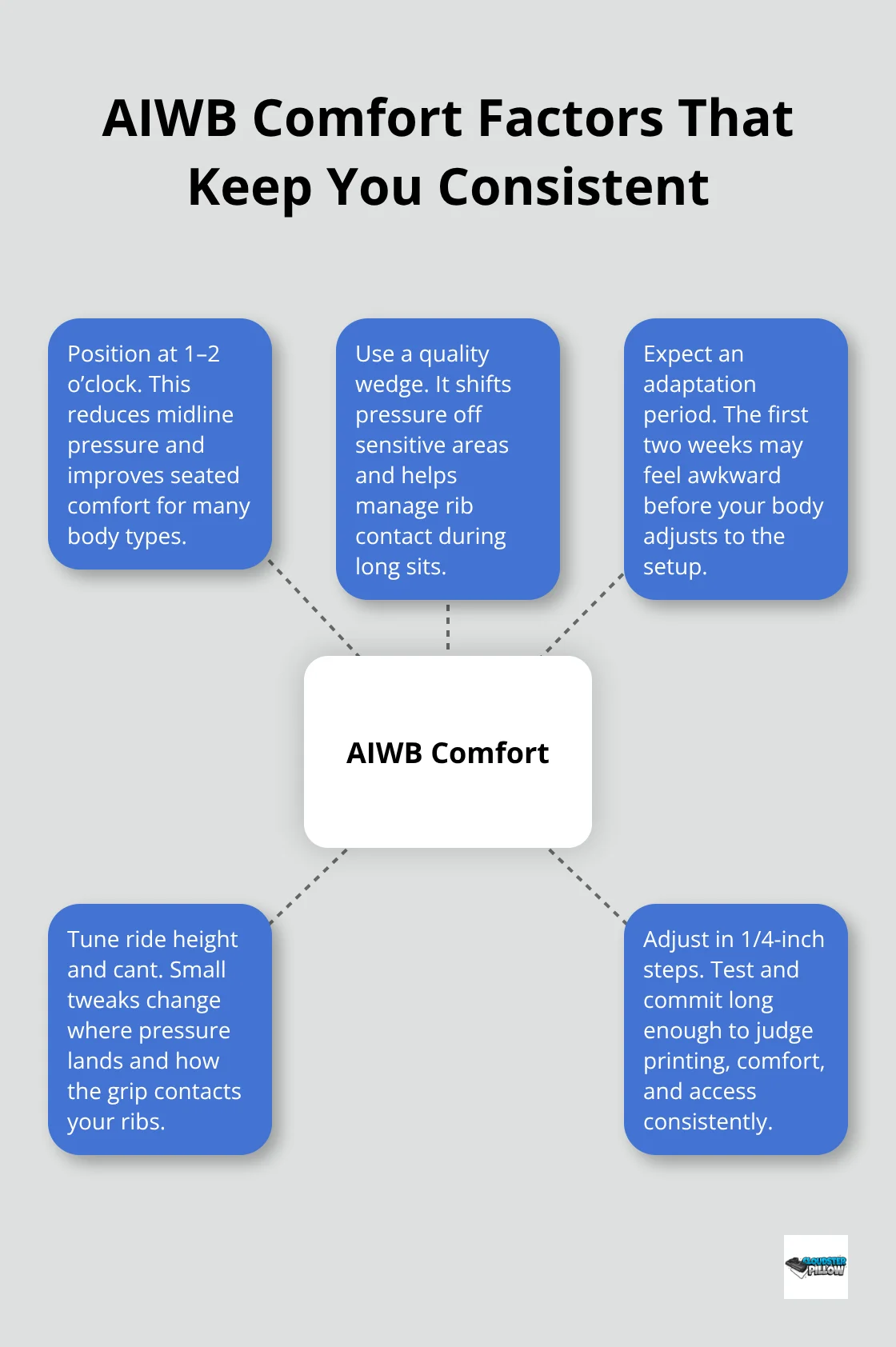
AIWB carriers who maintain consistency report that their success hinges on three specific practices: positioning the holster between 1 and 2 o’clock rather than dead-center appendix, using a quality wedge system to manage rib pressure during long sitting sessions, and accepting that the first two weeks feel awkward before their body adapts. One critical detail most carriers miss is that AIWB comfort depends on adjustable ride height and cant angle. Too high and the grip digs into your ribs when seated. Too low and printing becomes unavoidable under normal clothing. The carriers who stick with AIWB test ride height in increments of a quarter-inch and commit to one position for a full month before adjusting.
Moisture-wicking undershirts matter far more than holster material because sweat accumulation under the gun creates friction that compounds throughout the day. Your skin stays dry, your holster stays stable, and discomfort drops significantly compared to cotton or standard fabrics.
IWB Hip Carry Distributes Weight Across Your Belt Line
IWB hip carry appeals to different carriers for a different reason: it distributes weight across a larger area of your belt line, reducing the concentrated pressure that causes discomfort. However, IWB carriers who maintain all-day carry habits specifically mention that their setup requires a 1.75-inch rigid belt and positioning the holster at 3 or 4 o’clock rather than 2 o’clock. They also emphasize that IWB comfort improves dramatically when they add a pressure-relief wedge that manages grip pressure when sitting.
Training and Mindset Transform Your Carry Experience
What separates carriers who succeed long-term from those who quit is their approach to training and mindset. Carriers who view their gun as an extension of their daily responsibility rather than an uncomfortable burden report significantly higher consistency rates. This means consistent practice as often as your time and budget allow, with weekly or bi-weekly practice ideal for new shooters, and mental rehearsal of real-world scenarios instead of theoretical tactical situations.
The carriers who maintain this discipline report that their awareness of the gun shifts from physical discomfort to confident readiness, which makes carrying feel purposeful rather than burdensome. They also view gear investment as non-negotiable and replace worn components immediately rather than tolerating degraded holster retention or damaged padding.
Comfort and Training Work Together for Sustainable Carry
Comfort and training work together: a comfortable setup enables consistent daily carry, and consistent daily carry builds the muscle memory that transforms carrying from a conscious effort into automatic habit. These carriers understand that sustainable carry depends on both elements functioning in tandem. A comfortable holster setup without training leaves you unprepared. Training without comfort leads to inconsistent carry and abandoned routines. The carriers who achieve real consistency invest in both sides of this equation.
Final Thoughts
All-day CCW comfort isn’t a luxury-it’s the foundation that determines whether you’ll actually carry every single day or abandon your setup after a few weeks of frustration. The carriers who maintain consistent routines didn’t get there through willpower alone. They got there by systematically testing what works for their body, their schedule, and their real life, then committing to those choices. Small changes create measurable differences in your daily life: upgrading your belt from thin to rigid eliminates constant shifting, adjusting your ride height by a quarter-inch transforms rib pressure from unbearable to manageable, and adding a pressure-relief wedge reduces hotspots without replacing your entire setup.
Your body type, your daily activities, and your specific setup determine whether all-day CCW comfort feels natural or feels like punishment. A person sitting in an office chair has different needs than someone moving constantly, and an AIWB position that works brilliantly for one carrier creates unbearable pressure for another. The only way forward is testing your setup systematically, identifying pressure points, and making targeted adjustments based on what actually works for you. These aren’t revolutionary modifications-they’re practical refinements that compound into genuine comfort.
At Cloudster Pillow, we designed our holster wedge collection specifically for carriers who want comfort without replacing their entire holster system. Our wedges work with any rigid IWB or AIWB holster, mount using simple hook-and-loop adhesive, and come in three sizes to match your body type and firearm dimensions. Find your setup, test it thoroughly, and commit to it.

