Appendix Carry, IWB Holster Wedge
All day CCW comfort: Simple Ways to Stay Comfortable
 Carrying a concealed firearm every day takes commitment, but discomfort shouldn’t be the price you pay for that dedication. When your holster digs into your ribs or sweat soaks through your shirt, staying consistent with your carry becomes harder-and that affects your readiness when it matters most.
We at Cloudster Pillow know that all day CCW comfort isn’t a luxury; it’s the foundation of reliable self-defense. The good news is that small adjustments to your setup can make a real difference in how you feel from morning to night.
Why Comfort Matters for Your Carry
Your body sends signals all day long, and when your holster is the problem, those signals get louder. Discomfort from pressure points, moisture buildup, or poor positioning doesn’t just make you miserable-it actively undermines your readiness. Research on occupational strain shows that prolonged physical discomfort impairs decision-making and focus, which directly affects how safely you handle your firearm. When your holster digs into your ribs during a seated position, your instinct shifts it, adjusts it, or avoids it altogether. That inconsistency is dangerous. A carrier who leaves their firearm at home three days a week because the setup hurts has zero protection on those days.
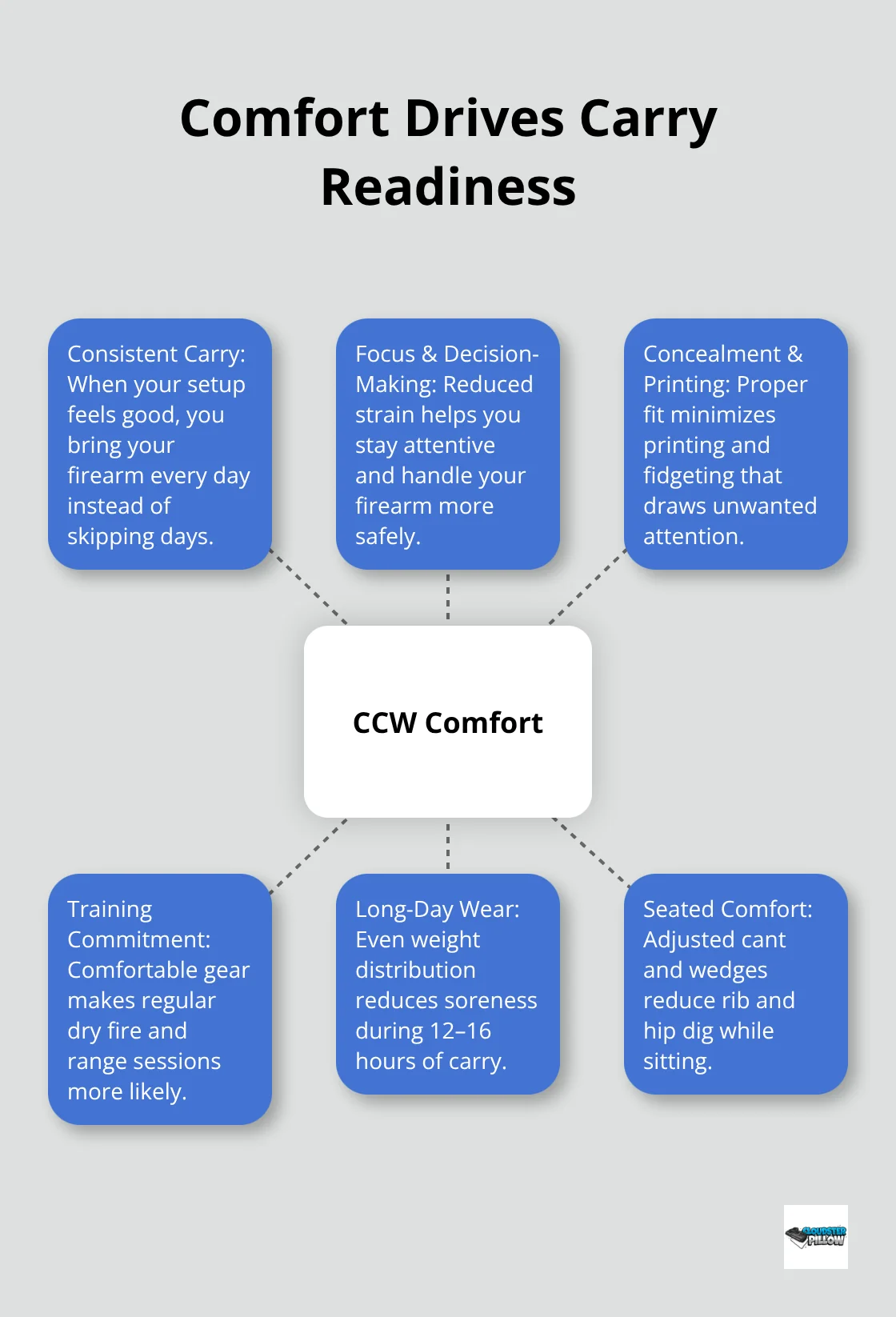
The mental fatigue from managing discomfort all day also erodes your commitment to training and practice. If your gun feels like a burden, you’re less likely to put in the dry fire reps or range time that builds muscle memory and confidence.
Physical Strain Compounds Over Time
All-day carry means your body bears weight and pressure for 12 to 16 hours. If your holster rides too low or your belt lacks proper support, the pressure concentrates on your hip and lower back. Over weeks and months, this creates chronic soreness that makes you dread putting on your gear each morning. A quality gun belt that stays tight to your waist distributes weight evenly and prevents the sagging that causes printing and back strain. Hybrid holsters with padded backing offer the highest level of comfort with their leather backing that conforms to your body’s shape. The difference between a mediocre setup and a well-tuned one often comes down to small tweaks-adjusting cant angle, adding a wedge for better concealment, or switching to a holster with better weight distribution. These adjustments matter because your body will tell you if something works or not, and you’ll actually keep carrying consistently.
Consistency Depends on Comfort
A carrier who feels good in their setup shows up with their gun every single day. Comfort breeds habit, and habit breeds readiness. When your clothing fits well with your holster, your draw feels natural, and your firearm stays concealed without printing, you stop thinking about it. That’s when your carry becomes truly reliable. Discomfort forces constant mental attention and physical adjustment, which breaks your focus on your actual job, your family, or your surroundings. Small comfort improvements change everything about your willingness to carry. The right setup removes friction-literally and mentally-so you can focus on what matters. That’s why the next section walks you through the specific comfort issues that most carriers face and how to fix them.
Common Comfort Issues Concealed Carriers Face
Holster Dig and Pressure Points
Holster dig strikes when pressure concentrates on a single point instead of spreading across your waistband. Your hip bone, ribs, and lower back become common targets, especially during seated positions like driving or sitting at a desk.
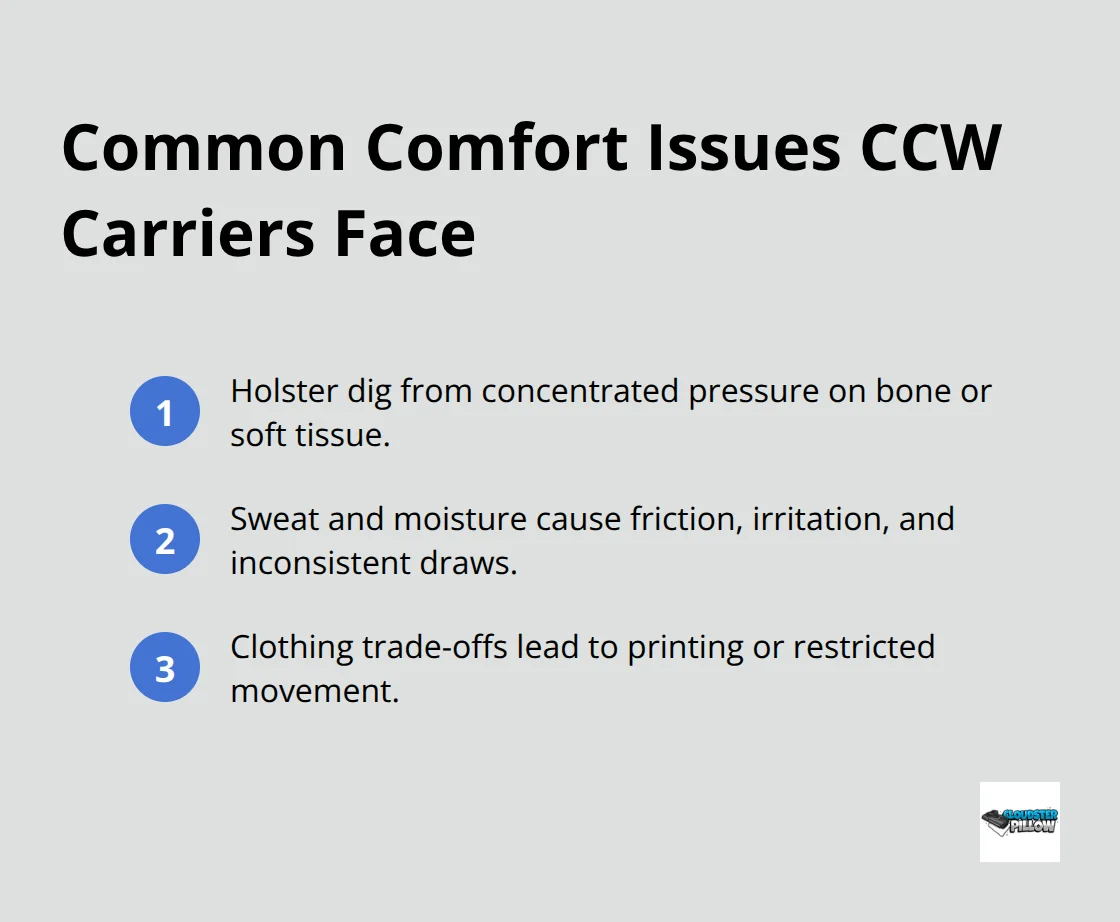
When you sit, your body compresses forward, and a holster dig that feels fine standing suddenly presses hard against bone or soft tissue. The issue intensifies if your holster rides too low or your belt lacks rigidity. A sagging belt makes the problem worse because the weight of your firearm pulls downward instead of staying tight against your body.
Sweat and Moisture Management
Sweat and moisture create a second layer of misery in warm weather or during physical activity. Moisture buildup under your holster creates friction and skin irritation that compounds throughout the day. The moisture also affects your draw speed because a slick hand or grip surface makes your draw less consistent. Many carriers fail to realize that moisture management directly impacts their ability to practice safely and effectively. If your setup makes you sweat excessively, you’re less likely to train regularly, which erodes your muscle memory and confidence.
Clothing Restrictions and Printing
Clothing restrictions force difficult choices between concealment and comfort. Tight shirts hide your firearm better but limit your movement and create printing when you bend or sit. Loose clothing solves the comfort problem but can reveal your holster outline. Many carriers cycle through the same few outfits because their setup only works with specific clothing, which reduces flexibility and increases the mental burden of carrying.
How to Fix These Problems
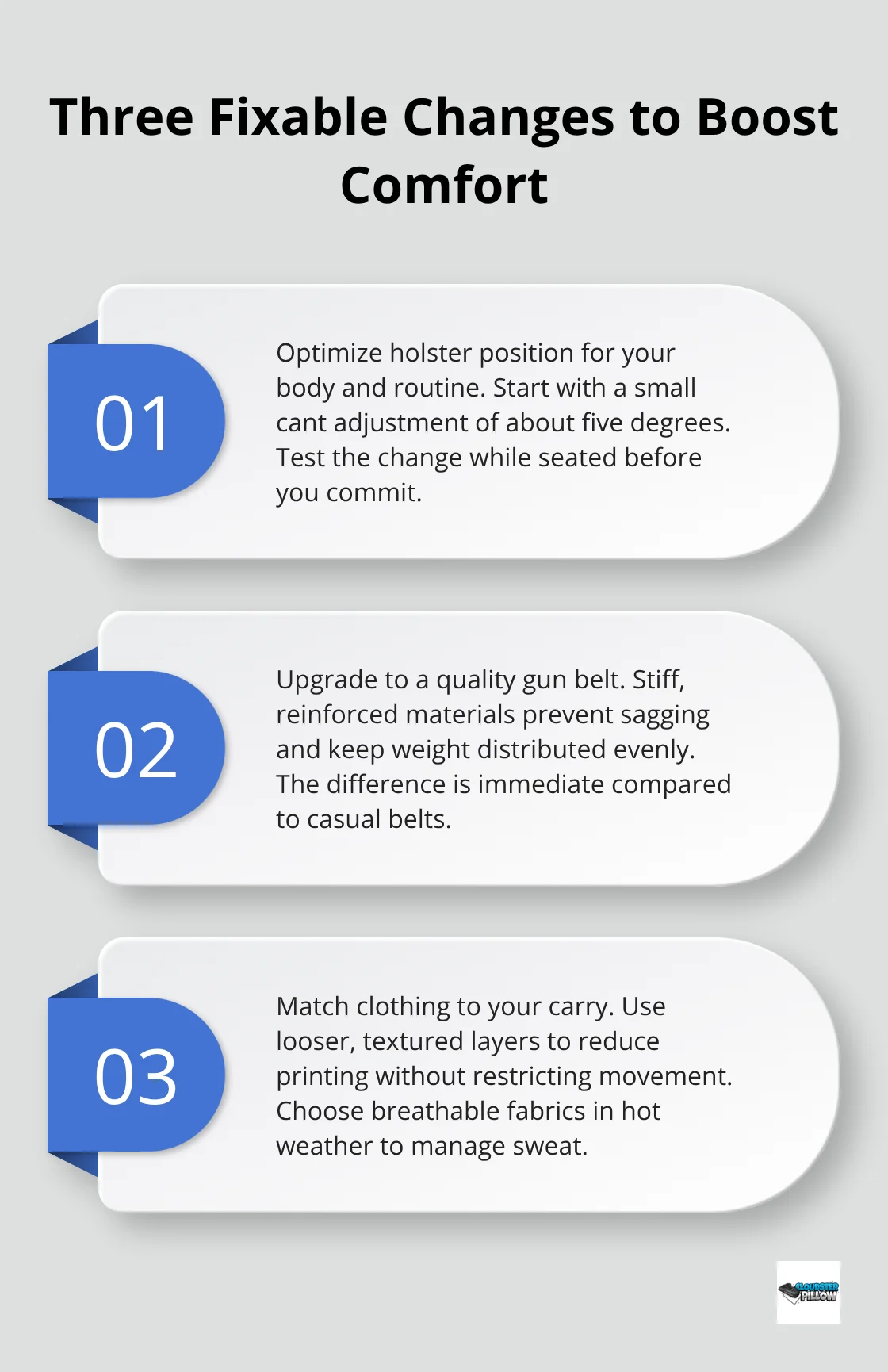
Three fixable problems cause most comfort issues: holster positioning, belt quality, and gear selection. A holster that rides too low or sits at the wrong cant angle concentrates pressure instead of distributing it. Adjusting your cant angle by just five degrees transforms how your holster feels during seated carry. A quality gun belt supports the weight of a loaded firearm and distributes it better around your waist, keeping your firearm positioned correctly throughout the day. Cheaper belts stretch and sag, which forces your holster lower and increases pressure on your hips.
Adding a wedge or padding behind your holster redistributes pressure away from bone and into softer tissue, reducing discomfort significantly. Hybrid holsters with leather or padded backing outperform all-plastic designs because they conform to your body and spread pressure more evenly. Clothing strategy matters just as much as your gear. Loose-fitting shirts, layered outfits, and clothing with texture or pattern reduce visible printing while allowing your holster to sit comfortably. Cold weather actually helps because heavier outerwear naturally conceals larger firearms, giving you more flexibility in positioning and holster choice. Hot weather demands breathable fabrics and strategic layering rather than oversized clothing that looks unnatural.
Real-World Testing Reveals What Works
Testing your setup while sitting, driving, and moving reveals problems that standing practice never shows. Most carriers discover their real issues only after wearing their setup for eight hours straight, which is why small adjustments based on real-world wear matter more than theoretical advice. The next section walks you through specific positioning and adjustment techniques that address these comfort problems head-on.
How to Adjust Your Setup for All-Day Comfort
Fine-Tune Your Holster Position
Fine-tuning your holster position makes the biggest immediate difference in comfort. Most carriers position their holster at the factory default, which rarely matches their body type or daily routine. Start with your cant angle-the forward or backward tilt of your holster. A five-degree shift forward reduces rib dig during seated positions because your firearm tilts away from your body instead of pressing straight into bone. If you carry appendix, a forward cant also improves comfort when you bend at the waist.
Test your cant adjustment while sitting in your car or at a desk for at least two hours before finalizing the change. Ride height matters equally-your holster should sit high enough that your grip stays accessible but low enough that your shirt covers it without stretching. Carriers who lower their holster to reduce printing often sacrifice comfort because the weight pulls downward and concentrates pressure on their hip.
Invest in a Quality Gun Belt
A quality gun belt prevents sagging that undermines all your other adjustments. It should be made from leather or reinforced materials that maintains its shape throughout the day. Your belt should feel snug enough that it doesn’t shift when you move, sit, or bend. Most carriers notice immediate relief after switching from a standard belt to a proper gun belt because the weight distributes evenly rather than pulling downward.
Choose Clothing That Works With Your Carry
Clothing strategy determines whether comfort improvements actually stick. Loose-fitting shirts with texture or subtle patterns conceal your firearm far better than tight shirts because fabric drape hides the holster outline. Avoid solid-colored, form-fitting tops that print immediately. Layering works year-round-a light jacket, unbuttoned overshirt, or even a hoodie adds concealment without overheating.
Cold weather gives you the most flexibility because heavier outerwear naturally hides larger firearms. Hot weather demands breathable, lightweight fabrics that wick moisture away from your body. Cotton blends and technical fabrics reduce sweat buildup that causes skin irritation under your holster.
Add Padding or a Wedge for Pressure Relief
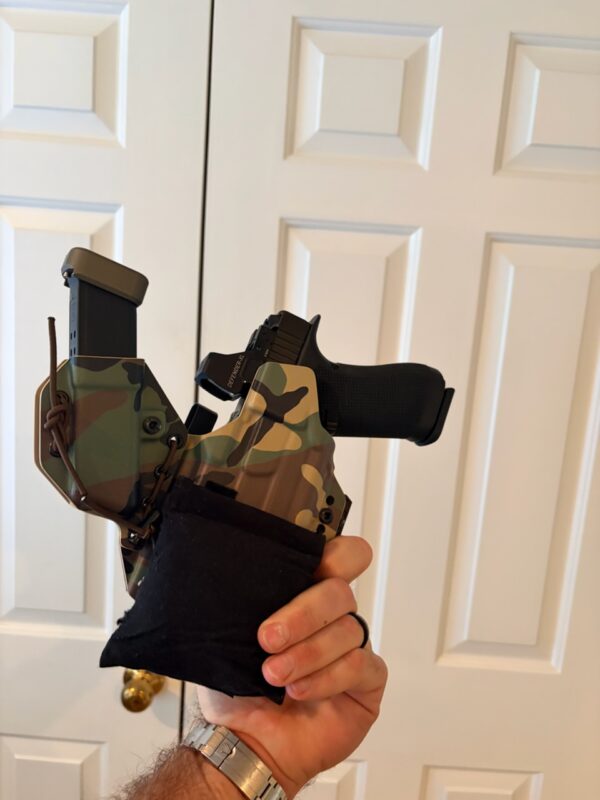
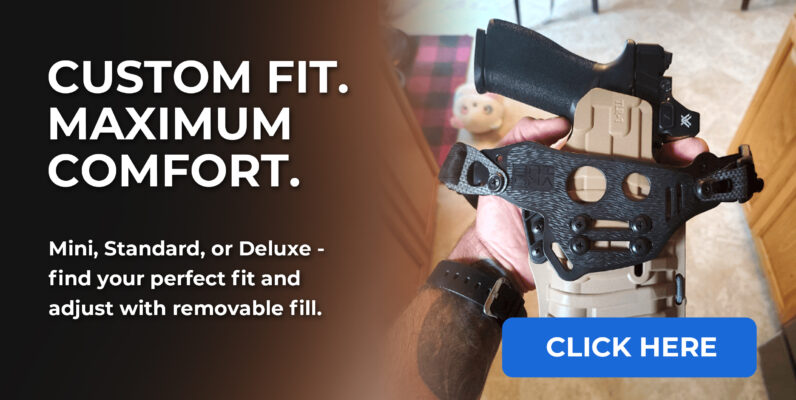
Adding padding or a wedge for pressure relief behind your holster redistributes pressure from bone into softer tissue, which transforms comfort during long sitting sessions. Wedges work by creating space between your holster and your body, angling the pressure away from sensitive areas. This small addition often eliminates the rib dig that makes all-day carry miserable.
Test Your Setup in Real-World Conditions
Test your setup while driving, sitting at a desk, and walking to identify where pressure concentrates. Your real-world environment reveals problems that standing practice never shows. Make one adjustment at a time and wear your setup for a full day before changing anything else, so you know exactly what each modification accomplishes.
Final Thoughts
All-day CCW comfort transforms carrying from a burden into a natural part of your day. Start with three immediate changes: test your holster position while sitting to identify pressure points, switch to a quality gun belt that maintains its shape, and choose loose-fitting clothing with texture to reduce printing. These adjustments remove the friction that makes consistency difficult and training feel like a chore.
Your setup must support your actual lifestyle, not force you to change how you live. If you drive eight hours daily, your cant angle and ride height matter more than they do for desk workers; if you work in warm weather, breathable fabrics and moisture management become your priority. Real-world testing reveals what works for your body and routine far better than theoretical advice, so wear your setup for a full day before making additional changes.
Adding a wedge behind your holster redistributes pressure away from bone and into softer tissue, which eliminates the rib dig that makes all-day carry miserable. We at Cloudster Pillow designed our holster wedge collection specifically for carriers who want comfort without replacing their entire holster system, and it works with both AIWB and IWB setups to improve concealment and reduce strain during long days.