EDC Gear
Everyday Carry Gear Upgrades: Small Improvements, Big Comfort Gains
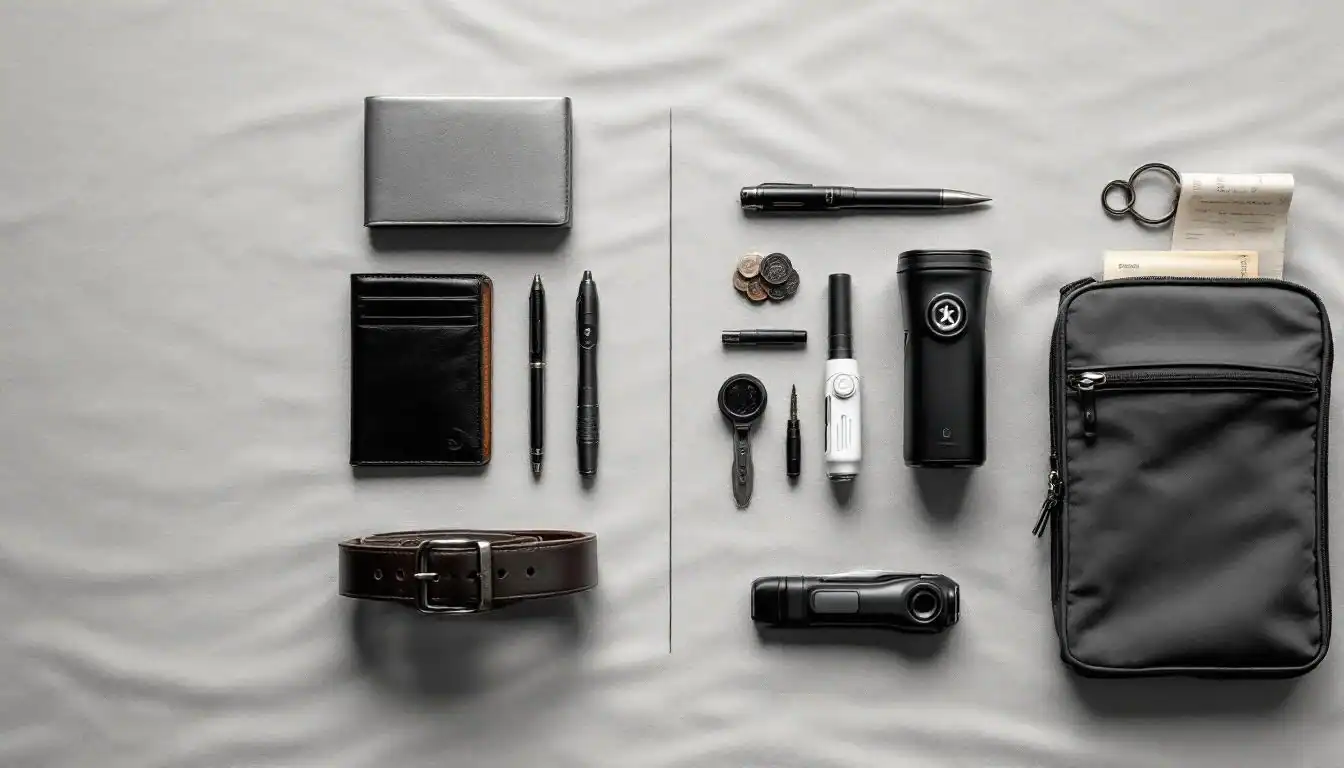
Carrying a firearm daily means dealing with discomfort that most people never think about. Printing, pressure points, and heat buildup can turn a necessary responsibility into a frustrating experience.
At Cloudster Pillow, we know that everyday carry gear upgrades don’t have to be expensive or complicated. Small changes to your holster setup, belt, and clothing choices create real comfort gains that compound over time.
The Gear Foundation That Actually Matters
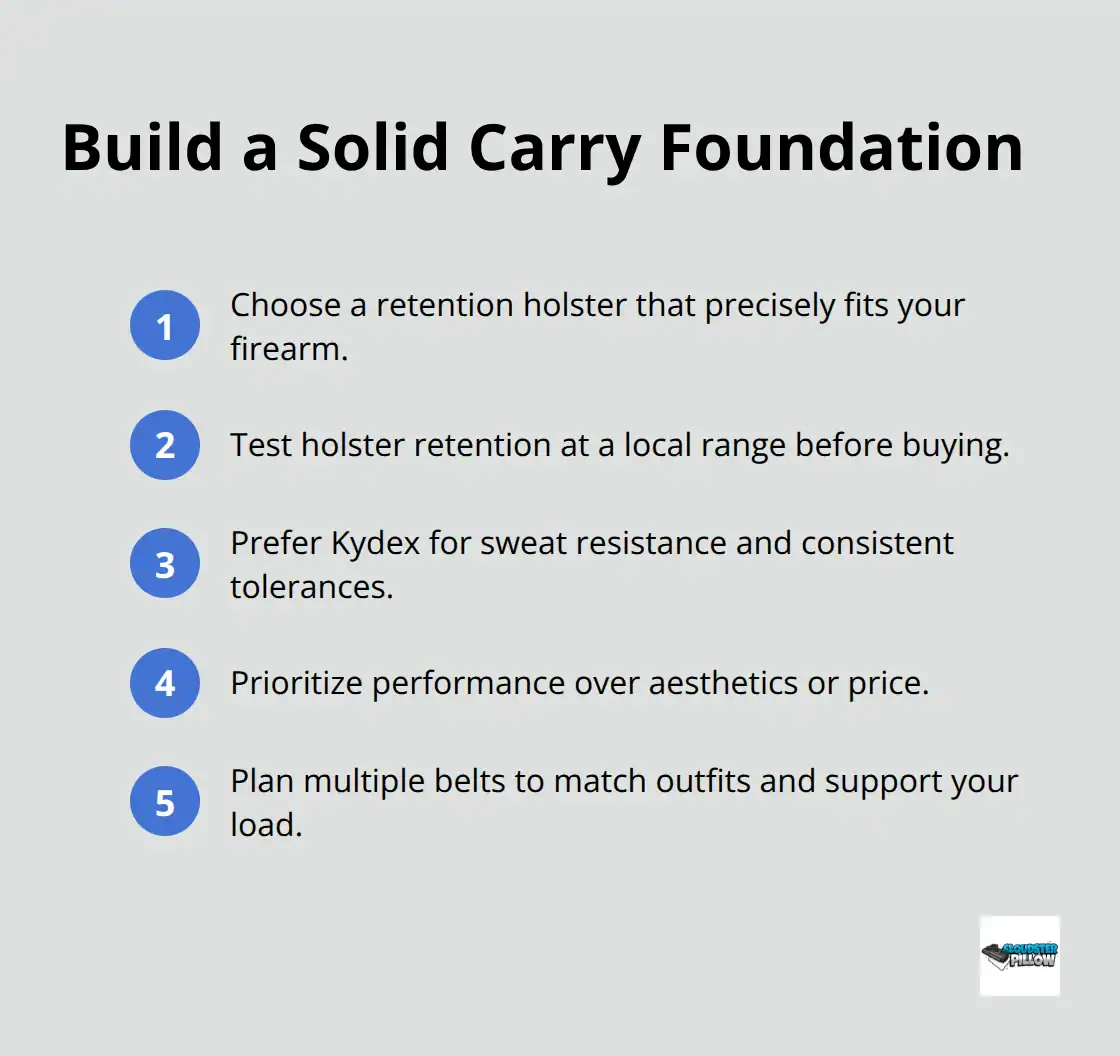
Your holster choice determines whether you’ll carry consistently or leave your firearm at home. A retention holster with proper fit eliminates the constant worry about your gun shifting during movement, sitting, or physical activity. Kydex dominates the market for good reason-it holds precise tolerances and resists sweat better than leather. Test the retention at a local range before committing to any holster. Many carriers make the mistake of selecting based on aesthetics or price rather than how the holster actually performs with their specific firearm model.
AIWB Holsters and Wedge Placement
AIWB holsters with integrated wedges reduce printing significantly compared to standard designs, though wedge placement matters more than wedge size. Appendix carry offers faster access than other positions, especially when seated, which explains why it has become the default for serious carriers. The wedge tapers the grip snugly into your body, boosting concealment without requiring a complete holster replacement. Asymmetrical wedge designs that mirror your body shape work better than one-size-fits-all options, reducing pressure points while keeping the gun tight against your torso.
Why Your Belt Fails Before Your Holster Does
A quality load-bearing belt transforms your entire carry experience, yet most people underestimate this component. Standard dress belts lack the internal stiffening needed to support a holster and magazine carrier without sagging. Leather belts with stiffeners or heavy-duty nylon options distribute weight evenly across your waist, preventing the holster from shifting throughout the day. Plan for multiple belts to match different outfits-your gym clothes need a different setup than your business casual wardrobe. Upgrading your belt costs between $50–$150, which is often cheaper than replacing a mediocre holster. Proper belt tension also reduces pressure on your hips during extended carry sessions, making all-day comfort genuinely achievable.
Clothing Strategy Beats Gear Strategy
Dressing around your firearm matters more than most carriers acknowledge. Size your pants up one or two sizes to create the space needed for a holster and magazine carrier without printing through your shirt. Untucked shirts work best for AIWB, while slightly loose button-ups provide better coverage for IWB positions. Layering with a light jacket or overshirt adds concealment flexibility for variable weather. Test your actual carry setup with the exact clothes you wear daily-laying everything out together before heading out catches printing issues that dressing in the dark won’t reveal. Dark, textured fabrics hide printing better than light or smooth materials.
The Pressure Point Problem
The most expensive holster fails if your clothing works against concealment, which is why experienced carriers prioritize outfit planning alongside gear selection. Pressure points develop when holster edges dig into your body during extended wear, turning comfort into a real problem by midday. Soft goods like orthotic-grade foam cores reduce pressure against sensitive tissue while maintaining their shape through hours of carry. Skin-friendly exterior coatings resist sweat and abrasion, keeping your setup comfortable even in warm climates. These upgrades attach to your existing rigid holster via adhesive backing, so you don’t need to replace your entire setup to gain real comfort improvements.
Your gear foundation now supports consistent carry. The next step involves the training and habits that transform this foundation into genuine readiness.
The Real Comfort Upgrades That Actually Work
Why Printing Happens and How Soft Goods Fix It
Printing occurs because your holster edges transmit the gun’s outline through fabric, and no amount of gear philosophy fixes poor execution. The problem intensifies in warm climates where lighter clothing becomes mandatory and sweat amplifies pressure points against your body. Most carriers blame their holster when the real culprit is missing soft goods that redistribute pressure and shape the gun’s profile.
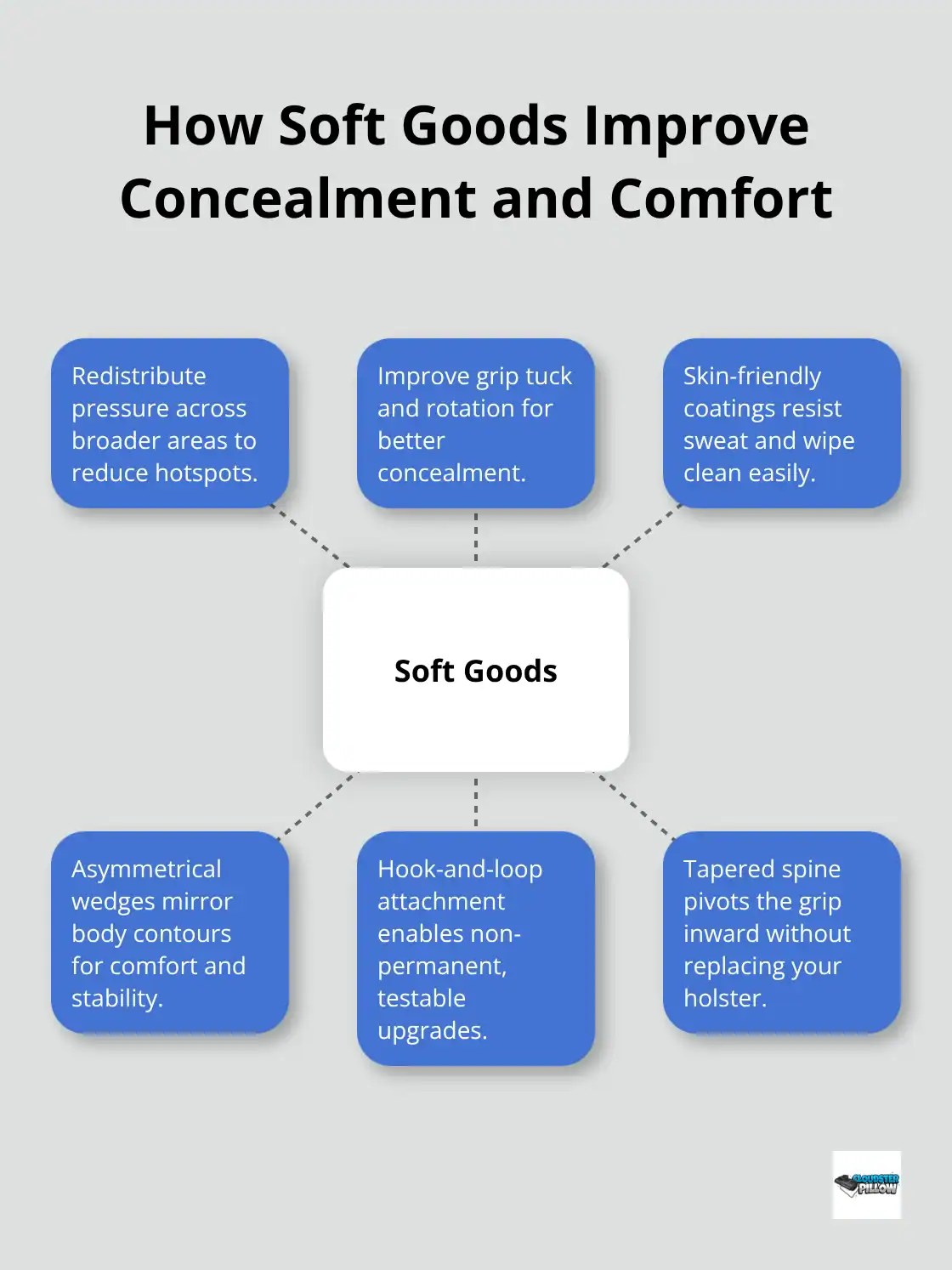
Orthotic-grade foam cores designed specifically for holster wedges improve grip tuck and rotation while reducing contact pressure against sensitive ribs and hip bones. These cores feature skin-friendly exterior coatings used in hospital settings, which resist sweat, wipe clean easily, and stay comfortable even during extended sessions.
The tapered spine design pivots your pistol grip snugly into your body, creating genuine concealment improvement without forcing you to buy a new holster. Asymmetrical wedge shapes that mirror custom carrier contours work dramatically better than symmetrical designs because they account for your actual body shape rather than assuming everyone fits a standard template. Adhesive hook-and-loop attachment lets you upgrade your existing setup without permanent modifications, so you test the comfort gain before committing additional resources.
Heat, Moisture, and Pressure Point Management
Heat and moisture create a second concealment problem that soft goods directly address. Breathable holster designs and moisture-resistant foam built with waterproof closed-cell foam prevent sweat from pooling between your body and the holster, which causes both discomfort and visible darkening of your cover garment. Kydex-only AIWB setups outperform hybrid designs in hot climates because they eliminate fabric backing that traps moisture against your skin.
Test your carry setup during your warmest month before concluding it works year-round, since humidity dramatically changes how pressure distributes across your torso. Dark, textured fabrics hide printing better than light colors regardless of climate, so your clothing strategy matters as much as your holster choice. Pressure points develop fastest in warm weather because sweat reduces friction, allowing your holster to shift slightly throughout the day.
Distributing Pressure Across Larger Surface Areas
Upgrading to a wedge system with generous muzzle-side padding reduces pressure points and distributes pressure more evenly across a larger surface area, preventing the concentrated hotspots that make midday carry unbearable. This approach transforms how your body experiences extended carry sessions, especially when you combine soft goods with proper clothing choices and belt support. The combination of these three elements-wedge design, fabric selection, and load-bearing belt-creates the foundation for all-day comfort that actually holds up under real-world conditions.
Your comfort upgrades now address the physical realities of carrying throughout your day. The next step involves the training and habits that transform this comfort foundation into genuine readiness.
Training Transforms Gear Into Readiness
Draw Practice From Your Actual Carry Position
Proper draw practice from your actual carry position matters far more than theoretical firearm knowledge. Most carriers never practice from appendix or IWB positions, which means they’ve never felt how clothing, belt tension, and holster retention affect their access speed under pressure. The NRA Basic Pistol Course teaches fundamentals, but concealed carry training specifically addresses drawing from concealment, which requires understanding your exact holster geometry and how your body moves around it. Find a comfortable holster with an easy draw, and practice until your muscle memory takes over-this builds the foundation that makes your setup feel natural instead of awkward.
Draw speed improves dramatically once you stop fighting your clothing and start working with it. Your grip angle changes when you draw from appendix versus strong-side IWB, which means your sight picture and trigger control adapt differently depending on position. Practice at your local range with your actual carry clothes, belt, and holster to eliminate surprises during real-world situations. Consistency matters more than speed-a smooth, reliable draw beats a fast draw interrupted by fumbling with fabric or adjusting your holster.
Holster Retention and Positioning Adjustments
Test your draw speed and holster retention immediately after any gear adjustment, since small changes in wedge positioning or belt tension affect how your holster responds during draw. Check your holster retention monthly by holding the gun firmly and shaking the holster-any movement indicates wear that compromises your carry safety. Your grip angle and sight picture shift when you adjust wedge placement, so practice from your new position before relying on it in public.
Inspect your adhesive hook-and-loop attachment on wedge systems every two weeks, especially if you carry in humid climates where moisture degrades adhesive performance faster. Document your carry setup with photos so you can replicate exact positioning if components shift or wear. These adjustments transform how your holster responds during the draw stroke, making consistency and reliability your primary focus.
Belt Maintenance and Replacement Cycles
Your belt loses stiffness after extended daily carry, so plan to replace quality belts regularly rather than waiting until they visibly sag. A worn belt allows your holster to shift throughout the day, which degrades both comfort and retention reliability. Test your draw speed immediately after replacing your belt, since new belt tension changes how your holster sits against your body.
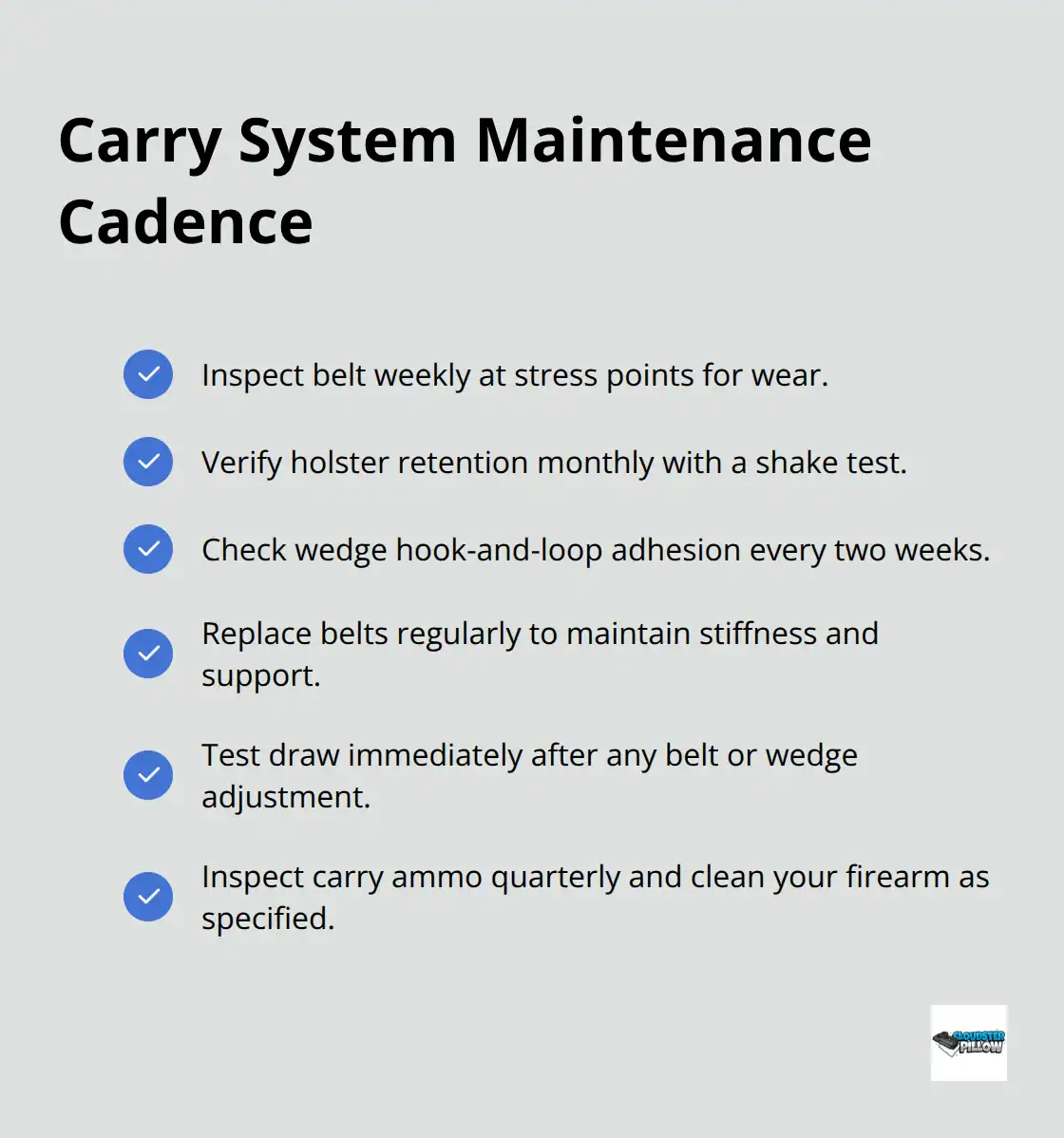
Inspect your belt weekly for signs of wear, particularly at stress points where your holster attaches. A quality belt costs between $50–$150, which is often cheaper than replacing a mediocre holster that fails due to poor belt support. Proper belt maintenance prevents the cascading failures that compromise your entire carry system.
Ammunition and Firearm Maintenance
Keep a spare magazine loaded and stored properly at home-research from the National Violent Crime Survey shows most defensive encounters happen within arm’s reach, making quick access to a backup magazine realistic preparation rather than paranoia. Clean your firearm according to manufacturer specifications and inspect your carry ammunition quarterly for corrosion or damage. Corroded ammunition fails to fire reliably, which defeats the purpose of carrying in the first place.
Test your chosen ammunition in your firearm for 100% reliability before carrying it daily. Federal HST rounds offer proven performance, with alternatives like Speer Gold Dot and Hornady providing reliable options across different firearm platforms. Ammunition maintenance habits ensure your carry system functions when you need it most.
Building Sustainable Carry Habits
Maintenance and inspection habits determine whether your setup fails when you need it most. These habits transform your gear from static equipment into a system you actively maintain and understand, which builds the confidence that makes consistent carry sustainable. Your carry setup requires regular attention to function reliably, and small maintenance tasks prevent expensive failures down the road.
Final Thoughts
Small everyday carry gear upgrades compound into genuine comfort gains that make consistent carrying sustainable. Your belt upgrade reduces pressure on your hips, your wedge system redistributes force away from sensitive ribs, and your clothing strategy eliminates printing that forces you to adjust your setup throughout the day. These individual improvements stack together, transforming carry from a frustrating obligation into something that feels natural by midday. Comfort and security reinforce each other rather than compete-a holster that fits properly retains your firearm reliably while distributing pressure evenly across your body.
Finding your optimal carry setup requires honest assessment of what works with your body, your daily routine, and your actual clothing choices. Your ideal position might be appendix carry with an AIWB holster, or it might be strong-side IWB with a different belt and wedge configuration. Test multiple approaches at your local range before committing resources to any single setup, then adjust incrementally rather than replacing everything at once. Most carriers overthink gear selection while neglecting the soft goods and maintenance habits that transform comfort into reality.
We at Cloudster Pillow designed our holster wedge specifically for carriers who want real comfort improvements without replacing their entire holster system. Our orthotic-grade foam core reduces pressure points while maintaining shape through extended wear, and the skin-friendly exterior coating resists sweat in warm climates (adhesive attachment means you upgrade your existing setup in minutes). Start with the essentials you already carry, observe which tasks repeatedly cause discomfort, then selectively add improvements that address those specific issues. Learn more about how holster wedge upgrades improve comfort and concealment without forcing you to rebuild your entire system.