
Uncategorized
Appendix Carry Comfort Fixes: Appendix Carry Solutions For All Day Wear
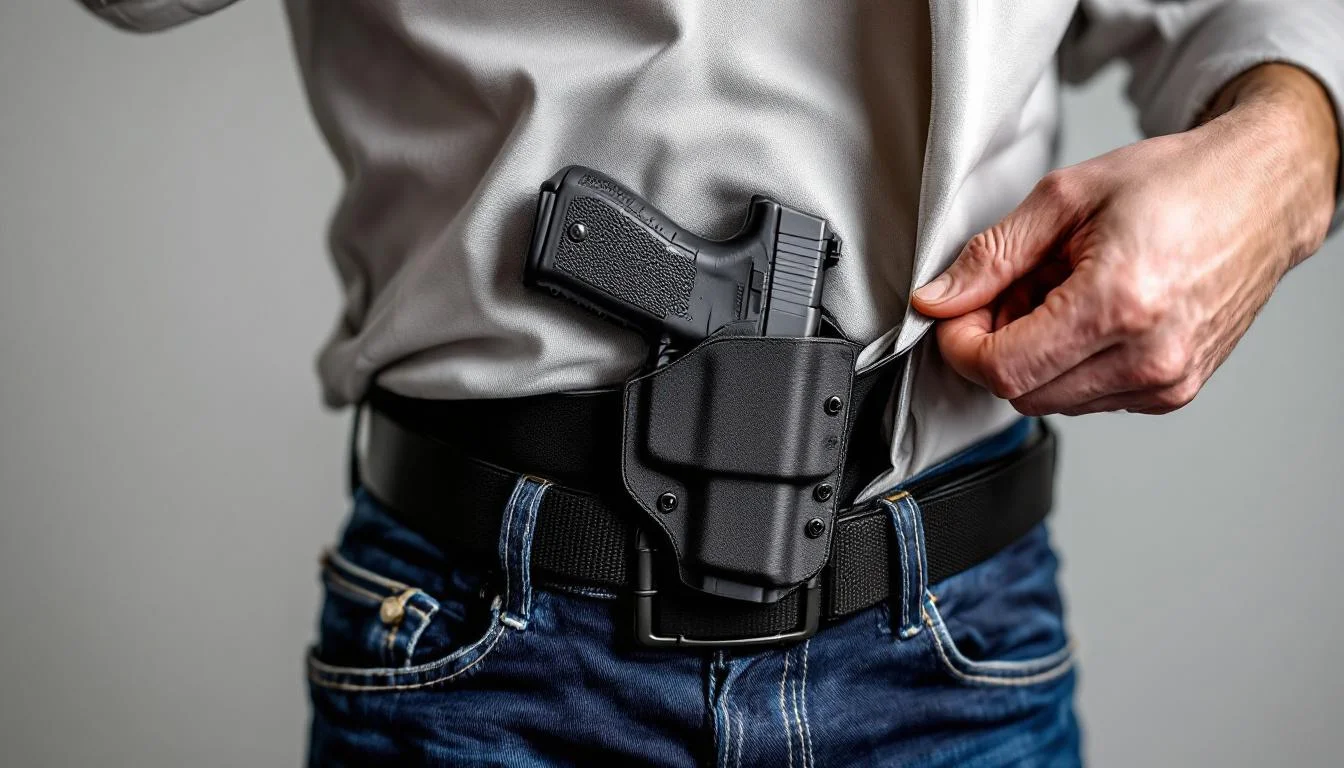

Appendix carry comfort isn’t a luxury-it’s what separates carriers who stick with their setup from those who abandon it after a few hours. When your holster digs into your abdomen or prints through your shirt, you’re fighting your gear instead of trusting it.
At Cloudster Pillow, we’ve seen firsthand how small adjustments transform daily carry from uncomfortable to sustainable. The right solutions make all-day appendix carry feel natural, not like a burden you’re enduring.
Why Comfort Changes How You Carry
Physical Discomfort Sabotages Your Consistency
Appendix carry discomfort doesn’t just annoy you-it actively destroys your commitment to carrying. Research on habit formation and physical friction effects on carrying consistency shows that physical friction, whether literal pressure against your body or the mental resistance to a setup you dread, erodes commitment over time. When your holster presses into your abdomen while sitting, or your grip catches on your shirt and creates visible printing, you face a choice every single day: wear it and suffer, or leave it at home. Most carriers choose to leave it behind.
A shooter on Reddit documented exactly this problem after testing multiple firearms in appendix carry. He found that no configuration felt sustainable for all-day wear. That’s not a personal failure-that’s a system failure. Your body knows when something doesn’t work, and it will reject the setup regardless of how theoretically sound appendix carry appears.
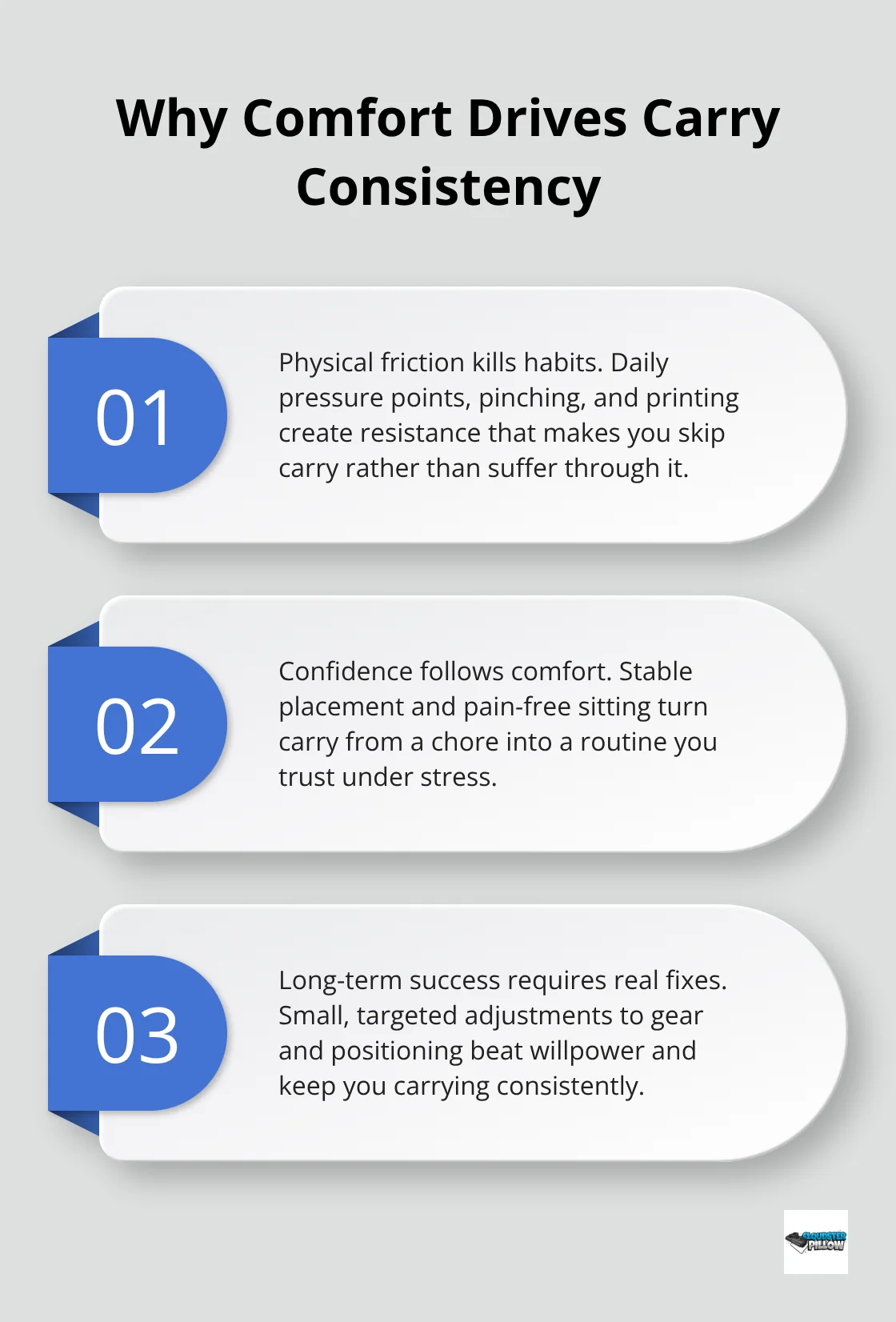
Mental Confidence Follows Physical Comfort
Mental confidence tracks physical comfort almost automatically. When your holster stays in place without shifting, when you sit through a full workday without sharp pressure points, and when your shirt conceals your firearm outline, your mind stops treating carry as a chore. Instead, it becomes part of your routine.
This shift matters more than most carriers realize. Confidence in gear translates to response readiness. You stop second-guessing your setup during a stressful moment and focus on the actual threat instead. That mental clarity comes from knowing your equipment works.
Long-Term Viability Requires Real Solutions
Long-term appendix carry success depends on solving comfort issues head-on, not hoping your body will adapt. Your body won’t adapt to bad positioning, and your commitment won’t survive weeks of daily discomfort. The carriers who stick with appendix carry aren’t tougher-they’ve simply fixed the underlying problems through proper holster selection and positioning for appendix carry.
These fixes address real pain points that most carriers encounter. The solution isn’t to accept discomfort as the price of appendix carry. Instead, you need to identify which specific problems affect your setup and apply targeted fixes that work for your body type and daily routine. That’s where a holster wedge like the Cloudster Pillow makes a real difference-it fills the gap between your body and holster, eliminating pressure points while improving concealment so you can carry all day without compromise.
What Actually Goes Wrong With Appendix Carry
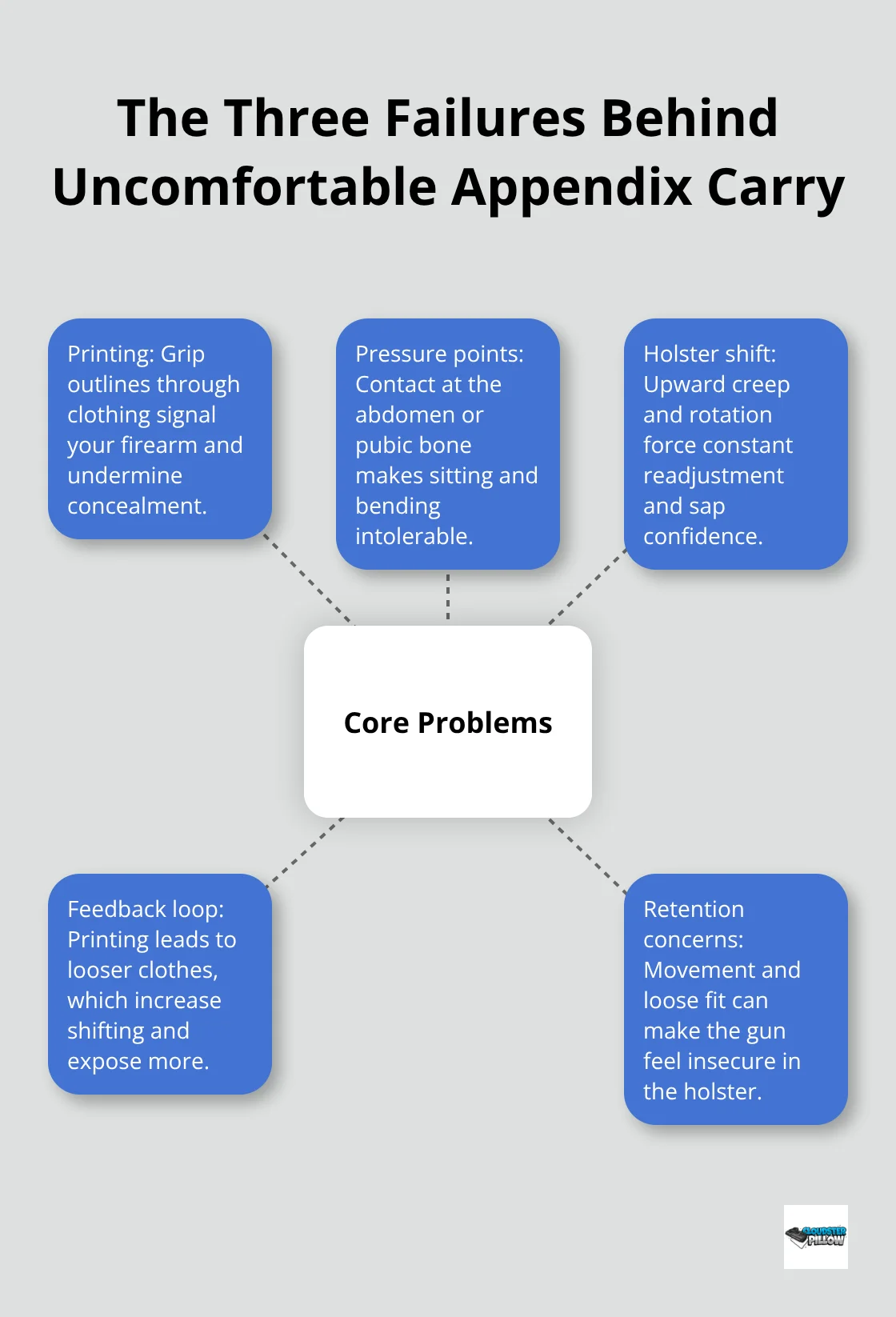
Printing Destroys Your Concealment Advantage
Appendix carry fails for most people because three specific problems compound into unbearable discomfort. Your grip outline shows through your shirt no matter how you adjust your cant or clothing, and bystanders notice it. This visibility destroys the concealment advantage appendix carry is supposed to provide. You dress looser to hide the outline, which then allows more holster shift and creates additional problems downstream.
Pressure Points Make Sitting Intolerable
Pressure points develop when you sit at a desk, drive, or bend forward. The holster and grip dig directly into your abdomen or pubic bone. A 6-foot, 240-pound carrier on Reddit tested multiple firearms in appendix carry and found that every single configuration created unacceptable pressure during sitting. He wasn’t weak or doing it wrong-the position itself created a physics problem his body couldn’t solve.
Holster Shift Ruins Your Confidence
Your holster creeps upward or rotates as you move, forcing you to constantly readjust it under your shirt. Retention fails too, where the firearm feels loose in the holster or the holster itself moves independently from your belt. This makes you question whether your gun will actually stay where you need it during a defensive situation.
How These Problems Feed Each Other
These three problems don’t exist in isolation-they feed each other. Poor holster positioning causes printing, which makes you dress looser to hide the outline, which then allows more holster shift. Pressure points make you move differently throughout the day, which accelerates holster rotation. Weak retention combined with holster shift means you constantly check your setup, which creates the mental friction that kills long-term carry commitment.
The NRA notes that appendix carry isn’t inherently more dangerous than other methods when done correctly, but correctness requires solving these specific comfort failures first. A holster wedge addresses multiple problems at once (filling the gap between your body and holster, pressing your grip toward your body to reduce printing, and cushioning pressure points so sitting becomes tolerable). This single adjustment often fixes enough of the equation that appendix carry becomes sustainable for all-day wear, which means you’re ready to explore the practical solutions that transform your setup.
Fix the Root Problems With the Right Gear
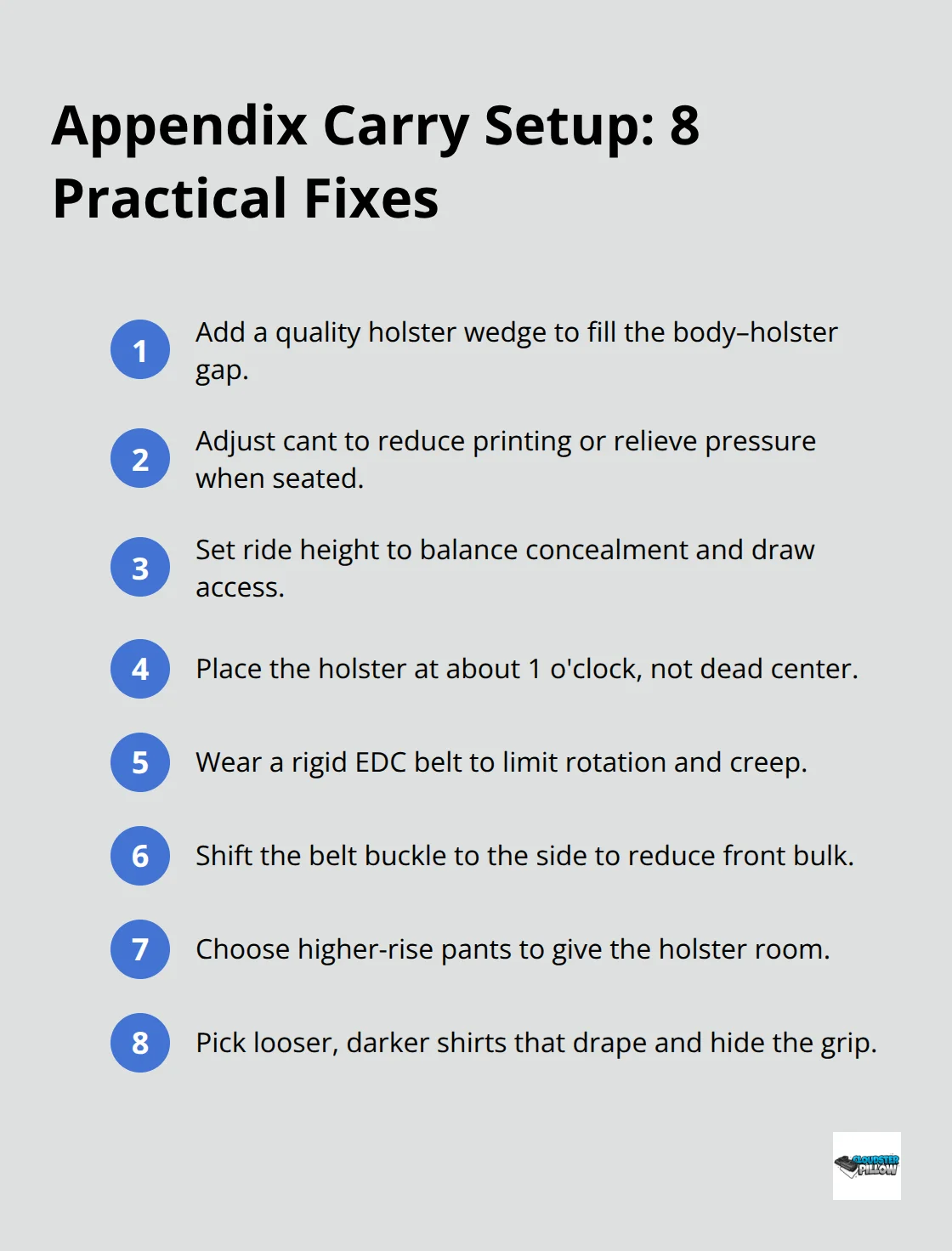
Your appendix carry setup fails because three specific problems stack on top of each other, and fixing one without addressing the others leaves you frustrated. Start with your holster wedge, which is the single most effective tool at your disposal right now. A quality wedge fills the empty space between your body and the holster shell, pressing your grip toward your body to eliminate printing while simultaneously cushioning the pressure points that make sitting unbearable. This isn’t theoretical-carriers report noticeable comfort improvements within the first day of use because the wedge addresses the core physics problem appendix carry creates. Your body and the holster shell have a gap, and that gap forces the grip into your abdomen when you sit. Close that gap, and the pressure vanishes.
Adjust Your Holster for Maximum Control
Beyond the wedge, your holster’s adjustability matters more than the brand name. Look for a holster with adjustable cant and adjustable ride height so you can dial in exactly where the firearm sits on your body. Purpose-built AIWB holsters offer cant adjustment in both directions, which gives you real control over how your grip positions relative to your waistband. Test different angles over a few days-some carriers need forward cant to reduce printing, while others need reverse cant to improve comfort during sitting. Your body is unique, and the right angle for you might be different from what works for someone else.
Position Your Holster Correctly on Your Belt
Where your holster sits on your belt determines whether appendix carry works for all-day wear or becomes intolerable by lunch. Position your holster at the 1 o’clock position (slightly right of center if you’re right-handed), not directly at 12 o’clock where many new carriers default. This offset position reduces pressure on your pubic bone when sitting and improves your draw angle. Your belt quality directly impacts how well your holster stays in place-a flimsy belt allows the holster to rotate and shift as you move, which accelerates the mental friction that kills carry consistency. Invest in a thick, rigid EDC belt designed for holster weight. Move your belt buckle to the side (9 o’clock for right-handed carriers) to eliminate bulk at the front of your waistband, which reduces printing and creates more comfortable positioning during sitting.
Choose Clothing That Supports Concealment
Clothing choice isn’t optional for appendix carry success. Wear pants with a higher rise and slightly looser fit around the waistline-modern slim-fit jeans compress your abdomen and amplify pressure points. A rise of at least 10 inches (measured from the crotch seam to the waistband) gives your appendix holster room to sit naturally without digging in when you bend or sit. Your shirt needs to be loose enough that the fabric hangs straight down without clinging to your grip outline, but not so baggy that it looks tactical. Dark colors and patterns mask any remaining outline far better than light solids. Test your setup by sitting at a desk for 30 minutes and checking if you feel pressure-if you do, adjust your holster position or cant before moving forward.
Final Thoughts
Appendix carry comfort results from solving specific problems with targeted fixes that address your body, your gear, and your daily routine. When you eliminate printing through proper holster positioning and a quality wedge, reduce pressure points by adjusting your cant and ride height, and choose clothing that supports concealment, appendix carry stops feeling like a burden and becomes part of your normal day. The carriers who succeed with appendix carry aren’t special-they’ve simply made small adjustments that compound into real results.
A holster wedge fills the gap between your body and holster shell, pressing your grip toward your body while cushioning pressure points during sitting. Adjustable cant and ride height let you dial in exactly where your firearm sits, and a rigid EDC belt with the buckle positioned to the side eliminates bulk and keeps your holster stable. Pants with proper rise and a loose-fitting shirt complete the equation without requiring you to replace your entire holster system.
Your appendix carry comfort improves when you start with the adjustment that addresses your biggest pain point. If printing frustrates you, focus on holster positioning and a wedge; if sitting feels unbearable, prioritize cant adjustment and pressure point relief; if holster shift drives you crazy, invest in a quality belt and test different ride heights. Most carriers find that a holster wedge from Cloudster Pillow solves multiple problems at once, which is why it’s the first fix we recommend.
