Uncategorized
Inside Waistband Pressure Tips That Actually Improve Comfort
 IWB holster pressure is one of the biggest reasons carriers abandon their daily carry routine. When your holster digs into your ribs or creates hot spots against your body, staying armed all day becomes a battle you’ll eventually lose.
At Cloudster Pillow, we’ve seen firsthand how small adjustments to pressure distribution transform carry comfort. The good news is that inside waistband pressure tips don’t require expensive gear swaps or complicated solutions.
Where Your IWB Holster Creates Pressure and Why It Matters
Your body isn’t a flat surface, and your IWB holster knows it. The trigger guard, rear sight, and grip panel all contact your torso at different angles and intensities. When a holster sits at the wrong cant or ride height, these contact points concentrate pressure into small areas rather than spreading it across your waistband. Poorly positioned holsters can cause discomfort within four hours of wear, leading many to stop their everyday carry routine entirely. The problem isn’t the holster itself-it’s where it sits and how the pressure spreads across your body.
Pressure Points Shift With Your Body Position
Standing feels completely different from sitting, and sitting differs from getting in and out of a car. When you sit, your torso compresses and your ribcage shifts forward, which pushes the grip into your side harder than it does when you’re upright. If your holster sits too high, contact with your ribcage can create discomfort.
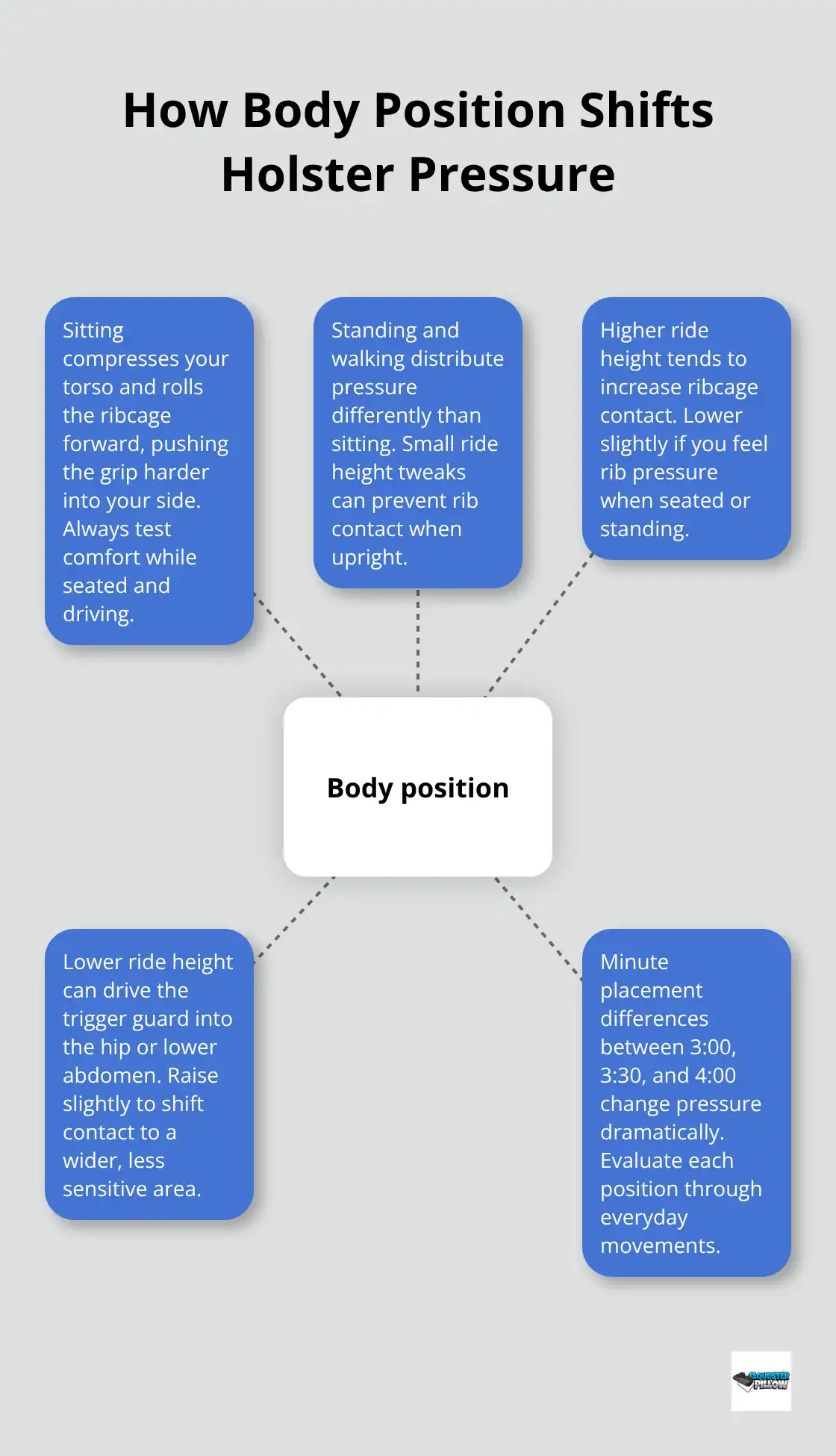
If it sits too low, the trigger guard edge stabs into your hip bone or lower abdomen, especially for larger builds. The 3:00 to 4:00 o’clock strongside position works well for most carriers, but the exact placement within that range matters enormously. A quarter-inch difference in ride height can eliminate a hot spot that would otherwise ruin your day. Real carriers test multiple positions-3:00, 3:30, and 4:00-while standing, walking, and seated in a vehicle to find where pressure spreads naturally instead of concentrating in one spot.
How Pressure Undermines Your Carry Confidence
Discomfort doesn’t just hurt; it kills consistency. A carrier who experiences rib pressure or pinching at the hip starts looking for reasons to leave the holster at home. They convince themselves they’ll carry tomorrow, or that today’s trip doesn’t warrant it. This mental shift away from daily carry happens fast, often within the first week of an uncomfortable setup. Even experienced carriers who understand the importance of readiness struggle to maintain discipline when their holster creates pain. The solution requires honest assessment of where your specific body experiences pressure, then targeted adjustments to cant, ride height, or support materials like a holster wedge to redirect that pressure across a larger surface area.
Why Small Adjustments Deliver Real Results
Most carriers overlook how much a quarter-inch change in ride height or a slight cant adjustment transforms their all-day comfort. You don’t need to replace your holster or invest in expensive gear overhauls. Instead, test your current setup at different positions and angles while moving through real-world scenarios (sitting in your car, bending to pick something up, walking up stairs). This hands-on testing reveals exactly where your body pushes back against the holster. Once you identify the pressure point, you can address it with targeted solutions-adjusting cant, raising or lowering ride height, or adding a wedge to distribute force across a wider area. The carriers who stick with their daily carry routine aren’t the ones with perfect gear; they’re the ones who took time to match their setup to their body and lifestyle.
Fine-Tuning Cant, Ride Height, and Support
Adjust Cant and Ride Height to Match Your Body
Cant and ride height control where your holster contacts your body, and getting them right eliminates most pressure complaints without buying new gear. Cant refers to the angle your holster leans away from your body-typically between 15 and 30 degrees. A steeper cant pushes the grip outward and reduces rib contact, which helps if your holster digs into your ribcage when seated. A shallower cant brings the grip closer to your body, improving concealment but increasing pressure on your side.
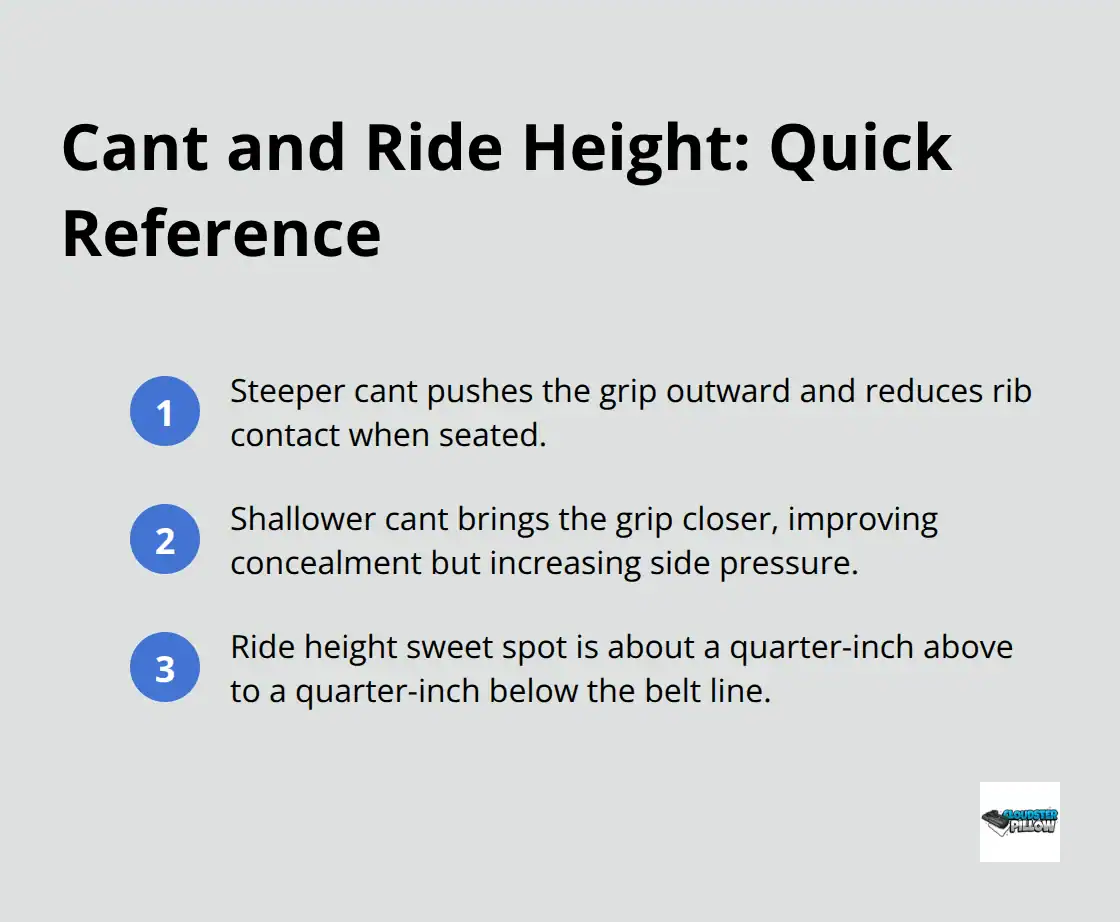
Ride height determines how high or low the holster sits relative to your waistband. Most carriers find the sweet spot between a quarter-inch above and a quarter-inch below the belt line, but your exact position depends on your torso length and build.
If your holster stabs your hip bone when sitting, raise the ride height slightly to shift pressure higher onto your ribcage where it distributes more evenly. If it digs into your ribs, lower it to move contact points toward your side. Test these adjustments one at a time while standing, walking, sitting in a car, and bending forward. Your holster’s attachment system matters here-if you use IWB loops or a belt clip, you can adjust cant and ride height by moving the attachment point up or down on the holster body itself. If you’re locked into a fixed attachment, a holster wedge designed to redistribute pressure across a larger surface area becomes your best option for fine-tuning comfort without repositioning.
Select a Quality Belt and Proper Clothing Layers
A quality belt and proper clothing layers work together with cant and ride height to control how much pressure concentrates at any single point on your body. Your belt must be rigid enough to support the holster’s weight without flexing-a soft fabric belt transfers all pressure directly into your waistband, creating hot spots within hours. A 1.5-inch leather or reinforced nylon belt spreads that load across your hip and reduces pinching compared to a standard dress belt. Clothing affects pressure too because tight shirts pull the holster harder against your body, while looser garments allow the holster to sit more naturally.
A closed-front shirt that extends 2 to 3 inches below your holster prevents the grip from printing and also acts as a friction layer that reduces direct skin contact with the holster body. Test your setup in the clothes you actually wear daily-using gym clothes for testing and dress clothes for carry creates a mismatch that masks real comfort problems. If you experience chafing or pressure sores after four to six hours of wear, your clothing is too tight or your holster sits too close to your body.
Address Stubborn Pressure Points With Targeted Solutions
The solution to chafing or pressure sores isn’t padding the holster edge; it’s adjusting cant, ride height, or adding a wedge to move the contact point away from the irritated area. Carriers dealing with stubborn pressure points often benefit from a holster wedge that angles the grip outward, reducing direct side contact while maintaining retention and concealment. These wedges work by redistributing force across a wider surface rather than concentrating it at a single spot (much like how a quality belt spreads load across your hip). Once you eliminate pressure complaints through cant, ride height, and support materials, your next step involves testing how your refined setup performs during actual training and daily carry scenarios.
How Successful Carriers Match Their Setup to Real Life
Test Your Holster in Real-World Scenarios, Not Just Standing Still
Most carriers test their holster in ideal conditions-standing still in their bedroom or at the range-then wonder why it becomes uncomfortable during an eight-hour workday. Real comfort testing happens while sitting in your car for extended periods, bending to pick up boxes, climbing stairs, and moving through the exact situations you’ll face daily. Start at the 3:30 position as your baseline, then test small adjustments: move to 3:00 or 4:00 while performing these real-world movements. Discomfort is the silent killer of concealed carry routines, particularly when driving or sitting for extended periods, which can push uncomfortable holsters into your abdomen or hip.
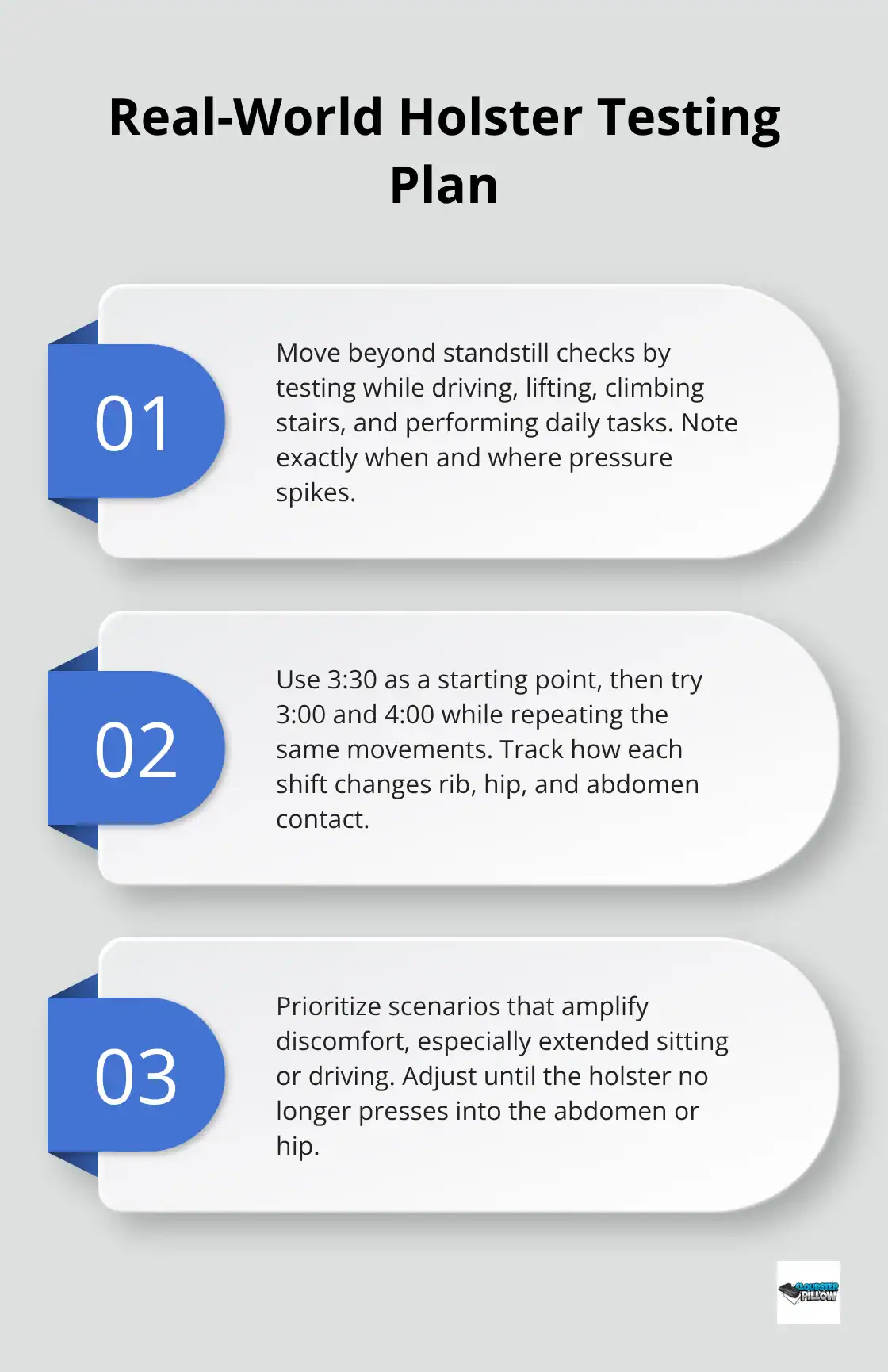
Successful carriers commit to a single week of intentional testing-standing, walking, sitting, getting in and out of a car, and bending forward-at each position before deciding where their holster sits best.
Match Cant and Ride Height to Your Body Type
Your body type dictates which cant and ride height combination works, and mismatching them creates unnecessary pressure. A carrier with a 5’11” frame and 180-pound build might find that a 4:00 position with a slightly higher ride height eliminates rib pressure when seated, while a taller, leaner frame needs a 3:00 position with lower ride height to prevent hip bone contact. Test these combinations while sitting upright in a vehicle-this is where most pressure complaints emerge-and adjust cant or ride height by a quarter-inch at a time. Small, measurable adjustments transform your all-day comfort without expensive gear swaps.
Use a Holster Wedge When Your Attachment Points Won’t Adjust
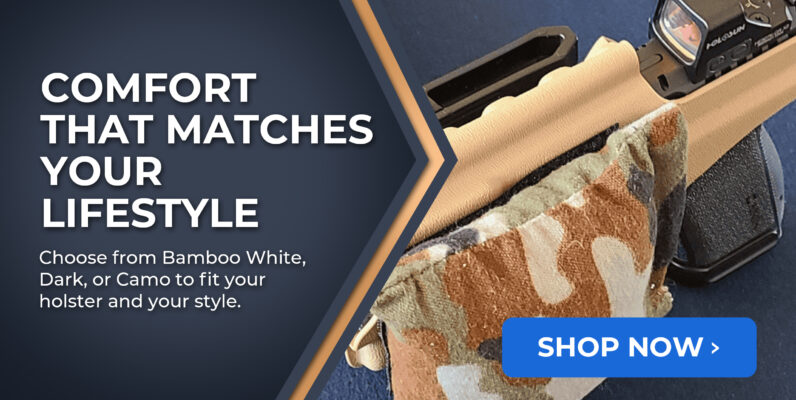
If your current holster’s attachment points don’t allow fine-tuning, a holster wedge redistributes pressure across a wider surface area without repositioning your entire setup. We at Cloudster Pillow designed our wedge specifically for carriers who can’t adjust their existing holster. A wedge adds pressure-spreading support without replacing your gear, allowing you to solve comfort problems through targeted solutions rather than costly equipment changes. This approach works because wedges angle the grip outward, reducing direct side contact while maintaining retention and concealment.
Final Thoughts
Comfort transforms your carry routine from a burden into a sustainable habit. When your holster fits your body properly, you train without wincing, sit in your car without constant repositioning, and move through your day without fighting pressure points. Inside waistband pressure tips work because they address the real reason carriers abandon daily carry: discomfort that builds throughout the day and becomes unbearable by evening. A carrier who stays comfortable carries every single day, which means they remain actually prepared when it matters.
The relationship between comfort and safety runs direct and unbreakable. A holster that digs into your ribs or hip bone causes you to adjust your position constantly, which affects retention and draw consistency. Your holster stays in the same position all day when comfort improves, your muscle memory stays accurate, and your draw remains reliable. You work with your gear instead of fighting it.
We at Cloudster Pillow built our holster wedge because most carriers cannot afford to replace their entire setup just to solve pressure problems. A quality wedge redistributes force across a wider surface area, reducing the concentrated pressure that creates hot spots and chafing (without requiring expensive gear swaps). Test your current setup honestly, identify where pressure concentrates, then address it with targeted solutions-explore our holster wedge collection to find the pressure-relief solution that works for your body and your carry style.