Concealed Carry Insurance
Is Concealed Carry Insurance Worth It? How Pillow Comfort Plays a Role
Stay Ready Without the Holster Dig
Legal coverage matters—but carrying consistently matters first. The Cloudster Pillow holster wedge boosts AIWB comfort, reduces hot spots, and helps keep your setup truly “everyday.”

Choosing to carry a firearm for self-defense comes with more layers than most people expect. You research the pistol, you compare holsters, you experiment with belts, and you spend time dialing in your drawstroke. Then a different question shows up—one that’s less about gear and more about consequences: is concealed carry insurance worth it?
That’s a fair question. A self-defense incident can create two battles: the physical confrontation that happens in seconds, and the legal aftermath that can last months (or years). Many carriers want a plan for attorney fees, bail, expert witnesses, and civil lawsuits. That’s where “CCW insurance” and legal defense memberships come into the conversation.
But there’s a missing piece that doesn’t get enough attention: you only benefit from any plan if you were actually carrying when you needed to be. If your holster is so uncomfortable that you “take a break” on quick errands, your readiness becomes inconsistent—and no policy can protect you from the consequences of leaving the gun at home on the wrong day.
This is where comfort gear—specifically a holster wedge or concealed carry pillow—becomes part of the bigger preparedness picture. In this guide, we’ll break down what concealed carry insurance is meant to do, what it typically does not do, and why a comfortable carry setup (including a pillow wedge) can be the deciding factor in whether any of it matters in real life.
Quick Note Before We Start
This article is general education, not legal advice. Laws vary by state and situation, and insurance/membership benefits vary by provider and plan. If you want legal clarity, consult a qualified attorney in your area and read any plan documents carefully before you buy.
What People Mean by “Concealed Carry Insurance”
When someone asks is concealed carry insurance worth it, they’re usually referring to one of two categories:
- Insurance-style policies that function like traditional insurance products (subject to terms, exclusions, and state rules).
- Legal defense memberships that provide access to attorneys, funding for defense, and coverage for certain legal expenses.
Different companies structure their offerings differently. Some emphasize “coverage limits,” some emphasize “attorney access,” and some operate more like a prepaid legal network. Regardless of the model, the goal is typically the same: reduce the financial shock of defending yourself after a self-defense incident.
Why the Aftermath Can Be Expensive
Even in a clean, justified self-defense situation, you may encounter:
- Criminal investigation costs: Interviews, evidence review, and the need for representation early in the process.
- Attorney fees: Self-defense cases can be complex and time-consuming.
- Expert witnesses: Use-of-force experts, forensic analysis, and other specialized testimony can matter.
- Civil litigation: Even if no charges are filed, civil suits can still happen.
- Lost wages and disruption: Court dates, stress, and time away from work can stack up fast.
That’s the “why” behind the question. The bigger your perceived risk and the more you want a safety net, the more you’ll think about whether concealed carry coverage is a smart move.
So… Is Concealed Carry Insurance Worth It?
Let’s answer the question the way most responsible carriers think: it depends on your personal risk tolerance, finances, and lifestyle. For many people, is concealed carry insurance worth it becomes a yes when they consider how quickly legal costs can exceed what they can comfortably pay out of pocket.
But there’s a more practical framing that cuts through the marketing:
- If you carry regularly and want a structured plan for “what happens next,” a coverage option can provide peace of mind.
- If you carry occasionally and would struggle financially in a worst-case scenario, it can still be valuable—because rare events are still possible.
- If you have substantial savings and a legal team already in place, you might decide to self-insure and keep your own emergency fund.
The core question isn’t just “worth it” in a math sense. It’s whether the plan helps you respond correctly under stress, make good decisions, and avoid financial ruin if you’re forced into the legal system.
What to Look for in a Plan (Beyond the Sales Pitch)
If you’re evaluating providers, don’t stop at the headline. The details matter. If you’re asking is concealed carry insurance worth it, these are the areas that typically separate strong plans from weak ones:
1) Attorney Access and Choice
Some programs provide a specific network of attorneys. Others allow you to choose your own counsel. Having a qualified self-defense attorney early can change outcomes, so look closely at how representation is provided.
For general self-defense law context (not plan-specific), resources like Cornell’s Legal Information Institute can help you understand terminology and legal concepts you’ll see in plan documents.
2) Upfront Payment vs. Reimbursement
Some programs pay certain costs directly (or provide immediate access to counsel). Others reimburse after the fact. The difference matters if you don’t have tens of thousands available on short notice.
3) Civil Coverage and What’s Included
Civil suits can be financially devastating. Pay attention to whether civil defense is included, how funding is handled, and what conditions must be met.
4) Exclusions and Use-of-Force Requirements
Every plan has exclusions. Read them. Understand what events are not covered, what behavior triggers denial, and what the provider requires to support a claim. Also note that legality and coverage can vary by state—some states restrict or regulate how these products are offered.
5) Training and Education Benefits
Some programs include training resources, educational material, and access to instructors. Education doesn’t replace legal protection, but it can support better decision-making and safer carry habits.
For broader training and carry education (independent of insurance), organizations like NRA Instructors and reputable training schools can help carriers improve safety and judgment.
The Missing Link: Comfort and Consistency
Here’s the uncomfortable truth: most people don’t stop carrying because they stopped believing in self-defense. They stop carrying because it’s annoying, painful, or inconvenient. That’s why the comfort piece belongs in the same conversation as legal protection.
If you’re still debating is concealed carry insurance worth it, ask yourself another question:
Are you carrying consistently right now?
If the honest answer is “not always,” then your priority isn’t a policy—it’s fixing the reason you’re skipping carry days. For many carriers, that reason is holster discomfort: Kydex edges digging into the pelvis, hot spots forming after a couple hours, pain while driving, or constant readjustment when sitting down.
How a Concealed Carry Pillow Helps You Carry More Often
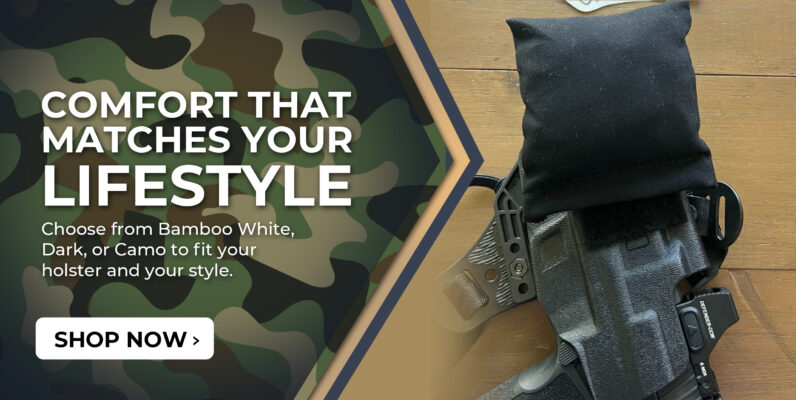
A concealed carry pillow (often called a holster wedge) is a soft, adjustable pad that attaches to the body-side of your holster—typically with hook-and-loop (Velcro). The purpose is simple: reduce pressure points and improve how the holster sits against your body.
A quality wedge changes two things at once:
- Comfort: It cushions the hard edges of Kydex and spreads pressure across a broader area.
- Concealment: The wedge can help rotate the grip inward, reducing printing under a shirt.
When comfort improves, consistency improves. And when consistency improves, your overall preparedness improves. That’s how a “small” comfort upgrade becomes part of a serious protection strategy.
Why Comfort Is a “Readiness Multiplier”
A painful holster creates predictable behavior:
- You start leaving the gun at home on short errands.
- You fidget in public, which draws attention and can compromise concealment.
- You rush the process of gearing up or gearing down, which can create safety errors.
A comfortable holster setup does the opposite. It makes carrying normal—like putting on your wallet and keys. In that sense, comfort becomes a readiness multiplier: it increases the number of days you’re actually prepared. That’s why, for many carriers, the real answer to is concealed carry insurance worth it depends partly on whether their setup is comfortable enough to be worn consistently.
Building the “Worth It” Carry System: Holster + Belt + Pillow Wedge
The best concealed carry setup is a system. Most experienced carriers eventually land on a three-part foundation:
- A quality holster with solid trigger guard coverage and adjustable retention.
- A supportive belt designed to handle the weight of a firearm without sagging.
- A concealed carry pillow wedge to eliminate hot spots and improve concealment geometry.
When these components work together, you get a setup that’s easier to live with. And when your carry is easy to live with, you carry more often—which makes any legal plan you purchase more relevant to real life.
How Cloudster Pillow Fits Into the Preparedness Equation
At Cloudster Pillow, the mission is simple: make concealed carry comfortable enough that you stop thinking about it. The Cloudster Pillow holster wedge uses adjustable fill so you can fine-tune thickness to your body type, your holster, and your preferred ride height. Instead of a stiff rubber block that traps heat and resists movement, a pillow-style wedge is designed to compress and adapt throughout the day.
That matters because daily carry isn’t static. You sit, drive, bend, stand, and move. Your holster should move with you—not punish you for having a human body.
Verdict: Legal Coverage + Comfort Gear Is the Real “360°” Plan
So, is concealed carry insurance worth it? For many daily carriers, yes—because legal defense can be financially and emotionally overwhelming. But it’s only half of the protection puzzle. The other half is making sure you’re actually carrying consistently.
Think of it like this:
- Coverage helps protect your finances and legal options after an incident.
- Comfort gear helps protect your consistency before an incident.
When you combine a thoughtful legal plan with a comfortable, dialed-in carry rig, you’re taking a more complete approach to self-defense. You’re supporting preparedness in the real world—not just on paper.
Frequently Asked Questions
1) Is concealed carry insurance worth it if I carry only occasionally?
If you carry at all, an incident could happen during one of those times. Whether it’s “worth it” depends on your budget and risk tolerance—but occasional carry is still carry.
2) Can I use a concealed carry pillow with any holster?
Most pillow wedges attach to Kydex and similar materials using hook-and-loop, and many carriers use them across multiple holsters. Always follow the manufacturer’s attachment instructions.
3) Does carry coverage protect my family too?
It depends on the provider and plan. Some offer add-ons or household coverage. Read the plan documents carefully and clarify who is covered.
4) What makes the best IWB holster setup actually work?
Consistency and safety. Look for full trigger guard coverage, stable retention, and a belt that supports the weight. Comfort add-ons like wedges often turn a “good” setup into an all-day setup.
5) How does a pillow wedge reduce printing?
Wedges can change holster geometry by adding thickness near the muzzle end, which helps rotate the grip inward toward the body. Less grip protrusion usually means less printing.
6) Will a provider pay attorney fees upfront?
Some models emphasize immediate access to legal help, while others are reimbursement-based. This is a major point to verify during plan comparison.
7) Is a pillow wedge too bulky for smaller carriers?
Not necessarily. Adjustable-fill designs allow you to reduce thickness. The goal is “just enough” cushioning and leverage—no more.
8) Does coverage apply in every state?
Plans vary, and state laws differ significantly. Always follow local laws wherever you are and verify how a plan works across state lines.
9) Why is Kydex uncomfortable without padding?
Kydex is rigid and doesn’t compress. Hard edges and pressure points become noticeable during sitting and movement, especially in appendix carry.
10) Can I get a refund if I never use coverage?
Generally, no—similar to other forms of insurance or membership fees, you’re paying for access and protection during the active period.
Related Cloudster Pillow Articles
- How to Streamline Your Morning Routine with an EDC Valet Tray
- Travel EDC: Why You Should Pack a Collapsible EDC Dump Tray
If you’re still asking is concealed carry insurance worth it, make sure you’re solving the “carry consistency” problem at the same time. Legal protection is smart. But comfort is what keeps you carrying day after day—so your preparation is real, not theoretical.
Make Carry Comfortable Enough to Be Consistent
If your holster hurts, you’ll eventually skip carry days. The Cloudster Pillow holster wedge helps eliminate pressure points, reduce printing, and make AIWB feel natural—so you stay ready.