
Firearms Training, CCW Training
Real Life Defense Training: Turning Lessons Into Everyday Readiness
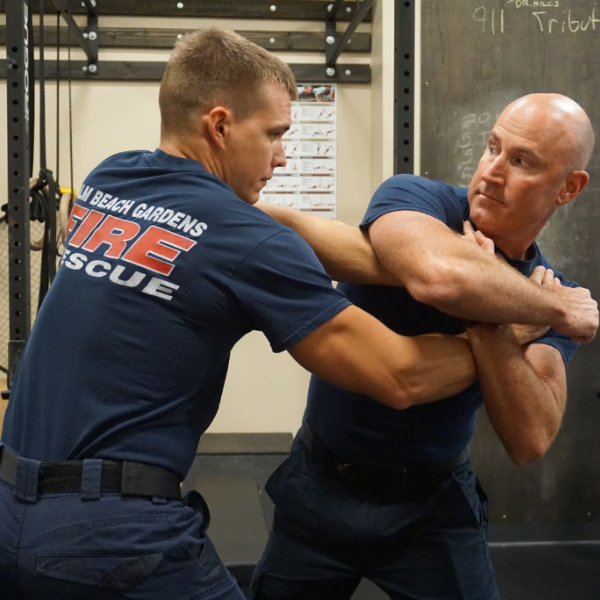

Most CCW carriers spend hours at the range but never train for what actually happens when a threat appears. At Cloudster Pillow, we believe self defense training goes far beyond hitting targets-it’s about building the mental and physical skills that keep you ready in real situations.
The gap between range practice and real-world readiness is where most carriers struggle. This post walks you through the training methods that close that gap and make defense readiness part of your everyday life.
Why Training Separates Ready Carriers From Unprepared Ones
Most CCW carriers never experience what happens when adrenaline floods their system and decision-making becomes impossible. USCCA reports that around 500,000 responsibly armed Americans actively seek training beyond basic firearm operation, yet countless others treat their concealed carry license as a one-time achievement rather than the beginning of lifelong preparation. The difference between these two groups shows up in real emergencies. Research from self-defense communities consistently shows that carriers who practice scenario-based training handle threats with measurable clarity while untrained carriers freeze or make critical errors under pressure. This isn’t about ego or competition-it’s about the hard reality that your body will revert to whatever you’ve trained it to do when stress hormones spike. If you’ve only practiced perfect shots on a quiet range, your nervous system has no template for the chaos of an actual threat. The gap between range performance and real-world readiness exists because shooting at paper targets tells you nothing about threat recognition, decision-making speed, or the physical coordination needed when your heart rate climbs to 180 beats per minute.
Range Performance Doesn’t Equal Street Readiness
Hitting a bullseye at 7 yards means almost nothing if you can’t identify a threat 30 seconds before it escalates. Situational awareness training teaches you to notice concealed hands, mismatched clothing, blocked exits, and behavioral patterns that signal danger-skills that never appear at a shooting range. Your draw from concealment under stress requires specific practice with your actual holster setup, whether AIWB or IWB, because muscle memory developed with one configuration fails when conditions change. Many carriers practice their draw in isolation, but real scenarios demand you draw while moving, while assessing distance, and while deciding whether a threat is genuine or perceived. Simulation training through organizations like USCCA forces your mind and body to process multiple variables simultaneously, which builds the mental framework you need when seconds matter. The physical and mental pressure of realistic scenarios reveals gaps in your technique that calm range sessions hide completely.
Confidence Comes From Specific, Repeated Practice
Carrying concealed all day creates a unique comfort challenge that generic self-defense training ignores. Many carriers abandon consistent training because their setup causes discomfort, printing problems, or movement restrictions that make daily practice feel impossible. When your carry setup works against you physically, motivation collapses. You build genuine confidence through training with your actual gear in the condition you’ll carry it-meaning your everyday clothing, your specific holster position, and the exact physical demands of your daily routine. Training creates confidence, and that confidence drives the consistency that separates prepared carriers from those who skip practice. Carriers who integrate low-impact drills into their daily life show measurably higher consistency and faster reaction times than those who treat training as an event. The carriers who succeed make readiness part of their lifestyle, not an occasional obligation they dread because their gear makes it uncomfortable.
Why Your Carry Setup Affects Training Consistency
Discomfort during training creates a hidden barrier that most carriers overlook. A holster that prints excessively, digs into your ribs, or shifts during movement makes you avoid practice rather than embrace it. You can’t build the muscle memory and confidence you need if your gear actively works against you. The solution isn’t replacing your entire holster system-it’s optimizing what you already carry.
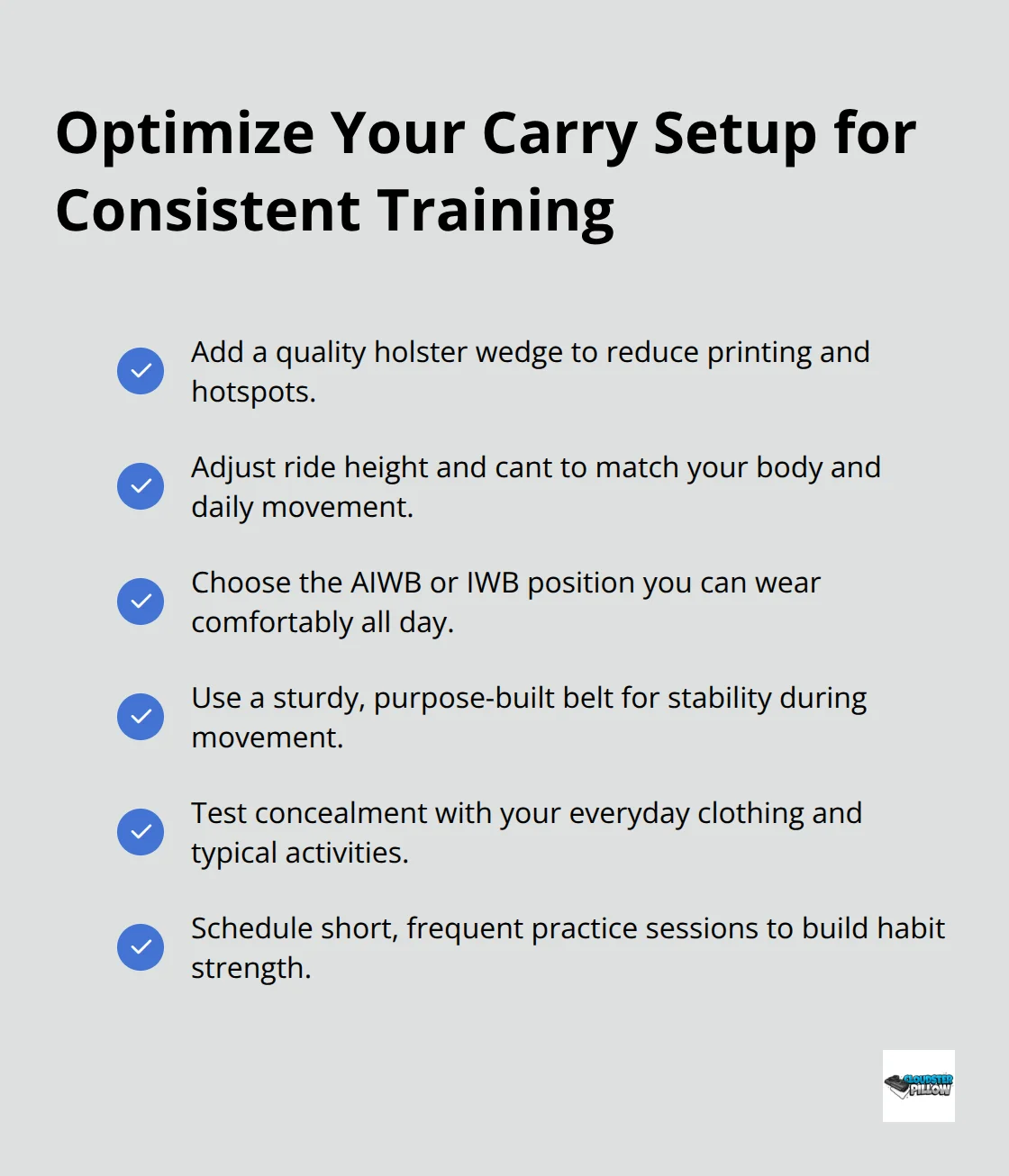
Small adjustments to your setup (like a quality holster wedge designed for AIWB and IWB positions) can eliminate printing, improve stability, and make daily practice feel natural rather than punishing. When your carry setup supports comfort and concealment, you actually want to train, which means you practice more consistently and develop faster, more reliable responses under pressure.
The foundation for real-world readiness starts with understanding what separates trained carriers from the rest-and that foundation only holds when you can practice without fighting your own gear.
What Skills Matter Most When Your Life Depends on Split-Second Decisions
Awareness Stops Threats Before They Force Your Hand
Marksmanship becomes irrelevant the moment you fail to recognize a threat exists. Situational awareness stops threats before they force you to draw, which means your first critical skill has nothing to do with accuracy or trigger control. Most carriers obsess over grouping at the range while remaining oblivious to the early warning signs that precede violence.
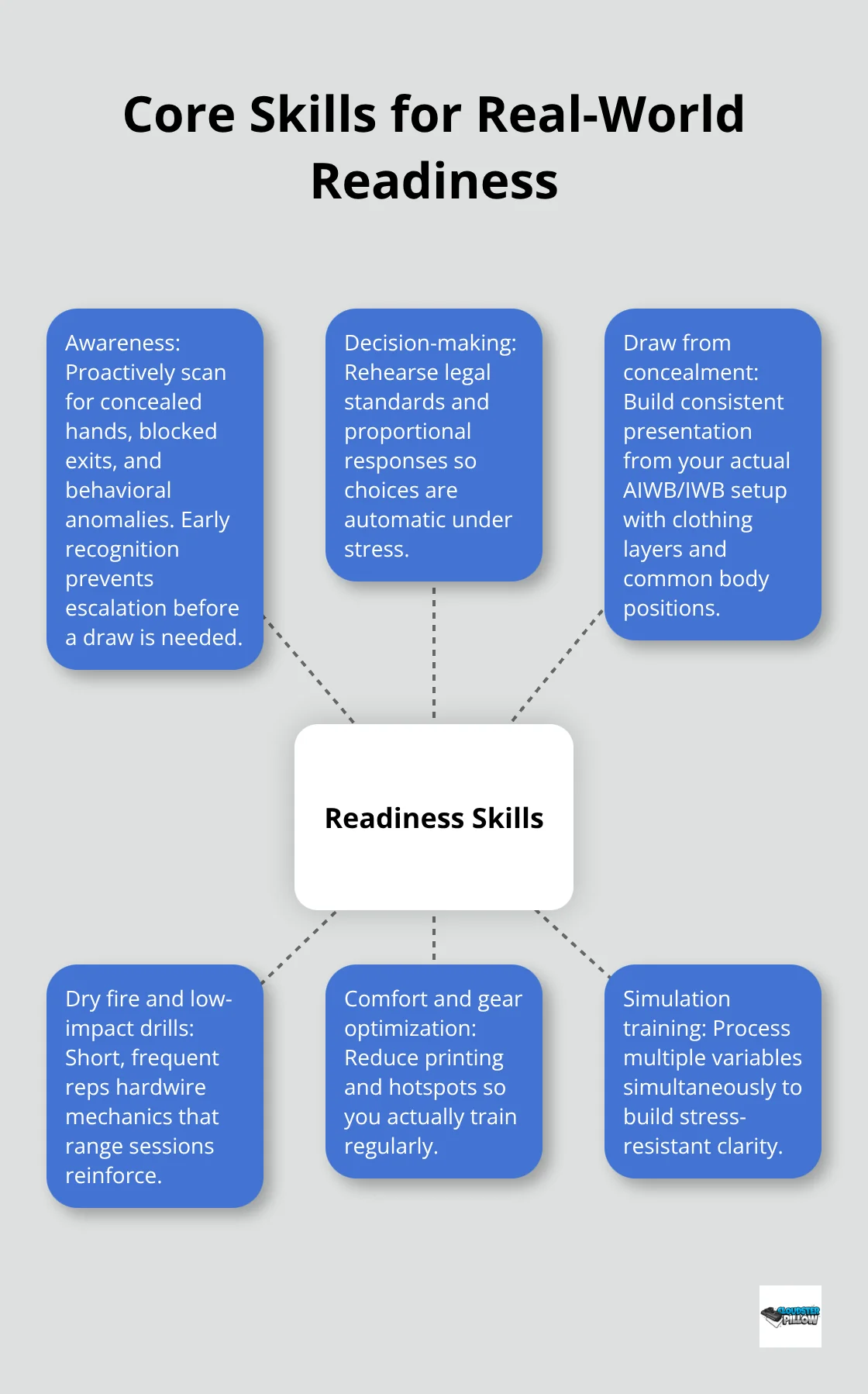
Watch for concealed hands, mismatched clothing in the environment, people who repeatedly glance at you, sudden direction changes, and blocked exits. These observations happen in the seconds before a threat escalates, and they separate carriers who prevent incidents from those who react to them. USCCA training emphasizes that awareness improves faster when you practice in familiar settings wearing everyday clothes, noticing patterns in your commute, your gym, your office, and your home.
Your nervous system learns to flag behavioral anomalies when you deliberately scan environments instead of scrolling through your phone. This mental shift transforms ordinary moments into training opportunities that compound over weeks and months.
Decision-making under stress Requires Mental Rehearsal
Scenario-based training is the gold standard for stress inoculation, triggering realistic physiological responses that prepare your decision-making framework before real emergencies occur. Understand your state’s self-defense laws, the concept of proportional response, and when lethal force becomes legally justified. Many carriers freeze not because they lack physical skills but because they haven’t mentally rehearsed the decision framework that separates lawful defense from criminal liability.
Simulation training forces your brain to process threat assessment, distance evaluation, and legal justification simultaneously, which builds the mental template that carries into real emergencies. When your heart rate climbs and adrenaline floods your system, you won’t suddenly develop clarity you never practiced-you’ll revert to whatever decision patterns you’ve rehearsed.
Drawing from concealment Under Stress Demands Specific Repetition
Drawing from concealment under stress requires specific repetition with your actual holster position, whether AIWB or IWB, because the technique that works from one position fails from another. Your draw must account for clothing layers, body position while seated or standing, and the exact angle of your specific holster.
Practice drawing from your actual daily carry setup in the clothes you wear regularly, not in a shooting range uniform. Speed matters far less than consistency and reliability under the physical and mental pressure that real threats create. Many carriers practice their presentation in isolation, but effective draw training incorporates movement, threat assessment, and the decision to fire or hold.
Low-impact drills at home build the muscle memory that range sessions reinforce. Dry fire practice (with an unloaded firearm and a cleared chamber) develops the neural pathways that speed becomes secondary to. Your carry setup directly affects whether you practice consistently enough to develop reliable presentation skills.
Comfort Determines Whether You Actually Train
If your holster prints excessively, shifts during movement, or creates discomfort that makes daily practice feel punishing, you’ll avoid the repetition that builds genuine competence. A quality holster wedge designed for both AIWB and IWB positions eliminates printing, improves stability, and transforms daily practice from something you dread into something that feels natural.
When your gear supports comfort and concealment without replacing your entire holster system, you practice more frequently and develop the muscle memory that separates prepared carriers from those whose skills decay between occasional range visits. This consistency compounds-the carrier who trains three times weekly for six months develops reflexes that the occasional range visitor never achieves.
Your next step involves taking these skills and weaving them into your actual daily life, not just your training sessions.
Training That Fits Your Real Life
Most carriers treat training as something that happens at a range during scheduled sessions, then vanishes from their daily routine. This approach guarantees skill decay because the human nervous system requires consistent repetition to maintain reliable responses. Effective training integrates into your actual life, not separate from it.
Dry Fire Practice Builds Foundation Skills at Home
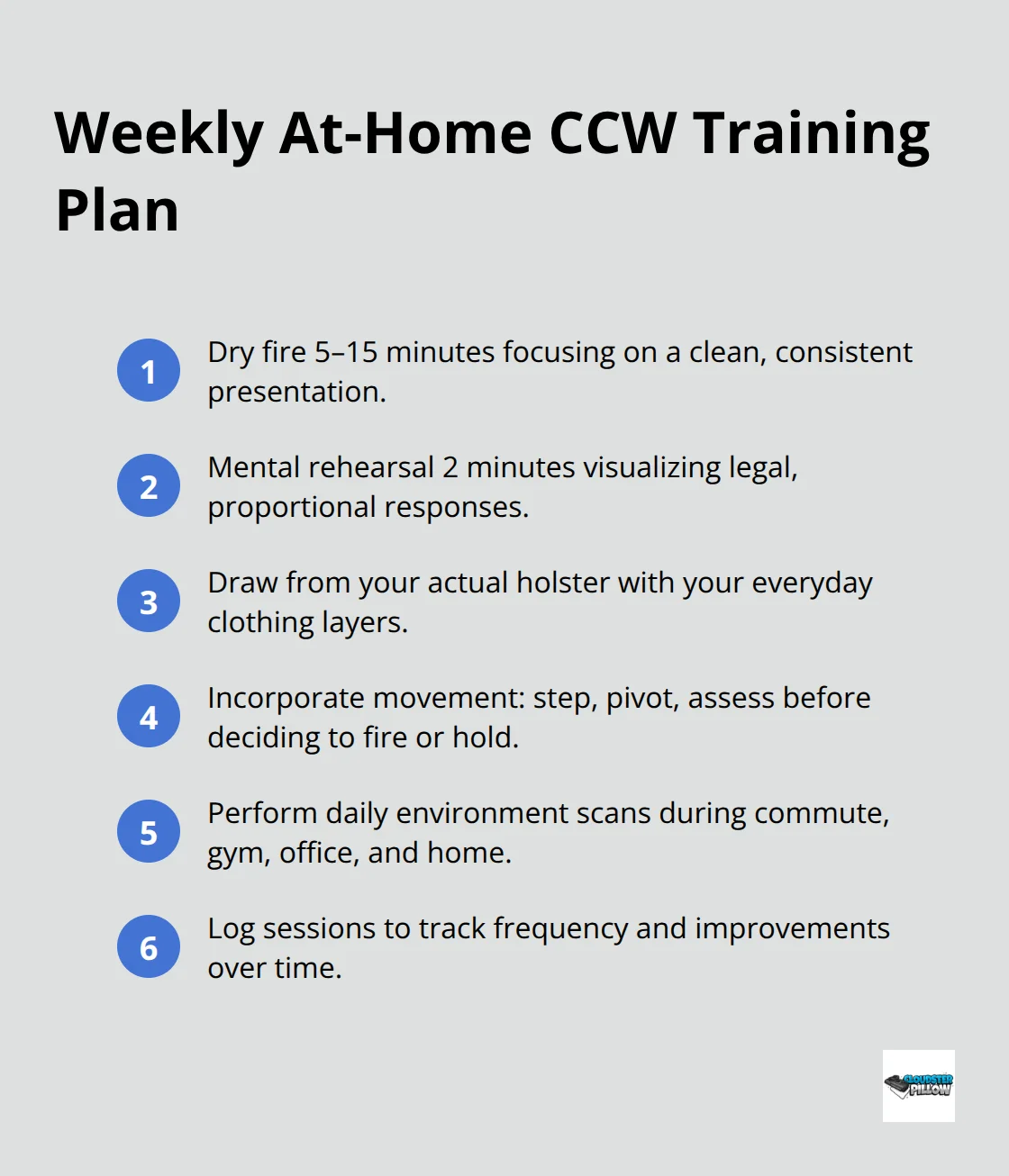
Dry fire practice at home costs nothing and takes fifteen minutes, yet produces measurable improvements in presentation speed and accuracy. Carriers practicing scenario-based training weekly show significantly faster threat recognition than those who train monthly. Start with five minutes of dry fire work three times weekly using your unloaded firearm in a cleared chamber. Practice your draw from the position you actually carry, whether AIWB or IWB, wearing the clothes you wear daily. This repetition trains your nervous system to respond reliably when stress hormones spike.
Mental Rehearsal Prepares Your Decision Framework
Mental rehearsal trains your decision-making framework before physical stress occurs. Visualize specific scenarios from your commute or your gym: someone approaching with concealed hands, a sudden direction change that signals threat assessment, a blocked exit. Spend two minutes visualizing your response-recognizing the threat, creating distance, assessing legality, and executing your draw. Simulation training enhances stress resistance and decision-making skills under pressure. Most carriers skip this step because it sounds theoretical, but the carriers who succeed refuse the false choice between dedicated training sessions and daily practice. They do both, building layers of competence that compound over weeks.
Structured Training Accelerates Your Progress
Finding structured training requires knowing what exists in your area and what actually transfers to real readiness. USCCA offers in-person classroom and range training for concealed carry, self-defense, simulation scenarios, and active shooter response across multiple locations, with classes open to both members and non-members. Search for instructors who teach scenario-based training rather than pure marksmanship, because decision-making under stress matters far more than tight groupings. Many gun ranges now offer simulation training that forces your brain to process multiple variables simultaneously-threat assessment, distance evaluation, legal justification, and movement. These classes typically cost between one hundred fifty and three hundred dollars for four to six hours, which represents the best return on investment for building genuine competence.
Consistency Matters More Than Duration
Join local CCW communities online to find recommendations for instructors who teach real-world readiness rather than range fundamentals. Your training frequency matters more than duration. Carriers who train twice monthly for an hour develop faster reflexes than those who attend one eight-hour class annually. This means your home practice fills the gap between formal classes, making consistency the actual variable that separates prepared carriers from those whose skills erode between occasional sessions. When your carry setup supports comfort through proper positioning and stability, daily practice becomes something you want to do rather than something you dread.
Final Thoughts
Real-world readiness develops through consistent practice that fits into your actual life, combined with a carry setup that supports rather than sabotages your efforts. When your holster prints or causes discomfort during daily wear, motivation collapses and self defense training becomes something you avoid. The carriers who succeed treat readiness as a lifestyle choice, not an obligation they dread.
Comfort directly impacts your training consistency, and small optimizations to your existing holster system eliminate printing and improve stability without requiring a complete replacement. Your holster wedge transforms daily practice from punishing to natural, building the muscle memory and decision-making framework that separates prepared carriers from those whose skills decay between occasional sessions. This consistency compounds over weeks and months, creating layers of competence that carry into real emergencies.
Start with fifteen minutes of dry fire practice three times weekly using your actual holster position and everyday clothing, then add mental rehearsal to train your decision-making framework before physical stress occurs. Find local instructors who teach real-world scenarios rather than pure marksmanship, because threat recognition and legal justification matter far more than tight groupings. We at Cloudster Pillow designed our holster wedge collection specifically for carriers who want comfort and concealment without replacing their entire system.

Pingback: CCW Training: Real World Tips for Effectiveness