
Uncategorized
The History of the EDC Valet Tray: From Butlers to Modern Essentials

Upgrade Your Carry Experience Today
Better organization starts with better comfort. Paired with the right gear, the Cloudster Pillow holster wedge eliminates hot spots, improves concealment, and transforms your AIWB experience.
EDC Valet Tray
Picture a scene from a classic film or a refined period drama. A gentleman steps into his dressing room, weary from the day. His valet appears instantly—nearly invisible, yet flawlessly attentive. The coat is removed, the hat is taken, and finally, the man empties his pockets into a velvet-lined box or polished silver tray. His belongings—a pocket watch, coin purse, signet ring, handkerchief, and sometimes even a small pistol—were not simply placed somewhere. They were cared for, arranged, and prepared for tomorrow. This ritual embodied order, luxury, readiness, and respect for one’s tools.
Today, most of us don’t have a personal attendant following us around the house, ensuring our keys and wallet stay neatly in one place. But the need for organization hasn’t vanished—if anything, it has intensified. We now carry more expensive daily gear than at any point in history: smartphones, flashlights, tactical pens, folding knives, multitools, earbuds, and electronic key fobs. We need a reliable place to store the valuables we rely on every day. This is exactly why the EDC Valet Tray has become a staple in modern homes.
It doesn’t speak. It doesn’t collect a salary. But the EDC Valet Tray performs the same essential service once provided by human staff: it preserves order, protects your gear, and supports a smooth daily routine. At Cloudster Pillow, we love exploring how timeless concepts like comfort, structure, and preparedness evolve for modern concealed carriers and EDC enthusiasts. Just as a pillow supports your rest, a dedicated tray supports your daily rhythm. To appreciate the modern EDC Valet Tray, we must first understand its lineage.
The Era of the Gentleman’s Gentleman
The term “valet” comes from the French word varlet, referring to a personal attendant whose sole responsibility was managing the wardrobe and accessories of a nobleman. In the 18th and 19th centuries, a well-dressed man relied on layers of clothing, delicate fabrics, and numerous accessories. Pocket watches were wound nightly. Snuff boxes stored tobacco. Coin purses held silver, copper, or gold currency. Cufflinks, rings, seals, keys, and even discrete weapons remained part of the daily loadout.
The valet handled all of it. At night, he arranged every item in meticulous order to ensure the gentleman could wake up and immediately slip into a prepared routine. It was an early form of what we now call “Everyday Carry”—but managed by another person. The early ancestor of today’s EDC Valet Tray was not a product; it was a person.
The Birth of the Silent Valet
As the 20th century unfolded, social structures shifted. Domestic staff declined and became rare outside the wealthy elite. Yet men still owned cufflinks, pocket watches, and suits that required careful storage. Enter the silent valet—a freestanding valet stand designed to replace the human attendant. Crafted from polished wood, it featured a hanger for jackets, a bar for trousers, a shoe rack, and crucially, a small tray for pocket contents.
This was the first time the function of a valet was distilled into a standardized object. A man returned home, hung up his suit, emptied his pockets into the tray, and prepared for the next day. It was a structured ritual that maintained the sense of readiness long after actual valets disappeared.
Casual Fashion and the Vanishing Valet Stand
By the mid-20th century, fashion began its shift toward casual wear. Jeans and t-shirts replaced three-piece suits. Fewer men required a dedicated stand for dress clothes. Consequently, the valet stand slowly faded from the home.
But the pocket dump did not. Men still carried wristwatches, wallets, keys, pens, and—eventually—smartphones. Without a dedicated place to put these items, belongings ended up scattered across kitchen counters, nightstands, and car cup holders. The absence of the valet stand left a vacuum that modern EDC culture would later fill.
The Rise of the EDC Valet Tray
By the early 2000s, the term Everyday Carry (EDC) gained traction. Enthusiasts began sharing loadouts online, discussing knives, lights, pistols, multitools, and gear designed for personal safety and preparedness. Suddenly, the items in your pockets weren’t random—they were your curated tools. And tools deserve a place of honor.
This realization inspired the revival of a forgotten household object: the tray. But this time, it wasn’t attached to a wooden stand. The modern EDC Valet Tray was designed to sit on existing furniture—dressers, nightstands, office desks, entryway tables—and serve as a simple, compact platform for essential gear.
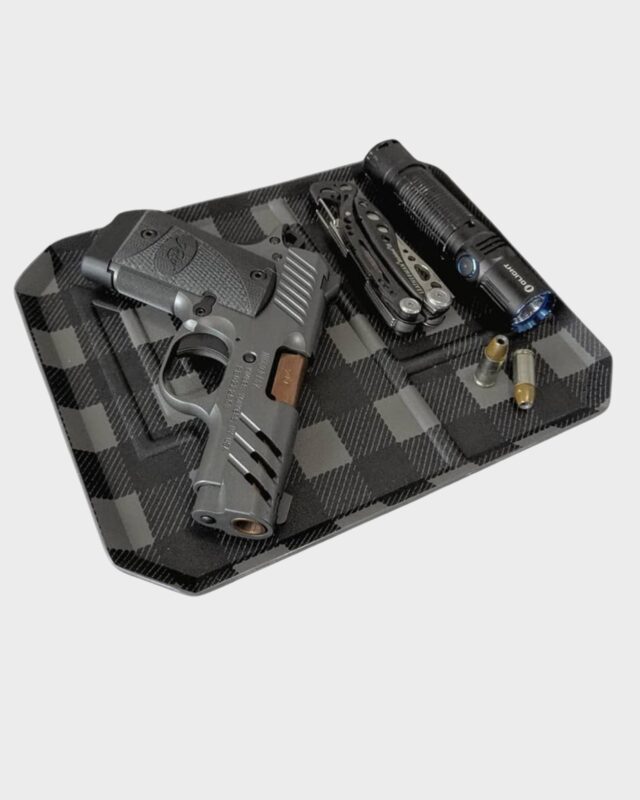
It evolved far beyond the tiny bowls perched atop old valet stands. The new tray accommodated large smartphones, folding knives, metal wallets, flashlights, pens, keys, and even pistol magazines. It reintroduced order to modern chaos, combining a century-old concept with tactical practicality.
Form Meets Function: The Modern EDC Valet Tray
Today’s EDC Valet Tray is engineered to solve problems previous generations never imagined. Modern gear is heavier, sharper, more expensive, and more tech-integrated. The tray had to adapt. Common improvements include:
- Soft linings to protect glass screens and prevent scratches.
- Cable pass-through channels for charging phones and smartwatches.
- Noise-dampening surfaces to quiet the clatter of metal tools.
- Segmented compartments to organize gear intuitively.
- Snap-corner designs allowing travel-friendly foldable trays.
This shift represents the perfect blend of form and function. The modern EDC Valet Tray doesn’t merely store gear; it preserves readiness.
Materials Through the Ages
Materials tell a story of evolution:
Victorian Luxury
Early trays were made from silver, porcelain, or crystal—beautiful but fragile. They weren’t designed for knives, metal wallets, or rugged tools.
Mid-Century Warmth
The 1950s introduced wooden trays, especially teak and walnut. These matched furniture trends but weren’t padded enough for modern tech.
The Tactical Era
Today, the EDC Valet Tray reflects the nature of modern gear:
- Leather — durable, masculine, and reminiscent of holsters.
- Kydex — lightweight and used in modern firearms gear.
- Carbon fiber — ultra-modern, strong, and stylish.
- Canvas or ballistic nylon — rugged and abrasion-resistant.
The materials mirror the lifestyle of today’s EDC enthusiasts—tactical, prepared, durable, and practical.
The Psychology Behind the EDC Valet Tray
From human servants to wooden stands to modern catch-all organizers, one truth remains constant: humans crave order. Emptying pockets into an EDC Valet Tray isn’t just a mechanical action—it’s a ritual of transition. It communicates:
- You’re home.
- You’re safe.
- Your responsibilities can wait until tomorrow.
This ritual mirrors concepts supported by psychological research showing that physical organization reduces stress and mental clutter. For concealed carriers, readiness is part of that calm. When your gear is always in the same place, you eliminate uncertainty and prevent dangerous lapses in preparedness.
Cloudster Pillow emphasizes comfort and reliability in concealed carry. Just as our holster wedge eliminates pressure points and improves AIWB concealment, the EDC Valet Tray eliminates daily chaos by creating a small island of control—a modern sanctuary for your gear.
The Modern Butler
We may not live in manors or dress in tails for dinner, but the human need for order never left. The EDC Valet Tray is the modern butler—quiet, efficient, and always waiting for you. Whether you use it to hold a smartwatch or a tactical folding knife, its purpose is identical to its ancestors: protect and prepare your daily tools.
In a world that sometimes feels chaotic, an EDC Valet Tray offers clarity. When you drop your keys into it at the end of the day, you’re continuing a centuries-old tradition of organization and preparedness. It’s more than a tray—it’s a ritual, a lifestyle, and a connection to every man who has ever ended a long day by setting his tools aside with intention.
Frequently Asked Questions
1. Why is it called an EDC Valet Tray?
It borrows the name from historical valets—personal servants responsible for organizing a gentleman’s accessories. Today, the tray fulfills the same job.
2. When did valet trays regain popularity?
They surged in popularity during the EDC movement of the 2010s, when enthusiasts needed a dedicated place to store expensive gear. Communities like r/EDC on Reddit helped fuel the trend.
3. Are “tidy trays” and valet trays the same?
Functionally, yes. A tidy tray is a general catch-all. An EDC Valet Tray is built specifically to hold tools, tech, and daily gear.
4. Did women use valet trays?
Women historically used vanity trays, often ornate and designed for perfume, brushes, and jewelry.
5. Can antique trays be used for EDC?
Yes, but fragile materials like silver scratch easily. If you use an antique tray, consider adding a leather insert for protection.
Related Cloudster Pillow Articles
- How to Streamline Your Morning Routine with an EDC Valet Tray
- Travel EDC: Why You Should Pack a Collapsible EDC Dump Tray
Ready to Improve Your Daily Carry Setup?
Complete your EDC system with the Cloudster Pillow holster wedge—designed for superior AIWB comfort, concealment, and confidence.
