
CCW Training
7 Critical Concealed Carry Mistakes to Avoid

Most concealed carry mistakes happen within the first year of carrying. These errors can compromise your safety, comfort, and legal standing.
Understanding concealed carry mistakes is essential for every responsible gun owner.
We at Cloudster Pillow see these same issues repeatedly among new carriers. Poor holster selection, inadequate training, and comfort problems top the list of preventable mistakes that turn daily carry into a frustrating experience.
Identifying common concealed carry mistakes can help new carriers avoid unnecessary issues.
1. Wrong Holster Selection Destroys Your Carry Experience
Your body shape determines concealment success more than the gun you carry. A 6-foot-2 lean frame hides a full-size pistol easier than a 5-foot-6 stocky build conceals a compact. Hip-to-waist ratios affect how holsters sit against your body, with wider hips creating natural concealment advantages that narrow builds lack. Manufacturers rarely account for torso length variations, which leads to holsters that dig into ribs or ride too low for effective draws. Generic holster designs ignore these anatomical differences and force carriers into uncomfortable compromises that reduce carry consistency.
Standard holster companies use medium builds for their prototypes and leave shorter and taller carriers with poor fit. Retention settings designed for average hand strength fail smaller users while they create sluggish draws for larger hands. Belt attachment points rarely adjust for different waist sizes, which causes holsters to cant incorrectly or create pressure points. One-size-fits-all approaches ignore that different waist sizes carry differently, even with the same gun (these sizing mismatches create printing, discomfort, and safety issues). These problems make daily carry miserable rather than natural and often lead carriers to abandon their holsters within weeks.
Poor holster selection creates a cascade of problems that extends beyond simple discomfort. Many new carriers blame their gun choice when the real issue lies with holster fit and body compatibility. This mistake sets the foundation for every other carry problem you’ll encounter.
Addressing concealed carry mistakes early on can set a strong foundation for safe carrying.
2. Skipping Draw Practice Creates Deadly Hesitation
Skipping draw practice is one of the most critical concealed carry mistakes to avoid.
Most defensive gun encounters last 3 to 5 seconds, with distances that average 5 to 6 feet. Your draw speed determines survival more than your gun choice or holster brand. Professional instructors report that untrained carriers take 4 to 8 seconds for their first draw under stress, while trained carriers complete draws in 1.5 to 2.5 seconds.
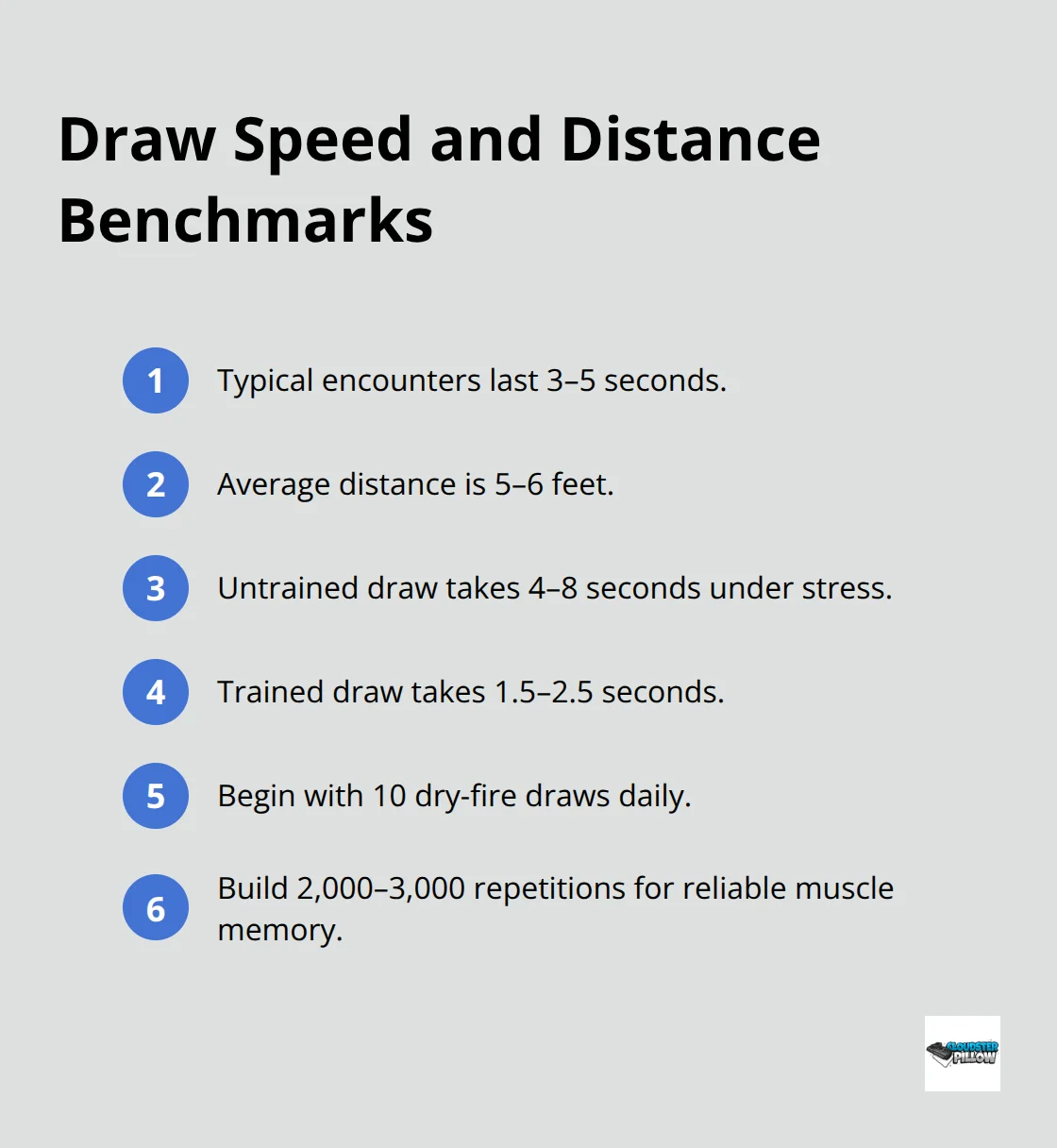
This speed difference means life or death when you face an armed threat. Muscle memory through repetition creates automatic responses that bypass conscious thought when high-stress situations occur.
Dry fire practice at home builds the neural pathways that prevent fumbles when adrenaline floods your system. Start with 10 draws daily with an unloaded firearm in a safe direction with no ammunition in the room. Focus on grip consistency, sight alignment, and trigger press rather than speed (professional trainers recommend 2,000 to 3,000 repetitions to establish reliable muscle memory for basic draw mechanics). Advanced carriers practice one-handed draws, shots from cover, and malfunction clears to handle real-world scenarios. Range time validates your dry fire work but cannot replace the volume of repetitions needed for automatic responses.
Recognizing concealed carry mistakes can significantly improve your response times during emergencies.
Poor draw technique compounds when carriers switch between different holster positions or carry methods, which destroys the consistency that builds reliable muscle memory and leads directly to our third major mistake.
3. Legal Ignorance Lands Carriers in Prison
Concealed carry laws changed in 27 states during 2023, with permitless carry expansion while gun-free zones increased simultaneously. Florida’s constitutional carry took effect in July 2023, which eliminated permit requirements for residents but maintained all prohibited locations. Texas added university campuses to restricted areas while it loosened church carry restrictions.
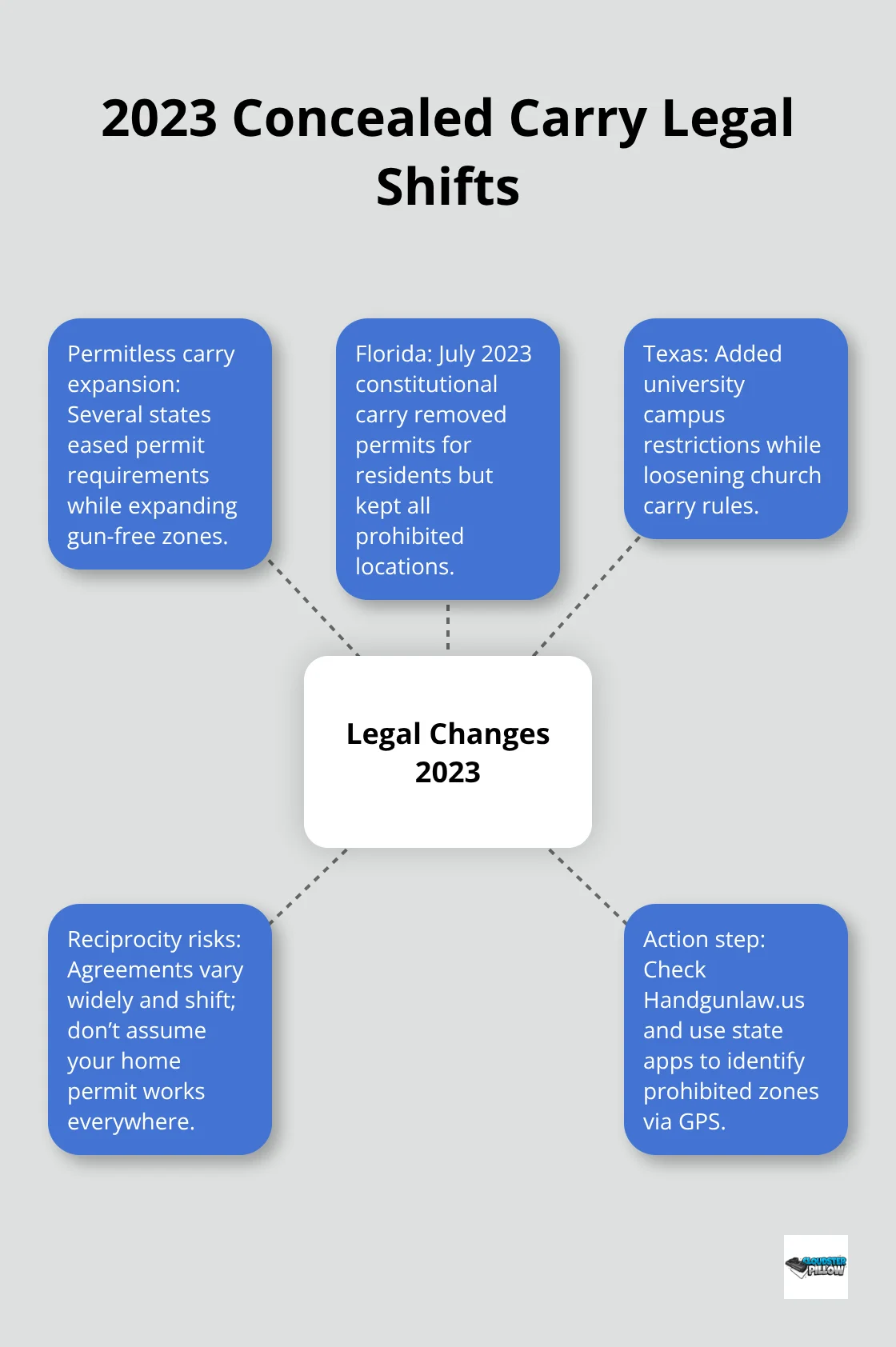
These rapid changes catch travelers off-guard, especially when reciprocity agreements shift without notice. Interstate travelers face the biggest legal risks because they assume their home state permit works everywhere, but reciprocity varies significantly between states.
Familiarity with legal aspects helps prevent concealed carry mistakes that could lead to serious consequences.
Federal facilities, schools, and post offices remain prohibited nationwide, but state-specific zones create legal minefields for carriers. Michigan prohibits carry in daycare centers and sports arenas, while Georgia bans firearms in government buildings but allows them in state parks. Virginia restricts carry in restaurants that serve alcohol unless you abstain, but West Virginia has no such limitation. Violators face felony charges in most states, with sentences from 1 to 10 years. Smart carriers check Handgunlaw.us before travel and download state-specific apps that identify prohibited zones based on GPS location. Legal violations destroy lives faster than poor marksmanship, which makes law knowledge more important than accuracy for daily carriers.
Poor legal preparation connects directly to equipment choices, especially when carriers select belts that cannot support their holster systems properly.
4. Cheap Belts Sabotage Your Entire Carry System
Using the wrong gear is another of those concealed carry mistakes that can be easily avoided.
Standard dress belts collapse under firearm weight and create dangerous draw inconsistencies that compromise your defensive capability. A loaded Glock 19 with holster weighs approximately 2.5 pounds, which exceeds the design limits of most fashion belts that use thin leather or fabric construction. Professional instructors report that new carriers often use inadequate belts, which causes holster sag, weapon shift, and print problems throughout the day. Quality gun belts use reinforced cores with 13 to 15-ounce leather or polymer inserts that maintain rigidity under load. Hanks Belts and Blue Alpha Gear produce belts that support firearm weight without stretch or roll, while department store belts fail within weeks of daily carry use.
Belt flexibility destroys draw consistency because your holster moves during the draw stroke instead of providing a stable platform for weapon presentation. Trainers at Thunder Ranch and Gunsite Academy require students to use dedicated gun belts because flexible belts negatively impact occupational tasks and movements during live fire exercises. Your belt must remain rigid when you apply upward pressure during the draw, which prevents the holster from lifting with the gun (Cobra Buckle systems and Wilderness Tactical belts offer quick release options for airport security while maintaining the stiffness needed for reliable draws). Tactical instructors recommend belts with 1.5-inch width minimum for daily carry applications. Poor belt choice creates the foundation for our next major mistake: clothing selections that broadcast your concealed weapon to everyone around you.
5. Wrong Clothing Choices Expose Your Concealed Weapon
Tight-fitting shirts reveal every outline of your firearm and holster, which creates obvious printing that defeats concealment entirely. Polo shirts, fitted t-shirts, and athletic wear cling to your body and highlight the rectangular shape of most handguns against your torso. Polyester and spandex blends stretch around weapon contours and create visible bulges that trained eyes spot immediately. Cotton button-ups and loose-fitting shirts break up weapon outlines effectively, while heavyweight fabrics like denim and canvas hide printing better than thin fabrics. Dark colors conceal shadows and depth variations that light colors amplify (navy blue and charcoal gray provide superior concealment compared to white or beige shirts).
Choosing the right clothing can help address the concealed carry mistakes of visibility and comfort.
Summer carry demands strategic wardrobe changes because lightweight fabrics and minimal clothing layers reduce concealment options significantly. Hawaiian shirts, camp shirts, and untucked button-ups provide the extra fabric needed to hide weapon printing during hot weather months. Patterned clothing disrupts visual recognition of firearm shapes better than solid colors, with plaid, geometric designs, and busy prints that break up telltale gun outlines.
Winter layers create natural concealment advantages, but avoid thick base layers under heavy coats because removing outerwear in buildings exposes poorly concealed weapons. Professional carriers recommend purchasing shirts one size larger than normal to accommodate concealed firearms without obvious bulges or fabric stress. Poor clothing choices compound when carriers develop inconsistent daily routines that undermine their concealment efforts.
6. Inconsistent Carry Habits Destroy Your Defensive Readiness
Inconsistent carry habits are often the result of common concealed carry mistakes made by many.
Habit formation research from University College London shows that new behaviors require 66 days of consistent repetition to become automatic responses. Most concealed carriers switch between appendix carry, hip carry, and pocket carry based on comfort or convenience, which prevents muscle memory development and creates dangerous hesitation during emergencies.
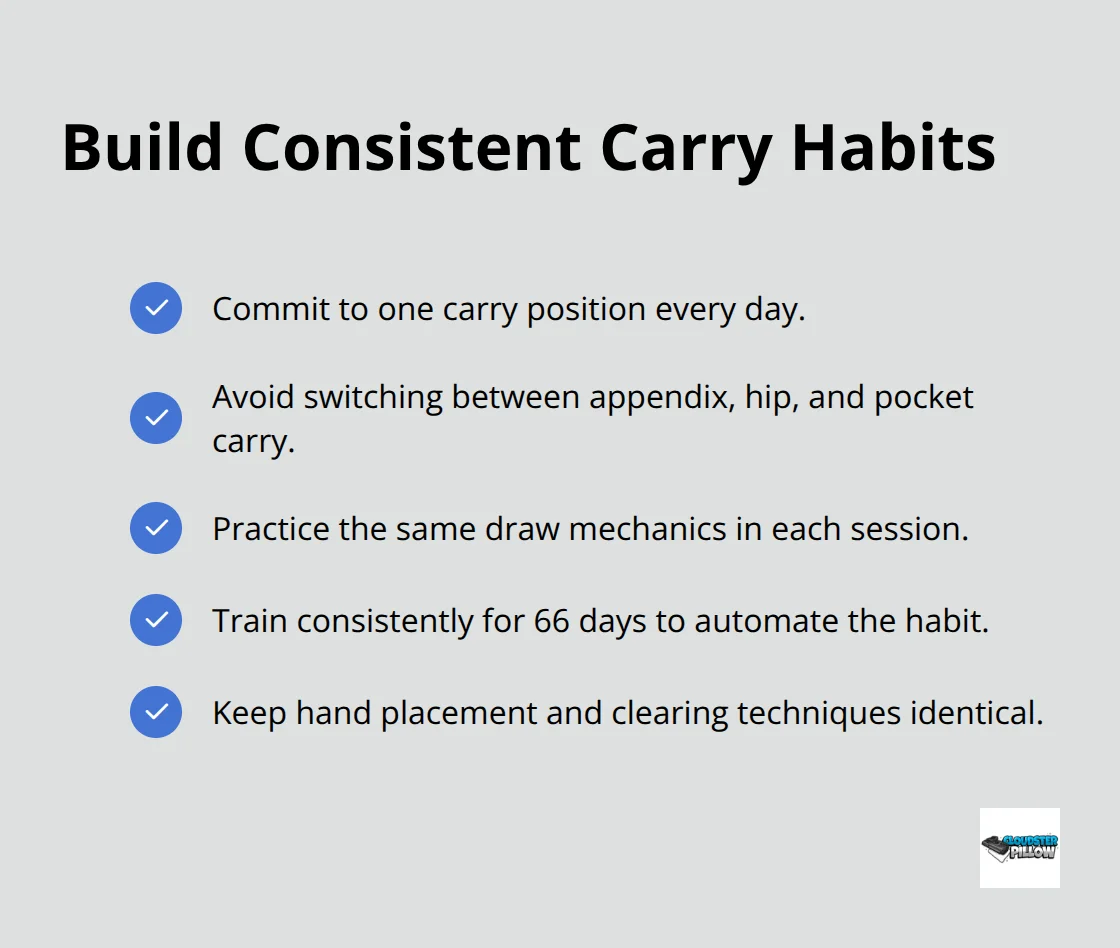
Professional defensive instructors report that carriers who change positions frequently take longer to draw their weapons compared to those who maintain consistent carry locations. Your brain builds neural pathways specific to each carry position, and position changes force you to relearn draw mechanics repeatedly instead of developing automatic responses that work under stress.
Each carry method destroys proficiency when mixed with others because different positions require unique body mechanics, hand placement, and clearing techniques that cannot transfer between locations. Appendix carry demands straight-up draws with support hand clearing, while strong-side hip carry requires rotation and different grip angles that feel completely foreign to appendix-trained hands. Police academies mandate single carry positions throughout training because mixed methods create confusion during high-stress encounters when officers need immediate weapon access. Smart carriers choose one position based on body type and lifestyle demands, then practice that same position daily until draws become subconscious reactions.
These inconsistent habits compound when carriers ignore the physical discomfort that drives position changes, which leads directly to the most overlooked aspect of successful concealed carry.
7. Comfort Problems End Most Carry Journeys
Recognizing comfort problems as concealed carry mistakes is vital for a successful carrying experience.
Research shows that many new concealed carriers face significant challenges in their first year, with studies indicating that ease of access to firearms may contribute to various outcomes including increased suicide rates in certain states. Hip pressure, back strain, and skin irritation drive carriers to leave their firearms at home instead of addressing the root causes of their pain. Lower back pain affects many appendix carriers who use standard holsters without proper weight distribution accessories. Rib cage pressure from inside-the-waistband holsters creates chronic discomfort that worsens throughout long workdays. Most carriers accept this pain as normal when simple accessories eliminate these problems completely.
Holster wedges redistribute firearm weight and eliminate pressure points that standard holsters create against your body. Quality foam wedges reduce print while they push the grip closer to your torso and prevent the muzzle from digging into your leg during extended sitting periods. Claw attachments pull the grip tighter against your body and reduce print significantly compared to holsters without these accessories. Medical professionals report that improper carry positions cause long-term spinal alignment issues and muscle strain that requires physical therapy to correct. Smart carriers invest in comfort solutions early rather than endure months of pain that often leads to abandonment of concealed carry entirely.
These comfort issues create a foundation for success when carriers address them properly, which leads directly to building sustainable carry habits that work for your specific lifestyle and daily routine.
Final Thoughts
Successful concealed carry requires commitment beyond your permit. Professional carriers develop routines that make daily carry feel natural rather than burdensome. Start with 15 minutes of daily dry fire practice to build muscle memory that works under stress.
Remember, overcoming concealed carry mistakes is part of the journey towards becoming a proficient carrier.
Choose one carry position and stick with it for at least 90 days to develop automatic responses. Your clothing, belt, and holster must work together as a complete system rather than individual components. Most concealed carry mistakes stem from treating carry as a part-time activity instead of a lifestyle commitment.
Striving to correct concealed carry mistakes can lead to a more confident carrying experience.
Consistency beats perfection when you build sustainable habits. Quality accessories solve comfort problems that cause carriers to leave firearms at home (the most common reason people abandon concealed carry). The Cloudster Pillow holster wedge eliminates pressure points and print issues that standard holsters create, which makes all-day carry comfortable for any body type.
Never underestimate the impact of concealed carry mistakes on your overall carrying strategy.
Ultimately, addressing concealed carry mistakes can enhance your overall safety and preparedness.

Pingback: Essential EDC Gear Every Person Should Carry Daily - Cloudster Pillow