
EDC Gear
The Best Concealed Carry Jackets: What to Look For
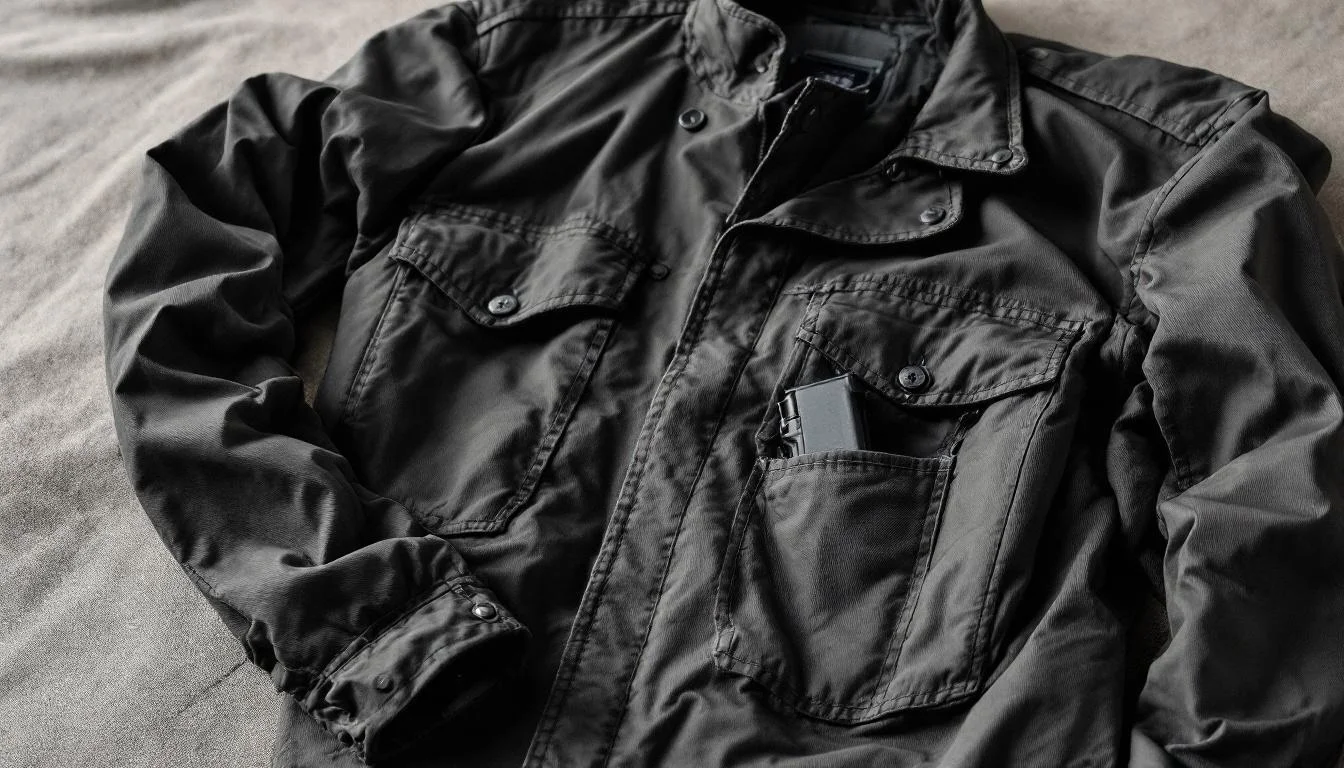
Quick answer: A good concealed carry jacket gives you a fast path to the gun and keeps it covered when you move. Look for side-seam zippers or zippered pass-throughs in the hand pockets, a hem long enough to cover the grip when you bend, and room for the holster. Test it in a mirror before you rely on it.
Features that matter
- Side-seam zippers. They open at the hip so you can reach a belt holster without unzipping the front. 5.11 calls its version the Quixip system.
- Hand-pocket pass-throughs. These are zippered openings inside the hand pockets that reach the waistband. They’re aimed at appendix carry. Concealed carry hoodies use the same idea; see our concealed carry hoodie guide.
- A drop-back hem. The back is cut longer so the belt stays covered when you bend or reach.
- Room at the waist. Some makers say they cut jackets to leave space for gear along the waistline.
- Inner lining that resists wear. Vertx adds an abrasion-resistant lining to some jackets to cut wear from gear worn at the waist.
Jackets with carry features, as their makers describe them
Each feature below is quoted or summarized from the maker’s own product page, checked November 3, 2026. We haven’t tested these jackets. Prices and colors change, so check the maker’s site.
| Jacket | Type | Carry feature the maker lists |
|---|---|---|
| 5.11 Tactical Sabre Jacket 2.0 | Softshell, waterproof membrane, hood | Side-seam Quixip system. 5.11 calls it “our most popular concealed carry jacket.” |
| 5.11 Tactical Signature Duty Jacket | All-weather duty jacket, removable quilted liner | “Side-seam zippers provide quick access to your firearm.” |
| Vertx UD2 Jacket | Relaxed-fit jacket | Angled pass-throughs inside the front hand pockets for appendix carry, and a drop-back hem. |
| Vertx Integrity P Jacket | Insulated (80g) | Vertical zippered pass-throughs in the hand pockets and a drop-back hem. The insulation sits on the outside of the inner chest pocket, which Vertx says “prevents printing.” |
| Vertx Integrity Shell Jacket | Rain shell | Two-way side zippers running from the hem to the upper arms, for venting and “quick access to sidearms.” |
| Vertx Women’s Fury Hardshell | Women’s hardshell | Pass-throughs in both hand pockets, plus an inner lining that “resists wear from CCW and EDC gear.” |
| Vertx Women’s Trailhawk Jacket | Women’s fitted jacket | Vertical pass-throughs in the hand pockets. Vertx says the fitted cut leaves “room for appendix-carry gear.” |
Pick by how you carry. If you carry on the hip, look at side-seam zippers like the 5.11 pair or the Integrity Shell. For appendix carry, look at pocket pass-throughs like the UD2, Integrity P, Fury or Trailhawk. For a cold-weather coat, the two heavier options above are the insulated Vertx Integrity P and the 5.11 Signature Duty Jacket with its removable quilted liner.
Concealed carry jackets for women
Two jackets in the table are women’s cuts: the Vertx Women’s Fury Hardshell and the Women’s Trailhawk Jacket. Outback Trading also lists women’s jackets with concealment pockets:
- Women’s Adelaide Oilskin Jacket: made from “8oz waterproof oilskin,” with “dual concealment pockets” and a Berber fleece lining, per Outback.
- Women’s Woodbury Jacket: “water-resistant Canyonland fabric” with “dual concealment pockets.” Outback’s sizing note: “If you are typically in between sizes, we recommend sizing up due to the fleece lining.”
For carry on the body under a jacket, see our guide to concealed carry holsters for women and our concealment vest guide, which lists women’s vests.
How to choose and use one
Pocket placement
Match the access point to your holster. A side zip helps only if it opens over the gun, so put the jacket on with your real holster and check. Don’t load the inner chest pocket with heavy items. They can drag the front and change how the jacket hangs, so check it in the mirror loaded the way you’ll wear it.
Length that covers the grip
In front of a mirror, raise both arms, bend to tie a shoe, and sit in a car seat. The hem should still cover the grip and the bottom of the holster each time. A drop-back hem helps at the back. A cropped jacket that rides above the belt won’t do the job.
One more way to keep the grip covered is to angle it into your body. The Cloudster Pillow holster wedge mounts to any IWB or AIWB holster with hook-and-loop, angles the grip into your body, and has memory-foam fill you can add or remove to set its thickness. USA made, with free 30-day returns.
Layering
In cold weather, every added layer is something you have to clear before you reach the gun. Try your full winter setup at home: base layer, shirt and jacket. An undershirt between the holster and your skin keeps the holster edge off your side. Test your access with the jacket zipped and unzipped.
Drawing with a jacket
Your draw changes with every layer, and an open jacket, a zipped jacket and a pocket pass-through each need their own motion. For vests, see our concealment vest guide. Learn them from a qualified instructor. Rehearse with an unloaded firearm, following your range’s and instructor’s safety rules. Do it again every time you change jackets. Keep the gun in a holster that covers the trigger, not loose in a coat pocket.
Beyond the jacket: everyday carry clothing
The jacket is the outer layer. The pants and belt underneath carry the weight. Our concealed carry pants guide covers what to look for in the pants. For a suit jacket or blazer, see our guide to concealed carry in a suit.
- Vertx lists a “CCW-compatible design” on its Trailslacker Pant. It says the Defiance Jeans’ belt loops “fit up to 1.75-inch belts.”
Whatever the brand, check that the belt loops fit a sturdy gun belt and that the waist has room for an inside-the-waistband holster. The Kore gun belts we carry for everyday carry are 1.5″ wide. If you carry IWB, the Cloudster Pillow holster wedge mounts to any IWB or AIWB holster with hook-and-loop, angles the grip into your body, and has memory-foam fill you can add or remove to set its thickness.
Do You Need a Dedicated Carry Jacket?
Not always. The Firearm Blog’s “Concealed Carry Corner” column on concealment jackets argues that nothing blends in better than carrying in the jacket you already wear every day, such as a North Face jacket. It says beginners should use what they have first and explore other options once they are comfortable, since most “tactical” options are a waste of money. A holster maker’s buying guide gives a simple filter for the same decision: if you would not wear the jacket without a firearm, you are unlikely to wear it with one.
For faster access without looking out of place, brands such as Viktos and FirstSpear make neutral-colored jackets that look normal but add side zippers for reaching the gun. Viktos lists its Operatus jacket with “Gunvent sidearm access zippers” and two interior cargo pockets. Whichever you choose, practice drawing in the jacket you intend to carry in. If it feels cumbersome or awkward, it is not the right choice (see the draw section below).
More Features Worth Checking
The five features above cover access and coverage. Buyers’ guides from jacket, clothing and holster makers add these:
- Access from either side. Outback Trading builds hidden interior holsters on both sides of its carry jackets for an easy left- or right-hand draw.
- Glove-friendly hardware. Zippers and snaps that work with gloves on matter in cold weather. 5.11’s guide says to open and close every pocket while wearing your normal gloves before you buy. Alien Gear adds that the zipper should be large enough to grasp under stress and smooth enough to open with one pull.
- Adjustable cuffs. Undertech’s guide warns that ill-fitting sleeves can interfere with the draw and recommends adjustable cuffs so the sleeve fits your arm.
- Stretch and articulation. Articulated sleeves, stretch panels and a practical cut support natural shoulder and arm movement, and the jacket should stay comfortable over your base and mid layers. Avoid stiff or slick materials that snag or slow your movement.
- Weather rating. Water-resistant jackets handle light rain but are not built for sustained rainfall; waterproof jackets add sealed seams and protected zippers for prolonged wet conditions. Storm flaps help against wind, and breathable fabric with vents releases heat during active work. One forum member questioned how well an unlined cotton-canvas carry jacket stops cold wind, rain or snow, and suggested checking for shrinkage if you machine wash and dry it.
More Brands with Carry Features (Western, Canvas and Insulated)
The table above lists 5.11 Tactical and Vertx. The makers below are named on the maker’s own pages, in gun-press writing and by carriers on the USCCA community forum. Check each model on the maker’s product page before buying; only the Viktos entry below was checked against the maker’s own product listing.
| Maker | Style | What the source says | Source |
|---|---|---|---|
| Viktos Operatus | Insulated, ripstop polyester | Gunvent sidearm access zippers, two interior cargo pockets, rib-knit waist and cuffs, drawstring hood; $150 on the maker’s page as of November 3, 2026 | Viktos product page |
| Outback Trading (Langston, Rancher’s, Pathfinder, Deer Hunter, Landsman) | Western, oilskin and canvas | Hidden interior holsters on both sides for left- or right-hand draw; models listed with dual concealed carry pockets, pockets on both sides, or a concealed carry pocket system; glove-friendly zippers and snaps | Maker’s blog, May 21, 2026 |
| Carhartt | Cotton canvas | A forum member owns a couple of Carhartt canvas jackets, wears them in 40 to 50 °F weather, and suggests looking at Carhartt’s website as an alternative to a dedicated carry jacket | USCCA forum, Oct 2020 |
| Berne | Cold weather | A forum member owns two and likes them for cold weather; Detroit Holster sells a clip system for Berne’s Adder system | USCCA forum, Oct 2020 |
| Nine Line | Carry jacket | Described by a forum member as well made and nicely fitted | USCCA forum, Oct 2020 |
| Cabela’s Alaskan Guidewear Parka | Extreme cold | Recommended by a forum member for wind, snow and sub-zero temperatures, with a caution that quality may have changed after the brand changed hands | USCCA forum, Oct 2020 |
| FirstSpear | Neutral-colored, side zippers | Named alongside Viktos for side-zipper access that looks normal | The Firearm Blog, Aug 21, 2025 |
Jacket Pocket vs. Belt Holster Under a Jacket
Undertech’s guide suggests choosing either a jacket with a built-in holster or one that fits comfortably over the holster you already wear.
A gun in a jacket pocket or jacket holster is off-body carry. As one USCCA community member put it, “if it is in the jacket, whether a pocket or a concealed holster, it is not on my person. The jacket might need to be taken off at some point”.
For that reason, this guide recommends a belt holster under the jacket, with the jacket chosen for access and coverage. The holster stays on your body if the jacket comes off. The jacket’s job is then to cover the grip and open fast, which is what the features above are for.
A belt holster under a jacket depends on the belt. A gun belt is built to carry the weight of a loaded holster without sagging or rolling, so the grip stays tucked in against the body. For inside-the-waistband or appendix carry, a holster wedge attaches with hook-and-loop to any IWB or AIWB holster and angles the grip into the body for concealment and comfort. Undertech’s guide also suggests a jacket with pockets that can hold a spare magazine as well as your everyday items; a magazine carrier keeps a spare on you so a reload is always within reach.
Carrying Concealed Under a Winter Coat
- Consider an outside-the-waistband holster. Vedder’s winter guide says OWB holsters tend to be much easier to conceal in winter and easier to access, while an IWB holster becomes harder to reach under all those layers. The Firearm Blog notes that one of the most common winter changes is moving to a larger mid- or full-size handgun and from IWB to OWB.
- Keep the coat open when you can. Vedder recommends keeping the coat unzipped or unbuttoned if possible so you can reach the gun more easily, and says this also helps prevent printing. If the coat has to stay closed, consider carry clothing designed to be torn open quickly.
- Check your gloves against the trigger guard. When buying gloves for carry, make sure your finger fits inside the trigger guard with them on.
- Practice in the clothes you will wear. Vedder says to practice drawing and holstering while wearing the extra layers, and to do it with and without your winter gloves.
Drawing From Under a Jacket: Step by Step
Get instruction from a qualified trainer before you rely on any of this. These steps summarize what holster makers and gun-press writers teach for an open jacket and a strong-side belt holster.
- Start unloaded and slow. An American Rifleman piece on the concealed draw says to be certain the pistol is unloaded and to start practicing slowly to develop the needed nerve and muscle responses.
- Clear the jacket. Vedder’s guide says to use your weak hand to move layers of clothing out of the way so you can draw with your dominant hand. The American Rifleman method has the strong hand sweep under the garment in one smooth, continuous movement to scoop the pistol from the holster.
- Keep the jacket short enough to lift. A jacket that stops at the waist is easier to pull up quickly than one that extends far below the beltline.
- Practice in the jacket you will carry in. Alien Gear puts it plainly: practice drawing while wearing the jacket you intend to carry in, and if it feels cumbersome or awkward, it is not the right choice for concealed carry.
- Repeat with gloves and layers. Run the same drill with and without winter gloves, and with the layers you will actually wear.
The Printing Check
Printing is when the outline of the gun shows through the fabric. The simplest check is a mirror at home: if you cannot see the gun in the mirror, there is a high probability that a random bystander will have no idea you are carrying. Avoid stiff or slick materials that snag or slow your movement, and wear the jacket open where you can, since that also helps prevent printing.
FAQ
What makes a jacket a concealed carry jacket?
The makers point to features that give a path to the gun without opening the whole jacket, like side-seam zippers or hand-pocket pass-throughs. They also name hems cut to cover the belt when you move.
Side zip or pass-through: which is better?
It depends on where you carry. Side-seam zippers sit over the hip. Pass-throughs inside the hand pockets reach the front, which suits appendix carry.
Should I size up for carry?
Try it on with your holster first. Some makers cut for it. Vertx says the UD2’s relaxed fit makes room for gear and extra layers, and the Trailhawk leaves room for gear along the waistline.
Are there concealed carry jackets for women?
Yes. Vertx makes the Women’s Fury Hardshell and Women’s Trailhawk with hand-pocket pass-throughs, and Outback Trading lists women’s jackets with “dual concealment pockets.”
Can I carry a gun in a jacket pocket?
Off-body carry brings its own safety and legal issues. Learn the law where you live and get trained before you try it.
Should I carry in the jacket’s holster pocket or in a belt holster?
This guide recommends a belt holster under the jacket. A gun in a jacket pocket or jacket holster is off-body carry: once the jacket comes off, the gun is no longer on you. You can choose a jacket with a built-in holster or one that fits comfortably over your own holster; the second kind keeps the gun on your body.
Does a regular jacket work for concealed carry?
Yes. A The Firearm Blog column argues that everyday outerwear blends in better than tactical-looking gear and that beginners should start with what they already own. Purpose-built jackets add features such as side zippers for faster access, and the same column suggests exploring them once you are comfortable carrying.
Which holster works best under a heavy winter coat?
An outside-the-waistband holster is often easier to reach and conceal under heavy layers than an inside-the-waistband holster. Many carriers also switch to a larger mid- or full-size handgun in winter. Whatever you choose, practice the draw in the coat and gloves you will actually wear.
How do I draw from under a jacket?
Use the support hand to move the clothing out of the way, then draw with the dominant hand. Start with an unloaded pistol and go slowly until the motion is smooth. Practice in the specific jacket you will carry in; if it feels awkward, it is the wrong jacket.
How do I know if my gun is printing through a jacket?
Check in a mirror at home. If you cannot see the gun, a casual observer is very unlikely to. Wearing the jacket open also helps prevent printing.
Can I draw with gloves on?
Only if the gloves fit. Before buying gloves for carry, make sure your trigger finger fits inside the trigger guard with the glove on, and choose a jacket whose zippers and snaps work with gloves. Practice the draw with and without the gloves.
Is a cotton-canvas carry jacket warm enough for winter?
One forum member who owns cotton-canvas jackets questioned how well an unlined one stops cold wind, rain or snow, and suggested checking for shrinkage before machine washing and drying. For sustained rain, look for waterproof fabric with sealed seams rather than water-resistant fabric.
