
Articles and Blogs, Carry Techniques and Optimization, CCW Awareness & Mindset, CCW Training
Daily Life Training Tips For Real-World Carry
Carrying a firearm daily means more than just strapping on a holster and going about your day. Real-world carry demands consistent practice, smart habits, and the right gear that actually works when you need it.
We at Cloudster Pillow know that daily life training tips aren’t just for the range-they’re about building competence through the routines you already have. This post covers practical strategies that fit into your actual life, not some fantasy training schedule.
How to Build Carry Into Your Actual Life
Commit to One Carry Method and Own It
Wearing your firearm consistently forms the foundation of real-world readiness, but consistency only works if your setup doesn’t fight you every single day. Most carriers abandon daily carry within weeks because discomfort wins-not because the gun weighs too much, but because the holster digs into their ribs, the grip prints through their shirt, or they spend all day adjusting. Select one carry method (appendix, strong-side IWB, or shoulder carry) based on your daily environment and clothing, then commit to it for at least two weeks straight. Your body adapts, your grip becomes automatic, and muscle memory develops through repetition, not variety. According to the FBI, the average distance of a defensive shooting is 3 yards (9 feet), which means your draw needs to be smooth from whatever position you wear your gun in daily.
Practice Your Draw From Real Positions
Practice your draw from that exact position-not at the range in an ideal stance, but at home from the position you’ll actually be in: sitting at your desk, standing in a grocery line, or getting out of your car. Start slow without ammunition, focusing on a consistent hand path, a secure grip, and a smooth presentation. Speed follows accuracy and consistency, never the other way around. Many carriers skip this because it feels boring compared to live fire, but unloaded draws at home build the neural pathways that matter most when stress is high. Execute five draws in the morning and five at night, and after two weeks you’ll notice the movement feels natural instead of forced.
Establish Baseline Awareness in Your Spaces
Situational awareness habits separate carriers who react from carriers who prevent problems before they start. Establish a baseline for your normal environments-the coffee shop you visit three times a week, your office, the parking garage where you park. Notice what normal looks like: the regulars, the typical traffic patterns, the exits and entrances. When something deviates from that baseline, your brain flags it without conscious effort.
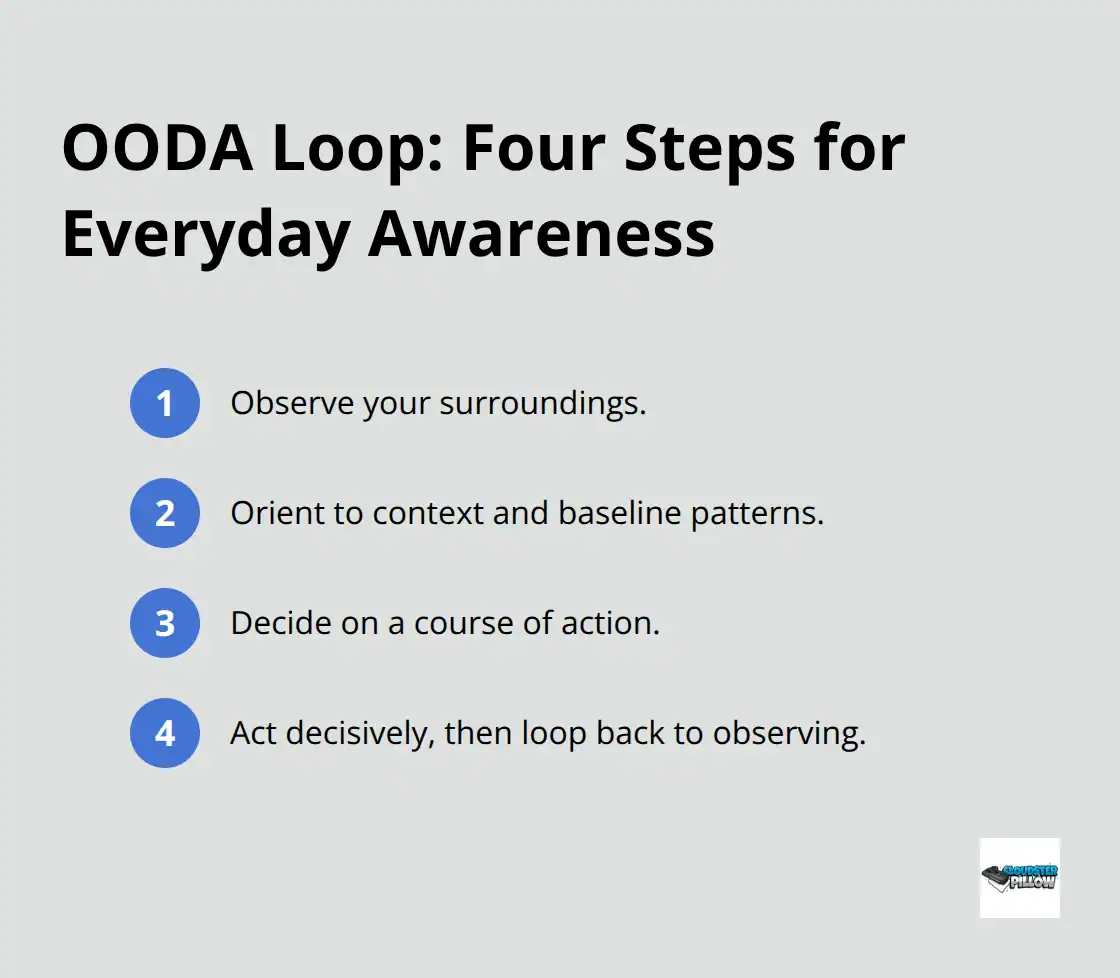
The OODA loop is a decision-making model developed by United States Air Force Colonel John Boyd in the early 1970s that breaks this down into four steps: observe your surroundings, orient yourself to context and patterns, decide on a course of action, and act. Then loop back to observing.
Stay Present and Scan Deliberately
Most people skip the observe step entirely, glued to their phones or lost in thought. Before you leave your car in a parking lot, scan the area for people, vehicles, and exits. Walk with your head up and your hands free. Notice which direction people move and whether anyone seems out of place. This isn’t paranoia-it’s the same attention you’d give to traffic while driving. Research on inattentional blindness shows that distraction and complacency steadily degrade your ability to spot threats, which is why phone use while walking makes you a target. Your carry system only matters if you’re aware enough to deploy it, and awareness is a skill you build daily, not at the range. These foundational habits-consistent wear, practiced draws from real positions, and deliberate observation-prepare you for the next level of training. Remember, comfort matters just as much as technique: the Cloudster Pillow holster wedge keeps your carry comfortable throughout the day, so you’ll actually stick with it at https://cloudsterpillow.com/holster-wedge/.
Training Without the Range
Structure Your Dry Fire Practice
Dry fire practice at home separates carriers who build competence from those who waste time, and the difference comes down to structure. Set a timer for ten minutes and execute five slow draws followed by five trigger presses from low ready, focusing entirely on sight alignment and trigger control without ammunition. Defensive incidents occur between 3–5 yards, so position yourself at that distance from a target on your wall. Practice this four times per week, and within a month your draw becomes automatic instead of something you think about. Many carriers skip dry fire because it feels less “real” than live ammunition, but unloaded practice eliminates flinching and lets you focus on the mechanics that matter most under stress. Ten focused minutes beats an hour of distracted repetition every single time.
Master Movement and Footwork
Movement and footwork separate carriers who stay safe from those who freeze when threats emerge. Step laterally while maintaining your sight picture, move backward without looking away from your target area, and transition between different shooting positions without losing balance. Start at home with furniture as obstacles, then progress to parking lots where you can practice drawing from your car while moving around it. These drills train your body to function in real environments, not just static range setups.
Build Stress Tolerance Through Exposure
Stress inoculation means exposing yourself to mild discomfort so your nervous system adapts before real danger arrives. Take a cold shower to elevate your heart rate, then immediately execute five draw repetitions; this trains your body to function when adrenaline spikes. Attend a reputable self-defense training class that includes movement and decision-making under time pressure rather than static range shooting. The goal is building the neural pathways that keep you functional when your body’s threat response activates, not just proving you can shoot accurately in ideal conditions.
Real readiness emerges from training that mimics the chaos of actual situations, not the controlled environment of a shooting range. This foundation prepares you to recognize where most carriers stumble-and how to avoid those pitfalls entirely.
Where Most Carriers Derail Their Progress
Comfort kills more carry routines than any other factor, and the carriers who understand this reality stay consistent while others quit. You can own the perfect holster and train religiously, but if your setup creates pressure points, prints through your shirt, or shifts during normal movement, you’ll eventually abandon it. The problem isn’t weakness or lack of commitment-it’s that discomfort compounds daily. After two weeks of a holster that digs into your ribs during sitting, your body starts rejecting the entire carry system. We at Cloudster Pillow see this pattern constantly: carriers invest hundreds in gear, then stop wearing it because the fundamentals of fit and comfort weren’t addressed first. A holster wedge adjusts the angle of your gun, reduces printing, and improves how your carry system sits against your body throughout the day.
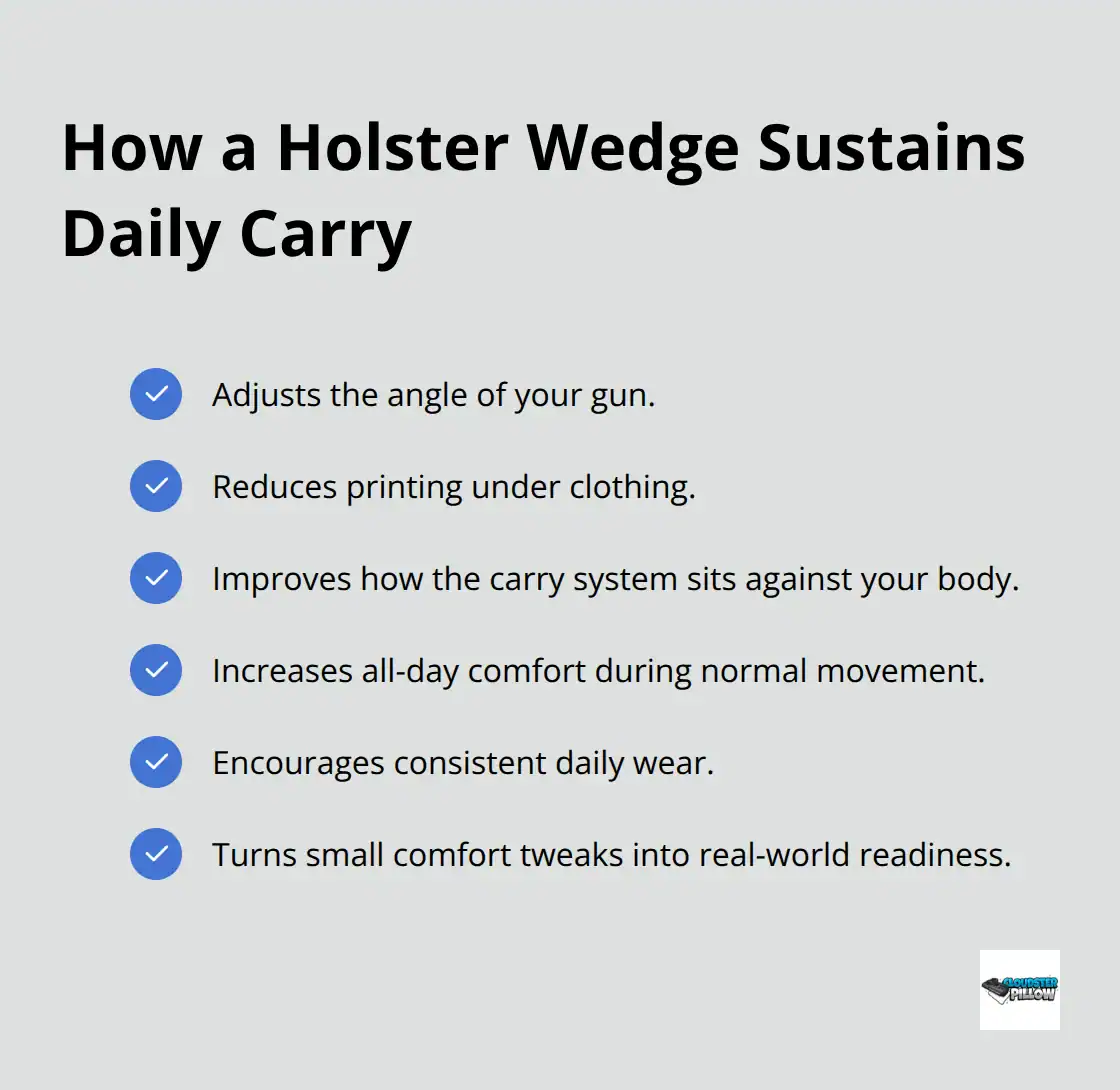
Small adjustments to comfort directly translate to consistent wear, which is the actual foundation of readiness. Without consistent wear, all the training in the world becomes theoretical.
Range Time Maintains Your Baseline
Skipping regular range sessions guarantees your skills decay faster than they developed. You don’t need eight-hour range days-four focused sessions per month at thirty to forty minutes each maintains your baseline and builds competence. Most carriers attend the range once or twice per year, shoot twenty rounds, and call it training. That frequency isn’t maintenance; it’s just expensive ammunition. Schedule your range time like a recurring appointment, bring the same firearm and holster you carry daily, and run the dry fire drills you practiced at home under live fire. Track your splits and accuracy on paper to measure actual progress instead of assuming consistency. Muscle memory fades without reinforcement, which is why carriers who skip range time for months suddenly find their draw feels clumsy and their accuracy has regressed.
Physical Conditioning Determines Your Performance Under Stress
Your cardio fitness directly impacts your ability to function during a defensive incident. Most carriers neglect this entirely, assuming that shooting skill alone covers readiness. Elevated heart rates impair fine motor control, which means your trigger control and sight picture degrade precisely when you need them most. Carry a loaded gun for several weeks, then run stairs or sprint for sixty seconds before executing five draw repetitions at your home target. Your heart will race, your hands might shake slightly, and your presentation won’t feel as smooth as during calm practice. This is the reality of stress, and the only way to adapt is exposure. Add twenty minutes of conditioning work twice per week-hill sprints, loaded carries, rowing, or heavy compound movements-and your nervous system adapts to physical stress more effectively. Carriers who maintain basic conditioning stay functional when adrenaline spikes; those who skip it often freeze or fumble during high-stress moments.
The Foundation That Actually Matters
Comfort, consistent range time, and physical readiness form the actual foundation of daily carry, not the gear sitting in your holster. These three elements work together: comfort keeps you wearing your firearm consistently, range time maintains your technical skills, and conditioning ensures your body functions when stress arrives. Carriers who address all three stay ready; those who focus only on gear or training alone inevitably fall short.
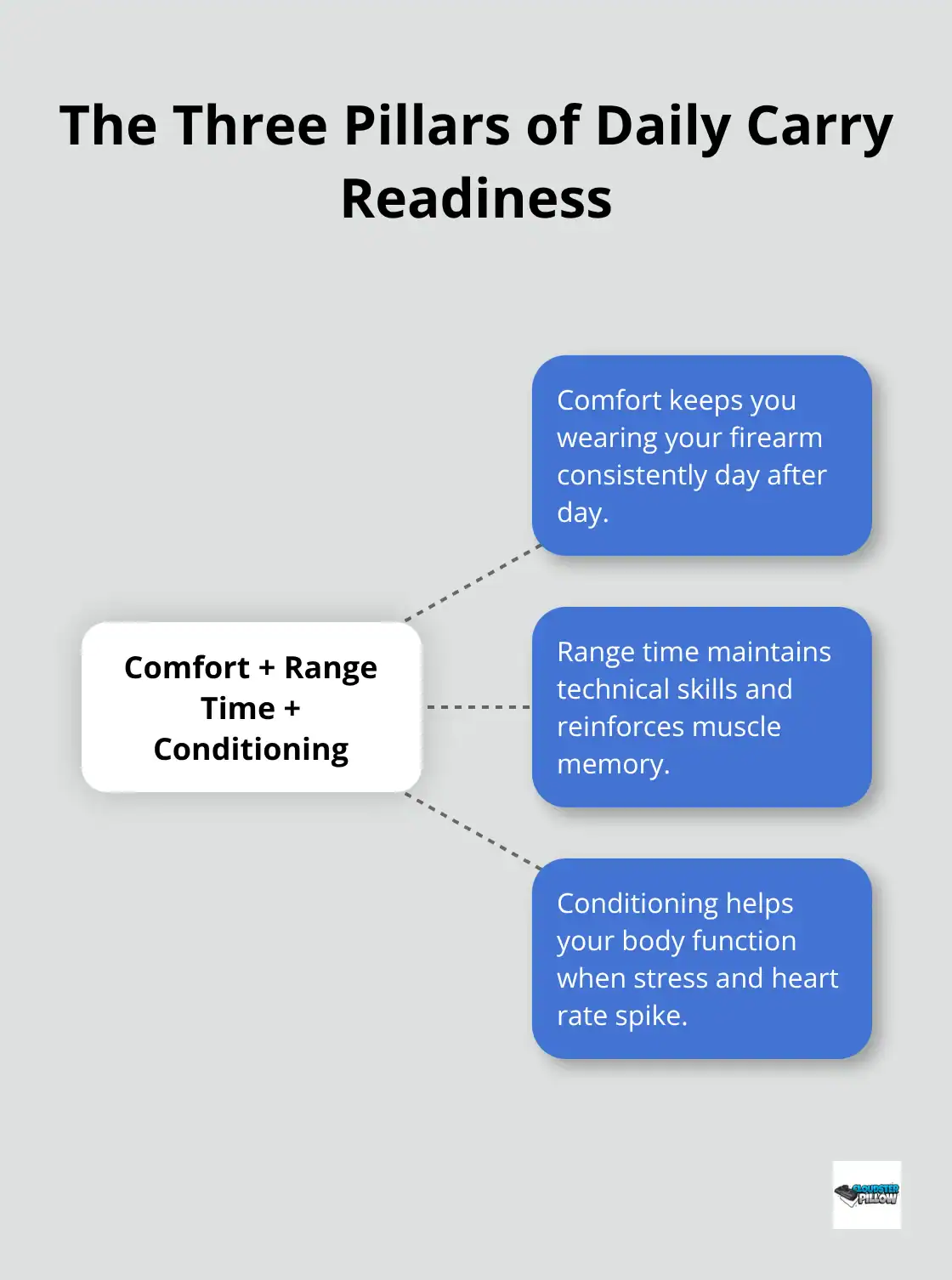
The Cloudster Pillow holster wedge enhances that comfort foundation, helping you maintain the consistency that separates prepared carriers from those who eventually abandon their carry routine.
Final Thoughts
Daily life training tips work only when you integrate them into your actual routine, not something you do once and forget. The carriers who stay ready wear their firearm consistently, practice draws at home without ammunition, and attend the range regularly to maintain their baseline skills. These habits compound over weeks and months, building the muscle memory and situational awareness that matter when real situations arise.
Comfort ties everything together because if your holster setup creates pressure points or prints visibly through your shirt, you’ll eventually stop wearing it, and all your training becomes worthless. We at Cloudster Pillow understand this reality because we designed our holster wedge specifically to address it. A quality wedge adjusts the angle of your carry system and reduces printing, which keeps you comfortable throughout the day so you’ll maintain the consistency that separates prepared carriers from those who quit.
Physical conditioning, range time, and daily wear form the foundation of real readiness, and none of these elements work in isolation. Your training only matters if you’re wearing your firearm consistently, and you’ll only wear it consistently if it feels natural against your body. Start with one carry method, commit to it, and let your body adapt as you add structured dry fire practice and monthly range sessions.
Comfort matters as much as preparation.
Training is easier when your gear does not fight you. An adjustable pillow wedge keeps the rig comfortable enough to actually wear during reps.
