
AIWB, AIWB Holster Wedge
The Keel Principle: Why Boat Physics Is the Secret to AIWB Concealment
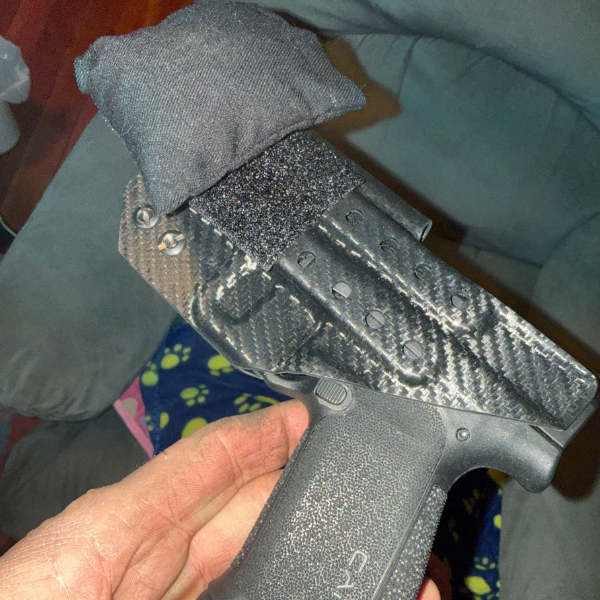
Fix AIWB Printing With a “Soft Keel”
Add stability, comfort, and the perfect tuck with an adjustable Cloudster Pillow wedge—built for real daily carry.
The Keel Principle: Why Boat Physics Is the Secret to AIWB Concealment
When most people picture a ship carving through rough water, they don’t think about concealed carry. But the same physics
that keep a sailboat upright when the wind slams the mast are the exact rules that decide whether your appendix setup
prints through a t-shirt or stays locked tight against your body. If you’ve ever felt your holster “tip” outward on your
belt, you already understand the problem. What you may not have heard yet is the solution: the Keel Principle—and how an
appendix carry holster wedge pillow gives your rig the “soft keel” it needs to stay stable, hidden, and comfortable.
AIWB concealment is often explained like a mystery: “Try a different belt,” “Maybe a different holster,” “Try a smaller gun.”
Those tips can help, but they don’t address the underlying mechanics. Printing happens when the gun rotates outward around
your belt line. Once you understand that rotation, the fix becomes straightforward: add controlled leverage below the belt
to rotate the grip inward. That’s the Keel Principle in a nutshell—and it’s why the right appendix carry holster wedge pillow
can turn a frustrating setup into an all-day carry solution.
Quick answer: a wedge and a claw both rotate the grip toward your body, but they push from opposite directions — and only one of them also cushions. That is why they work best together.
| Wedge / pillow | Claw / wing | |
|---|---|---|
| Where it sits | Behind the holster, against your body | On the front of the holster, against the belt |
| How it works | Pushes the muzzle away from you, rotating the grip in | Uses belt pressure to lever the grip in |
| Direction of force | From the body side | From the belt side |
| Adds comfort? | Yes — it cushions the pressure point as well | No — it is a lever, not padding |
| Best at | Grip printing plus all-day comfort | Grip printing |
| Use together? | Yes — they push from opposite directions, which is the two-direction combo | |
See the Cloudster Pillow holster wedge
What Is the Keel Principle?
A boat’s keel is a structure that extends below the waterline. In many designs, it adds weight, surface area, or both.
That “below the waterline” mass resists rolling and keeps the boat from tipping over. Without a keel, a boat becomes
dramatically less stable—especially when forces hit high above the waterline.
Concealed carry has a “waterline” too: your belt. Everything above the belt—your grip, slide, optic, and magazine—is
top-heavy. Everything below the belt—the muzzle end of the holster—is where you can create stabilizing leverage.
If your setup doesn’t have enough “keel” below the belt, the top-heavy portion of the gun wants to roll outward.
That outward roll is printing.
So the Keel Principle is simple: stability comes from leverage below the belt line. The more controlled leverage you have
at the muzzle end, the more easily you can keep the grip from tipping outward.
This is why an appendix carry holster wedge pillow works so well—it creates that leverage without adding painful edges.
Why Printing Happens (It’s Not Just “Grip Size”)
When people say “my gun prints,” they often blame the grip. The grip is what shows, so that assumption makes sense.
But the grip is only the symptom. The cause is rotation.
Imagine your belt as a hinge point. If your holster is short, or if the muzzle end sits too flat against the body,
there’s not enough counterforce below the belt to resist the gun’s natural tendency to tip outward. Movement makes it worse:
walking, bending, reaching, getting in and out of a car—your rig experiences tiny torque changes all day. If your setup is
missing keel, those small forces add up to big printing.
That’s why “just tighten your belt more” is often a dead end. Over-tightening can flatten your belt, collapse comfort,
and still fail to create the right rotation. What you really want is the correct geometry: controlled pressure at the
muzzle end that rotates the grip inward. That’s exactly what the appendix carry holster wedge pillow is designed to do.
How an Appendix Carry Holster Wedge Pillow Creates a “Soft Keel”
A wedge (or pillow wedge) adds thickness to the lower portion of your holster near the muzzle. When you tighten your belt,
your belt applies pressure over that added thickness. The bottom of the holster is nudged outward—just a bit—creating a
lever effect that rotates the top of the gun inward toward your stomach.
This is the core mechanic behind the Keel Principle in concealed carry: push the bottom out to pull the top in.
Instead of fighting printing at the grip with wardrobe tricks, you correct the geometry at the base. That’s why an
appendix carry holster wedge pillow feels like a “cheat code” once you get it dialed: the grip stops trying to escape
your shirt, and the gun settles into a consistent, repeatable position.
Even better, a pillow-style wedge does it without the classic downside of hard wedges—pain. Traditional foam blocks and
rigid wedges can dig into the pelvis, thigh, or groin when you sit. A pillow wedge distributes that pressure across a wider
area, allowing you to keep the concealment advantage while staying comfortable through long drives and long days.
Why Micro Compacts Often Need More Keel
Here’s the counterintuitive truth: smaller guns frequently conceal worse for AIWB beginners. Pistols like the Glock 43X,
SIG P365, and similar micro compacts have short barrels, which means they have less holster length below the belt.
Less length below the belt means less built-in keel. Combine that with a relatively tall grip and magazine above the belt,
and you’ve created the perfect conditions for outward rotation.
This is why your “small gun” can feel oddly floppy compared to a longer slide model. It isn’t that the gun is too big—it’s
that the geometry is too short to stabilize. A properly tuned appendix carry holster wedge pillow replaces that missing
keel by adding controlled thickness at the muzzle end. The result is a setup that feels planted, consistent, and easier to
conceal under a fitted shirt.
Comfort Meets Concealment: Why Pillow Wedges Changed the Game
Early AIWB wedges were effective but brutal. A hard foam wedge or plastic block could absolutely improve tuck, but many
carriers ended up trading printing for pain—especially when sitting. The “pillow” approach solved that problem by creating
a wedge that conforms to the body while still holding enough structure to do its job.
- Better pressure distribution: a pillow spreads force over more surface area, reducing hot spots.
- More tuning options: adjustable fill means you can find the exact amount of tuck that fits your build.
- Better daily wear: soft exterior materials reduce chafing and improve comfort against skin.
If you’ve tried a wedge in the past and hated it, you likely hated the material, not the concept. The concept is sound.
The Keel Principle works. The question is whether your wedge is comfortable enough to wear every day. That’s where a true
appendix carry holster wedge pillow earns its keep.
The Cloudster Pillow Advantage
At Cloudster Pillow, we didn’t set out to make a generic chunk of foam.
We built a product for the CCW community that solves a real problem: carriers shouldn’t have to choose between concealment
and comfort. The goal is to carry responsibly, consistently, and confidently—every single day.
Cloudster Pillow wedges use adjustable fill so you can tune your “keel” to match your exact body shape—whether you’re lean,
athletic, or rocking a tactical midsection. The result is a stable AIWB setup that improves concealment while staying
comfortable across movement, sitting, and long hours on the belt.
If you want to go deeper on setup fundamentals, you may also like these internal guides:
AIWB Holster Wedge Basics,
How to Stop Printing AIWB, and
Holster Claw vs Wedge.
Wedge vs Claw: The Two-Direction Concealment Combo
A wedge and a claw solve different parts of the printing puzzle, and together they’re incredibly effective.
A claw (also called a wing) applies pressure on the belt to rotate the grip inward horizontally—toward your body’s centerline.
A wedge applies pressure at the muzzle end to rotate the grip inward vertically—toward your torso.
Think of it like this: a claw manages the sideways angle; a wedge manages the tilt. When you combine both, the grip
compresses toward your body from multiple directions. If you’re trying to disappear a full-size gun under a light shirt,
this is often the fastest path to success—and an appendix carry holster wedge pillow is usually the comfort piece that
makes the combo wearable.
How to Dial In Your “Keel” (Practical Setup Tips)
The Keel Principle is physics, but dialing it in is personal. Here’s a simple, repeatable process to tune your wedge:
- Start small: use less fill than you think you need. Too much wedge can over-rotate the grip and feel awkward.
- Set your ride height first: if the holster is too high or too low, wedge tuning becomes inconsistent.
- Adjust the wedge position: moving the wedge slightly changes where the lever force applies.
- Test seated comfort: stand concealment is only half the battle—drive, sit, and bend to confirm no hot spots.
- Lock in consistency: once the grip stays tucked during movement, you’ve found your “keel.”
Once tuned, you’ll notice a major benefit beyond concealment: stability. Your rig will feel less “shifty.” The grip will
be in the same place each draw. This consistency is a huge confidence boost—and one reason carriers say a good
appendix carry holster wedge pillow improves both comfort and performance.
Boat Physics Isn’t a Metaphor—It’s the Mechanism
If you want a quick mental model, picture a sailboat: the wind pushes high, the keel resists low. Your belt line is the
waterline. Your grip is the mast. Your muzzle end is where you create resistance. That’s the reason a wedge works.
For a basic definition of a keel and why it stabilizes a boat, you can read:
Encyclopaedia Britannica’s overview of keel design.
Understanding that “below the waterline” leverage makes it easier to understand why AIWB setups tip—and how a wedge fixes it.
Authority Resources: Learn More About AIWB Mechanics
If you want to validate the mechanics and expand your setup knowledge, these reputable guides are worth your time:
- Lucky Gunner’s appendix carry fundamentals
- Pew Pew Tactical’s AIWB guide and setup considerations
- PHLster’s explanation of AIWB basics and concealment concepts
Notice how often geometry and leverage show up in serious AIWB discussions. That’s the Keel Principle, even when it isn’t
called by name. A good setup isn’t random—it’s engineered.
Frequently Asked Questions
Does an appendix carry holster wedge pillow make drawing harder?
No. In many cases, it makes the draw more consistent because the holster is more stable and the grip stays in a predictable
position. The key is dialing in the right amount of wedge so you get tuck without over-rotation. A properly tuned
appendix carry holster wedge pillow should feel natural on presentation.
Can I use a wedge pillow with a holster claw?
Yes—and it’s one of the best combinations for concealment. The claw pulls the grip inward sideways; the wedge rotates it inward
toward the torso. Together, they reduce printing more than either one alone. Many carriers consider this combo the “cheat code”
for deep concealment, especially with longer grips.
Will a wedge pillow be too hot in summer?
Cheap foam wedges can trap heat. A quality appendix carry holster wedge pillow with breathable materials and adjustable
fill is typically far more comfortable in warm weather. The goal is to reduce sweat buildup and chafing while maintaining
the lever effect that improves concealment.
How do I attach an appendix carry holster wedge pillow to my holster?
Most pillow wedges use hook-and-loop (Velcro) attachment. You apply the loop-side adhesive strips to the holster, then press
the pillow’s hook-side panel onto it. This method allows you to reposition the pillow until you find the perfect feel and
tuck for your body and holster.
How long will a wedge pillow last?
Rigid foam blocks often crush and stay flat. A quality appendix carry holster wedge pillow with resilient fill can be
fluffed and adjusted over time, keeping its performance for years of regular use. Longevity depends on materials, daily wear,
and how you maintain the fill, but pillow-style wedges generally outlast cheap foam wedges.
Final Thoughts: Stop Fighting Your Belt Line
The biggest AIWB breakthrough for most carriers is realizing concealment is mechanics, not magic. Your setup either has
stability below the belt line or it doesn’t. If it doesn’t, the grip will try to roll outward and print—especially with
shorter holsters and micro compacts.
The Keel Principle gives you a clean, repeatable way to solve the problem: create controlled leverage at the muzzle end so
the grip rotates inward. A properly tuned appendix carry holster wedge pillow is one of the fastest, most comfortable
ways to apply that principle—without buying a longer holster, without over-tightening your belt, and without living with hot
spots all day. That keel only works off a stable platform, though — your belt matters more than you think.
If you’re ready to stop the poke and start the tuck, the next step is simple: add a soft keel to your rig.
Add a Soft Keel to Your AIWB Setup
Upgrade comfort and concealment with an adjustable Cloudster Pillow wedge—built to reduce printing without the pain.

Pingback: Beginner IWB Setup: Starting Strong With AIWB Holsters - Cloudster Pillow