
Home Defense
Home Defense Tactics 2026: Essential Tips For Concealed Carriers
 Your home is your safest space-until it isn’t. As a concealed carrier, you already understand the responsibility of self-defense, but home defense tactics require a different mindset than everyday carry.
We at Cloudster Pillow believe that true preparedness starts with understanding your vulnerabilities, knowing your legal rights, and training for real scenarios. This guide walks you through the fundamentals, integration strategies, and advanced tactics that separate prepared carriers from those just hoping for the best.
Understanding Your Home’s Weaknesses and Legal Position
Walk Your Property Like an Intruder Would
Most CCW carriers never conduct a serious vulnerability assessment of their homes. You know the layout of your place, but that’s not the same as understanding how an intruder sees it. Walk your property at night and identify which entry points lack adequate lighting. Your first actionable step involves verifying every single entry point has functional locks.
Move through your home from an intruder’s perspective and note blind spots where someone could approach without visibility from the street or neighboring properties. Check whether your front door has a solid core or metal frame, not a hollow-core door that takes minimal force to breach. Test your door frames for gaps and loose hinges. If you have sliding glass doors or windows, install secondary locks or bars because standard locks on these are notoriously easy to defeat.
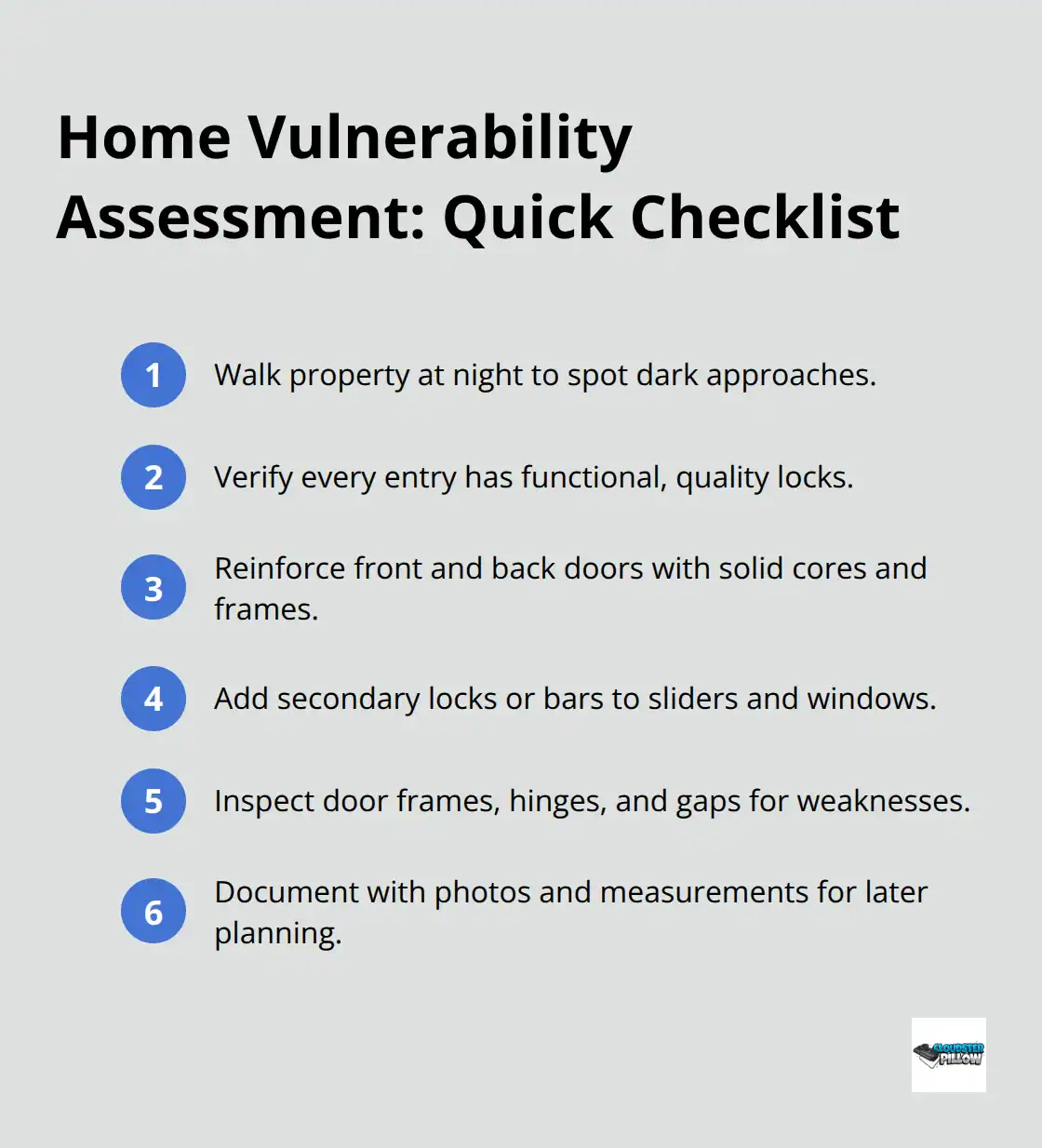
Document everything with photos and measurements so you can reference this information later when discussing home defense strategies with family members.
Know Your State’s Self-Defense Laws
Your state’s self-defense laws determine what’s legally permissible in your home, and this varies dramatically across the country. Some states have stand-your-ground laws that apply to your residence, while others require you to retreat if possible even inside your own home. Look up your state’s specific statutes on use of force, castle doctrine, and duty to retreat-don’t rely on assumptions or what you’ve heard at the range.
Contact your local police non-emergency line and ask if they offer free home security assessments, as many departments still provide this service and officers can identify vulnerabilities you might miss.
Create a Family Communication Plan
Develop a written family communication plan that covers where each person goes during different threat scenarios, how you’ll communicate if separated, and what the designated safe room is in your home. This plan needs buy-in from everyone in your household, not just you, and should include children old enough to understand basic instructions. Practice this plan quarterly so muscle memory develops.
Establish clear signals or code words for alerting family members to a potential threat without using words like gun or intruder that might escalate panic. Every family member needs to know where your firearm is stored and understand the absolute rule about not touching it without permission. These conversations form the foundation for how your household responds when seconds matter, and they directly influence whether your family acts with coordination or confusion during an actual emergency.
Where Your Firearm Lives When You’re Home
Balancing Access and Safety
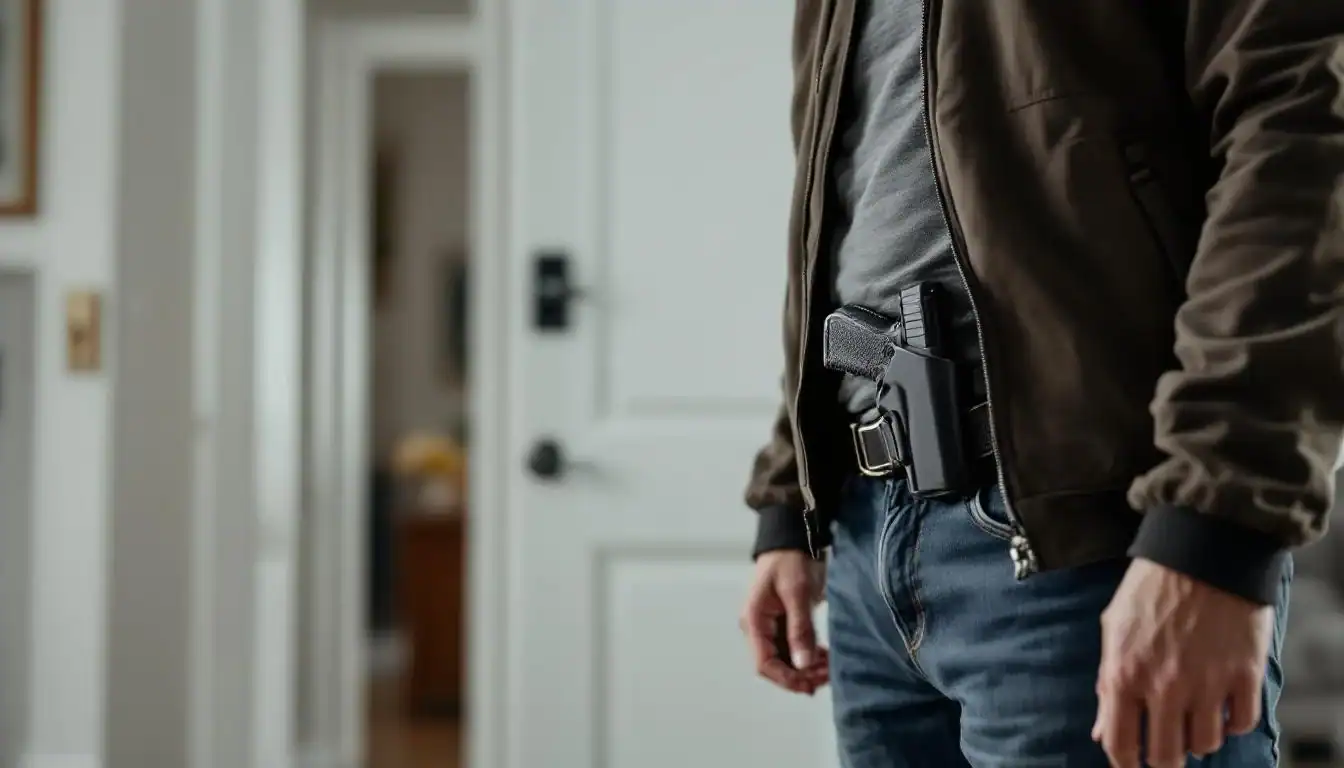
Your firearm’s location inside your home determines whether you can access it in seconds or whether it becomes a liability during a threat. We at Cloudster Pillow recommend keeping your primary defensive firearm in a location that balances accessibility with safety, and this means different things depending on your household composition. If you live alone, your firearm can remain on your person in your AIWB or IWB holster throughout the day and evening, which eliminates the access-versus-security problem entirely.
If you have children or other household members, a quick-access safe mounted within arm’s reach of your bed or primary seating area provides the balance you need. Biometric safes open in under one second, which matters when an intruder is inside your home.
Positioning for Immediate Response
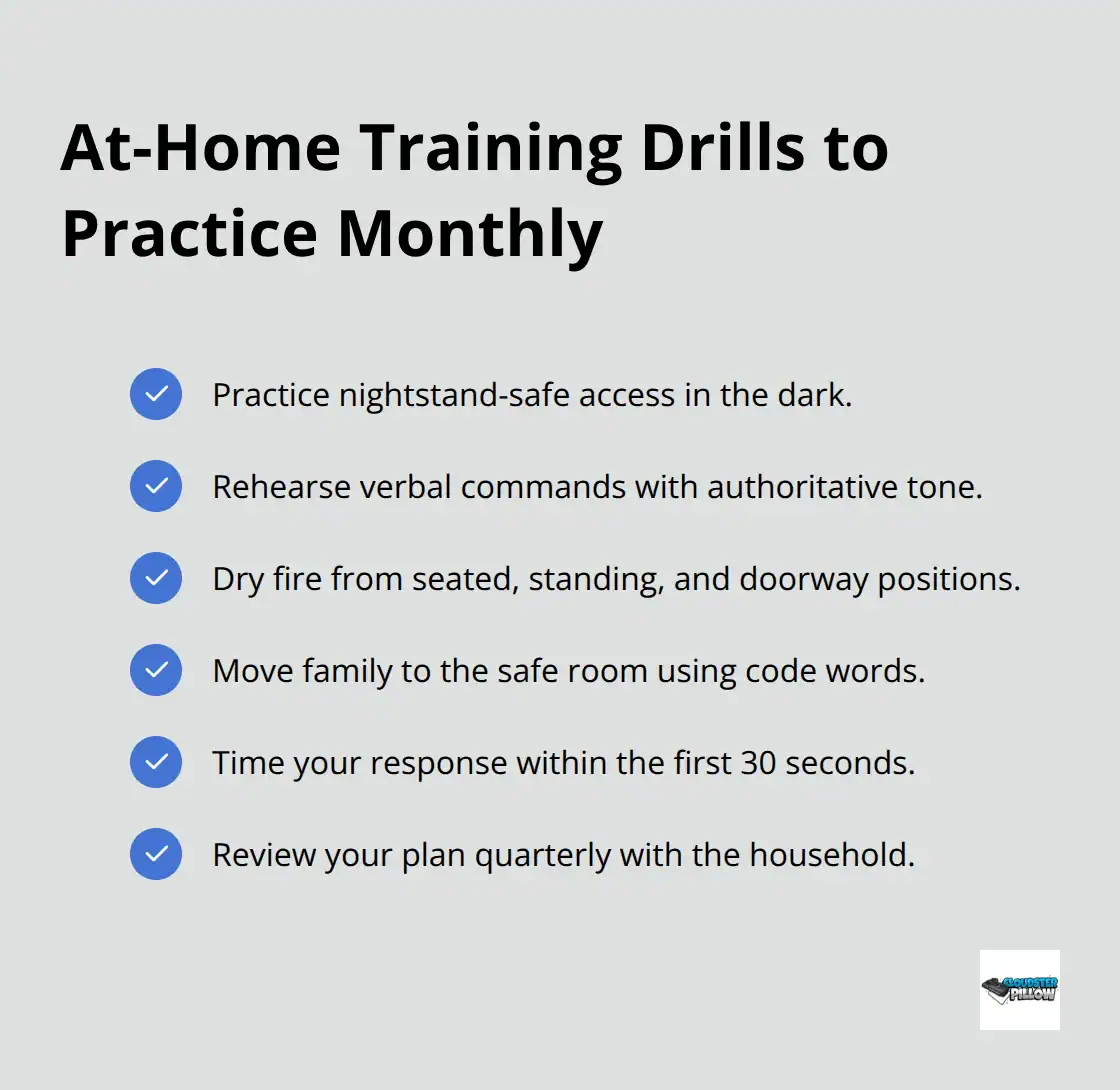
Position your safe so you can reach it from your bed without leaving your defensive position. Many carriers make the mistake of storing their firearm in a closet or separate room, thinking this adds safety, when it actually removes your ability to respond within the critical first 30 seconds of a threat. Your training should reflect your actual home defense setup, not some theoretical scenario.
If your firearm stays in a nightstand safe, practice drawing from that safe in the dark at least monthly, because you won’t have time to find your light switch during an actual emergency. If you carry throughout your home, practice your draw while seated, standing, and moving through doorways because these are the positions you’ll actually be in.
Training Standards for Home Defense
Your comfort carrying all day directly influences your consistency with your home defense system, which is why proper gear matters more than most carriers realize. An uncomfortable holster setup means you’ll remove your firearm when you’re home, which defeats the entire purpose of being prepared.
Family Safety Rules and Accountability
Involve your family in safety discussions by explaining that your firearm stays accessible because accessibility keeps them safer than an inaccessible firearm does. Establish an absolute rule that no one touches your firearm without explicit permission, and back this up with consequences.
Every family member needs to know where your firearm is stored and understand the absolute rule about not touching it without permission. These conversations form the foundation for how your household responds when seconds matter, and they directly influence whether your family acts with coordination or confusion during an actual emergency. Your next step involves training your household to respond quickly when a threat emerges, which requires drills that simulate real conditions rather than theoretical exercises.
Building Effective Layers of Defense
The difference between a reactive home and a prepared one comes down to how you structure your defenses before a threat arrives. Most carriers focus entirely on their firearm and ignore the perimeter systems that prevent incidents from happening in the first place. Your security should operate in layers, with each layer buying you time and information.
External Visibility and Perimeter Control
Start with external visibility through motion-sensor lighting on all approaches to your home, which deters most casual intruders before they even attempt entry. According to the FBI’s Uniform Crime Reporting Program, homes without outdoor lighting experience break-ins at significantly higher rates than illuminated properties. Install lighting on your front porch, back patio, driveway, and any pathway leading to entry points.
Next, add reinforced entry points with solid-core or metal doors, deadbolts with at least one-inch throws, and door frame reinforcement plates that prevent kicks from breaching the frame. These physical barriers force intruders to spend time and effort, which increases their exposure to neighbors and law enforcement response.
Interior Positioning and Defensive Spaces
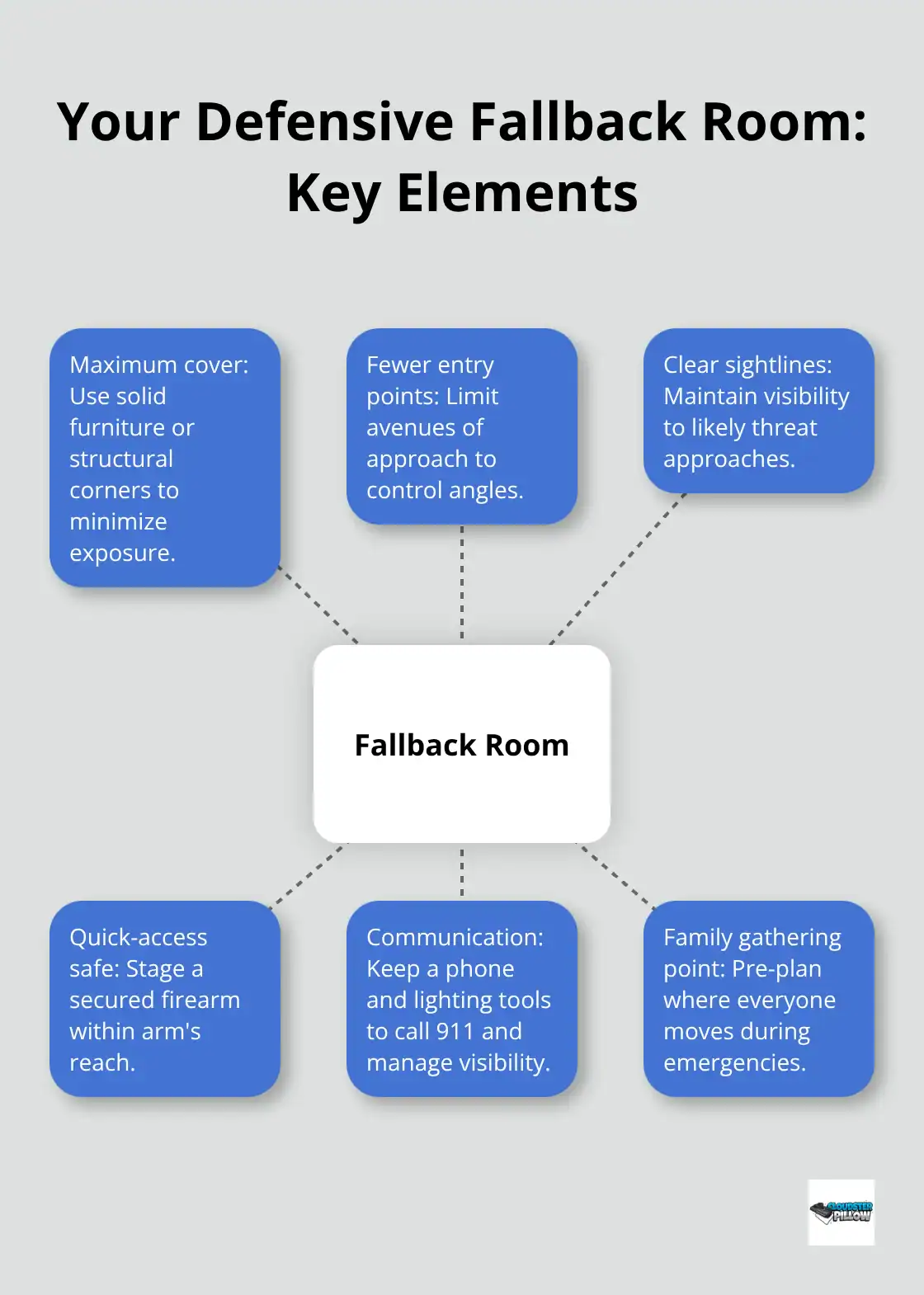
Your interior layer involves understanding which room becomes your defensive position during different threat scenarios. Most carriers assume they’ll engage an intruder in an open area, but the reality involves moving through your actual home layout with furniture, doorways, and confined spaces that change everything about your tactical options. Walk through your home and identify the room with the most cover, the fewest entry points, and the best sightlines to likely threat approaches. This becomes your fallback position where your family gathers during an emergency.
De-escalation and Verbal Authority
Verbal awareness and de-escalation skills matter far more in home defense than most carriers acknowledge, because many home invasions involve interaction before violence occurs. Your tone, body language, and word choice during those critical first seconds determine whether a situation escalates or the intruder leaves. If you encounter an intruder before they see you, your advantage involves creating distance and alerting them that they’ve entered an occupied home, which causes most burglars to flee immediately.
Speak with authority and volume without screaming, use clear directional language like “get out now,” and avoid words that sound like a question or invitation for negotiation. If you’re forced into a direct confrontation, your response tactics depend entirely on the specific scenario. An intruder who notices you and freezes requires different action than one who moves toward you with apparent intent to harm.
Threat Assessment and Response Tactics
The National Institute of Justice emphasizes that most home invasion victims report the intruder displayed no weapon initially, which means your first seconds involve threat assessment rather than immediate escalation to lethal force. Position yourself with maximum distance between you and the threat, keep family members behind you rather than beside you, and maintain verbal commands that establish your authority in your own home.
Your training scenarios should include dry fire drills for handguns to sharpen your self-defense skills at home. These specific drills matter infinitely more than general marksmanship practice because home defense happens at contact distances in familiar environments, not at the range. The comfort and confidence you develop through consistent training directly translates into better decision-making when actual pressure arrives, which is why your carry setup throughout your day shapes how you perform when it matters most.
Storage and Carrying at Home
A home defense gun has to be both secured and reachable. Many people use a quick-access safe near the bed and keep it locked, especially when children or guests are in the home. Safe-storage laws differ by state, so check yours.
Some carriers simply keep carrying at home. If you do, comfort decides whether you keep it up; see how holster wedges and pillows compare.
Final Thoughts
Home defense tactics only work if you practice them regularly and maintain consistency over time. Monthly dry fire drills, quarterly family communication plan reviews, and seasonal vulnerability assessments keep your preparation sharp instead of letting it fade into assumptions. Training reveals gaps in your setup that sitting on the couch never will, and these discoveries during practice prevent failures during emergencies.
The comfort of your carry setup directly impacts whether you maintain your firearm accessibility throughout your day, because an uncomfortable holster means you’ll remove your firearm when you’re home and eliminate your ability to respond during critical first seconds. We at Cloudster Pillow designed our holster wedge specifically for carriers who want all-day comfort without sacrificing accessibility, and better comfort means consistent carry that actually prepares you when it matters. Explore how proper gear supports your home defense readiness at our holster wedge.
Your preparation protects your family, and that’s the only metric that matters.
