CCW Courses and Tips, Firearms Training
Practical CCW Training Tips for Real Life Scenarios
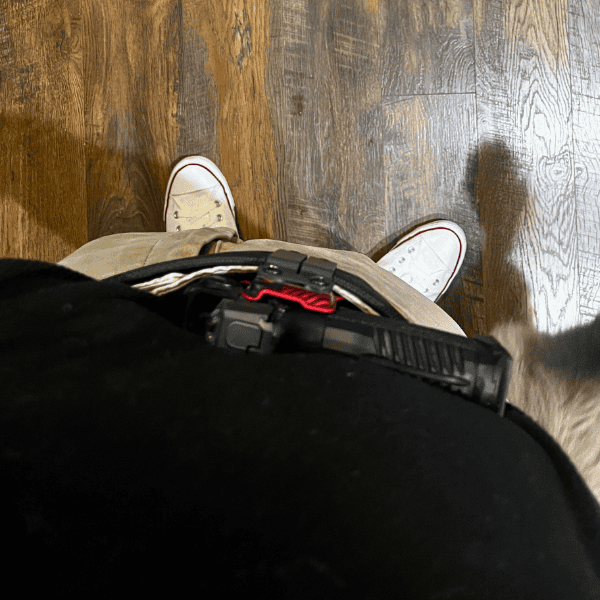

Most CCW carriers train at the range but freeze when it matters. The gap between target practice and real-world readiness is where mistakes happen.
We at Cloudster Pillow know that practical CCW training tips go beyond marksmanship-they cover mindset, gear reliability, and the skills that actually save lives. This post breaks down what works.
Mindset Under Real-World Pressure
Your Brain Responds Differently on the Street
Your brain’s threat-detection system works differently at the range than it does on the street. At the range, you control variables-target location, distance, lighting, and timing are predictable. Real incidents unfold in roughly 3 seconds, according to defensive training data, which means your conscious mind barely has time to process what’s happening. This is why mindset training separates carriers who stay effective from those who freeze.
Awareness Prevents the Need to Draw
The first step is accepting that awareness beats reaction every time. Most CCW carriers focus entirely on marksmanship, but situational awareness actually prevents the need to draw in the first place. You should regularly scan your environment for exits, potential threats, and baseline behavior patterns in crowds. When you enter a coffee shop, notice where people are positioned, identify the exits, and observe who seems out of place. This takes seconds but trains your brain to recognize abnormal activity before it escalates. The goal isn’t paranoia-it’s baseline awareness that becomes automatic.
Stress-Inoculation Training Sharpens Threat Recognition
Recognizing genuine threats requires you to train your perception under stress, which standard range shooting never addresses. Real threats often come with adrenaline dumps that distort time, impair fine motor skills, and cloud judgment.
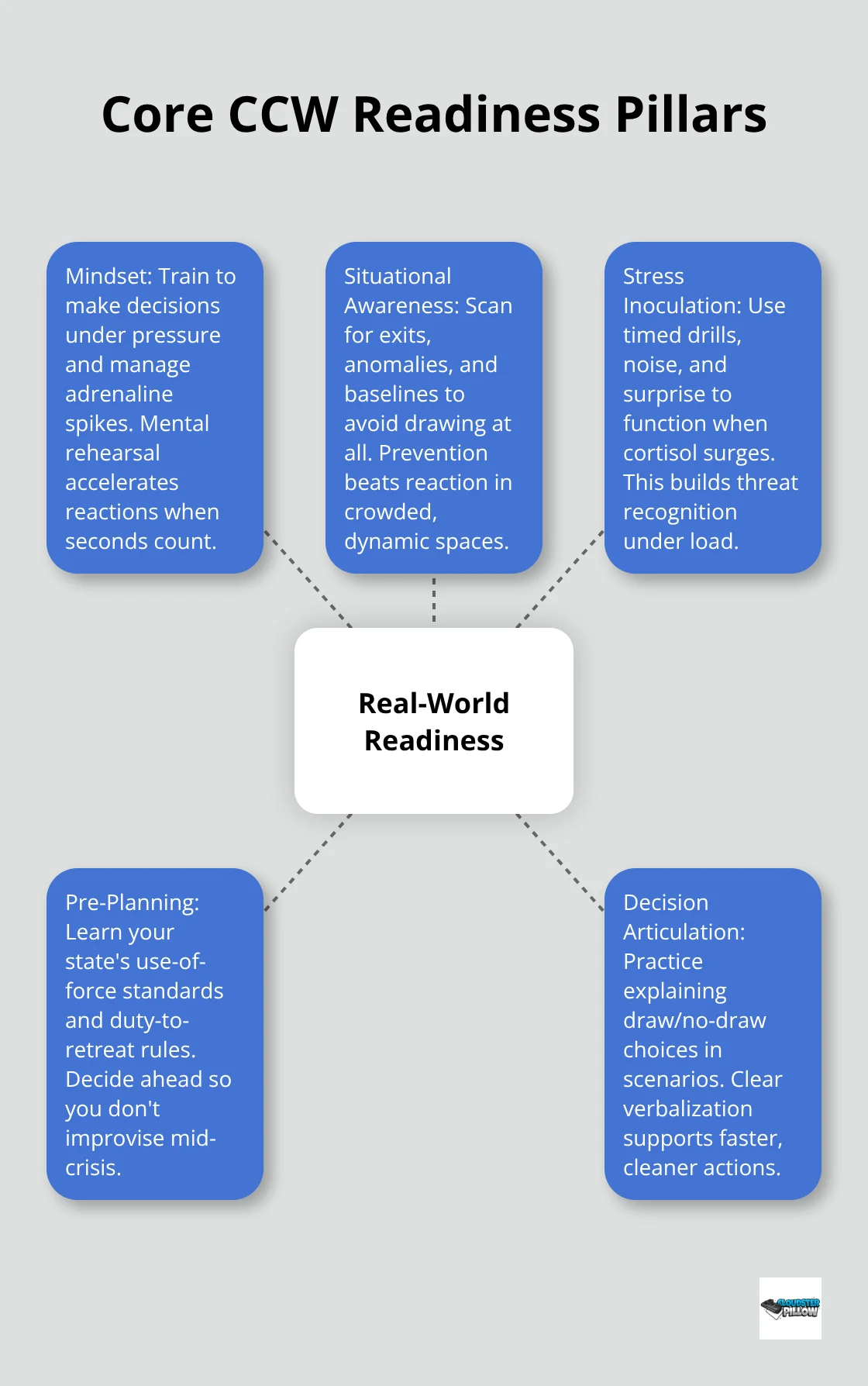
Stress-inoculation training teaches your brain to function when cortisol floods your system through controlled exposure to time pressure, noise, and surprise. Many qualified CCW instructors now incorporate stress-inoculation drills into training programs, where carriers practice decision-making while fatigued or under cognitive load.
Pre-Planning Replaces Improvisation Under Pressure
Decision-making under pressure requires pre-planning, not improvisation. You must know your legal use-of-force standards in your state, understand when retreat is legally required versus when you can stand your ground, and practice verbalizing your decision-making process during drills. Some carriers train with role-play scenarios where they must articulate why they’re drawing or not drawing in a given situation. This mental rehearsal creates neural pathways that activate faster when adrenaline spikes. The carriers who handle real incidents effectively are those who’ve already made their decisions before the moment arrives-they’ve trained the mindset, not just the trigger finger. This foundation of mental preparation directly impacts how you perform with your actual gear and equipment during high-stress moments.
Skills That Matter When Seconds Count
Draw Speed Requires Your Actual Carry Setup
Drawing from concealment faster than your competition means nothing if your first shot misses. Speed without accuracy is just noise, and at 3-7 yards where most real confrontations happen, you cannot afford wasted rounds. The fundamental skill separates carriers who train purposefully from those who just shoot. Start with your exact carry setup-the holster, belt, and clothing you wear daily. Many carriers train with a range holster, then struggle when they draw from their actual concealment gear. Practice drawing from concealment at least twice weekly, focusing on a smooth presentation rather than explosive speed. Your goal is a reliable draw that lands accurate shots within 2-3 seconds, which matches real-world incident timelines. Film yourself drawing to identify where your presentation slows down-often it’s the moment the gun clears your waistband or when your grip hand meets your support hand. Eliminate that lag through repetition with holster draw techniques.
Seated Draws Close a Critical Training Gap
Include draws from seated positions, since you spend significant time in cars and at desks. Most training emphasizes standing draws, leaving a gap when you actually need the skill. Seated draws demand different angles and hand positioning, yet most carriers neglect them entirely. Practice from your vehicle with the same seatbelt and clothing you wear daily. This trains your body to execute the draw in the exact environment where you’ll spend hours each week.
Trigger Control Survives Adrenaline Through Dry-Fire
Shooting under pressure demands a foundation of trigger control and sight alignment that survives adrenaline. Fine motor skills start to deteriorate around a heart rate of 120, which happens in real threats. Train trigger control through dry-fire practice between live sessions-this costs nothing and builds muscle memory without ammunition expense. When you do shoot live, incorporate movement and decision-making rather than static target work. Set up drills where you move to cover, assess multiple targets, and decide whether to engage.
Low-Light Training Reflects Where Real Incidents Occur
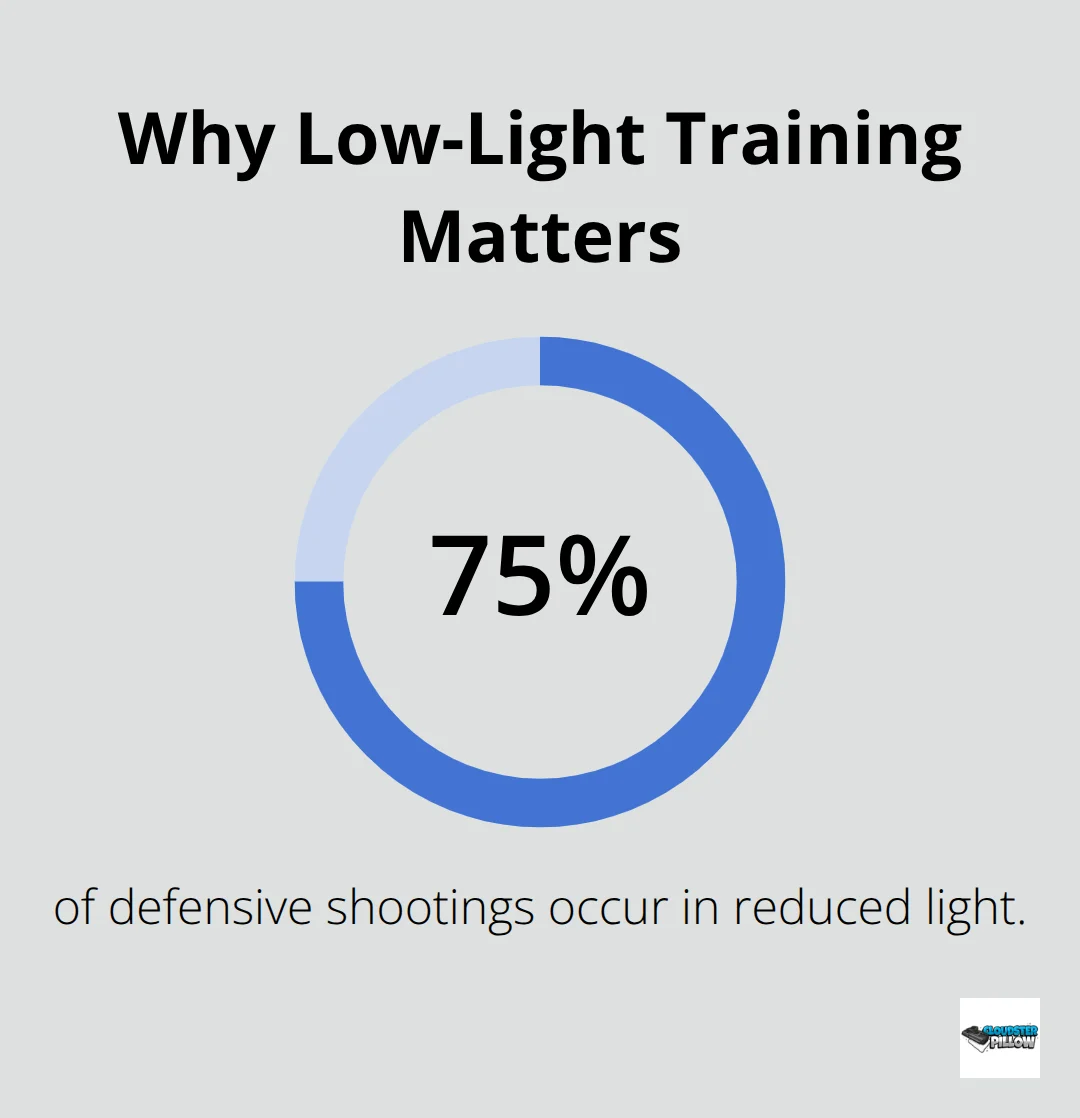
Include low-light training because as many as 75 per cent of defensive shootings occur at times of reduced light, yet most ranges train under bright daylight. If your range offers night shoots, attend them. If not, request low-light training from a qualified instructor who can safely manage that environment.
Practice malfunction drills regularly-failure to fire, double feeds, and immediate corrective actions. Carriers who freeze during malfunctions haven’t trained them enough. Add speed reloads to your practice routine, but only after you’ve mastered basic accuracy.
Your Body Falls to the Level of Your Training
The carriers who perform effectively under real pressure have already performed that exact scenario dozens of times in training. Your body will not rise to the occasion; it will fall to the level of your training. This reality means your holster choice, belt quality, and daily carry comfort directly impact how often you actually train. A holster wedge like the Cloudster Pillow helps everyday carriers maintain all-day comfort during frequent practice sessions, which means you train more consistently and build the muscle memory that matters when seconds count. Comfort and consistency work together-when your gear feels natural, you train harder and more often, which translates to better performance when it matters.
Common Training Mistakes CCW Carriers Make
Inconsistent Gear Breaks Your Training Foundation
Most carriers train inconsistently because their gear setup makes daily carry uncomfortable. An uncomfortable holster means you leave it at home, skip training sessions, or train with different equipment than you actually carry. This creates a dangerous gap between your practice and reality. At the range, you might use a competition holster with a perfect fit, then switch to a concealment rig that digs into your ribs all day. Your body adapts to whichever setup you use most, so inconsistent gear breeds inconsistent performance.
Carriers who want to train more often can’t because their current setup causes pain during extended wear. The solution isn’t buying a new holster-it’s making your existing holster work better for all-day comfort. A holster wedge designed for everyday carry reduces printing, improves comfort, and eliminates the excuse to skip training. When your gear feels natural, you train more often, which directly translates to better muscle memory and faster response times when it matters.
Low-Light Training Gets Skipped Too Often
Low-light training gets skipped because ranges don’t offer it or carriers assume daylight drills are sufficient. Roughly 75 percent of defensive shootings occur at times of reduced light, yet most training happens under perfect range conditions. Request low-light instruction from a qualified CCW instructor or find ranges that offer night shoots. This single gap in your training could cost you everything when a real incident unfolds in darkness or dim conditions.
Malfunction Drills Separate Ready Carriers from Unprepared Ones
Malfunction drills are another critical gap-carriers practice perfect-function scenarios but freeze when their firearm actually malfunctions. Spend time each month practicing immediate corrective actions for common failures (failure to fire, double feeds, and stovepipes). Your body will not rise to the occasion; it will fall to the level of your training. The carriers who survive real incidents have already trained their legal understanding, practiced in low light, and drilled malfunctions repeatedly.
Legal Knowledge Gaps Create Real Liability
Legal and safety knowledge gaps create liability that training alone cannot fix. Many carriers understand their state’s concealed carry laws but have never read their actual state statute or consulted a local attorney about use-of-force standards specific to their jurisdiction. You must know whether your state allows you to use force in public, whether retreat is legally required, and what self-defense insurance actually covers in your situation. USCCA membership includes legal resources and insurance coverage, which many carriers carry but never fully understand. Your training plan should reflect this reality, not just the comfortable parts.
Final Thoughts
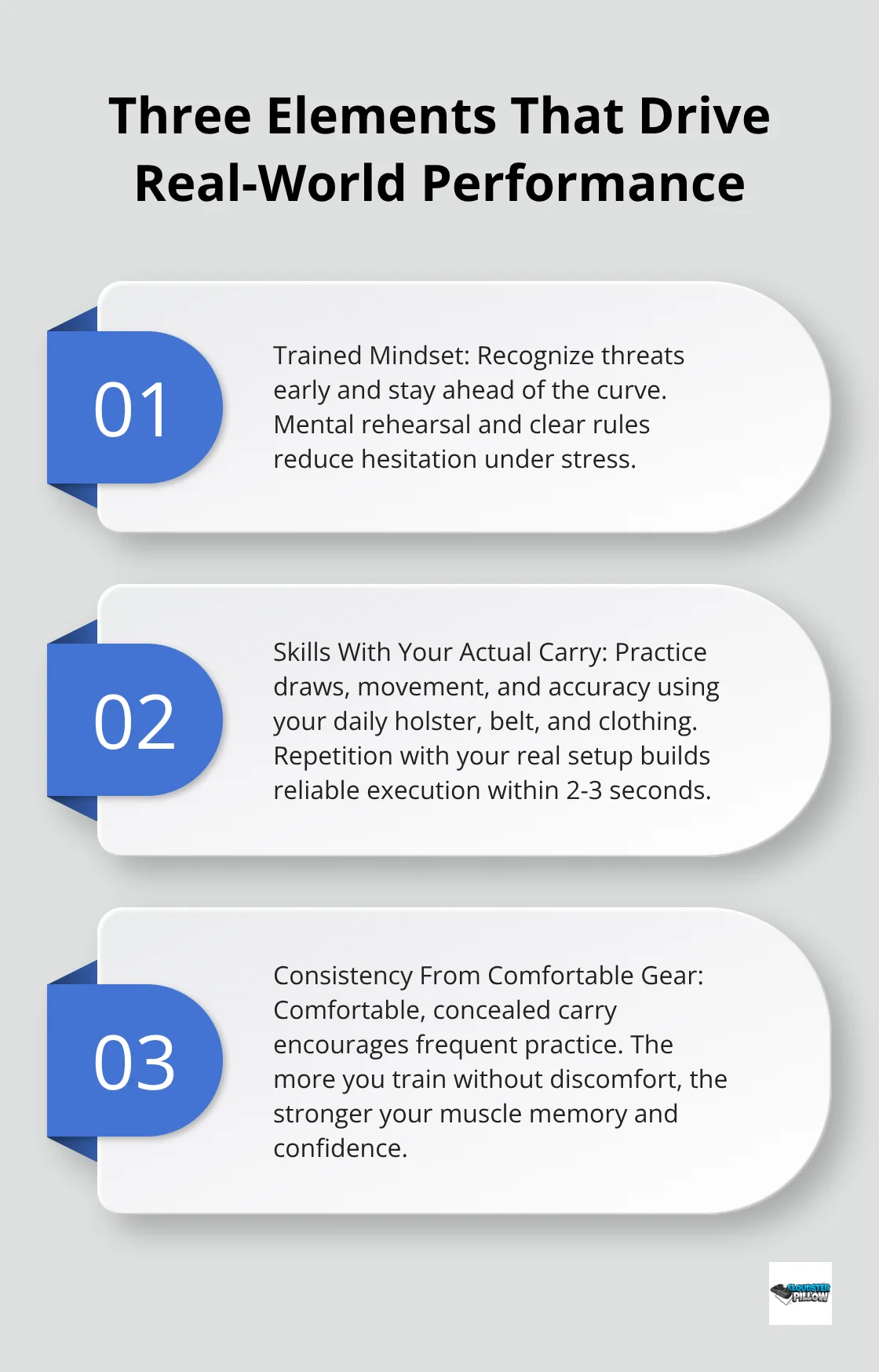
Practical CCW training tips work only when you actually use them. The carriers who perform effectively under real pressure built three things: a trained mindset that recognizes threats before they escalate, skills practiced repeatedly with their actual carry setup, and consistency that comes from gear that doesn’t fight against you. Your training foundation depends on one simple reality-you train with what feels natural, and discomfort kills consistency faster than anything else.
The carriers who train most often aren’t the ones with the fanciest equipment. They’re the ones whose gear works so well that carrying feels automatic. When your holster fits properly, your belt supports your setup, and your concealment works without constant adjustment, you train more frequently and build better muscle memory. Comfort and confidence work together, and this connection between daily comfort and real-world readiness transforms how you perform when seconds count.
We at Cloudster Pillow designed our holster wedge specifically for this reality. It enhances comfort and concealment for everyday carriers without replacing your entire holster system, which means you can train more often with the setup you already trust. Check how the Cloudster Pillow improves your daily carry comfort and builds the consistency that translates to real-world readiness.