
Best Concealed Carry Gear & Essentials for Women, Concealed Carry Clothing
Concealment Clothing Considerations: How Attire Affects Comfort and Print
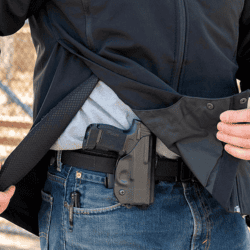
Your clothing choices matter more than most CCW carriers realize. The right fabrics, layers, and fit can transform how comfortable your carry feels throughout the day while keeping your firearm properly concealed.
At Cloudster Pillow, we’ve seen firsthand how concealment clothing considerations directly impact whether someone carries consistently or leaves their gun at home. This guide walks you through the practical decisions that affect both comfort and print management.
What Fabrics Actually Work for Concealment
Heavy Fabrics Beat Thin Materials Every Time
Heavier shirt fabrics outperform thin tees when it comes to print management, and this isn’t negotiable. Heavy fabrics with tighter weaves will show your holster outline far less readily than lightweight garments, which is why experienced carriers deliberately avoid thin materials during warmer months. Cotton-polyester blends in the 50/50 range offer durability advantages that pure cotton lacks-they resist the wear stress that daily holster contact creates, they dry faster when exposed to sweat, and they maintain their shape better after repeated washing.
Synthetic Blends Handle Moisture Better Than Pure Cotton
Synthetic materials tend to be less prone to showing moisture stains, which matters when you carry AIWB in humid conditions. The trade-off involves breathability. Pure cotton breathes better in high heat, but a quality cotton-poly blend still performs acceptably for most climates, especially when you layer properly. Moisture-wicking synthetics like polyester, nylon, or Merino wool actively pull sweat away from your skin, reducing the discomfort that leads carriers to abandon their setup mid-day. Athletic-style shirts designed for moisture management work surprisingly well for concealed carry-manufacturers engineered them for the exact problem you face when carrying appendix or IWB in summer heat.
Durability Determines Your Long-Term Carry Success
Your holster and belt create constant friction against your waistband and side panels, degrading fabric faster than normal wear. A thin tee won’t survive extended regular AIWB carry before the material thins, stretches, and starts printing more visibly. Heavier fabrics with tighter weaves handle this punishment far better, maintaining their structure and concealment properties over time.
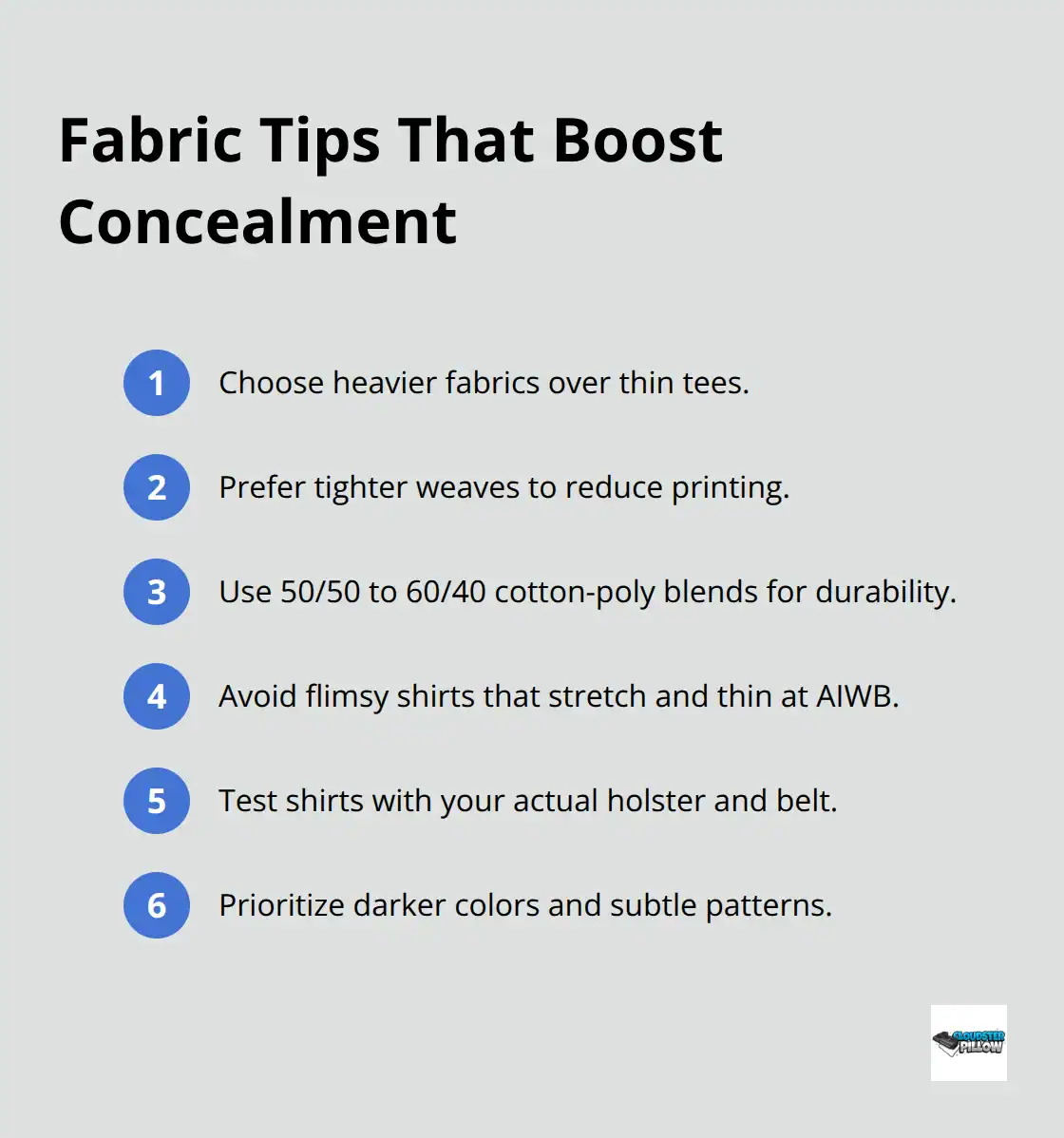
Test your chosen shirt material with your actual holster and belt before committing to daily wear-some fabrics pill or develop weak spots exactly where your holster sits.
Colors and Patterns Work as Visual Distractions
Darker colors and patterns work in your favor here, not because they hide the gun magically, but because they distract the eye and mask the subtle shadows that printing creates. Embellishments like buttons, texture variations, or decorative stitching serve the same purpose. Your fabric choice determines whether you replace shirts frequently or maintain a stable carry wardrobe that performs consistently. This foundation of proper fabric selection sets the stage for how you layer additional garments to further improve both concealment and comfort-and pairing quality fabrics with the right holster setup, like using the Cloudster Pillow at https://cloudsterpillow.com/holster-wedge/, ensures maximum comfort and minimal printing throughout your day.
Layering Strategies for Better Concealment and Comfort
Start With a Moisture-Wicking Base Layer
Your base layer sits directly against your skin and controls moisture management more effectively than any other single decision you make. Moisture-wicking base layer materials like bamboo, polyester, and spandex pull sweat away from your body faster than cotton, keeping you dry during humid weather or physical activity. This matters because wet fabric clings to your holster and prints dramatically more than dry material. A quality undershirt also smooths the silhouette between your body and outer garment, reducing the shadow effect that reveals your firearm’s shape.
Choose a Mid-Layer That Resists Printing
Your mid-layer-typically your primary shirt-should weigh mid-layer fabric weight between 8-10 ounces per square yard. This fabric weight naturally resists printing by refusing to conform tightly to the holster shape. Cotton-polyester blends in the 50/50 to 60/40 range excel here because they offer durability without excessive heat retention.
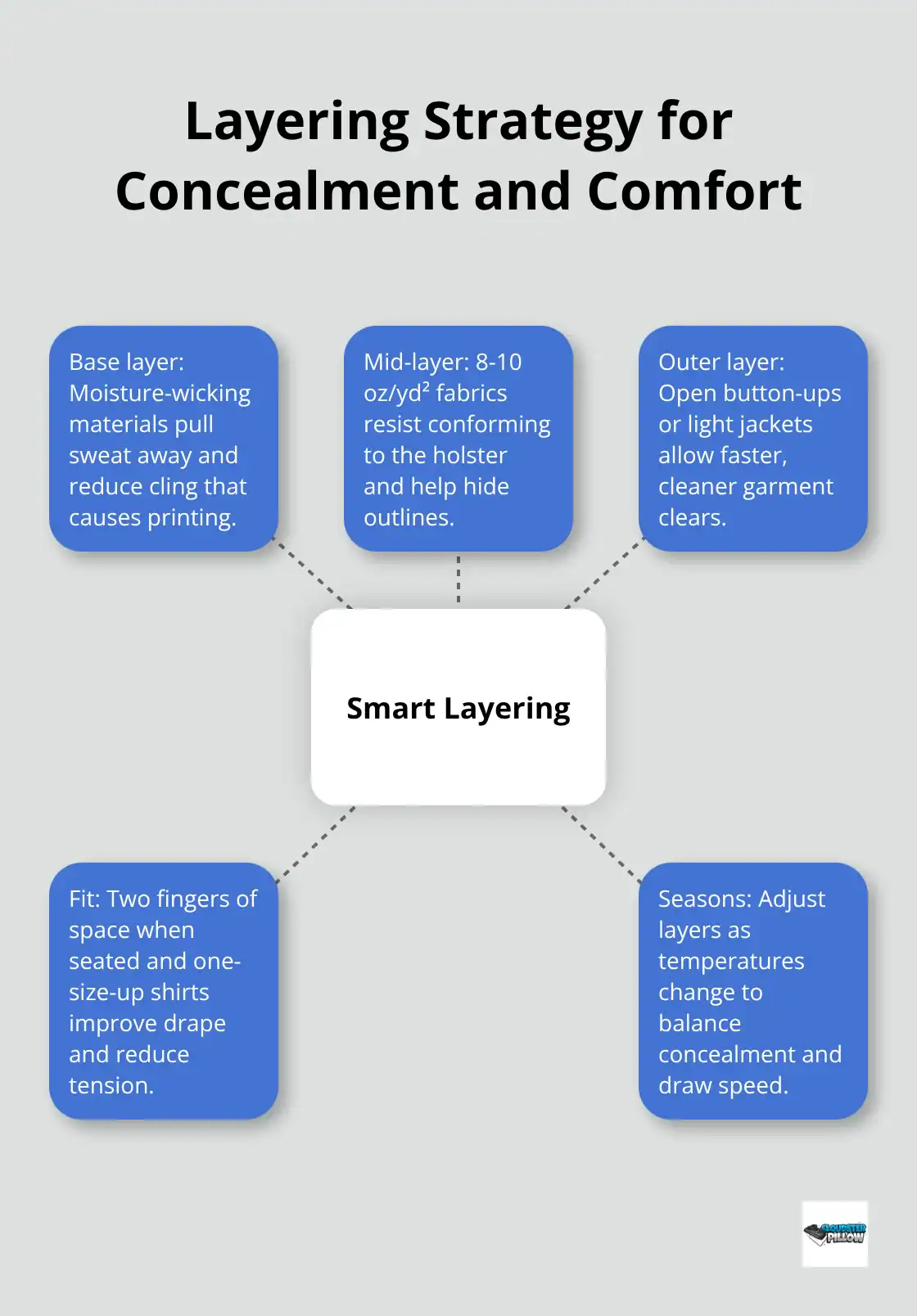
Patterns and texture work in your favor at this stage. A shirt with visible stitching, buttons running down the front, or a subtle geometric pattern disrupts the eye’s ability to detect the clean lines of your holster outline. Solid dark colors perform better than light pastels, which is why experienced AIWB carriers gravitate toward navy, charcoal, and black in summer months despite the heat penalty.
Select an Outer Layer That Allows Quick Access
Your outer layer determines whether you can actually draw when necessary. Button-up shirts or jackets worn open over your primary shirt work better than tight jackets because you can sweep them aside with your weak hand in one fluid motion. Loose-fitting hoodies and flannel shirts offer similar advantages while looking natural in spring and fall. Draw speed improves with lighter cover garments like jackets compared to heavy winter coats or multiple layers. If you cannot clear your garment smoothly with one hand while maintaining your grip, the setup fails regardless of how well it conceals.
Fit Your Clothing Properly Across All Layers
Fit matters across all layers-clothing should sit normally on your frame without pulling tight at the waist or riding up during movement. Two fingers of space inside your waistband when seated indicates proper fit for IWB carry. Oversizing your shirt by one size often improves concealment without looking obviously baggy, particularly if you maintain normal-fitting pants. Winter offers concealment advantages that summer does not, so plan your wardrobe seasonally. Heavy jackets and sweaters eliminate most printing concerns but slow your draw considerably, which is an acceptable trade-off during colder months when you are less likely to need rapid access in public settings.
Test Your Seasonal Transitions
As temperatures shift between seasons, your layering strategy must adapt to maintain both concealment and draw speed. Spring and fall present unique opportunities because moderate temperatures allow you to add or remove layers without overheating or sacrificing coverage. Summer demands thinner mid-layers and strategic use of patterns to manage printing with minimal fabric. The transition from winter to lighter clothing requires adjusting your carry setup to avoid exposed firearm as layers come off. Your next decision involves identifying and solving the specific printing problems that emerge despite your best fabric and layering choices.
Common Printing Problems and Practical Solutions
Locate Your Specific Printing Hotspots
Most carriers identify printing in mirrors or photos, but you need to know exactly where your setup fails during real movement. AIWB printing typically emerges at three specific locations: the grip area where the slide sits, the trigger guard area, and along the side panels where your holster’s backing contacts your body. IWB carriers experience printing most visibly at the 3 o’clock to 4 o’clock position on the side, where body movement stretches fabric across the holster’s widest point.
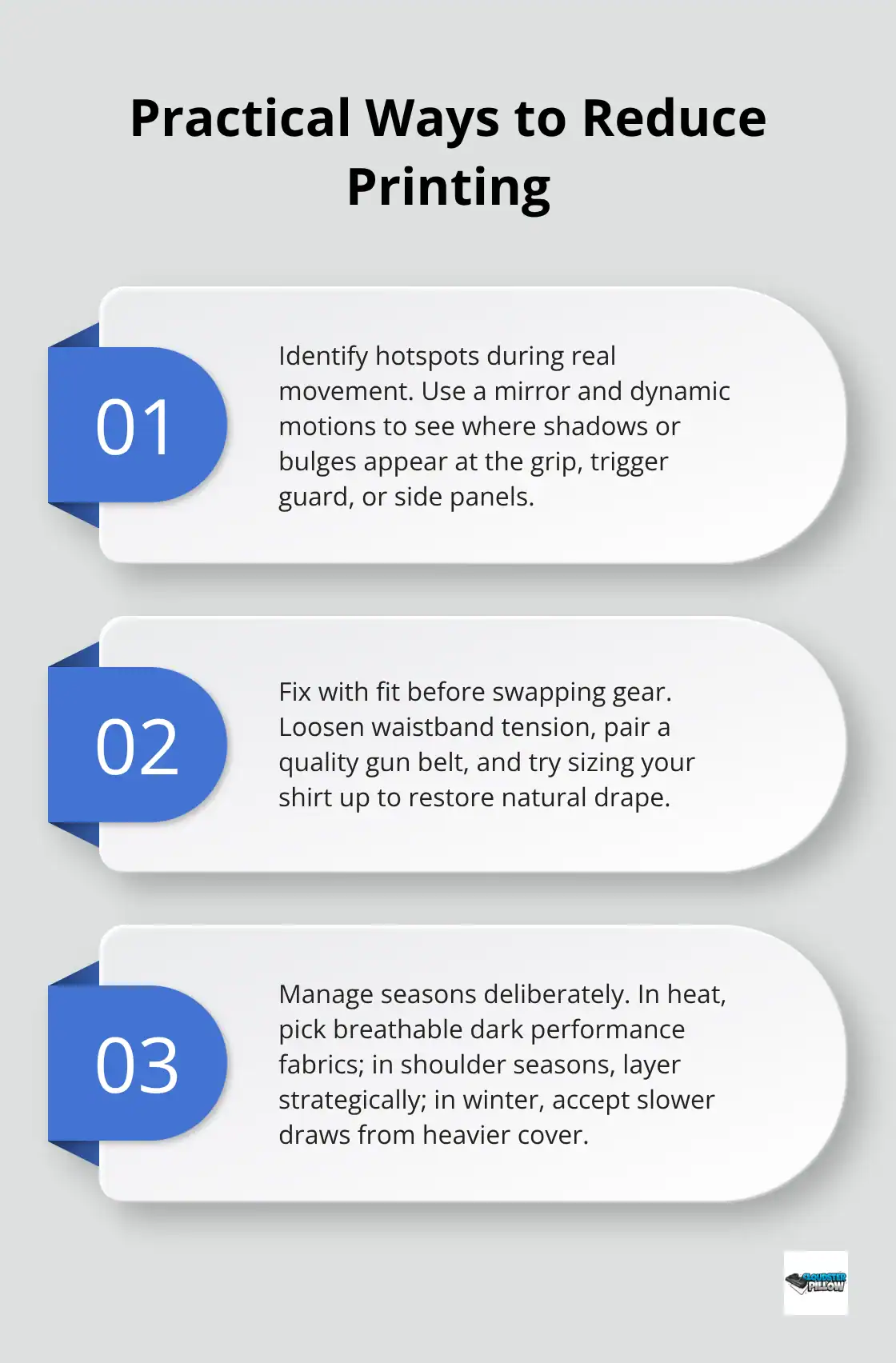
Wear your carry setup in front of a mirror, then reach for high shelves, bend forward, and rotate your torso to watch where fabric tension creates shadows or bulges. This matters because fixing printing at the grip differs from solving side printing-they demand different clothing and adjustment strategies.
Some carriers print badly at the grip but conceal the side panels perfectly, while others reverse this pattern entirely based on body shape and carry position. Your anterior pelvic tilt, shoulder width, and torso length all influence where printing occurs, which is why generic advice fails so many people. Once you locate your specific problem area, you can target solutions instead of guessing at your entire wardrobe.
Adjust Waistband Fit Without Replacing Your Holster
Adjusting waistband fit solves most printing problems faster than replacing gear. If your primary printing hotspot is the grip area, size up your shirt by one size and often eliminate the issue without requiring a holster change. Tighter waistbands create compression that forces fabric against your firearm, while slightly loose waistbands allow fabric to drape naturally. Ensure your gun belt doesn’t pull your pants tight-a loose waistband with a quality 1.5-inch gun belt works better than tight pants with any belt.
For side panel printing, undershirts become your best tool because they smooth the silhouette and reduce the shadow effect that reveals your holster’s backing. Tuck an undershirt while leaving your outer shirt untucked to create separation between your body and the outer layer, substantially reducing visible printing. This simple adjustment costs nothing and works across multiple carry positions and holster types.
Manage Printing Through Seasonal Transitions
Seasonal adjustments prevent printing from emerging when you transition between heavy winter layers and summer tees. Winter coats and sweaters eliminate almost all printing concerns, but spring and fall demand strategic layering because moderate temperatures tempt carriers to skip cover garments entirely. Summer heat forces difficult choices-thin fabrics print more readily, but heavy materials cause overheating.
Your best summer solution involves breathable, moisture-wicking fabrics like polyester blends or performance cotton in darker colors, paired with patterns or texture that distract from gun outlines. Test each seasonal transition in your actual daily environment before committing to that setup for weeks. A shirt that conceals perfectly in your climate-controlled office might print obviously during a 20-minute outdoor errand when body temperature rises and fabric wets from sweat.
Solve Printing With Layering and Positioning Adjustments
Printing solutions rarely come from a single change-they emerge from testing combinations of fit, fabric, layering, and positioning until your specific body and carry method work together seamlessly. Your next step involves identifying which adjustment addresses your particular hotspot most effectively. Some carriers need only a shirt size change, while others require undershirt additions or holster repositioning to achieve acceptable concealment. The goal remains consistent: maintain both comfort and concealment throughout your daily activities without sacrificing draw speed or accessibility.
Final Thoughts
Your concealment clothing considerations directly determine whether you carry consistently or leave your firearm at home. Fabric weight, layering strategy, and fit adjustments work together to solve real printing problems without forcing you to replace your holster or belt. Start with identifying your specific printing hotspot, then test one adjustment at a time until your setup feels natural during everyday movement.
Comfort drives consistency more than any other factor. Carriers who feel uncomfortable throughout the day eventually abandon their setup, leaving their firearm at home when they need it most. The right clothing eliminates the constant awareness of your holster digging into your side or sweat pooling under your shirt, and when your carry setup feels natural, you stop thinking about concealment and focus on training instead.
We at Cloudster Pillow understand that comfort and concealment work together seamlessly. Our holster wedge enhances all-day carry for both AIWB and IWB positions, reducing the discomfort that emerges from holster pressure points. Combined with the clothing strategies in this guide, a quality holster wedge transforms how your setup feels throughout your day.
