
Holster Wedge, Holsters and Gear Recommendations, IWB Holster Wedge, Uncategorized
DIY Pillow Holster for Cloudster Pillow Holders
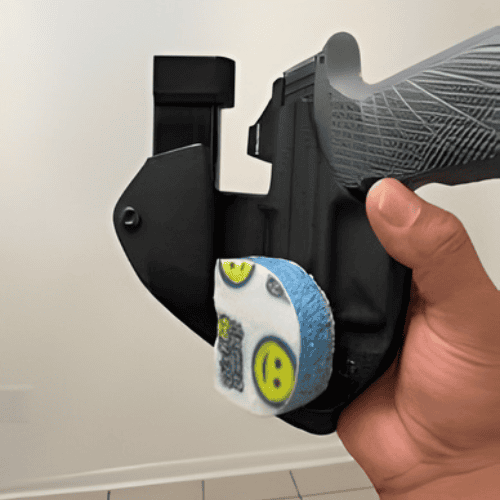
DIY Holster Wedge: Can You Make One Yourself?
A DIY holster wedge is one of the most common first modifications concealed carriers try. The concept is simple — attach a foam pad to the back of your IWB holster to improve concealment and comfort. But is building your own wedge worth the effort, or are you better off buying a purpose-built option?
This guide walks through how to make a holster wedge at home, what materials work best, and an honest comparison between DIY and pre-made wedges so you can decide which route is right for your carry setup.
What You Need to Make a DIY Holster Wedge
Building a basic holster wedge at home requires minimal materials. Here is what you need:
Materials
- Foam block: Closed-cell foam, yoga block foam, or adhesive-backed craft foam from a hardware store. Thickness should be between 1/4 inch and 3/4 inch depending on your needs.
- Adhesive-backed Velcro strips: The hook-and-loop system allows you to reposition the wedge without permanently attaching it.
- Contact cement or super glue: For a more permanent attachment if you skip the Velcro route.
- Scissors or utility knife: To cut the foam to shape.
- Rubbing alcohol: To clean the holster surface before attaching anything.
Optional Upgrades
- Neoprene fabric: Wrapping your foam in neoprene adds moisture resistance and durability.
- Moleskin or felt backing: Adds a softer body-facing surface.
- Sandpaper: To taper the foam edges for a smoother profile.
Step-by-Step: How to Make a DIY Holster Wedge
- Trace your holster shell — Place your holster face-down on the foam and trace the lower section where the wedge will go. You want the wedge to cover the bottom third to half of the holster shell.
- Cut the foam to shape — Use scissors or a utility knife to cut along your traced line. Round the corners to prevent the edges from digging into your skin.
- Taper one edge — The wedge should be thicker at one end and thinner at the other. This taper is what creates the pivot effect that tucks your grip inward. Use sandpaper or cut at an angle to create the taper.
- Clean the holster — Wipe the back of your holster shell with rubbing alcohol. Let it dry completely before attaching anything.
- Attach Velcro to holster and wedge — Stick the hook side to the holster and the loop side to the foam wedge. This lets you reposition or remove the wedge as needed.
- Test fit — Mount the wedge to the holster, insert your firearm, and put the holster on. Check concealment in a mirror and comfort around the house for 30 minutes.
- Adjust as needed — Move the wedge up or down, trim the foam if it is too large, or add thickness if you need more grip tuck.
Common DIY Holster Wedge Materials Compared
| Material | Pros | Cons | Durability |
|---|---|---|---|
| Yoga block foam | Easy to cut, cheap, good density | Can crumble over time, no moisture resistance | 1-3 months |
| Closed-cell foam | Moisture resistant, firm support | Less comfortable, harder to shape | 3-6 months |
| EVA foam (craft foam) | Available everywhere, easy to cut | Compresses quickly, loses shape | 1-2 months |
| Dr. Scholl’s insoles | Pre-shaped, adhesive backing | Not designed for holsters, odd fit | 2-4 months |
| Memory foam | Conforms to body, comfortable | Hard to find in right density, needs covering | 3-6 months |
DIY Holster Wedge vs Pre-Made Wedge: Honest Comparison
Before you invest time in a DIY project, consider how homemade wedges compare to purpose-built options:
| Factor | DIY Wedge | Pre-Made Wedge |
|---|---|---|
| Cost | $3 – $8 in materials | $10 – $25 |
| Time to make | 30 – 60 minutes | Ready to install |
| Consistency | Varies with skill | Engineered for purpose |
| Durability | 1-3 months typical | 6-12 months |
| Comfort | Good with right materials | Optimized foam density |
| Moisture resistance | Poor unless covered | Built-in (neoprene cover) |
| Taper/shape | Hand-cut, imprecise | Precision molded |
| Attachment | DIY Velcro or glue | Integrated Velcro system |
When DIY Makes Sense
- You want to test whether a wedge works for you before investing in a quality option
- You need a temporary solution while waiting for a pre-made wedge to ship
- You enjoy working with your hands and customizing your gear
- You have unusual holster dimensions that standard wedges may not fit
When Buying Pre-Made Is the Better Choice
- You carry daily and need a wedge that lasts months, not weeks
- You want consistent performance without trial and error
- Moisture and sweat resistance matter (most DIY materials absorb sweat)
- You value your time — a pre-made wedge installs in under 5 minutes
The Cloudster Pillow solves the main problems with DIY wedges. Its memory foam core provides the body-conforming comfort that most DIY materials cannot match, and the neoprene cover handles sweat and moisture. The integrated Velcro system means no messy glue or imprecise cutting.
Common DIY Holster Wedge Mistakes
- Using open-cell foam: Open-cell foam (like couch cushion foam) absorbs sweat and breaks down quickly. Always use closed-cell foam for DIY wedges.
- Making the wedge too thick: A thick DIY wedge can push the holster away from your body, creating a gap that actually makes printing worse. Start thin and build up.
- Skipping the taper: A flat foam pad is not a wedge. The taper is what creates the leverage that tucks the grip. Without it, you just have a pad.
- Permanent adhesive on the first try: Always use Velcro first so you can reposition the wedge. Once you find the perfect spot, you can switch to permanent adhesive if you want.
- Ignoring moisture: Your body produces sweat against the holster all day. Uncovered foam absorbs that moisture, develops odor, and degrades faster.
How to Upgrade from DIY to a Purpose-Built Wedge
If you have been using a DIY wedge and want to upgrade, here is what to look for:
- Memory foam core: Conforms to your body better than any single-density foam you can buy at a craft store.
- Neoprene or moisture-wicking cover: Handles sweat without degrading the foam inside.
- Pre-tapered design: Engineered angles that match how IWB holsters sit against the body.
- Reusable Velcro system: Lets you transfer the wedge between holsters or reposition it without buying new adhesive.
The Cloudster Pillow checks all of these boxes and works with any Kydex or hybrid IWB holster. If your DIY wedge taught you that wedges work, the Cloudster Pillow is the logical next step.
Frequently Asked Questions
What is the best foam for a DIY holster wedge?
Closed-cell foam is the best option for DIY holster wedges. It resists moisture better than open-cell foam and maintains its shape longer. Look for foam in the 1/4 to 3/4 inch thickness range at hardware or craft stores.
How long does a DIY holster wedge last?
Most DIY wedges last 1 to 3 months with daily carry before the foam compresses, shifts, or degrades from sweat. Pre-made options like the Cloudster Pillow typically last 6 to 12 months or longer.
Can I use a Dr. Scholl’s insole as a holster wedge?
Some carriers have used gel insoles as a quick DIY wedge. While they can work in a pinch, they are not shaped correctly for holster use and tend to slide around. A purpose-cut foam wedge performs significantly better.
Is a DIY holster wedge as good as a bought one?
A well-made DIY wedge can provide similar concealment benefits in the short term. However, pre-made wedges outperform DIY options in durability, moisture resistance, and consistency. If you plan to carry daily, a purpose-built wedge is worth the investment.
Final Thoughts
A DIY holster wedge is a great way to test the concept and understand how wedges improve your IWB carry. If you are handy with foam and a utility knife, you can build a functional wedge in under an hour. But for daily carry reliability, a purpose-built wedge like the Cloudster Pillow delivers better comfort, durability, and performance over time.
Start with DIY if you want. But once you feel the difference a wedge makes, upgrade to something built to last.
Ready to skip the DIY and go straight to a premium holster wedge? Browse our holster wedge collection and get a wedge engineered for everyday concealed carry.
