
AIWB Holster Wedge, IWB Holster Wedge
Holster Wedge Kit Pillow: Solving Grip Kick with Muzzle-End Torque
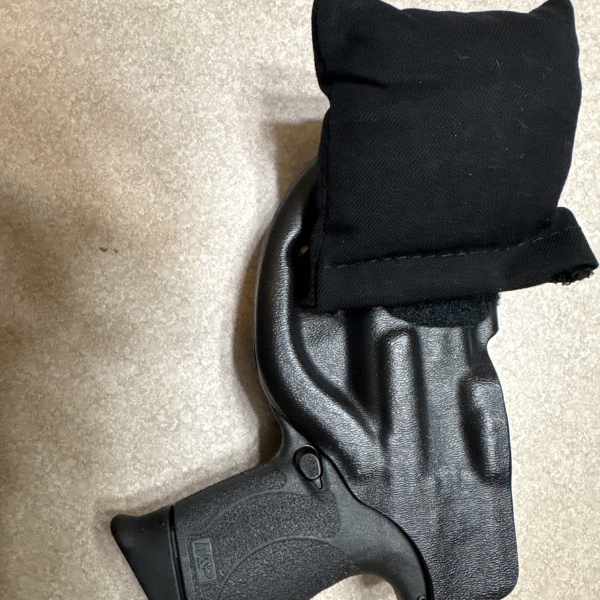
Stop “Grip Kick” Without Chasing More Hardware
Use muzzle-end torque to tuck the grip in comfortably with an adjustable Cloudster Pillow wedge kit.
Muzzle-End Torque: Solving “Grip Kick” Without a Claw
holster wedge kit pillow
If you’ve carried appendix (AIWB) for any length of time, you’ve probably met the enemy: grip kick.
It’s that annoying moment when everything feels fine in the mirror, you take three steps, and suddenly the pistol grip
pokes outward like it’s trying to introduce itself to everyone at the grocery store. Most carriers immediately reach for
the standard fix—a claw (or wing). A claw is a solid tool, but it isn’t a universal solution, and for a lot of people it
creates a new problem: the muzzle end of the holster starts jabbing the thigh, groin, or pelvic crease the moment you sit,
drive, or bend.
There’s a cleaner way to solve grip kick that doesn’t rely on fighting your belt tension with hard plastic. It’s the
mechanics of muzzle-end torque, and the easiest way to apply it is with a holster wedge kit pillow.
Instead of only pushing the grip sideways, you use vertical leverage to rotate the grip inward. Done correctly, the gun
stays flatter to your body, prints less, and feels dramatically more wearable for long days.
In this guide, we’ll break down torque in plain English, explain why claws sometimes fail (or hurt), and show how an
holster wedge kit pillow creates “dual-axis” concealment—often with better comfort than rigid wedges or over-tight belts.

What Is “Muzzle-End Torque” in AIWB?
In physics, torque is the twisting effect produced by a force applied at a distance from a pivot point.
If that sounds complicated, think of a door: pushing near the hinges does almost nothing, but pushing on the handle swings
the door easily. Same force, different leverage. Torque is basically “force × distance from the pivot.”
In appendix carry, your belt line functions like a pivot. When your holster is attached to the belt, the belt creates a
fixed reference point. Any pressure below the belt can influence how the holster rotates around that point. When the holster
rotates the wrong way (muzzle tucked in too much and grip pushed out), you see grip kick. When it rotates the right way
(muzzle slightly out, grip tucked in), concealment improves dramatically.
This is where an aiwb holster wedge earns its reputation. Placing a wedge at the muzzle end adds thickness between the
holster and your body. When the belt tightens and your body compresses the wedge, the wedge pushes the muzzle end outward,
creating torque around the belt line. The result is the “good rotation” you actually want: the grip rotates inward toward
your torso instead of flaring outward.
That’s muzzle-end torque in one sentence: controlled pressure at the muzzle end that rotates the grip inward.
A holster wedge kit pillow applies that pressure comfortably, because it compresses and distributes force rather than
creating a sharp, rigid contact point.
Why a Claw Isn’t Always the Answer
Claws are popular because they’re simple: they press on the belt and use the belt’s resistance to push the grip inward
horizontally. For many people, that helps. But claws are not a complete solution for every body type, holster, or carry
position. Here’s why:
- Claws primarily address horizontal grip rotation. They “pull” the grip inward sideways, but they don’t always
prevent the grip from tipping outward vertically. - They often demand more belt tension. If the claw isn’t getting enough purchase, carriers tighten their belt.
That can create pressure points, reduce comfort, and still fail to solve vertical tipping. - They can worsen muzzle discomfort. As you increase belt tension, you can drive the muzzle end inward—right into
the thigh or pelvic crease—especially when sitting.
This is why some carriers feel like a claw is a bully: it works by “winning” against your belt and body, and when it wins,
you sometimes pay for it with hot spots. If your goal is all-day comfort and concealment, you don’t want a solution that
requires you to crank down your belt until your hips go numb.
A holster wedge kit pillow attacks the problem from the other end—literally. Instead of forcing the belt to do all the
work, the wedge creates leverage below the belt line. You often need less belt tension to get a better tuck, and the muzzle
end becomes more comfortable because the wedge changes the contact geometry.
Dual-Axis Concealment: Side-to-Side and In-and-Out
A simple way to think about concealment is that the grip can move in two directions:
- Side-to-side (horizontal): The grip rotates toward your belly button or away from it.
- In-and-out (vertical): The grip tips into your torso or kicks outward away from your body.
A claw is best at the first axis. A wedge is best at the second axis. When you combine them, you get “dual-axis” concealment.
But here’s the key point of this article: you can often solve grip kick with muzzle-end torque even without a claw.
If your main printing issue is that the grip is tipping outward (vertical), the holster wedge kit pillow may be the
primary fix that finally makes your rig behave.
And if you do choose to use a claw later, you’ll often find it works better because you won’t need to crank belt tension
as hard. The wedge handles the vertical rotation; the claw fine-tunes horizontal tuck.
How a Holster Wedge Kit Pillow Fixes Grip Kick and Muzzle Jab
Let’s talk about the two complaints that usually show up together:
- My grip prints. (Grip kick: the top flares outward.)
- My muzzle hurts. (The bottom digs into my thigh/groin when I sit.)
A rigid solution can reduce printing but increase pain, because it concentrates force at a small point. A soft wedge can do
both jobs at once because it changes the angle and distributes pressure.
When you add an aiwb holster pillow at the muzzle end, the holster’s bottom edge is no longer the first thing that
touches you. The pillow is. That matters. The pillow compresses, spreads pressure, and creates a smoother transition when
your body folds (like sitting in a car). Meanwhile, the pillow increases thickness at the muzzle end, pushing it outward and
rotating the grip inward.
So instead of “hard edge + tight belt = concealment,” you get “soft contact + leverage = concealment.” That’s the difference
between a setup you tolerate and a setup you actually carry every day.
Why “Kits” Matter: Bodies Aren’t Standardized
One reason wedges have a mixed reputation is that a one-size foam block rarely fits everyone. The amount of torque you need
depends on your body shape, your holster ride height, your belt stiffness, and the pistol/holster length below the belt.
That’s why a holster wedge kit pillow is so valuable: it’s tunable.
- Adjustable fill: Add or remove fill to control how much torque you generate. More fill typically equals more
muzzle-out rotation and more grip-in tuck. - Positioning control: Hook-and-loop attachment means you can slide the pillow slightly to find the sweet spot
for your anatomy and holster geometry. - Stability through surface area: A wider pillow can reduce wobble by creating a flatter, more planted contact
patch against the body.
This is especially useful for carriers who sit a lot. Office chairs, vehicles, and long drives magnify pressure points.
A tunable appendix holster wedge pillow lets you keep concealment while reducing the “muzzle stabbing” problem that drives
people away from AIWB.
Setup Walkthrough: Dialing In Muzzle-End Torque (Without Overdoing It)
Here’s a practical, repeatable way to tune an holster wedge kit pillow for grip kick:
- Start with moderate fill. You want a noticeable but not extreme wedge effect. If you start too aggressive, you
may over-rotate the gun and feel like the muzzle is “floating” away from your body. - Set ride height first. If your holster is too high, the grip prints. Too low, the draw suffers. Get the height
reasonable before you micro-adjust torque. - Place the pillow at the muzzle end. The point is leverage below the belt line. The farther from the pivot, the
more torque you get from the same force. - Check standing concealment. Take a quick mirror look, then move naturally—bend, reach, walk.
- Check seated comfort. Sit in a chair and in your car. If you feel a sharp jab, shift the pillow slightly or
reduce fill. - Micro-adjust, don’t overhaul. Small changes matter. Add a little fill if grip kick remains. Remove a little if
the muzzle feels pushed out too far.
Once you find the right balance, you’ll notice two big changes: the grip stays tucked in a predictable spot, and the holster
feels less “shifty.” That stability improves concealment and can also make your draw more consistent—because your grip angle
stops changing as you move.
Why This Improves Your Draw (Not Just Your Concealment)
Printing is a visibility issue, but grip kick is also a performance issue. When the grip angles outward, your hand meets the
gun inconsistently. Some draws feel perfect; others feel like you’re chasing the grip. Under stress, inconsistency is the
enemy.
Using a holster wedge kit pillow to apply muzzle-end torque keeps the grip flatter and more vertical against the body.
That makes your index more consistent, your initial contact stronger, and your draw stroke more repeatable. In training,
repeatability is everything. The more consistent the setup, the more consistent the reps—and the better your performance
when it matters.
Why Cloudster Pillow Is Built for Real Daily Carry
At Cloudster Pillow, we built our wedges around a simple reality:
concealment solutions that hurt don’t get worn. You can have the most “tactical” holster in the world, but if it bruises you
by lunchtime, it’s not a daily-carry solution—it’s a drawer item.
A Cloudster holster wedge kit pillow is designed to make muzzle-end torque comfortable, adjustable, and repeatable. The
soft exterior reduces hot spots, while the adjustable fill lets you tune torque for your body type, pistol size, and carry
style. Whether you carry a full-size duty pistol or a micro compact that loves to kick outward, the goal is the same:
keep the grip tucked, reduce printing, and stay comfortable enough to carry every day.
For more carry optimization ideas, check out these internal guides:
AIWB Holster Wedge Basics,
How to Stop Printing AIWB, and
Holster Claw vs Wedge.
Authority Resources: Torque and AIWB Concealment Mechanics
If you want to validate the physics and deepen your understanding, these resources are worth reading:
- Physics fundamentals of torque:
The Physics Classroom: Torque - General reference overview of torque concepts:
Encyclopaedia Britannica: Torque - Practical appendix carry considerations:
Lucky Gunner: Appendix Carry - Concealment and AIWB fundamentals:
PHLster: Basics of AIWB
Notice how the “mystery” disappears once you think in leverage and rotation. Grip kick is not a personal failure. It’s a
geometry problem. And leverage is solvable.
Frequently Asked Questions
Can a holster wedge kit pillow replace a claw?
If your main issue is vertical tipping—classic grip kick—a holster wedge kit pillow can absolutely be the primary fix.
A claw is best for horizontal tuck, but many carriers discover their biggest printing issue is the in-and-out angle, not the
side-to-side angle. Start with muzzle-end torque first; add a claw later only if you still need more horizontal tuck.
Will an AIWB holster wedge make my setup too bulky?
Usually the opposite. Because a pillow compresses and blends into your body’s curves, it can make the holster look flatter
under clothing. The key is tuning fill. A holster wedge kit pillow lets you create only as much torque as you need—no more.
Does the pillow move around during the day?
A properly attached pillow using quality hook-and-loop should stay put. Once you position your appendix holster wedge pillow
in the sweet spot and press it down firmly, it shouldn’t shift under normal movement. If it does, clean the holster surface
and use fresh loop-side adhesive where needed.
How do I clean a holster pillow?
One advantage of a fabric-based aiwb holster pillow is hygiene. Wipe down the exterior as needed, and if your cover is
removable, wash it according to the care instructions. Keeping the contact surface clean helps comfort—especially in summer.
How much fill should I use?
Start medium. If grip kick remains, add a small amount of fill. If the muzzle feels pushed out too far or the rig feels odd
when seated, remove a small amount. The strength of a holster wedge kit pillow is that you can tune torque gradually until
concealment and comfort meet in the middle.
Final Thoughts: Solve Grip Kick with Leverage, Not Pain
Grip kick is one of the most common frustrations in AIWB, and it’s the reason many carriers either constantly fidget with
their setup or abandon appendix entirely. But you don’t have to choose between concealment and comfort. Once you understand
muzzle-end torque, the fix becomes straightforward: apply controlled pressure at the muzzle end to rotate the grip inward.
A well-tuned holster wedge kit pillow gives you that torque without sharp edges, without excessive belt tension, and without
turning your holster into a daily torture device. Whether you run a claw or not, muzzle-end torque is the missing piece that
makes many setups finally “click.” Stop fighting the grip. Fix the rotation.
Ready to Eliminate Grip Kick?
Tune muzzle-end torque with an adjustable Cloudster Pillow wedge kit for comfort-first concealment.
