
Uncategorized
Keeping Draw Steady Daily: Practical Drills For Consistent Access
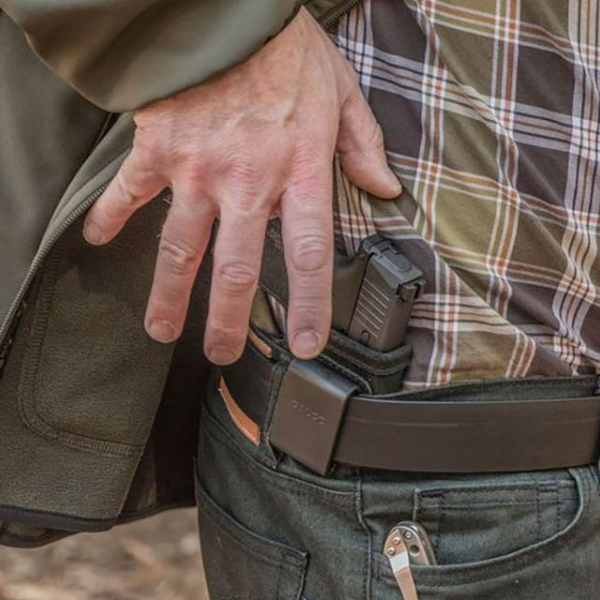

Your draw speed means nothing if your hands aren’t in the same place twice. We at Cloudster Pillow know that inconsistency under pressure is what stops most carriers from feeling truly confident with their firearm.
Drawing practice only works when you build it on a solid foundation. This post walks you through the drills, mistakes to avoid, and the daily habits that turn shaky draws into reliable ones.
Building Your Foundation for Consistent Draws
Grip Placement Sets Your Accuracy
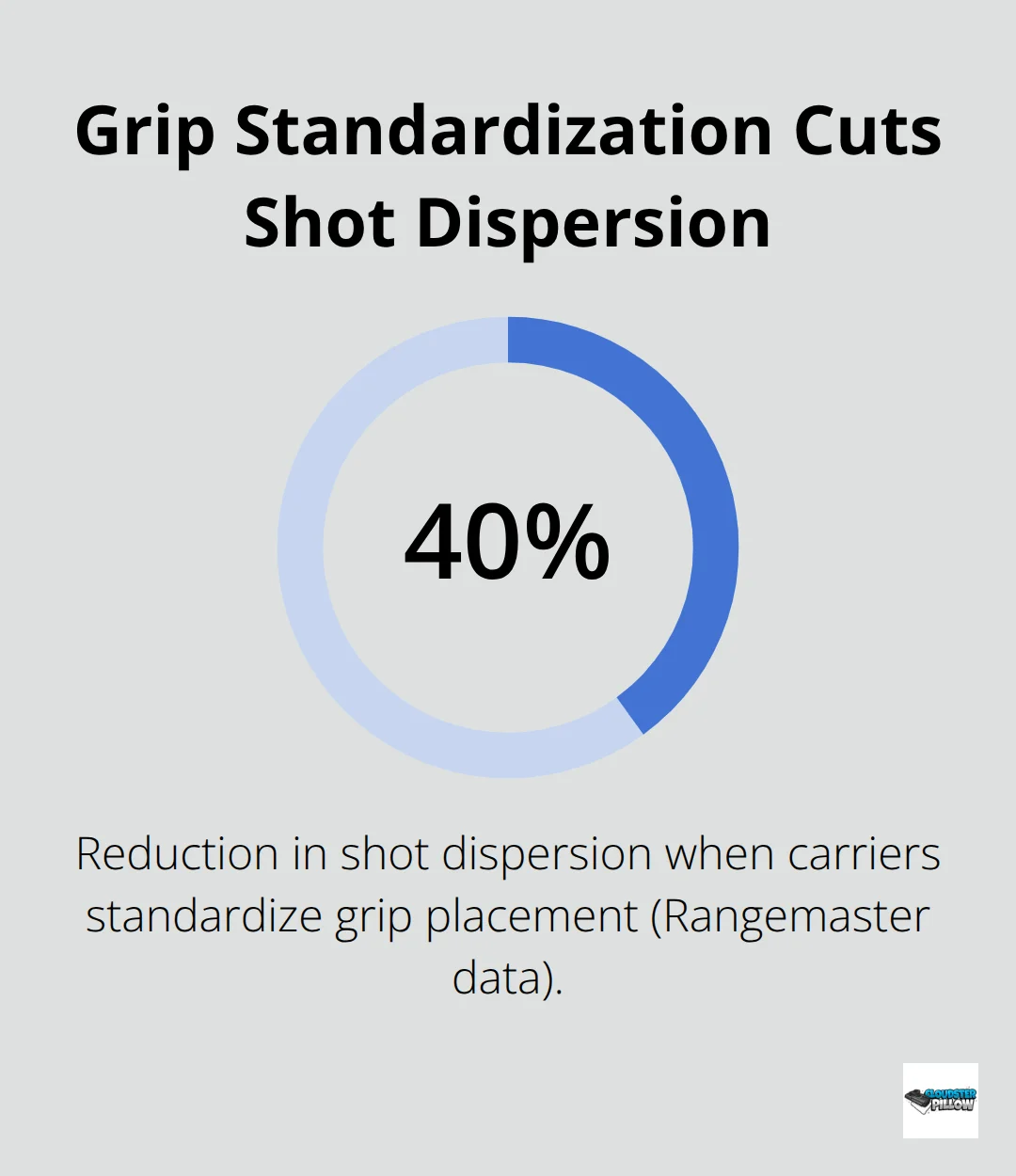
Your grip sets everything that follows. Most carriers grip too tight or position their hands inconsistently each time they draw, which means their presentation shifts slightly every single rep. Start with a two-handed grip where both thumbs point forward and your dominant hand sits high on the backstrap, allowing the web of your hand to make full contact. Your support hand wraps underneath, with the pinky and ring finger providing the real control. Practice this grip 30 times daily with an unloaded firearm, focusing on hand placement relative to your body and the holster position. After two weeks of this repetition, your hands naturally return to the same spot without conscious thought. The difference is measurable: carriers who standardize grip placement reduce shot dispersion by roughly 40 percent compared to those with loose hand positioning, according to data from the Rangemaster training facility.
Stance and Holster Position Work Together
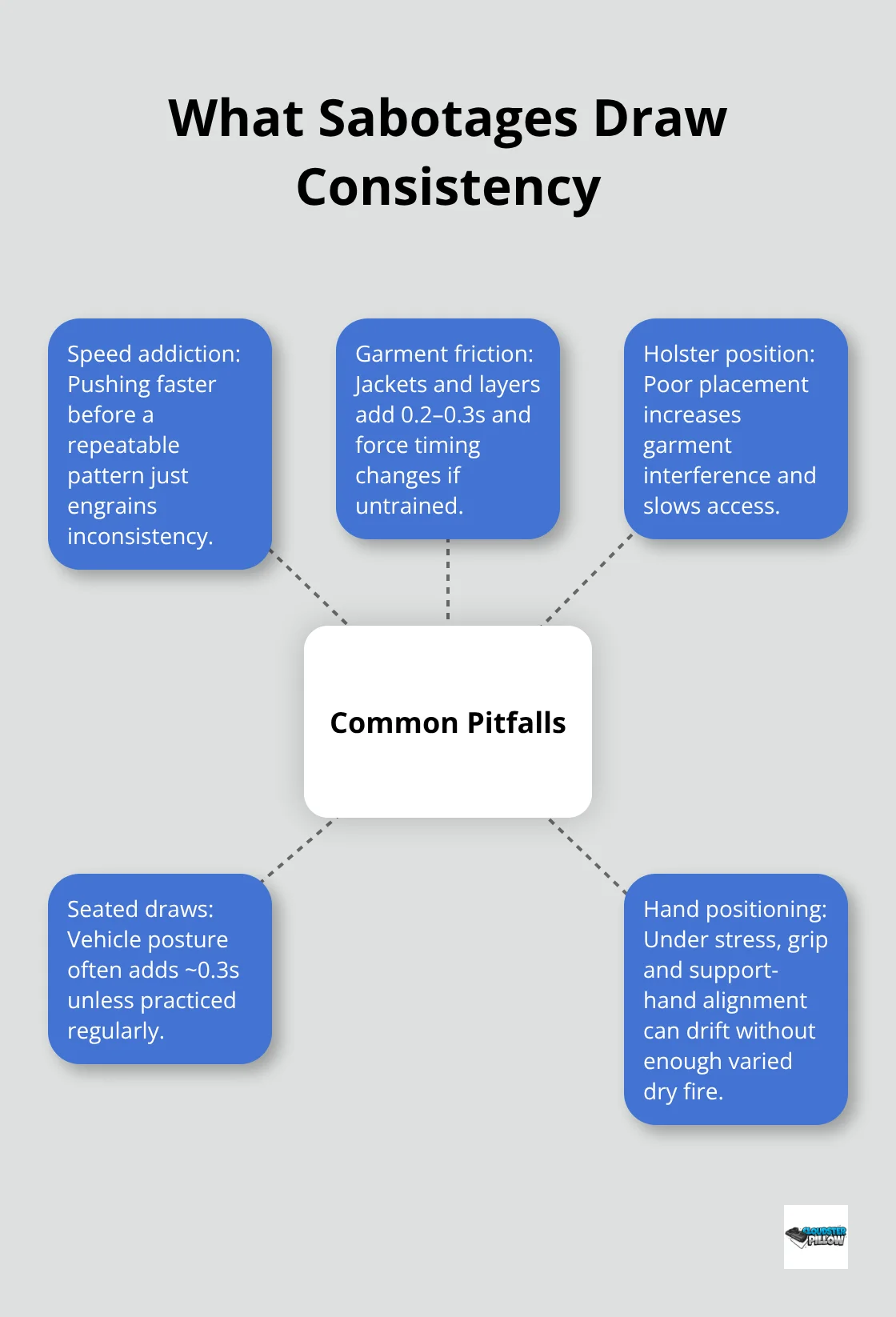
Your stance matters more than most people admit, but not for the reasons you think. A squared shoulders position with feet shoulder-width apart gives you the most stable platform for both drawing and firing accurately. Position your holster at the 3 o’clock position on your belt, which aligns with your natural hand drop and eliminates the need to rotate your torso during the draw. When you sit in a car or at a desk, your draw changes completely because your holster access shifts. Train draws from both standing and seated positions since one doesn’t transfer to the other. Add concealment garment variables into your daily drills: practice with untucked shirts, jackets, and sweaters since clothing friction adds 0.2 to 0.3 seconds to your draw time.
Trigger Control Prevents Accidents and Builds Safety
Your trigger finger stays completely off the trigger until your sights align on target. This single rule prevents the most common training accidents and builds the neural pathway that keeps you safe under stress. Once your sights are clear and on target, press straight back with consistent pressure rather than jerking or slapping. These three elements-grip consistency, positional awareness, and trigger discipline-form the foundation that separates safe, reliable carriers from those who struggle under pressure. The next section covers how repetition transforms these fundamentals into automatic responses that work when it matters most.
How to Build Draw Speed That Sticks
Structure Your Home Drills for Real Progress
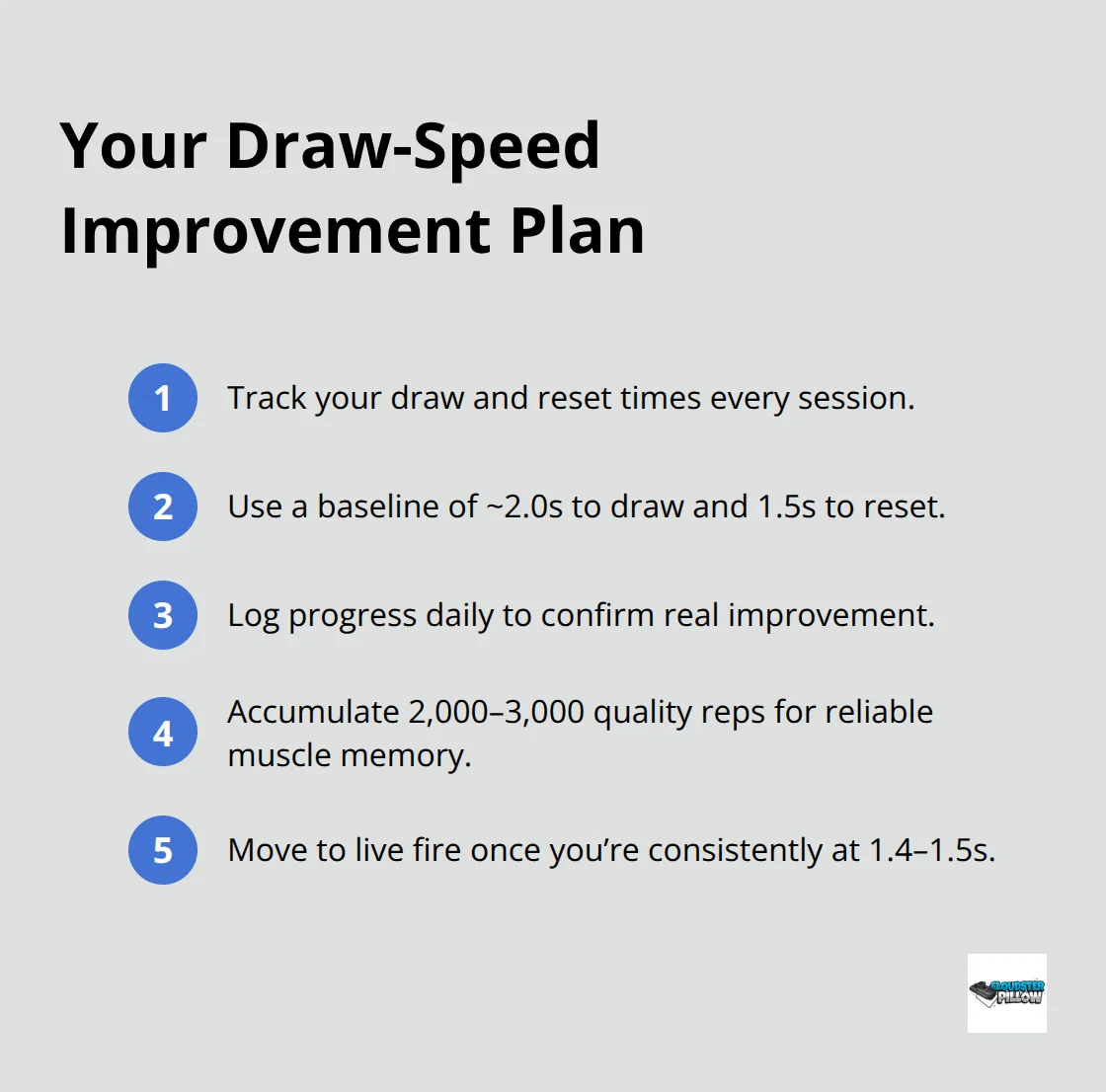
Dry fire practice at home separates carriers who build lasting skill from those who waste months spinning their wheels. The difference comes down to structure. Commit to 30 minutes of slow, deliberate draws daily for 14 consecutive days using an unloaded firearm. Start at a crawl-your first week should feel almost painfully slow, with each draw taking a full two seconds from rest to sights aligned downrange. This isn’t about speed; it’s about locking in the exact same movement pattern every single time. After two weeks of this repetition, your nervous system records the motion so deeply that faster draws happen naturally. Skip this foundation and you’ll spend months chasing inconsistency.
Measure Your Baseline and Track Progress
Time each rep using a simple stopwatch or phone timer. Your baseline should be roughly two seconds for the draw and 1.5 seconds for the reset back to ready position. Track these numbers daily-they reveal whether you’re actually improving or just going through the motions. Professional trainers recommend 2,000 to 3,000 repetitions to establish reliable muscle memory for basic draw mechanics. Once your home drills hit 1.4 to 1.5 seconds consistently, transfer that pattern to live fire at the range.
Apply Your Drills at the Range
The range reveals what dry fire conceals: recoil management, follow-up accuracy, and how your body responds under the stress of actual gunshots. Perform three consecutive draws in each set rather than stopping after one rep, since multiple reps build rhythm and let you identify which attempt slows down. If your third draw noticeably drags, you’ve found a weakness-likely fumbling during the exit or changing the gun’s path mid-draw. This diagnostic detail matters far more than your raw speed number.
Add Variables Progressively
Add variables progressively: start from a standing position, then seated in a car or chair, then with a jacket over your holster. Each variable adds 0.2 to 0.3 seconds, so you’ll need to adjust your expectations accordingly. Your 1.4-second standing draw might become 1.7 seconds in a vehicle with winter clothing, and that’s normal. The principle stays constant: consistency within each scenario beats chasing one magical number.
Transition Variables Into Automatic Responses
After two weeks of home drills plus two weeks of range work, your draw becomes automatic-hands find the same grip, your body assumes the same stance, and your trigger finger waits for sight alignment without conscious instruction. This automatic state is where training transfers to real life, and it’s also where comfort becomes critical. Many carriers overlook how their holster setup affects consistency; poor positioning or uncomfortable gear forces micro-adjustments that throw off your draw pattern. The next section covers the common mistakes that sabotage even well-intentioned practice routines.
What Sabotages Your Draw Consistency
Speed Addiction Destroys Pattern Reliability
Speed addiction ruins more draws than anything else. Most carriers push faster before they’ve built a repeatable pattern, which means they practice inconsistency at higher velocity. Your third rep in a set of three should match your first rep within 0.1 seconds. If it doesn’t, fatigue, technique breakdown, or poor positioning is working against you-and speed won’t fix any of it. The real problem surfaces when you film yourself drawing and compare the footage to your baseline week. Your hand entry might drift higher on the gun, your support hand might wrap differently, or your holster access might shift because you rush the garment clear. Use the shot timer and a journal to track your performance on standard drills to monitor speed consistency across consecutive reps.
Stop timing yourself for one full week and focus only on matching your hand position and grip pressure across five consecutive reps. Once those five reps look identical on video, speed naturally follows without conscious effort.
Concealment Garments Force Technique Adjustments
Concealment garments are the variable most carriers ignore until they carry in real conditions. Your 1.4-second draw in a t-shirt becomes 1.7 or 1.8 seconds when you add a jacket, untucked shirt, or winter coat. The friction alone adds 0.2 to 0.3 seconds, but more importantly, it forces you to adjust your garment clear timing, which destabilizes your entire draw pattern if you haven’t trained it. Practice your daily drills in the exact clothing you’ll carry in: untucked shirts, button-ups, jackets, and whatever else you wear regularly. Seated draws in a car with winter gear should be part of your rotation, not an afterthought.
Your holster positioning matters here too. If your setup sits too far back on your hip or too high on the waistband, garment management becomes a separate problem that slows you down. Proper holster positioning reduces garment friction and improves your draw consistency across all clothing scenarios.
Hand Positioning Breaks Under Stress
Inconsistent hand positioning under stress often stems from insufficient dry fire reps in varied conditions. Train 100 draws in your normal carry clothes before you train 100 in different scenarios. Build the automatic response first, then stress-test it. Track which specific variable slows you down the most and dedicate extra reps to that scenario. If seated draws lag by 0.3 seconds, add five extra seated reps daily until that gap closes. Your nervous system needs repetition in the exact conditions you’ll face-not theoretical practice in ideal circumstances. Situational awareness stops threats before they force you to draw, which means your first critical skill has nothing to do with accuracy or trigger control.
Final Thoughts
Consistent draws come from three non-negotiable elements: a repeatable grip, deliberate practice in your actual carry conditions, and honest assessment of where you’re breaking down. Your drawing practice only works when you measure it, film it, and adjust based on what the data shows. Most carriers skip this accountability step and wonder why they plateau after a few weeks.
Commit to 30 minutes daily for the first two weeks, then scale back to 15 minutes once your baseline hits 1.4 to 1.5 seconds. Rotate through your carry scenarios: standing draws, seated draws, different clothing layers, and various holster positions. Track your numbers weekly and identify which variable costs you the most time-if seated draws lag by 0.3 seconds, dedicate extra reps to that scenario until the gap closes.
Comfortable gear removes one variable from the equation and lets you build reliable draws without distraction. We at Cloudster Pillow designed our holster wedge to enhance comfort and concealment so your setup feels natural and stays in place during daily carry. When your equipment doesn’t fight you, you concentrate on the actual skill work instead of adjusting your gear throughout the day.
