
EDC Gear
Tactical EDC Gear for Preparedness and Security
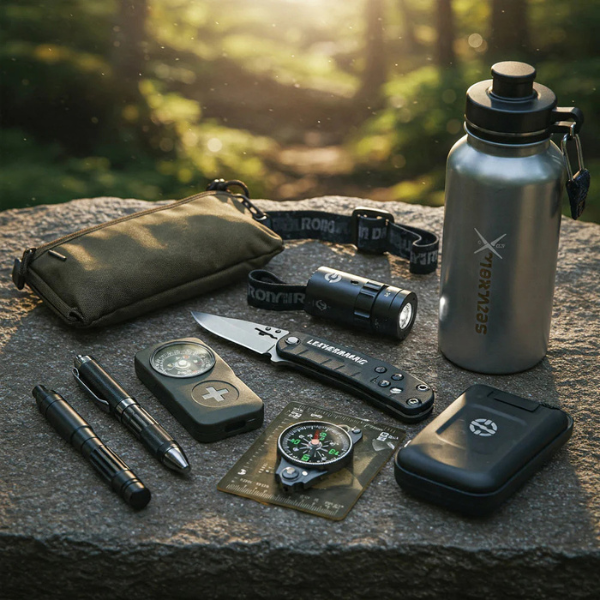
 Carrying the right tactical EDC gear separates those who are genuinely prepared from those who just think they are. Most people grab whatever fits in their pockets and call it a day, then wonder why they’re unprepared when something actually happens.
At Cloudster Pillow, we’ve seen firsthand how the right approach to everyday carry transforms your confidence and readiness. This guide cuts through the noise to show you what actually matters.
What Gear Actually Matters in Daily Carry
Start with Tools That Solve Real Problems
Your EDC lives or dies based on what you’ll actually use when pressure hits. A flashlight with a dead battery or a multi-tool stuck in a bag you never access won’t help anyone. We focus on gear that serves real purposes, not gear that looks tactical on social media. A reliable flashlight-something like a Streamlight MicroStream that runs on affordable batteries-fits in your pocket without bulk. Backup power matters too; a 10,000mAh portable charger keeps your phone alive for navigation and calls, which beats any survival gadget when you’re lost or need help.
Choose Multi-Use Items Over Single-Purpose Gear
A quality multi-tool solves everyday problems without forcing you to carry redundant items. The Leatherman Wave or SOG PowerAccess handles cutting, opening, and adjusting with one tool rather than three. This approach cuts your carry weight while expanding your capability. First aid supplies shouldn’t be theoretical-pack what you’d actually use: adhesive bandages, antibiotic ointment, pain relievers, and a tourniquet. The tourniquet matters most; research from the Journal of Trauma and Acute Care Surgery shows proper tourniquet application stops life-threatening bleeding within seconds. A compact kit from Rescue Essentials or a custom setup in a small pouch takes up minimal space but covers genuine medical scenarios.
Match Your Gear to Your Environment
The mistake most carriers make is treating EDC like a shopping list instead of a problem-solving toolkit. Your environment dictates what goes in your kit. Urban carry needs a portable charger and a compact pen for notes; outdoor settings demand a water purification straw and signaling mirror. Test each item across different daily scenarios-driving, sitting at a desk, bending, reaching-to confirm it stays secure and accessible.
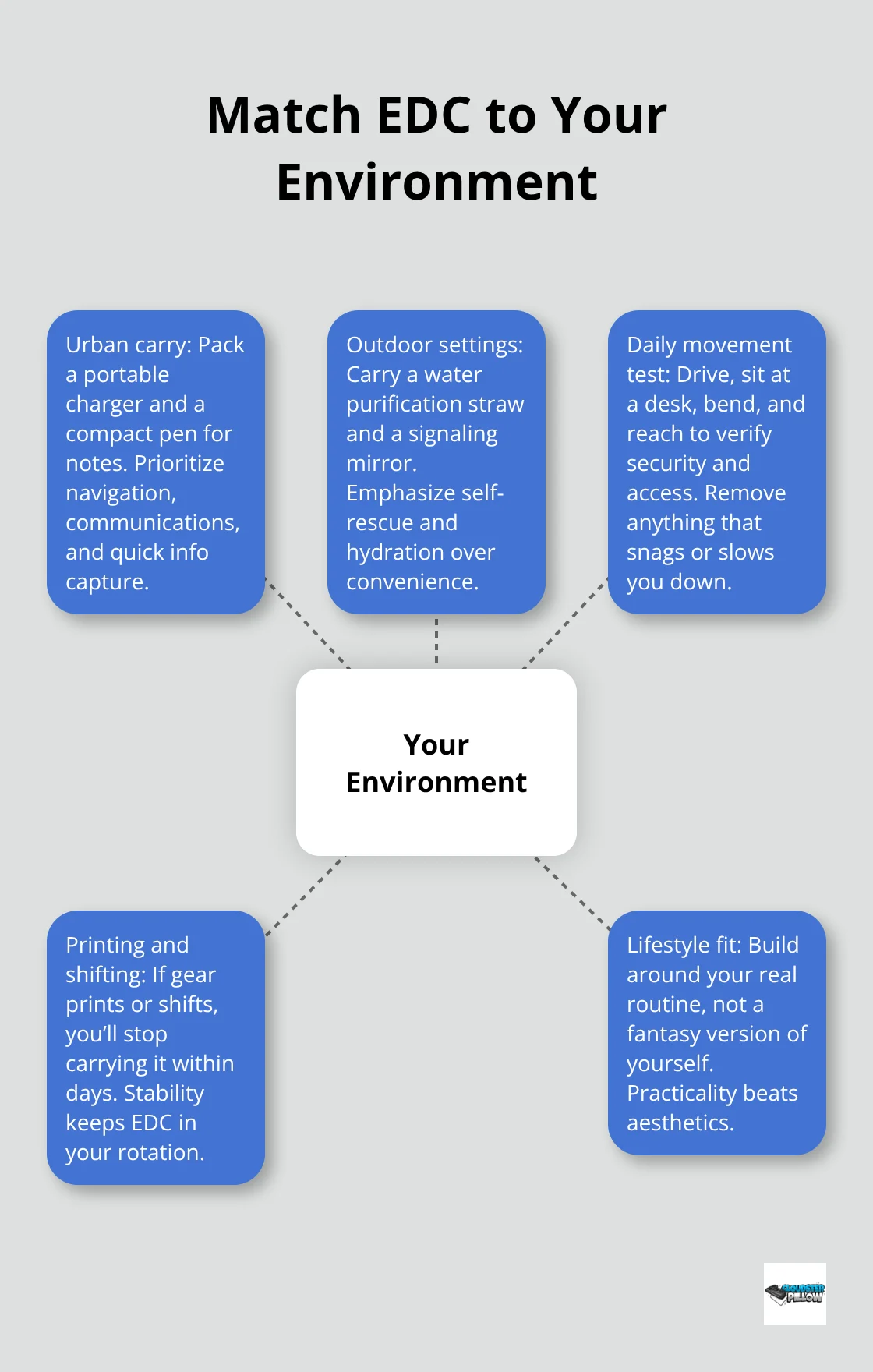
Gear that prints, shifts, or requires constant adjustment will get left behind within days. The best EDC setup matches your actual lifestyle, not some fantasy version of yourself.
Validate Your Setup Before Committing
Comfort and accessibility determine whether you’ll actually carry your gear consistently. A holster wedge designed for AIWB and IWB carry can transform how your setup feels throughout the day, improving both concealment and comfort without replacing your entire holster system. Test your complete kit in real conditions-work, errands, social events-before finalizing it. What works in theory often fails in practice, so give yourself time to identify weak points and make adjustments. Once you’ve validated your gear against your actual daily demands, you’re ready to build the layered defense strategy that transforms preparedness from concept into habit.
How to Build a Defense Strategy That Actually Fits Your Life
Assess Your Real Threat Environment
Your threat environment isn’t the same as your neighbor’s, and pretending it is wastes money and creates false confidence. An accountant working downtown faces different risks than a parent in the suburbs or someone commuting through multiple neighborhoods. The first step is honest assessment: where do you spend most of your time, what routes do you take, and what incidents actually occur in those areas? Check local crime statistics through your police department’s public reports or sites like CrimeReports.com, which aggregates FBI Uniform Crime Reporting data by location. This isn’t fear-mongering-it’s matching your gear and training to real conditions. Urban environments demand situational awareness tools like a reliable flashlight and phone charger; rural areas benefit from water purification and signaling capability. Once you know your actual environment, your gear selections become obvious instead of guesswork.
Train More Than You Buy Gear
Training matters more than equipment, and this is where most carriers stumble. Defensive gun use is exceedingly rare, yet most carriers never practice beyond their initial permit course. The difference between someone who trains and someone who doesn’t shows up instantly under stress-muscle memory either exists or it doesn’t. Dedicate time to regular practice with your specific carry setup: draw from concealment, practice one-handed shooting, work on reloads, and run defensive drills like the Dot Torture, which uses 50 rounds to build marksmanship and fundamental skills.
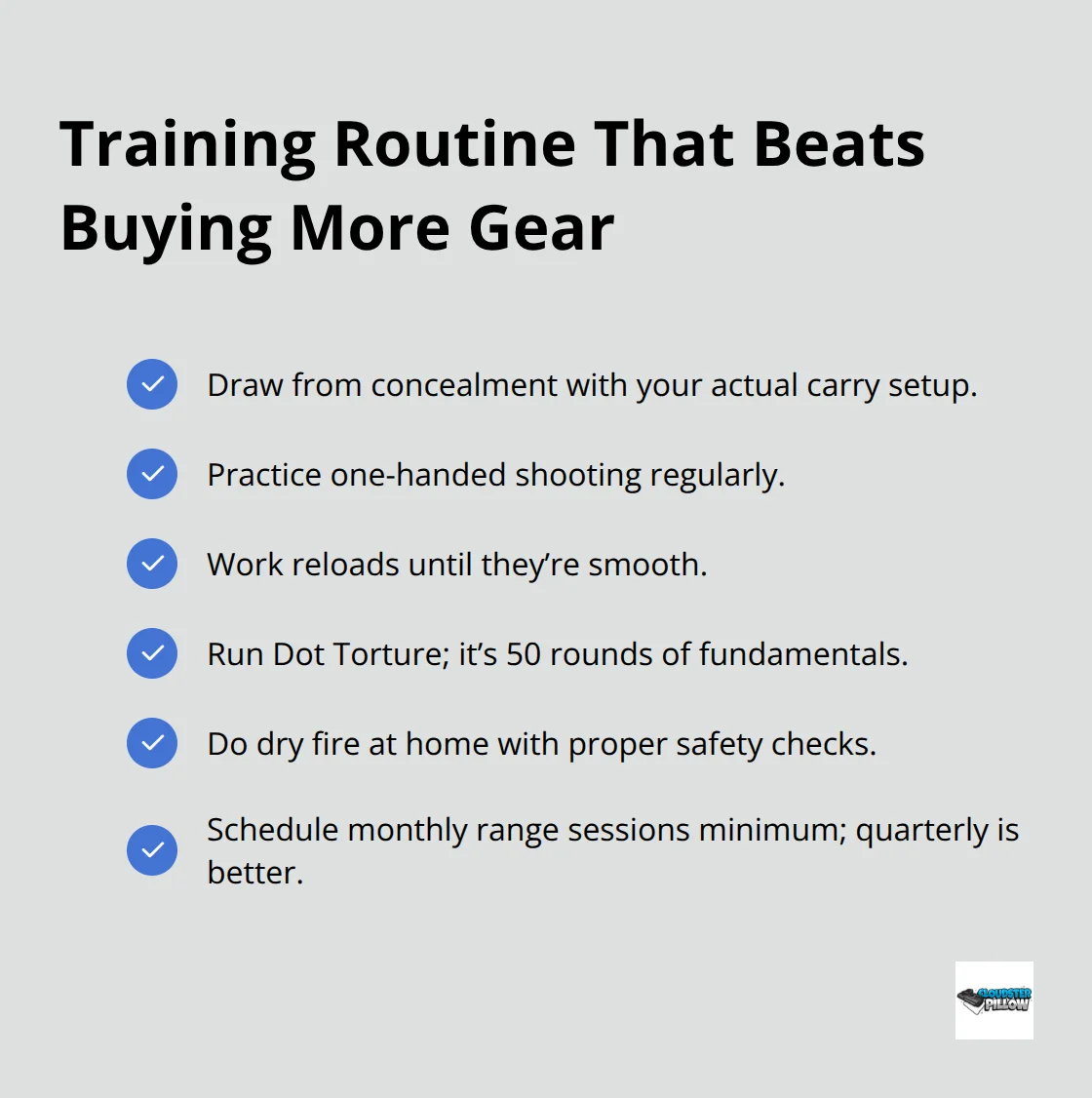
Dry fire practice at home (with proper safety checks) costs nothing and builds the neural pathways that live fire reinforces. Schedule monthly range sessions minimum; quarterly is better.
Develop the Right Mindset About Responsibility
Your mindset determines whether your gear serves you or becomes dead weight. Carriers who view their setup as a security blanket rather than a responsibility often neglect maintenance, skip training, and carry inconsistently. The right mindset treats concealed carry as an ongoing commitment: you maintain your gear, you stay current on local laws, you practice regularly, and you accept that carrying means de-escalation comes first. Your comfort level with your setup directly affects consistency-if your holster causes pain or your gun prints badly, you’ll leave it home eventually. A quality holster wedge compatible with most inside the waistband and appendix carry holsters can eliminate discomfort that undermines your commitment, ensuring you carry every day without compromise.
Validate Comfort Across Real Scenarios
Test your complete kit in real conditions-work, errands, social events-before finalizing it. What works in theory often fails in practice, so give yourself time to identify weak points and make adjustments. Comfort and accessibility determine whether you’ll actually carry your gear consistently. Once you’ve validated your gear against your actual daily demands, you’re ready to move into the mistakes that derail most carriers and how to avoid them.
Common Mistakes in EDC Setup
Overloading Your Kit Defeats the Purpose
Most carriers sabotage their own preparedness by overloading their setup with gear they’ll never touch. 68% of carriers regularly leave items at home because their kit feels too heavy or uncomfortable, which defeats the entire purpose of having it. You can’t stay prepared if your EDC stays on the nightstand because it causes back pain or makes your pants sag.
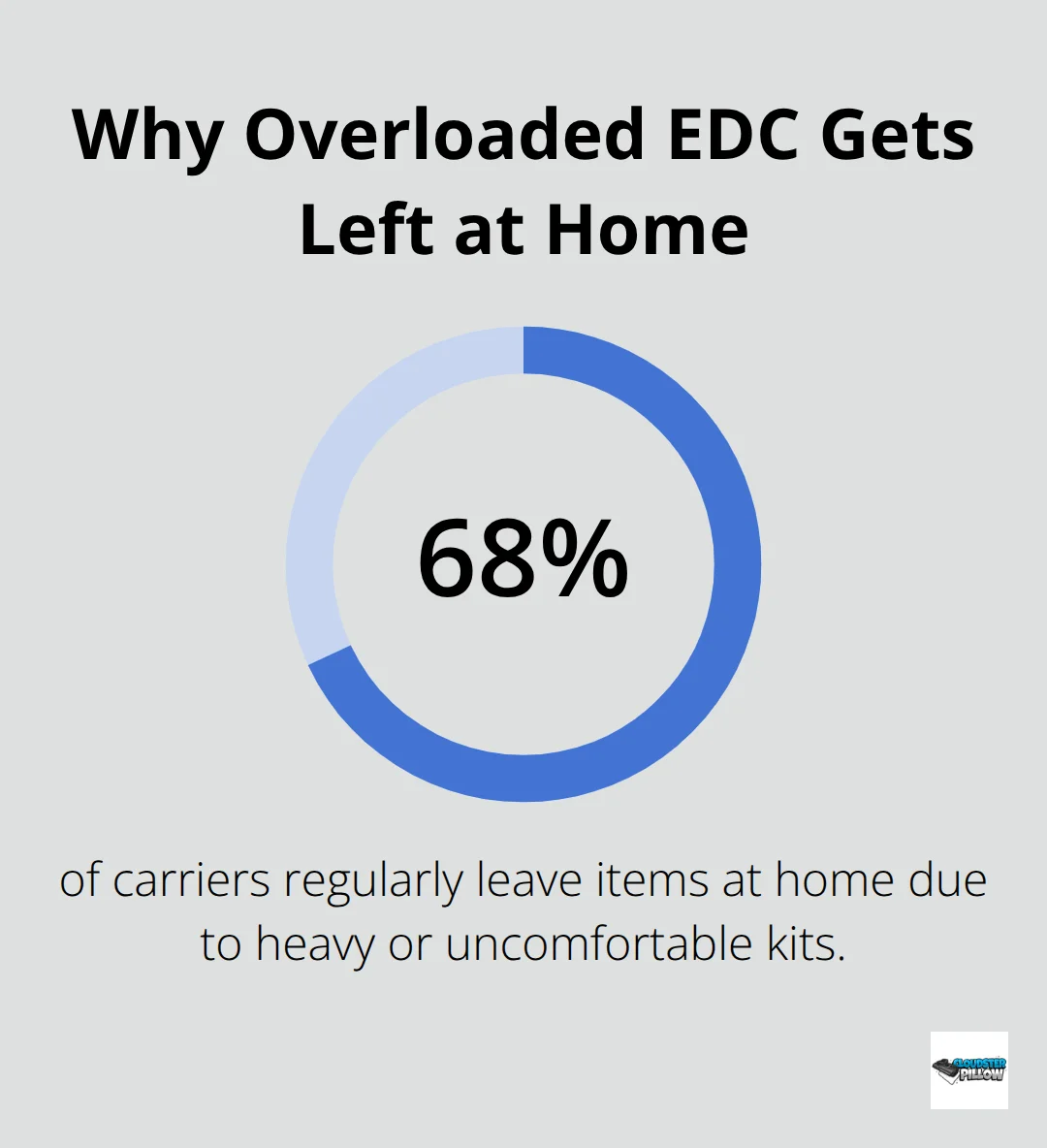
The real mistake isn’t buying tactical gear-it’s treating EDC as a collection instead of a system. Every item must earn its place by solving a problem you actually face. Cut ruthlessly. If you haven’t used something in a month, it’s taking up space that could go to something practical.
Weight matters more than most carriers realize. Carrying more than 10% of your body weight distributed around your waist increases fatigue and reduces situational awareness. A 180-pound person shouldn’t carry more than 18 pounds total, and that includes your firearm, holster, and all supporting gear. Most carriers exceed this within weeks because they keep adding items without removing anything. Your EDC doesn’t need to handle every scenario-it needs to handle your scenarios.
Neglecting Maintenance Ruins Your Readiness
Maintenance kills more EDC setups than poor initial selection. A tourniquet with expired packaging, a flashlight with corroded batteries, or a first aid kit with dried-out antiseptic wipes becomes worthless exactly when you need it. Schedule a 15-minute gear check every month: replace expired medications, test your flashlight, verify your holster retention, and confirm your firearm functions properly.
Check your state’s reciprocity laws quarterly since they change-the USCCA Reciprocity Map gets updated regularly and should be your reference. The carriers who stay consistent treat maintenance like a calendar event, not an afterthought. This simple discipline separates those who carry effectively from those who carry theoretically.
Mindset Determines Whether You’ll Actually Carry
Your mindset determines everything else. Gear sits unused when you don’t genuinely believe you need it or when you haven’t trained enough to trust it. A carrier who spends 2,000 rounds annually at the range will carry differently than someone who shoots twice a year. The Dot Torture drill costs 50 rounds and takes an hour-it builds fundamental skills that make your carry feel purposeful instead of theoretical.
Training creates confidence, and confidence drives consistency. Carriers who skip training often abandon their setup because they don’t trust themselves under pressure. Discomfort compounds this problem significantly. When your holster causes pain or your gun prints badly, you’ll leave it home eventually. A comfortable carry setup removes the physical barrier between intention and action. When your holster feels right, you carry every day. When it doesn’t, you find reasons not to.
Final Thoughts
Effective tactical EDC gear starts with honest assessment of your actual environment and consistent training with what you carry. The carriers who succeed aren’t the ones with the most expensive equipment-they’re the ones who validate their setup against real daily demands, maintain it religiously, and practice regularly. Your mindset determines everything else.
Comfort directly impacts consistency, and this is where most carriers fail without realizing it. If your holster causes pain or your gun prints badly, you’ll find reasons to leave it home (even if you don’t admit it to yourself). A holster wedge designed for everyday carry can eliminate the discomfort that undermines your commitment, ensuring you carry every day without compromise. When your setup feels right physically, you focus on what actually matters: training, situational awareness, and responsible decision-making.
Your tactical EDC gear works because you work-through consistent training, honest assessment, and the discipline to maintain what you carry. That’s what separates genuine readiness from the illusion of it.
