
AIWB, AIWB Holster Wedge, Appendix Carry, Articles and Blogs, Carry Techniques and Optimization
AIWB Gear Positioning Tips: Aligning Comfort and Accessibility
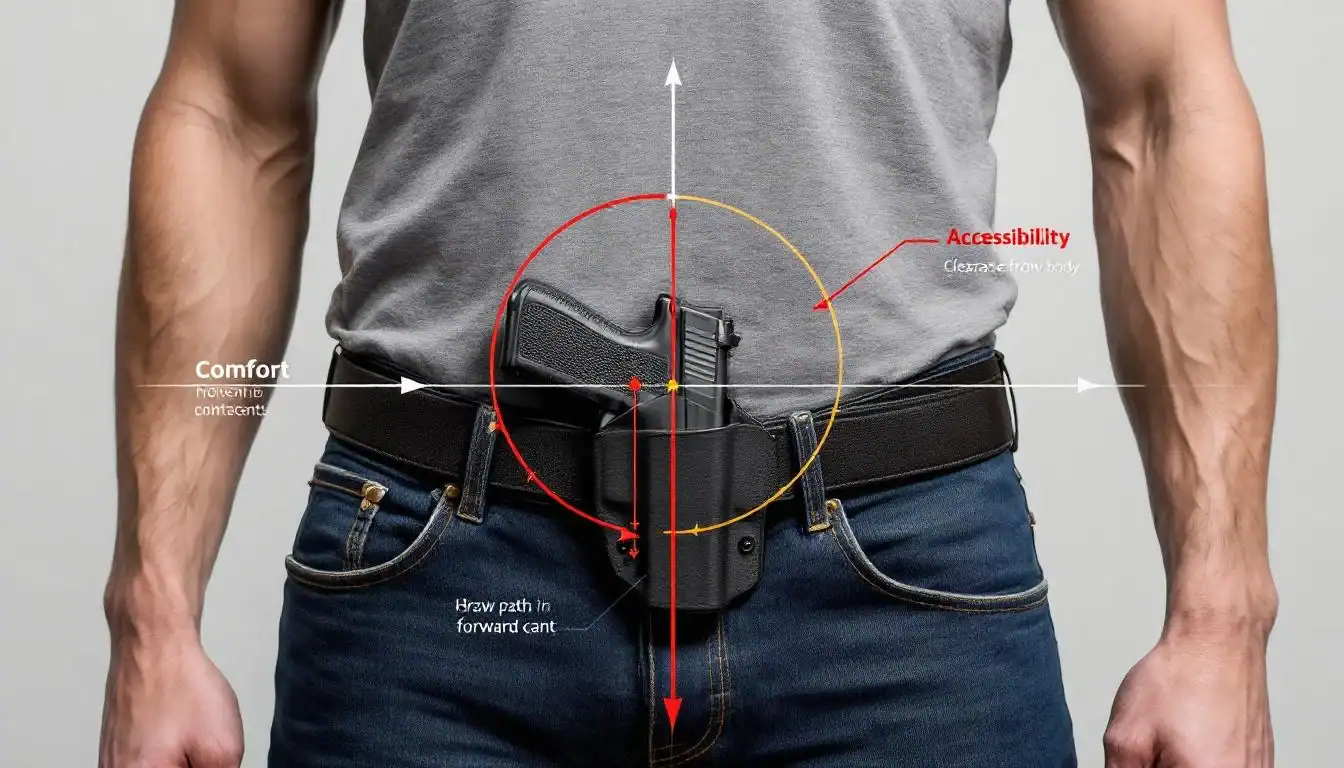
AIWB carry demands precision. Your cant angle, ride height, and holster setup determine whether you’ll draw fast or struggle with concealment. Small positioning tweaks make the difference between an uncomfortable rig and one that works seamlessly throughout your day.
We at Cloudster Pillow have helped countless carriers dial in their gear, and we’re sharing the exact adjustments that matter most.
Finding Your Optimal Cant Angle
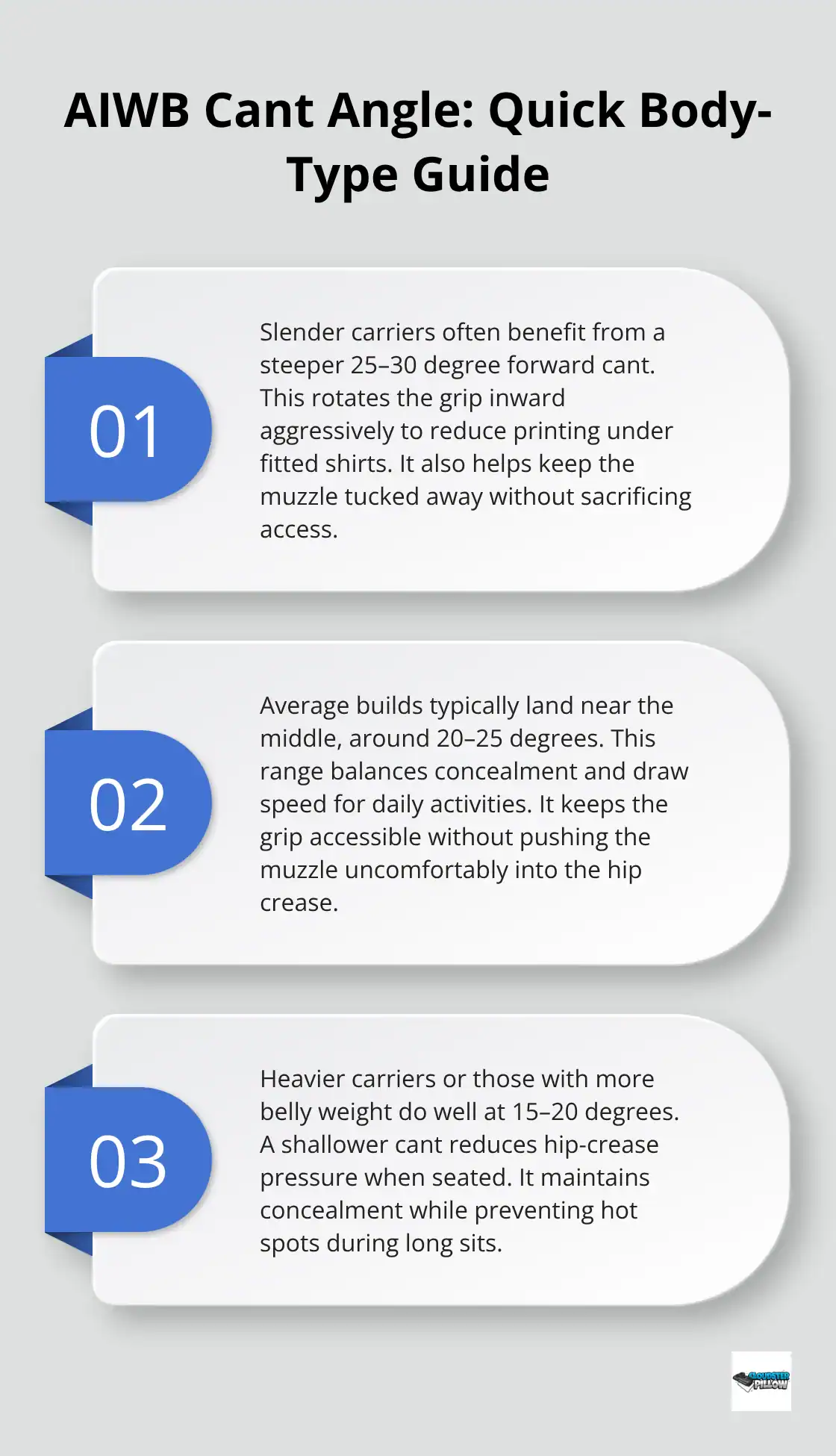
Cant angle isn’t something you should guess at. The angle at which your holster sits relative to your waistband directly controls how your grip prints and how fast you can access your firearm. Most AIWB carriers work between 15 and 30 degrees of forward cant, but your body type, clothing choices, and daily activities determine where you actually need to land. If you’re slender with minimal belly weight, a steeper cant around 25–30 degrees rotates your grip inward aggressively, keeping the muzzle tucked away and reducing printing under fitted shirts. Heavier carriers or those with belly weight often find success at 15–20 degrees because a shallower cant prevents the muzzle from digging into the hip crease when seated.
Test this yourself over a full week of normal activity. Wear your current setup for a day at the office, then a day with a lot of sitting like long drives or desk work, then a day with physical activity. You’ll quickly see whether your optimal cant angle for AIWB carry works or creates pressure points that make you want to remove the holster halfway through the day.
Draw Speed and Cant Angle Go Hand in Hand
Forward cant and draw speed relationship matters because the angle naturally positions the grip toward your hand and shortens the path to your strong-side shoulder. A 20–25 degree cant typically offers the fastest access for most body types without sacrificing concealment. However, if your cant sits too shallow around 10 degrees or less, your draw stroke becomes slower because you’ll fight the angle to get a full firing grip. Conversely, extreme forward cant past 30 degrees can actually slow your draw on certain body types because the grip rotates so far inward that you have to reach harder to grasp it.
The real test is dry practice. Draw from your holster 10 times at each cant angle you’re considering, and time yourself or have someone observe your consistency. You’re looking for smooth, repeatable draws without fumbling or adjusting your hand position mid-draw. Most carriers find their sweet spot produces identical draw times across multiple repetitions.
Real-World Testing Reveals What Works
Too many carriers adjust their cant in a mirror at home and assume it’s dialed in. That’s a mistake. Your holster positioning needs to survive your actual daily routine. If you work at a desk, test your setup sitting in your office chair for two hours straight. If you drive daily, spend an afternoon running errands with your current cant angle and pay attention to pressure points or whether the holster shifts during vehicle transitions.
A cant angle that feels perfect standing will often create unexpected discomfort or accessibility issues once you’re seated. Some carriers discover that a 22-degree cant works great standing but causes the grip to angle away from their body when sitting, making the draw slower and less reliable. Others find that their preferred cant angle works fine for daily wear but creates printing issues under certain clothing. These aren’t failures-they’re data points.
Adjust your cant by 2–3 degree increments after each test period, not in large jumps. Small adjustments compound into real improvements without requiring you to replace your holster entirely. Once you’ve locked in your cant angle, the next critical variable is ride height-the vertical position of your holster on your waistband. Ride height controls whether your setup stays comfortable during long sits or creates pressure that forces you to shift your rig throughout the day. When your cant is dialed in and your ride height is optimized, adding a holster wedge like the Cloudster Pillow can eliminate remaining pressure points and enhance both comfort and concealment.
Mastering Ride Height and Forward Cant
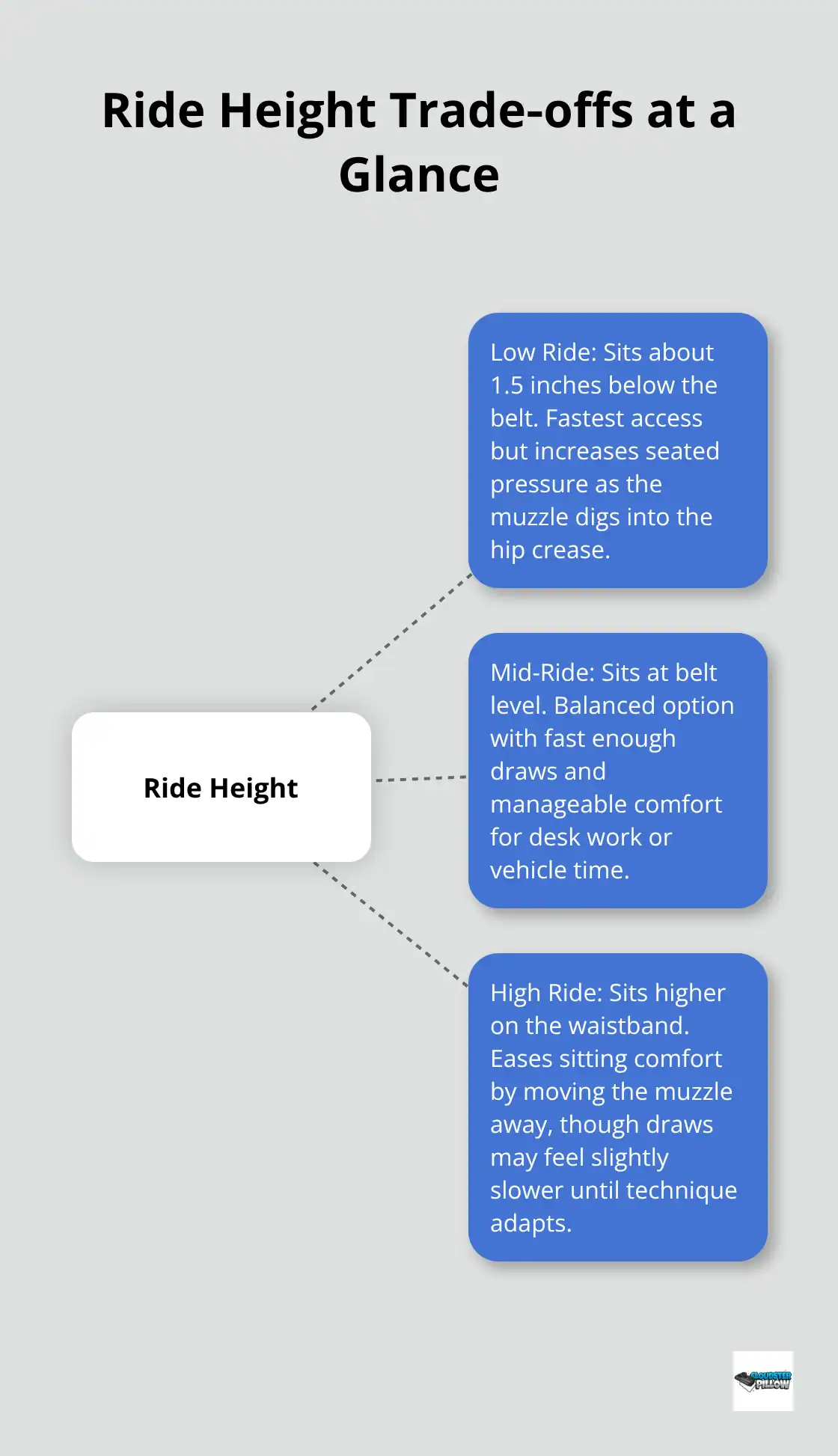
Ride height controls everything about your AIWB experience. The vertical position of your holster on your waistband determines whether you stay comfortable during eight hours of sitting or abandon your rig halfway through the day. Low ride setups sit about 1.5 inches below your belt and excel at draw speed because your hand reaches the grip naturally, but they create pressure problems when you’re seated because the muzzle digs into the hip crease. Mid-ride setups sit at belt level and deliver the balance most carriers need-fast enough draws with manageable comfort during desk work or vehicle time. High-ride positions sit noticeably higher and solve sitting comfort by moving the muzzle away from your hip crease, though draws can feel slightly slower until you adjust your technique.
How Your Daily Activities Shape Ride Height
Your daily activities determine which ride height actually works. If you drive two hours daily, low ride will punish you. If you sit at a desk most of the day, high ride makes sense. If your schedule mixes sitting and standing equally, mid-ride is your starting point. The mistake most carriers make is treating ride height as fixed. Adjust your holster clips vertically in half-inch increments and test each position through your actual routine-not just standing practice.
Sit in your car for 20 minutes at each height and notice where pressure develops. Stand and draw 10 times at each position and confirm your draw remains consistent. This real-world testing reveals what works far better than any theoretical recommendation.
Cant and Ride Height Work Together as a System
Forward cant amplifies ride height effects on draw and concealment because steep cant combined with low ride creates aggressive muzzle pressure when seated, while shallow cant at high ride can slow your draw significantly. A 20-degree cant at mid-ride works for most carriers because it balances accessibility and comfort across common daily scenarios. However, if you’re tall or have a longer torso, you might need higher ride height to prevent the muzzle from sitting too low relative to your body proportions. Shorter carriers often find lower ride heights work better because their natural hand position reaches the grip faster.
The common error is adjusting cant without considering ride height changes. When you raise your ride height, your cant angle changes relative to your hip, which affects both draw speed and how the grip prints under clothing. Small positioning mistakes compound-a ride height that’s too low combined with insufficient cant creates both comfort and concealment failures that feel unfixable without replacing your entire holster.
Fine-Tuning Your Setup for Maximum Performance
Test ride height and cant together as a system, not separately. This integrated approach prevents the frustration of dialing in one variable only to discover it conflicts with the other. Once you’ve locked in both variables, a quality wedge can fine-tune your setup by filling pressure gaps and improving grip tuck without requiring expensive holster replacements. The next chapter covers how wedges transform your positioning strategy and eliminate remaining discomfort points that adjustments alone cannot solve.
Holster Wedges and Their Role in Positioning
A wedge is the fastest way to fix positioning problems that cant and ride height adjustments alone cannot solve. Once your cant and ride height are locked in, a wedge fills the gap between your holster and your body to push the grip inward and pull the muzzle away from pressure points. When a holster sits at the wrong cant or ride height, these contact points concentrate pressure into small areas rather than spreading it across your waistband. This single addition eliminates the discomfort that forces carriers to shift their rig throughout the day or abandon AIWB entirely. Carriers spend weeks fine-tuning cant and ride height, only to realize a properly positioned wedge solves their remaining comfort issues in days. The wedge works because it addresses the root cause of most AIWB discomfort-the muzzle pressing into your hip crease when seated or the grip printing under clothing despite correct cant. Unlike adjusting your holster clips or repositioning your entire rig, adding a wedge requires no permanent changes and costs far less than replacing your holster.
How Wedges Improve Comfort Without Changing Your Holster
A wedge fills the space between your holster and body to create pressure relief where you need it most. The wedge pushes your grip inward toward your body, which reduces printing under fitted clothing and improves concealment across different outfits. At the same time, it pulls your muzzle away from your hip crease, which eliminates the sharp pressure that develops when you sit for extended periods. This dual benefit makes wedges the most efficient positioning tool available-they solve multiple problems with a single, affordable addition. Your existing holster stays exactly as it is; the wedge simply enhances what you already own.
Where Your Wedge Placement Matters Most
Wedge placement determines comfort and concealment. A wedge positioned directly behind the muzzle acts as a fulcrum to push the muzzle away from your body aggressively, which solves hip crease pressure during sitting but can increase muzzle printing under tight clothing. Placing your wedge higher, behind the trigger guard area, fills the space between your holster and body without pushing the muzzle as far out, improving grip tuck and concealment under fitted shirts while still addressing some sitting discomfort. Most carriers find their optimal placement sits between these two positions-roughly centered behind the holster body.
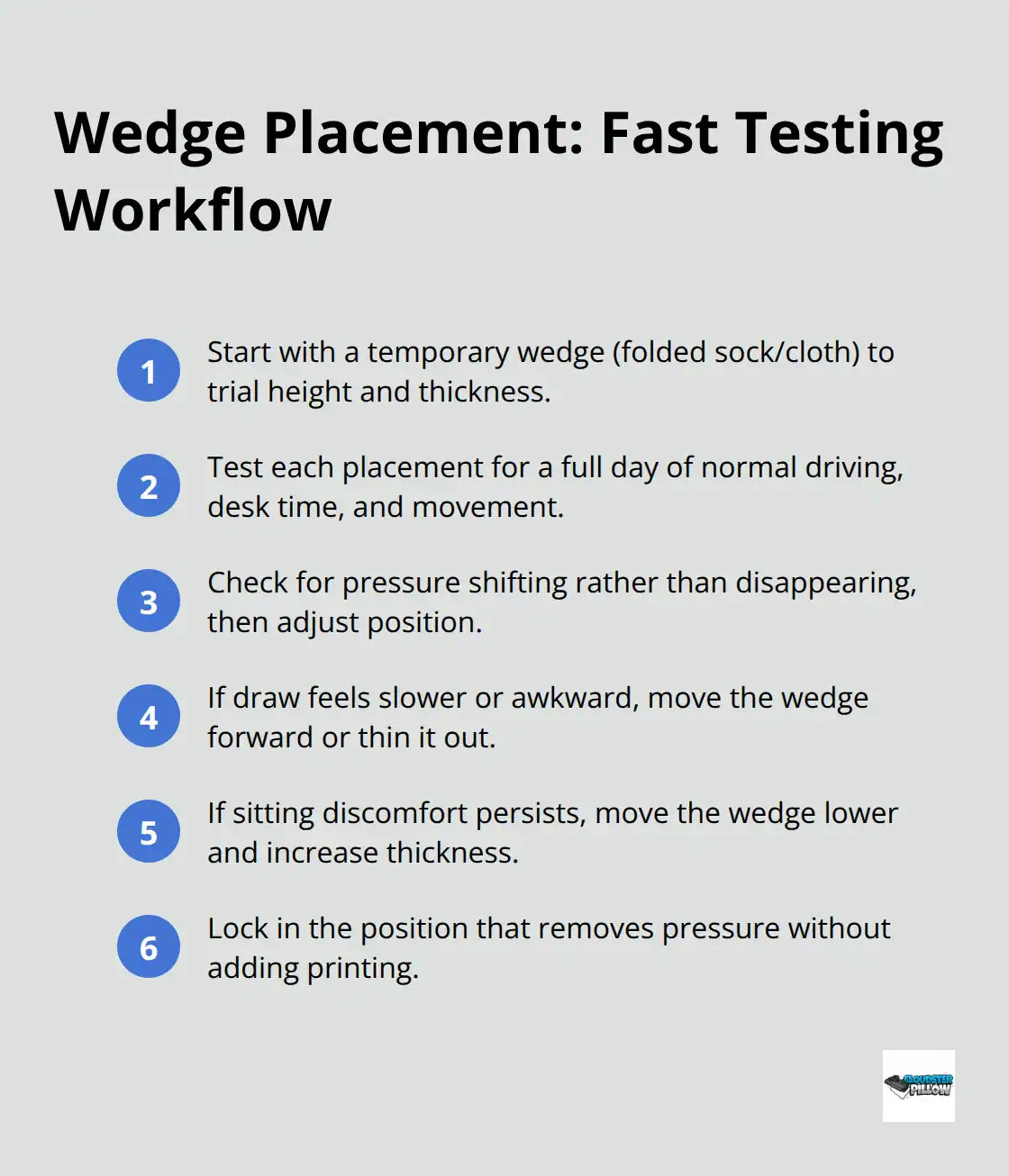
Test this with a simple folded sock or cloth wedge positioned at different heights and depths for two to three days each before committing to a fixed wedge solution. Pay attention to whether pressure shifts from your hip crease to your lower abdomen when you adjust placement, then fine-tune accordingly. The goal is eliminating pressure entirely, not just moving it somewhere else. Wedge thickness matters equally to placement: a thin wedge adds minimal bulk while still improving comfort, whereas a thick wedge solves severe pressure problems but risks increasing your overall profile under clothing.
Real Improvements Require Testing Your Actual Routine
Wedge effectiveness depends on matching thickness and placement to your specific body type and daily activities. A carrier who sits in a car for two hours daily needs different wedge positioning than someone who stands most of the day. Heavier carriers with belly weight often see the most dramatic improvements from wedges positioned slightly lower and thicker because the muzzle digs deeper into the hip crease when seated. Slender carriers typically benefit more from wedges positioned higher to improve grip tuck and concealment under fitted clothing. Your body geometry determines which strategy works, which is why generic wedge recommendations fail.
Sit in your car, at your desk, and during normal daily activity while wearing your wedge at different positions for at least one full day before deciding whether it’s working. Draw ten times from each position to confirm your draw speed and consistency remain unchanged. If your draw slows or feels awkward, your wedge placement is interfering with your grip access-move it forward slightly or reduce thickness. If sitting discomfort persists, move your wedge lower and increase thickness. Small adjustments compound into real improvements that transform your entire AIWB experience from uncomfortable to genuinely manageable throughout your day.
A quality wedge solution helps everyday carriers achieve the comfort and concealment they need without replacing their entire holster system. Whether you carry for personal protection, professional duty, or daily readiness, the right wedge positioning unlocks the full potential of your existing gear setup. Discover how the Cloudster Pillow holster wedge combines precision engineering with everyday comfort at https://cloudsterpillow.com/holster-wedge/.
Final Thoughts
AIWB gear positioning tips work because they address the real problems that stop carriers from staying comfortable throughout their day. Cant angle, ride height, and wedge placement aren’t theoretical adjustments-they’re practical tools that transform how your holster feels and performs. The carriers who succeed aren’t the ones with the most expensive gear; they’re the ones who test their setup against their actual routine and make small, deliberate changes based on what they learn.
Your optimal cant angle lives somewhere between 15 and 30 degrees, but only your body type and daily activities reveal where. Your ideal ride height depends on whether you sit in a car, at a desk, or move constantly throughout your day. These variables interact, which means adjusting one without considering the other creates frustration, and the breakthrough happens when you stop treating cant and ride height as separate problems and start viewing them as a system that works together.
Small adjustments compound into real improvements that transform your entire AIWB experience. A 2-degree cant change might seem insignificant until you realize it eliminates the printing that forced you to wear oversized shirts, and raising your ride height by half an inch might feel minor until you discover you can sit comfortably for hours without shifting your rig. Adding a quality holster wedge completes your positioning strategy by filling final comfort and concealment gaps without requiring you to replace your entire holster system.
Comfort matters as much as preparation.
Once you have your cant and ride height dialed in, an adjustable holster pillow can take the last edge off the AIWB pressure point.
