
Articles and Blogs, Carry Techniques and Optimization, Concealed Carry Clothing
Discreet Daily Carry Clothing: Hidden Style, Real Comfort
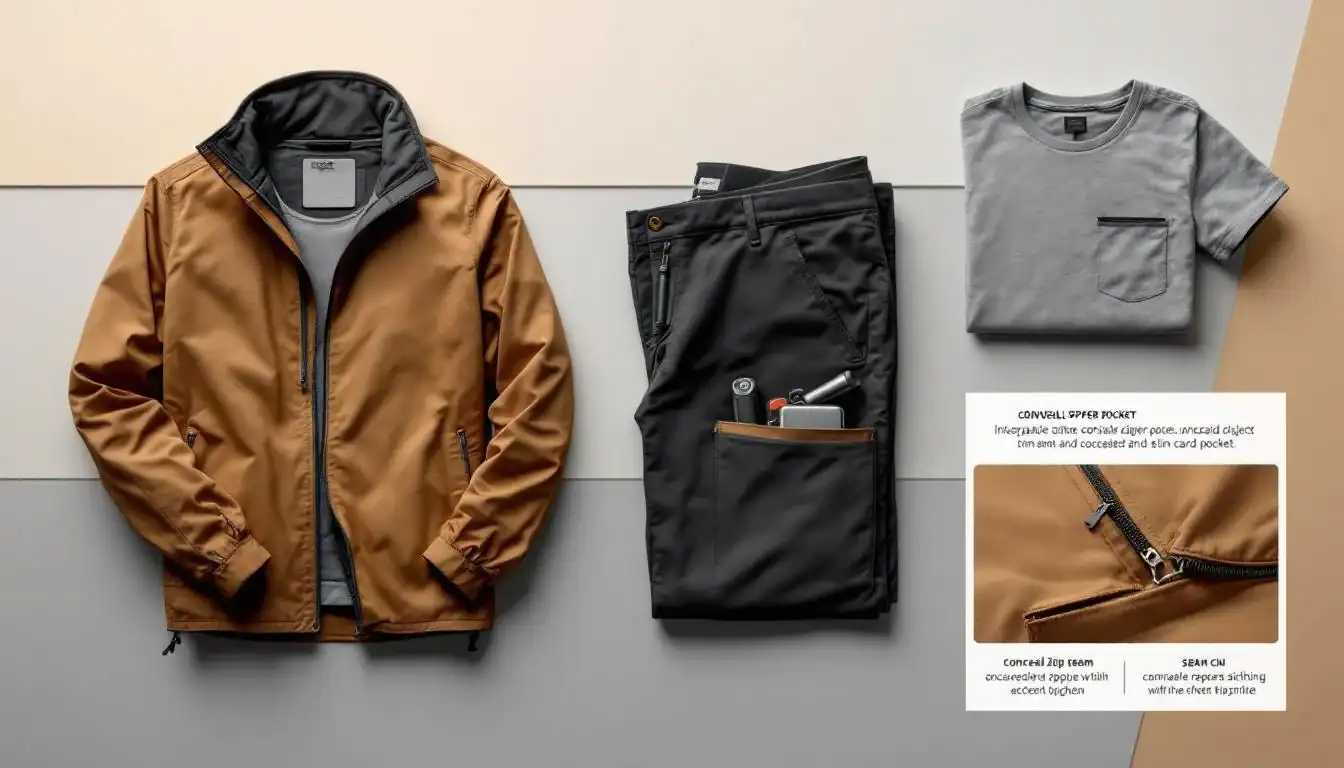
Carrying concealed means balancing two things that often feel at odds: staying invisible and looking like yourself. The right clothing makes all the difference, and we at Cloudster Pillow know that comfort matters just as much as concealment.
This guide walks you through fabrics, fits, and styling choices that keep your carry setup hidden without forcing you into baggy clothes or uncomfortable layers. You’ll learn practical combinations that work for your body, your lifestyle, and your daily routine.
Choosing the Right Fabrics and Fits for Concealment
Structured Materials That Hide Printing
Printing happens fast. A firearm outline shows through thin cotton in seconds, and once it’s visible, no amount of styling fixes it. Fabric weight and weave matter far more than most carriers realize.
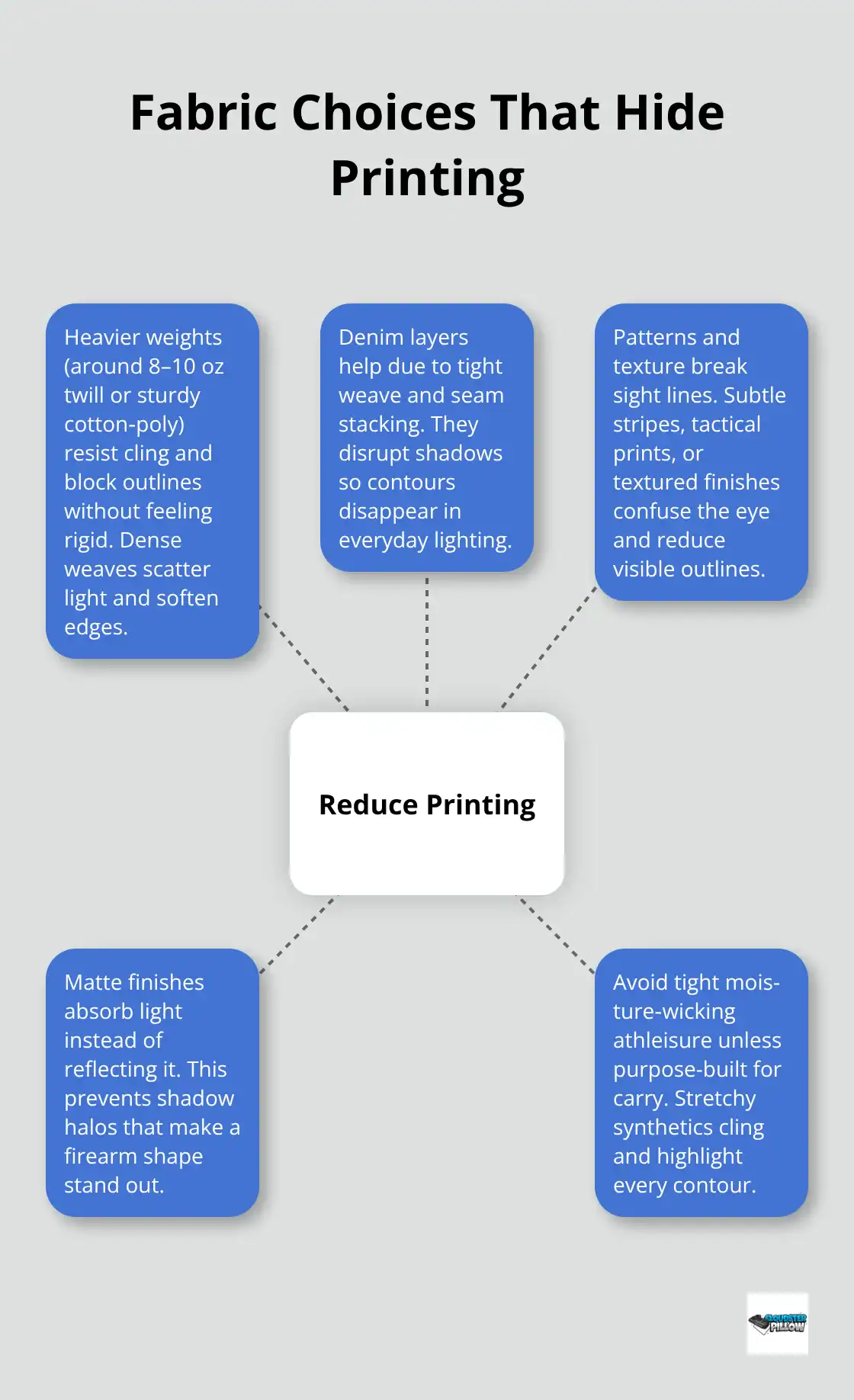
Thicker materials like 100% cotton twill or cotton-poly blends in the 8 to 10-ounce range naturally obscure gun shapes without feeling stiff. Denim works exceptionally well for this reason-the dense weave and multiple layers absorb light differently than thin fabrics, making outlines disappear.
Patterns break up sight lines, which is why tactical prints, subtle stripes, or textured finishes outperform solid colors. Matte fabrics defeat printing better than shiny ones because they scatter light instead of reflecting it back to create shadows. Avoid moisture-wicking athletic wear unless it’s specifically designed for carry-those tight, synthetic blends stretch across your gun and highlight every contour. Four-way stretch fabrics that blend spandex with cotton can work, but only if the base weight stays substantial.
The fit itself determines whether even good fabric conceals properly. A slightly relaxed cut through the torso-not baggy, but with room for your holster and gun-keeps your silhouette natural while hiding bulk. Many carriers make the mistake of going too large; oversized clothing actually prints worse because excess fabric bunches and creates visible lumps. For IWB carry, consider a waist size one to two inches larger than your normal fit, paired with reinforced belt loops that won’t sag under holster weight. Anchor your carry setup with a quality belt that doesn’t flex-this keeps your gun stable and prevents the telltale shift that signals concealment to observant people.
Seasonal Layering Without Sacrificing Access
Summer carry forces tough choices. Lightweight fabrics breathe better, but they reveal more. The answer isn’t thinner clothing-it’s strategic layering. Wear a breathable undershirt in a performance blend as your base, then add an untucked overshirt in a looser weave that hangs naturally over your holster. Linen-cotton blends offer genuine cooling while their looser construction hides carry gear effectively.
Winter simplifies concealment dramatically. A quality jacket eliminates printing concerns entirely, which is why many carriers view cold months as their easiest carry season. Choose jackets with interior pockets or ones that drape loosely enough for strong-side IWB without creating a bulge. Structured outerwear in wool or canvas maintains its shape better than soft fleece, preventing your gun from creating visible deformation. Spring and fall demand the most attention because temperature swings force multiple outfit changes. Layer with purpose: a fitted compression undershirt keeps your gun close to your body, then add a structured mid-layer shirt, then a light jacket if needed. This approach gives you flexibility without compromising concealment across temperature ranges.
Body Type Considerations That Actually Work
Carry comfort and concealment vary dramatically by build. Larger frames can often wear more relaxed fits without looking oversized, which gives you natural concealment room. The challenge comes with finding holsters and belts rated for heavier guns and weight distribution. Slimmer carriers need tighter fits to avoid looking drowning in fabric, but this demands a higher-quality holster that doesn’t shift and reveal itself through clothing.
Appendix carry (AIWB) works best for people with less abdominal projection-if you carry AIWB with a pronounced midsection, a slightly longer shirt becomes essential to prevent printing at the belly. Shoulder holster users benefit from jackets with structured shoulders that won’t collapse under weight. Women’s carry requires different consideration entirely. Leggings with reinforced waistbands and integrated holster pockets provide secure carry without sacrificing comfort, though they work best for smaller, lighter firearms. Concealment jackets or vests designed specifically for women’s body shapes offer professional appearance while maintaining access.
Athletic or curvy builds need garments that follow natural lines rather than fight them-oversized clothing reads as sloppy, while too-tight outfits print immediately. Tall carriers often struggle with shirt length; standard cuts may ride up during draw practice, exposing your setup. Try extended-length options from tactical brands, or simply size up in length while maintaining proper waist fit. The goal is clothing that matches your actual proportions, not something that forces you into an uncomfortable size that compromises both concealment and your ability to move naturally. Once you nail the foundation with proper fabrics and fits, styling choices become your next tool for maintaining that invisible carry setup.
Styling Tips That Don’t Compromise Concealment
How Color and Pattern Choices Affect Your Concealment
Neutral colors dominate concealed carry wardrobes for a reason-they work. Black, navy, gray, and earth tones blend into everyday environments and don’t draw attention. Solid colors remain your safest bet because they’re predictable and professional across settings.
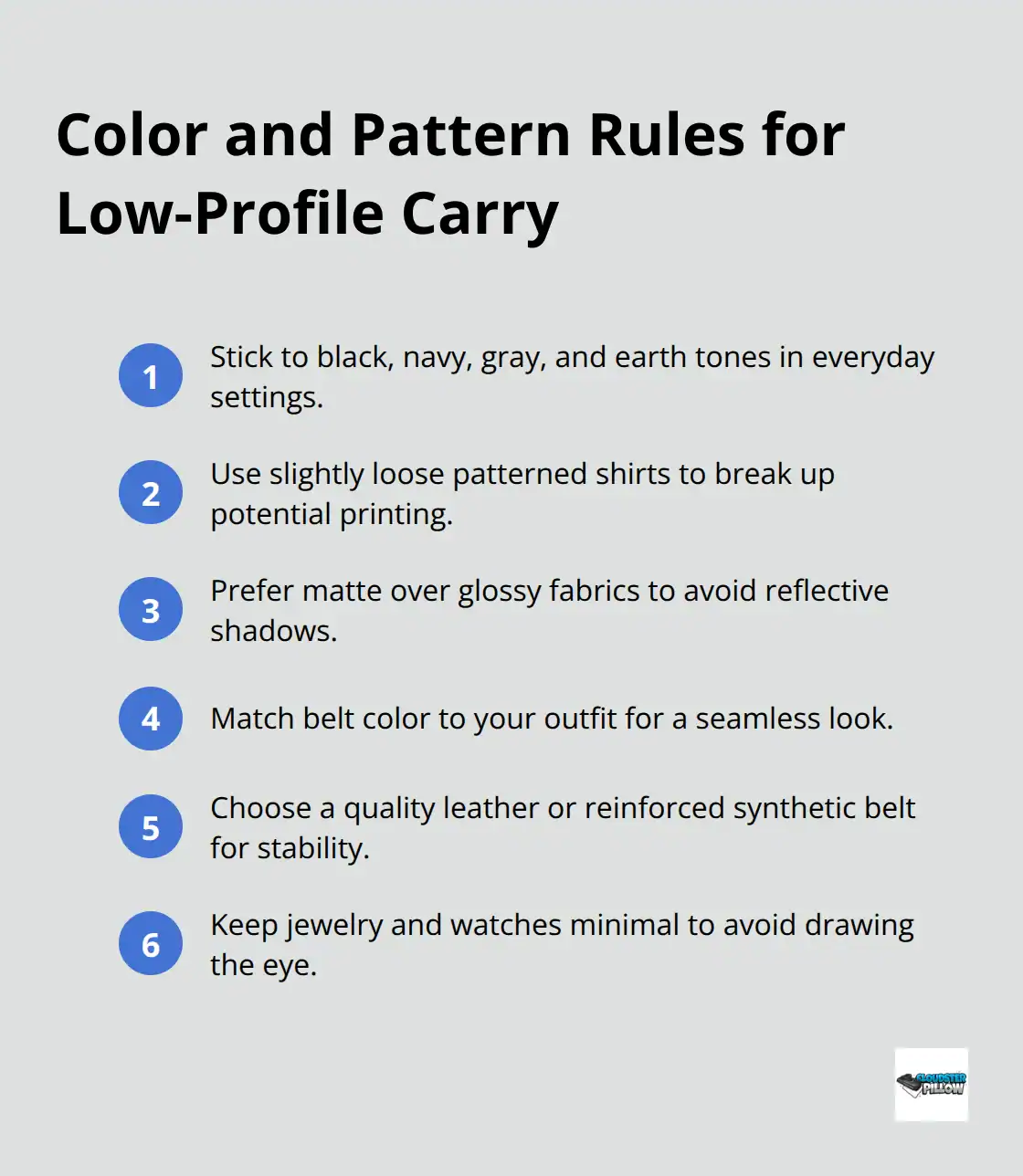
However, patterns offer a real advantage for concealment. Any slightly loose fitting shirt with a pattern on it will help break up any potential printing. Matte finishes outperform glossy ones because shiny fabrics create reflective shadows that actually highlight printing rather than hide it. Your quality belt selection matters more than most carriers realize. A quality leather or reinforced synthetic belt in a neutral color anchors your entire setup and prevents the holster shift that causes printing. Cheap belts flex under weight, allowing your gun to move and create visible bulges.
Strategic Accessory Choices That Support Your Setup
Accessories either support concealment or sabotage it. A well-chosen jacket becomes your most powerful concealment tool-structured outerwear in wool or canvas maintains its shape and hides carry gear entirely. Interior pockets add functionality without creating external bulk, and many quality jackets now include RFID-blocking liners that protect your cards without adding visible features. Your watch, rings, and everyday items should stay minimal and neutral; excessive jewelry or large watches draw focus to your hands and wrists, which trained observers use to profile armed individuals.
Bags and crossbody carriers work only if you size them appropriately-oversized bags scream tactical and defeat your discreet carry goal, while tiny bags look out of place with your body type. Choose neutral colors and classic silhouettes that complement your clothing. A well-fitted bag that matches your environment maintains your invisible carry setup far better than tactical gear that announces your intentions.
Professional Environments Demand Specific Attention
Dress pants in neutral colors paired with fitted button-up shirts maintain your secret while keeping you looking polished. Avoid oversized blazers that look baggy-fitted blazers work better for appendix carry because they won’t collapse under weight. Women in professional settings benefit from structured blazers and tailored pants with reinforced waistbands that support secure carry without visible bulk.
The goal across all styling choices is looking natural for your environment while maintaining consistent concealment and access. Once you master color, pattern, and accessory selection, your next step involves choosing specific gear combinations that work together seamlessly.
Practical Gear Combinations for Everyday Carry
Shirts and Belts for AIWB Holsters
AIWB carry demands a specific shirt strategy that most carriers execute incorrectly. Your shirt must sit loose enough to clear your holster during the draw but structured enough to hide the gun when standing still. Pearl-snap button-ups work exceptionally well because the fabric naturally drapes away from your body, and the snaps allow faster access than traditional buttons during draw practice. Untucked polos in cotton-poly blends perform similarly-the blend weight stays substantial while the loose cut hides appendix carry without looking oversized.
Your belt makes or breaks AIWB concealment. A quality reinforced belt rated for your gun’s weight keeps your holster at a consistent ride height and prevents the downward sag that creates printing. Cheap belts flex under firearm weight, causing your holster to shift forward and your shirt to pull tight against the gun. Invest in a belt designed specifically for concealed carry-brands engineer theirs to maintain rigidity without bulk. We at Cloudster Pillow know that comfort matters just as much as concealment, which is why a proper belt foundation supports both your holster and your all-day carry experience.
Jackets for IWB Carry
Jackets serve dual purposes for IWB carriers: they eliminate printing concerns entirely while adding a professional layer to your outfit. Structured outerwear in wool or canvas maintains its shape far better than soft fleece, preventing your gun from deforming the fabric and creating visible outlines. Look for jackets with interior pockets positioned toward the torso-these let you carry additional magazines or EDC items without external bulk.
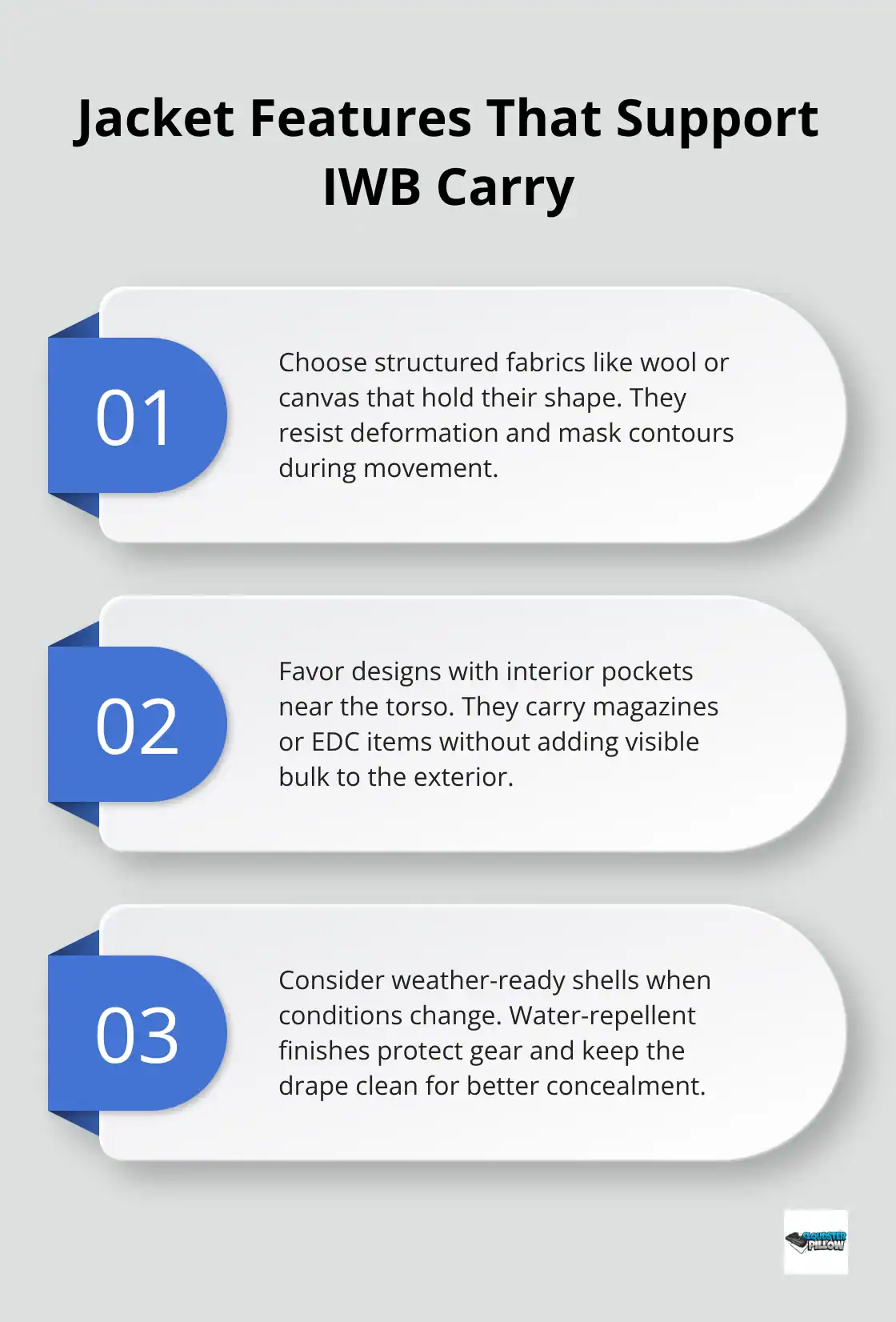
Many quality jackets now include water-repellent shells that protect your gear during weather changes.
For strong-side IWB carry, slightly oversized shirts in thicker fabrics work better than fitted options. A shirt one size larger than your normal fit gives your holster room without creating the baggy appearance that signals something’s wrong. Tactical T-shirts designed with reinforced seams and thicker construction hide strong-side carry effectively while maintaining your ability to move freely during training.
Footwear and Accessories That Complete Your Setup
Choose tactical shoes with slip-resistant outsoles and reinforced heel and toe areas. Your shoes affect your balance and speed during movement, which matters during draw practice and real-world scenarios. Comfortable, stable footwear improves your ability to execute proper stance and follow-up shots. Avoid fashion-forward shoes with minimal arch support or thin soles-they compromise your stability and tire your feet during all-day carry.
A good crossbody bag complements your carry setup without creating external bulk if you keep it minimal and neutral. Oversized bags scream tactical and defeat your discreet carry goal, while a properly sized bag in a neutral color maintains your invisible setup. Your watch, rings, and everyday items should stay minimal and neutral; excessive jewelry or large watches draw focus to your hands and wrists, which trained observers use to profile armed individuals.
Testing Your Complete Outfit Before Carry
The key to all these combinations is testing them during actual draw practice before carrying in public. Put on your complete outfit-shirt, belt, jacket, shoes, and all accessories-then practice your draw multiple times. If your shirt catches on your holster, your belt shifts, or your footwear throws off your balance, adjust before committing to that combination for daily carry. This real-world testing reveals problems that static evaluation misses and ensures your gear works together seamlessly when it matters most.
Final Thoughts
Your discreet daily carry clothing works best when every piece supports your actual lifestyle, not some theoretical ideal. The fabrics you choose, the fits you test, and the accessories you pair together create a system that hides your firearm while keeping you comfortable all day. Quality pieces in neutral colors with proper structure eliminate the constant worry about printing and let you focus on your routine instead of your carry setup.
Comfort and concealment work together when your clothing foundation is solid, your belt supports your holster properly, and your gear stays minimal. We at Cloudster Pillow understand that all-day carry demands more than just the right clothes-it demands support that makes carrying feel effortless. A holster wedge designed for everyday carriers enhances both comfort and concealment without forcing you to replace your entire holster system.
Start with the fabrics and fits that match your body type, add the accessories that enhance your setup, and finish with tools that make carrying feel natural. That’s when discreet daily carry clothing becomes part of who you are, not something you manage constantly.
Comfort matters as much as preparation.
Even the best concealment shirt cannot fix a wedge that digs in. Pair smart clothing with an adjustable pillow wedge for all-day comfort.
