
Holsters and Gear Recommendations
Micro Adjust Gun Belt: Best Fit for Daily Carry
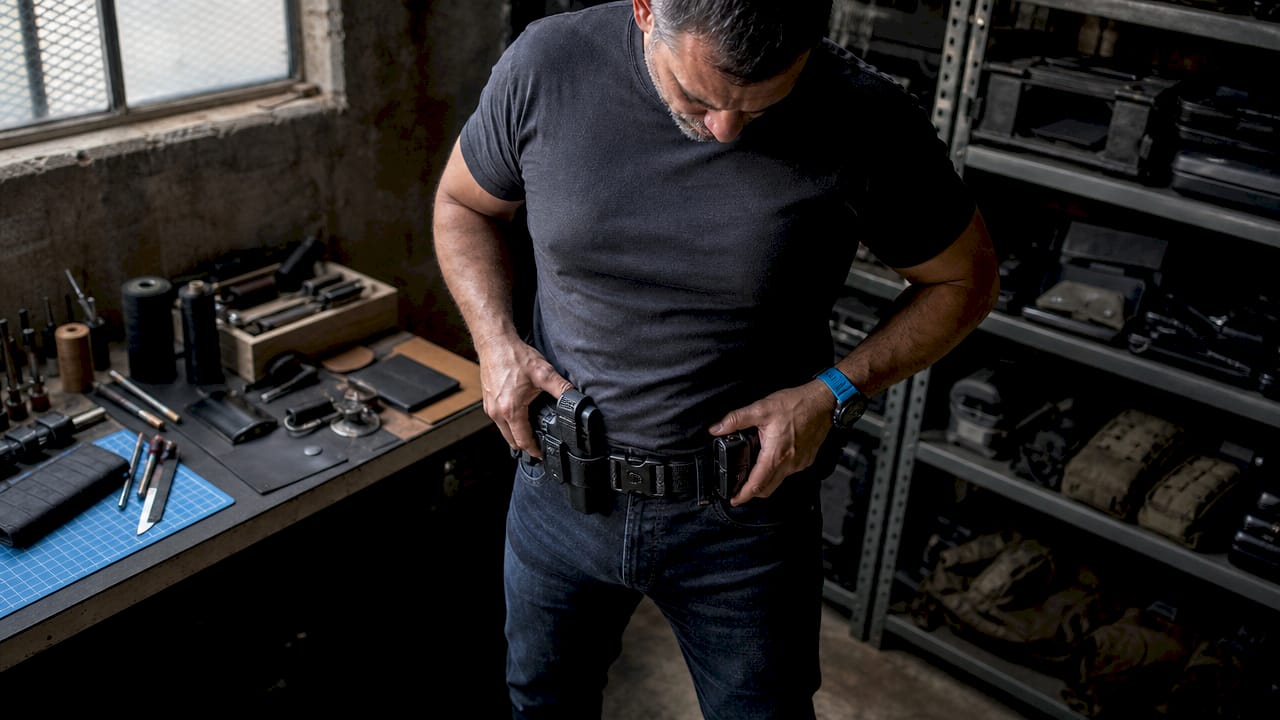
A micro adjust gun belt is a firearm carrying belt that uses a ratchet or track system to deliver quarter-inch incremental adjustments, giving you a custom fit that no traditional belt can match. Standard belts offer roughly five fixed holes spaced an inch apart. That gap is the difference between a belt that digs into your side by noon and one that rides comfortably all day. For concealed carry permit holders who wear a gun every day, that difference is not minor. The right fit keeps your holster locked in place, reduces printing, and makes carrying feel natural rather than like a chore.
How does a micro adjust gun belt work?
The core mechanism separates a ratchet-style adjustable gun belt from every traditional option on the market. Instead of punching holes through leather, these belts use a continuous track built into the strap. A spring-loaded buckle engages the track at any point, letting you click tighter or looser in small steps.
Micro-adjustable belts provide 30+ adjustment points spaced a quarter-inch apart. That is six times the adjustment range of a standard belt with five holes. The practical result is that you can dial in your fit to the nearest quarter inch rather than settling for “close enough.”
Here is why that matters for daily carry:
- Morning fit vs. afternoon fit. Your waist measurement changes throughout the day. A heavy lunch, a long drive, or a few hours at a desk all shift how a belt sits. A ratchet system lets you fine-tune belt tightness without removing your belt or your holster.
- No pressure points. Fixed-hole belts concentrate stress at the single engaged hole. Hole-free ratchet designs distribute tension evenly across the track, eliminating the ridge that digs into your hip after a few hours.
- Reduced belt sag. A holster carrying a loaded firearm adds real weight. Even a quarter-inch of slack lets the belt rotate and the holster drift. Micro adjustments let you snug the belt down to the exact tension that holds everything still.
- Longer belt life. Punched holes are stress fractures waiting to happen. A track system spreads wear across the entire strap, so the belt lasts significantly longer under daily use.
Pro Tip: Tighten your belt one click after you holster your firearm in the morning. That single click accounts for the added weight and keeps your holster from shifting during the first hour of carry.
What materials and sizing options should you look for?
The material of your concealed carry gun belt determines how well it holds up under the weight of a firearm and how comfortable it feels against your body all day.
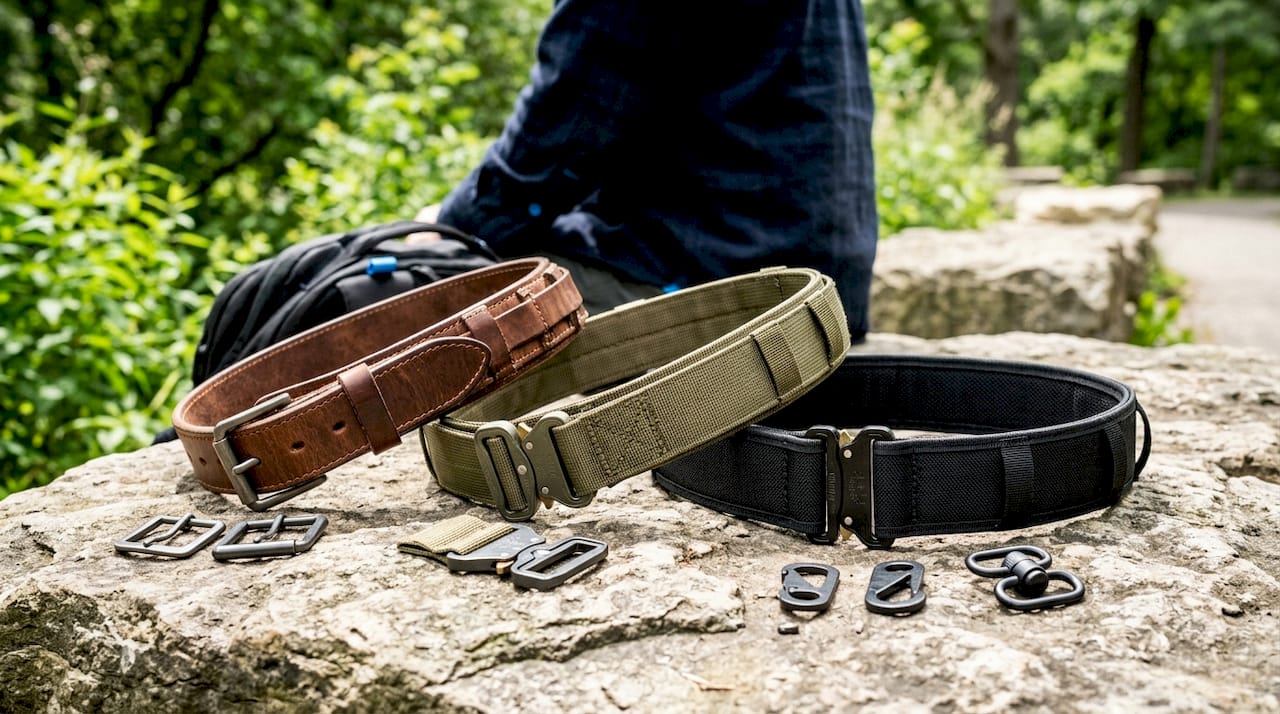
Common materials include durable leather, reinforced nylon, and composite fabrics engineered for all-day weapon support. Each has a different trade-off between stiffness, weight, and appearance.
| Material | Durability | Appearance | Weight | Best For |
|---|---|---|---|---|
| Full-grain leather | Very high | Dress or casual | Moderate | Office carry, formal settings |
| Reinforced nylon | High | Tactical or casual | Light | Active carry, outdoor use |
| Composite (nylon core, leather wrap) | Very high | Dress casual | Moderate | Everyday versatility |
Popular micro adjust gun belts are typically 1.5 inches wide, which is the standard width that balances weapon stability with concealment. A 1.5-inch belt fits most IWB and OWB holsters without modification. Some carriers prefer a 1.25-inch width for slimmer pants or dress wear, though the narrower strap provides slightly less support under a heavy firearm.
Sizing works differently than you expect. Most micro-adjust belts are sold as one-size-fits-most, accommodating waist sizes from 24 inches up to 50 inches or more. You receive a longer strap and trim it to your measurement. That means sizing is not based on your pant size.
Key points for getting the right fit:
- Measure your actual waist circumference at the point where you wear your belt, not your pant size.
- Add roughly 2 inches to your waist measurement to account for holster thickness when measuring for an IWB setup.
- Cut-to-fit belts require accurate measurement because most cannot be resized after cutting. Measure twice before you trim.
- Use sharp scissors or a utility knife with a straight edge for a clean cut. A ragged edge frays faster and looks unprofessional.
Pro Tip: Before cutting, thread the belt through your holster and pants loops first, then mark the cut point while wearing it. That accounts for holster bulk and gives you the most accurate trim.
What are the top benefits of a micro adjust gun belt for daily carry?
The benefits of switching to a ratchet-style adjustable gun belt go beyond comfort. They affect how well you carry, how well you conceal, and how long your gear lasts.
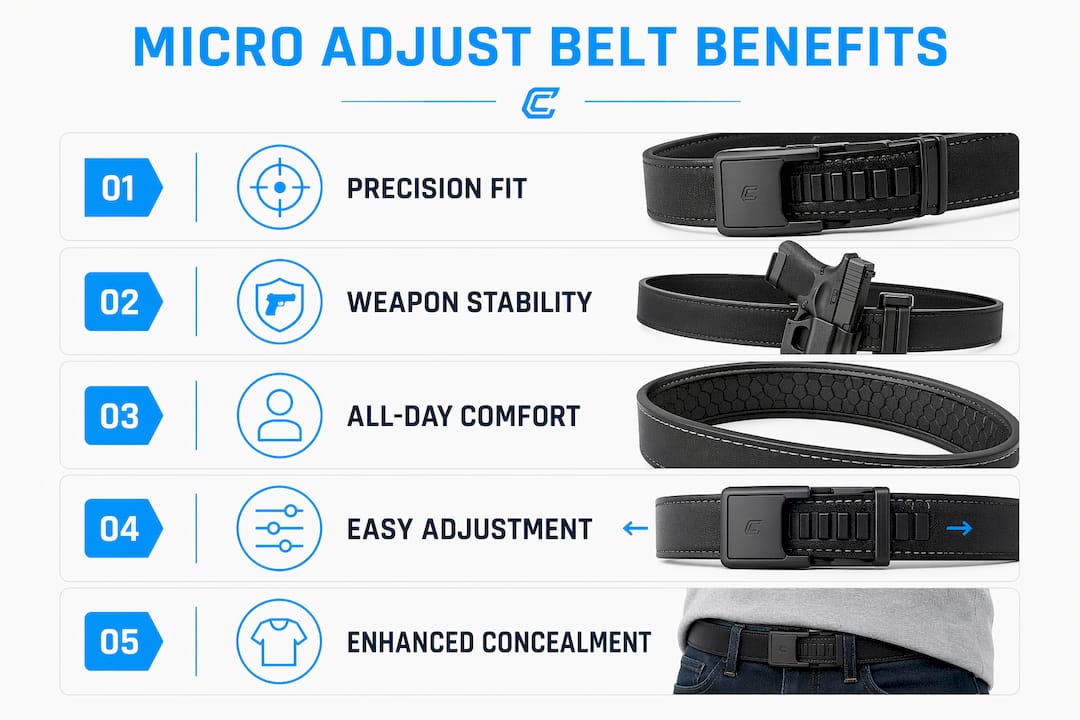
Weapon stability. A belt that fits precisely holds your holster exactly where you placed it. There is no rotation, no drift toward your back, and no holster mouth collapsing when you draw. This is the single most important function of a gun belt, and micro adjustments make it achievable every time you put the belt on.
All-day comfort. Ratchet systems adapt to natural body changes throughout the day, avoiding the pressure points that fixed-hole belts create. Carriers who switch from traditional belts consistently report that they stop noticing the belt by midday. That is the goal: a belt that disappears into your routine.
Improved concealment. A loose belt lets your holster tilt outward, which pushes the grip of your firearm away from your body. That is the number one cause of printing. A snug, precisely adjusted belt keeps the holster flat against your hip, which is the foundation of good concealment. Pairing a well-fitted belt with a quality IWB holster setup compounds the benefit significantly.
Additional advantages worth noting:
- Interchangeable buckles and straps let you swap the look of your belt without buying a new one. One strap can work with a dress buckle for the office and a matte tactical buckle for the range.
- The hole-free track design means no single wear point degrades over time. The belt ages evenly.
- Ratchet buckles release quickly with a lever press, which matters if you need to remove your belt fast.
Pro Tip: If you carry appendix style, loosen your belt by one click before sitting down for a long drive. It relieves pressure on your lower abdomen without compromising holster retention.
How to choose and maintain a micro adjust gun belt
Choosing the right belt starts with three questions: What is your waist size? What carry style do you use? What environment do you carry in most?
Follow this process to get it right:
- Measure your waist at carry height. Use a soft tape measure. For IWB carry, add 1.5–2 inches to account for holster thickness. For OWB, add about 0.5 inches.
- Match belt width to your holster. Check your holster’s belt loop or clip specification. Most IWB holsters accept 1.25-inch to 1.5-inch belts. Confirm before ordering.
- Choose material based on your environment. Leather looks better in professional settings. Reinforced nylon handles sweat and outdoor conditions better. Composite belts split the difference.
- Check the buckle release mechanism. Some ratchet buckles require two hands to release. Others have a single-finger lever. For carry purposes, a fast one-hand release is worth prioritizing.
- Trim carefully and only once. Mark your cut point while wearing the belt with your holster in place. Cut straight across. Most belts cannot be extended after trimming.
For maintenance, keep these habits:
- Wipe leather belts with a damp cloth monthly and condition them every few months to prevent cracking.
- Rinse nylon belts with water after heavy sweat exposure and let them air dry fully before storing.
- Check the ratchet mechanism every few months for debris. A small brush clears any grit that affects the click engagement.
- Avoid storing the belt coiled tightly for long periods. Hang it flat or loosely looped to preserve the strap shape.
Common mistakes to avoid: buying based on pant size instead of waist measurement, trimming too short before testing the fit with your holster, and ignoring buckle compatibility with your carry style. A tactical gun belt guide can help you cross-reference options before you commit to a purchase.
Key Takeaways
A micro adjust gun belt outperforms traditional belts because its ratchet track system delivers precise, repeatable fit that holds your holster stable and eliminates pressure points throughout the day.
| Point | Details |
|---|---|
| Adjustment range | Ratchet belts offer 30+ quarter-inch adjustment points vs. 5 fixed holes on traditional belts. |
| Sizing method | Measure actual waist circumference at carry height, not pant size, before trimming a cut-to-fit belt. |
| Material choice | Leather suits dress carry; reinforced nylon handles active or outdoor use; composite works for both. |
| Standard width | A 1.5-inch width fits most IWB and OWB holsters and balances stability with concealment. |
| Daily comfort | Ratchet systems eliminate pressure points and let you fine-tune fit as your body changes through the day. |
Why I think most carriers underestimate the belt
Most people shopping for their first concealed carry setup spend serious money on a holster and treat the belt as an afterthought. I made that mistake myself. I carried with a department store leather belt for months before I understood why my holster kept rotating toward my back by early afternoon. The belt was stretching and losing tension. No holster, no matter how well made, can compensate for a belt that does not hold its position.
When I switched to a ratchet-style adjustable gun belt, the first thing I noticed was not comfort. It was stillness. My holster stopped moving. That stability changed how I drew, how I sat, and how confident I felt carrying in public. The comfort came second, but it was just as significant. Removing the pressure point that a fixed-hole belt digs into your hip is something you feel within the first hour.
The mistake I see most often from other carriers is trimming the belt before testing it with their actual holster and pants. They measure their waist, trim to that number, and then discover the holster adds thickness that makes the belt too short. Measure with everything in place. That single habit saves you from an expensive trim error.
If you are comparing a ratchet belt to a traditional leather option, read through the ratcheting vs. traditional belt breakdown before deciding. The mechanical difference is more significant than most people expect.
— Keith
Build a carry setup that actually works all day
A well-fitted adjustable gun belt is the foundation of a comfortable daily carry setup, but it works best when the rest of your gear is dialed in too.
At Cloudsterpillow, we put together a practical guide covering the top concealed carry accessories that complement a ratchet-style gun belt, from holster pillows that reduce appendix carry pressure to pocket mag carriers built for everyday use. If you want to go deeper on pairing your belt with the right holster, the EDC belt and holster setup guide walks through the full process. We carry daily and write from that experience, so everything we recommend has been tested in real carry conditions.
FAQ
What is a micro adjust gun belt?
A micro adjust gun belt is a firearm carrying belt that uses a ratchet or track system to provide quarter-inch incremental adjustments. This gives carriers a precise, custom fit that traditional fixed-hole belts cannot deliver.
How many adjustment points does a ratchet gun belt have?
Micro-adjustable belts provide over 30 adjustment points spaced a quarter-inch apart, compared to roughly five holes on a standard belt. That range lets you find an exact fit rather than settling for the closest hole.
What width belt do I need for concealed carry?
Most concealed carry holsters are designed for a 1.5-inch belt, which is the standard width for IWB and OWB carry. Some dress holsters accept a 1.25-inch belt, so check your holster specs before ordering.
How do I size a cut-to-fit gun belt?
Measure your actual waist circumference at the height where you wear your belt, not your pant size. For IWB carry, add 1.5–2 inches to account for holster thickness, then trim carefully. Most cut-to-fit belts cannot be extended after cutting.
Does a micro adjust belt really improve concealment?
A precisely fitted belt keeps your holster flat against your body, which directly reduces printing. Loose belts let the holster tilt outward and push the grip away from your hip, which is the most common cause of visible printing under a shirt.
Recommended
- Best Concealed Carry Belt 2026: Comfort First
- Why a Regular Leather Belt Fails for Concealed Carry
- Best CCW Belt for Your Body Type & Outfit (2026)
- Best Tactical Gun Belt for Concealed Carry (2026)
Article generated by BabyLoveGrowth
