
CCW Courses and Tips, CCW Training, Firearms Training
What You Need to Know About CCW Permit Renewal [2025]
Your CCW renewal deadline is approaching faster than you think. Most permit holders wait until the last minute, creating unnecessary stress and potential legal complications.
We at Cloudster Pillow understand that staying compliant with your concealed carry permit requires careful planning and attention to detail. The renewal process varies significantly across states, with different timelines, fees, and requirements that can catch even experienced carriers off guard.
What Documents Do You Actually Need for Renewal?
State Deadlines Create Tight Windows for Action
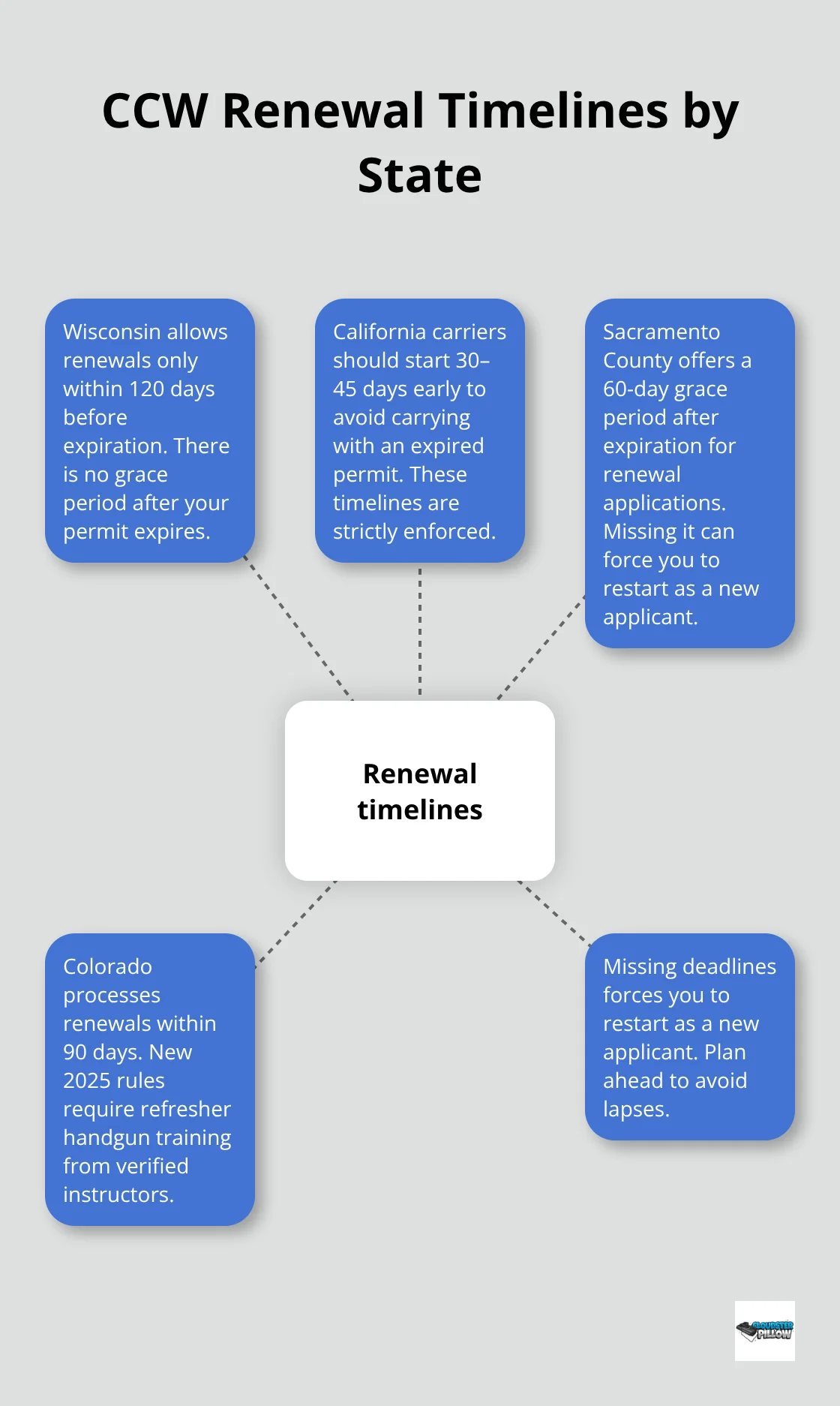
Wisconsin allows only 120 days before expiration for CCW renewals, while California demands you start your renewal process 30-45 days early to avoid carrying with an expired permit. Sacramento County provides a 60-day grace period after expiration for renewal applications, but Wisconsin cuts you off completely after your permit expires. Colorado processes renewals within 90 days, but their new 2025 requirements demand refresher handgun training from verified instructors. These timelines are absolute, and missing them forces you to restart as a new applicant.
Documentation Requirements Have Tightened Significantly
Your renewal package must include proof of current address, updated training certificates, and qualification records for each firearm listed on your permit. Sacramento County limits you to three handguns maximum on your permit, and California law now restricts you to carrying only two firearms simultaneously (regardless of what your permit lists). Colorado requires refresher training from verified firearms instructors after July 1, 2025, a major change from their previous requirements. Wisconsin charges $22 for renewal processing, while California costs can exceed $1,000 when you factor in mandatory 8-hour refresher courses and range qualification fees.
Background Checks Have Become More Thorough
Every renewal triggers a new background check, and any arrests or convictions since your last permit require consultation with your state’s Department of Justice before you proceed. Address changes must be reported immediately to maintain permit validity, and relocation to a new county requires you to apply for a completely new permit within 90 days. Training must be completed with DOJ-certified instructors only, which eliminates self-study options that some states previously allowed.
The financial impact of these new requirements extends far beyond simple renewal fees, and smart carriers plan their budgets accordingly.
Why Do Most CCW Renewals Get Rejected?
Permit Holders Miss Critical Deadlines Despite Clear Warnings
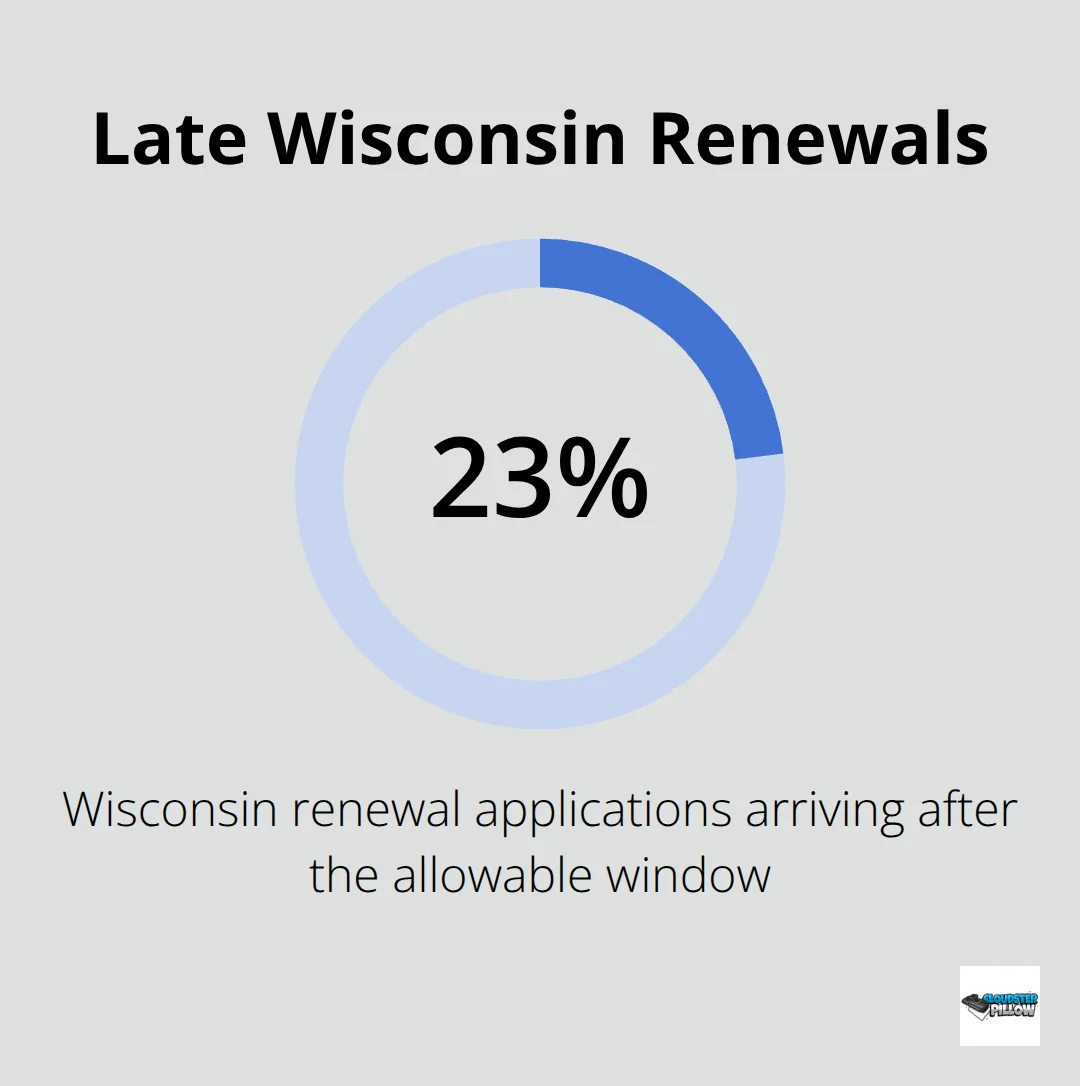
Wisconsin permit holders lose their carry rights permanently after 90 days past expiration, yet 23% of renewal applications arrive too late according to Wisconsin Department of Justice data. California carriers face immediate legal jeopardy when their permits expire, but Sacramento County reports that renewal attempts happen after the grace period ends.
Colorado’s new 2025 requirements create additional deadline pressure because refresher training must be completed before your permit expires, not during the renewal window. Smart carriers mark their calendars 120 days before expiration and start paperwork immediately.
Application Errors Cost Time and Money
Sacramento County rejects CCW renewal applications for missing signatures, incorrect photos, or incomplete firearm qualification records. Each rejected application delays your renewal by 30-45 days minimum, which pushes you dangerously close to expiration deadlines. Wisconsin requires individual document scans rather than combined PDFs, and applicants who ignore this rule face automatic rejection. Address changes trigger the most problems because permit holders forget to update their information with the sheriff’s office before they submit renewal paperwork. California carriers must qualify with each firearm listed on their permit every two years, and missing even one qualification record invalidates the entire renewal application.
Personal Information Updates Create Legal Headaches
Address changes must be reported to your issuing sheriff’s office within 30 days in most states, but permit holders routinely wait months before they update their records. Moving between counties requires a completely new permit application rather than a simple renewal, which costs additional hundreds of dollars and months of processing time. Name changes from marriage or divorce require certified court documents, and permit holders who submit photocopies face automatic rejection. Criminal history updates (including arrests that resulted in dropped charges) must be disclosed during renewal and can trigger additional background investigations that extend processing times by 60-90 days.
Understanding these common pitfalls helps you avoid rejection, but the financial impact of renewal requirements often catches carriers off guard when they calculate the true cost of maintaining their permit status.
How Much Will Your Renewal Actually Cost?
Renewal Fees Vary Dramatically Across States
Wisconsin charges just $40 for CCW renewals, which makes it one of the most affordable options nationwide. California renewal costs explode beyond $1,000 when you factor in mandatory refresher courses, range qualification fees, and administrative costs. Colorado’s new 2025 requirements add refresher courses to the renewal process, which pushes total costs above $300 in most counties. Sacramento County charges separate fees for each firearm qualification, and with a three-handgun maximum, carriers face multiple range session costs every renewal cycle. Smart carriers budget $500-1,200 annually for renewal expenses (depending on their state’s requirements and training mandates).
Training Costs Add Up Quickly
Colorado mandates refresher courses from DOJ-certified instructors only, which eliminates cheaper self-study options that some states previously allowed. California requires refresher courses for every renewal, and these classes cost $150-300 depending on your location and instructor. Range qualification fees run $50-100 per firearm in most states, and carriers with three handguns on their permit pay triple these costs. Wisconsin keeps training requirements minimal, but other states pile on mandatory education hours that drive up your total renewal investment.
Hidden Administrative Fees Catch Carriers Off Guard
Address change notifications cost $25-50 in most counties, and carriers who move frequently pay these fees multiple times per renewal cycle. Photo updates require new digital submissions in many states, and professional passport photos cost $15-25 at most locations. Background check fees vary by jurisdiction, with some counties charging $30-75 for the mandatory criminal history review that accompanies every renewal.
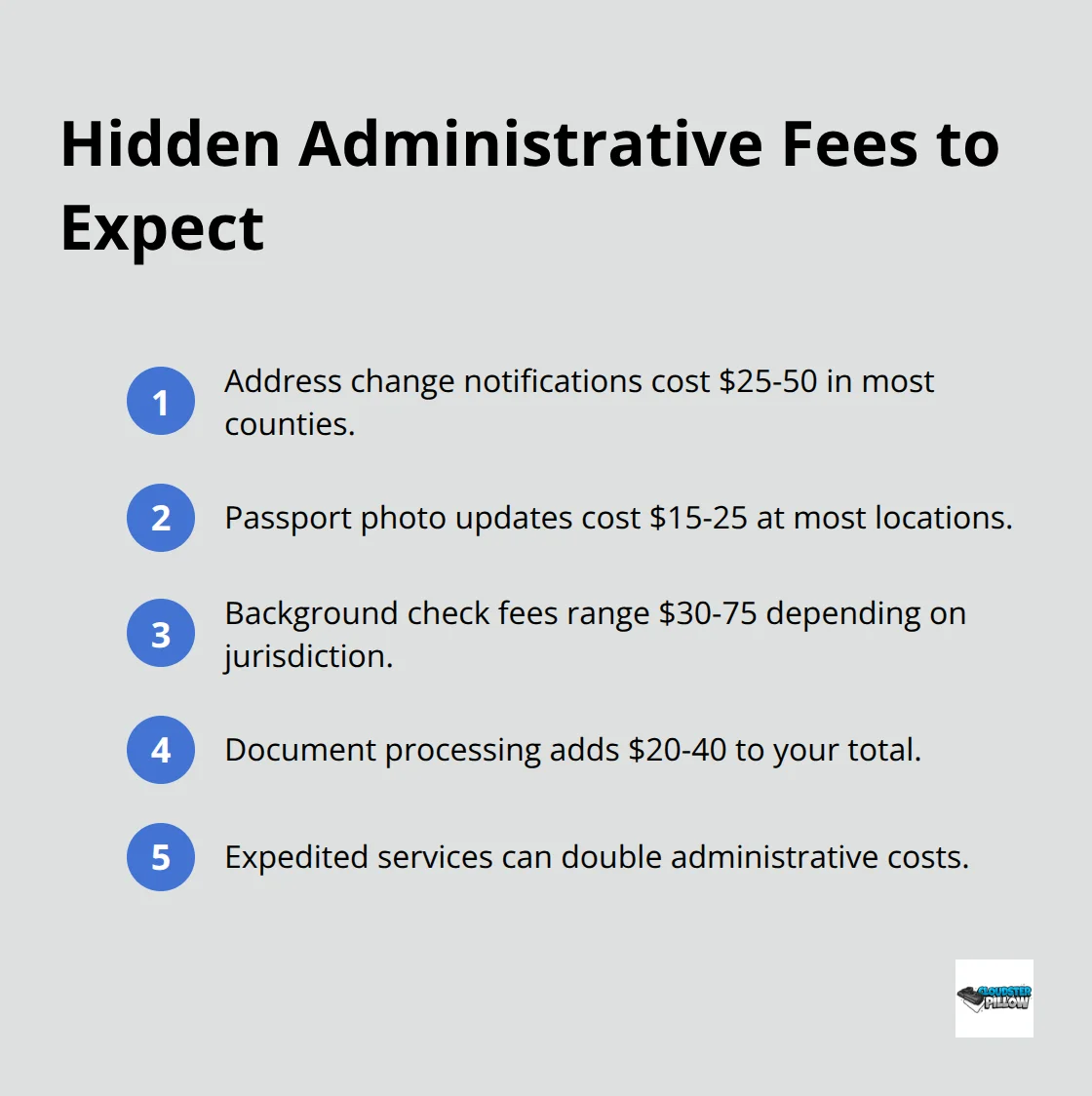
Document processing fees add another $20-40 to your total, and expedited services (where available) can double these administrative costs.
Timeline Pressure Creates Budget Stress
Colorado processes CCW renewals within 90 days, but their new training requirements mean you need 120+ days total to complete refresher courses before your permit expires. Wisconsin Department of Justice warns that renewal times vary based on background check complexity, with clean records taking 30 days and complicated histories requiring 60-90 days. California’s Sacramento County recommends starting renewal 45 days early, but carriers with address changes or criminal history updates should plan 90+ days minimum. No state offers true expedited renewal services (unlike new applications where some jurisdictions provide rush options for additional fees).
Final Thoughts – CCW Renewal
Your CCW renewal success depends on early action and organized preparation. Wisconsin’s 120-day window and California’s 30-45 day requirement leave no room for delays. Budget $500-1,200 annually for renewal costs, which include training, fees, and qualification expenses that vary dramatically by state.
Compliance protects your legal status and maintains your carry confidence. Address changes, criminal history updates, and expired training certificates create the most renewal problems. Colorado’s new 2025 requirements prove that states continue tightening their standards (making early preparation more important than ever).
Maintaining your permit status gives you daily carry confidence and legal protection. Experienced carriers know that consistent compliance builds habits that extend beyond paperwork into safe carrying practices. When your CCW renewal is complete and you’re carrying legally again, comfort matters for all-day concealment, which is why we at Cloudster Pillow designed our holster wedge to enhance AIWB and IWB comfort for confident daily carry.
