
Firearm Tips and Tricks, Firearms
Home Defense With Pistol: Everyday Readiness For Carriers
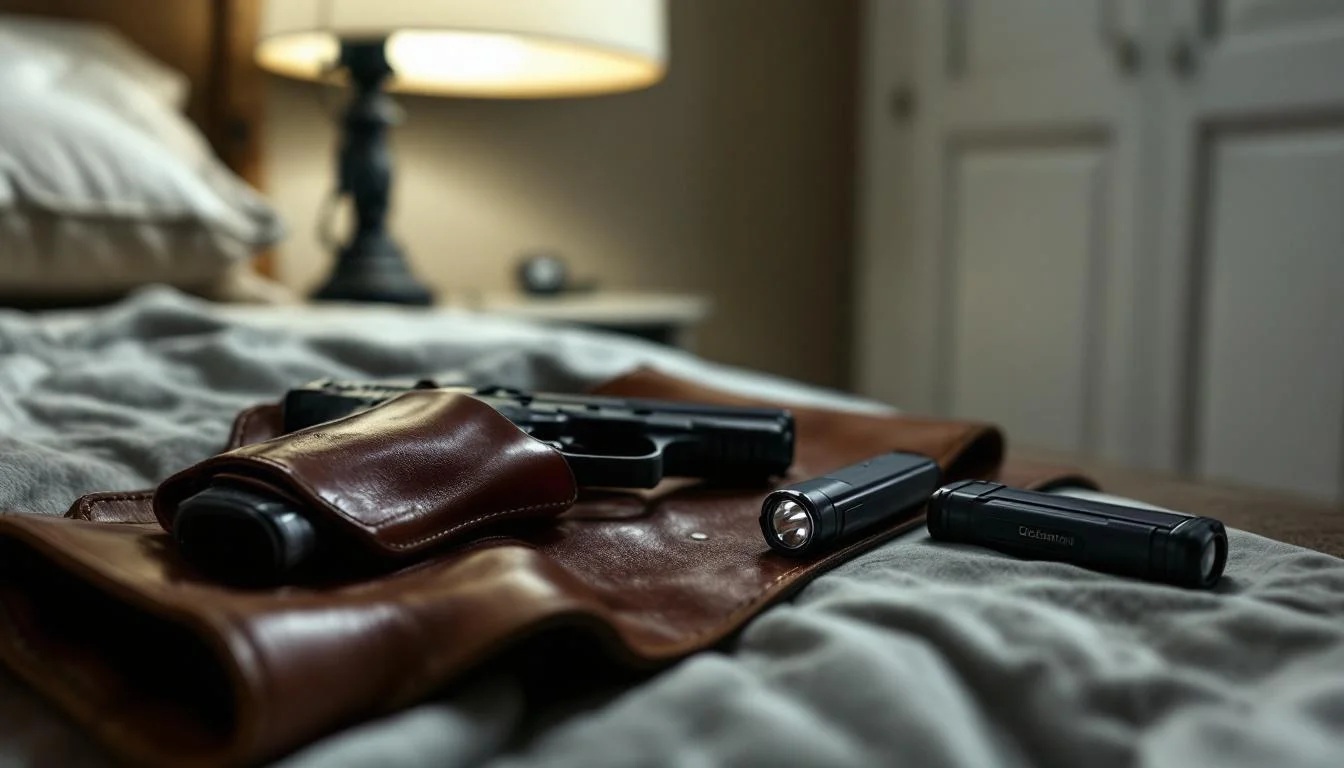
Your home defense guns are only as effective as your readiness to use them. Most carriers train at the range but never practice the scenarios that matter most-the ones happening inside their own homes.
At Cloudster Pillow, we know that comfort and consistency in your daily carry directly impact how you’ll perform when it counts. This post covers the strategies, mistakes to avoid, and practical drills that separate prepared carriers from those just hoping they’ll react correctly.
Why Your Home Defense Plan Fails Without Real Practice
Police Response Times Leave You Alone
Home invasions happen fast, and police response times prove it. The FBI reports that the average police response time to a burglary call is between 10 to 60 minutes, depending on your location and whether officers are already in the area. In rural areas, that wait stretches far longer. This means you have no backup coming. You’re the only line of defense for your family, which makes your readiness the actual security system.
The Training Gap That Matters Most
Most carriers understand this intellectually, but they train at the range-standing still, eyes open, plenty of light, no stress-and call themselves prepared. Range shooting and home defense are completely different skills. At the range, you solve a single problem: hitting a target. At home, you solve multiple problems simultaneously: identifying threats in darkness, moving through familiar spaces while disoriented, protecting family members, managing your mental state under extreme stress, and making split-second decisions with legal and moral weight. The gap between these two scenarios is where most carriers fail.
Comfort Determines Whether You Actually Carry
Comfort in your everyday carry directly determines whether you actually have a gun when you need it. Carriers who struggle with their setup often leave their pistol in a nightstand, a car, or another room at night. Concealed carriers who experience discomfort during daily wear are significantly less likely to maintain consistent carry habits, especially at home when they’re changing clothes or settling in for the evening. If your holster causes irritation, digs into your ribs, or shifts constantly, you’ll unconsciously avoid wearing it.
Muscle Memory Builds Real Readiness
When you skip carry during routine hours-cooking dinner, watching television, sitting on the couch-you train yourself to be unprepared during the exact moments when threats are most likely. A home invasion doesn’t wait for you to grab your gun from another room. The carrier who maintains consistent carry because their setup feels natural has a tremendous advantage over the carrier who technically owns a better pistol but leaves it behind half the time.
Familiarity compounds this advantage. When you carry the same setup daily, your draw becomes automatic. You know exactly where your gun sits. Your body remembers the weight and balance. Your hands move without conscious thought. This muscle memory is what separates trained readiness from hoping you’ll figure it out under pressure. The carriers who feel confident in home defense situations are the ones who’ve already drawn their gun hundreds of times during normal days, not just during dedicated range sessions. This consistency-carrying the same way every single day-is what transforms you from someone who owns a gun into someone who can actually use it when seconds count. That’s why a comfortable, reliable setup like the Cloudster Pillow makes all the difference-it keeps you carrying when it matters most.
How to Set Up Home Defense That Actually Works
Storage That Keeps Your Gun Accessible and Secure
The difference between a home defense plan that works and one that fails comes down to three connected decisions: where your gun lives, how well you know your space, and whether you’ve actually practiced using your gun in that space. Most carriers get one or two of these right. The ones who are truly ready nail all three.
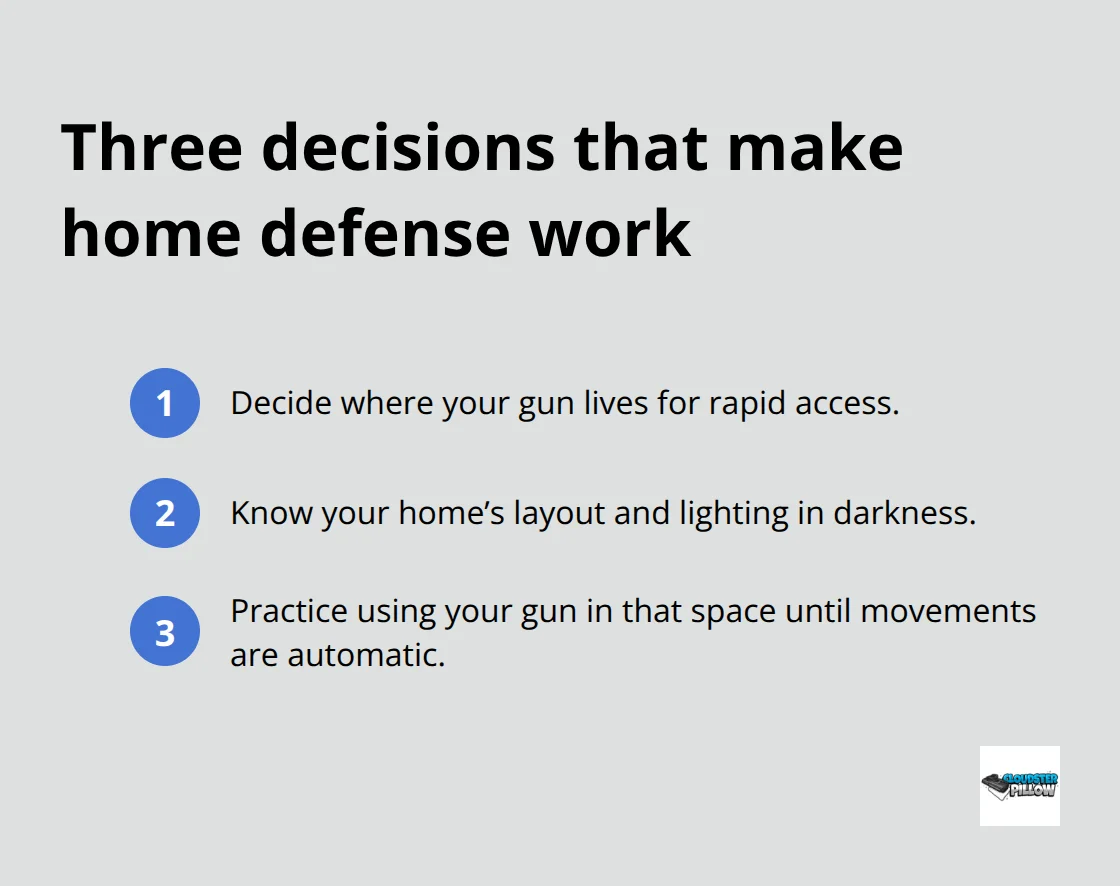
Your gun needs to be accessible enough that you can reach it in seconds, but secured well enough that unauthorized people can’t access it. StopBox makes American-made mechanical storage designed for this exact problem. Their PRO model and wall-mounted options let you place rapid-access storage by your bed or near entry points, with no electronics to fail during a crisis. The Hand Gesture Code Lock provides hands-free access without requiring you to remember a code or find a key in darkness. If you have children or guests in your home, Chamber Lock Pro adds a chamber-locking feature that reduces the risk of unintended discharge while maintaining your ability to deploy quickly. The point isn’t to overthink storage-it’s to eliminate the seconds you’d waste searching for your gun while a threat is active.
Know Your Space in Darkness
Knowing your home layout matters far more than most carriers realize. Walk through your space at night with the lights off and notice what you actually see versus what you think you see. Most people overestimate how much light exists in their home after dark. Identify the routes you’d take to reach family members. Note furniture placement, doorways, and obstacles. This mental blueprint prevents the disorientation that happens under stress. When you’ve walked that path dozens of times-even in daylight-your body knows where to move without conscious thought.
Practice Drawing From Real Positions
The final piece is actually practicing your draw and presentation in the positions where threats are most likely. You won’t be standing at the range. You’ll be sitting on the couch, lying in bed, or moving through a hallway. Dry-fire practice in realistic home positions trains your body to respond correctly when adrenaline spikes. Start slow, verify your firearm is unloaded multiple times, and use snap caps for safety. Practice drawing from your seated position on the couch. Practice from the edge of your bed. Practice moving through your hallway to check on family. These aren’t range drills-they’re rehearsals of the actual scenario you’re preparing for.
This combination of accessible storage, environmental familiarity, and position-specific practice creates readiness that range time alone never builds. When your gun sits where you can reach it, you know your space, and your hands have already drawn from bed or couch a hundred times, you’ve stopped hoping you’ll react correctly and started knowing you will. The next critical mistake most carriers make-one that undermines all this preparation-happens in the moments when light disappears and stress takes over.
Where Most Carriers Fail When Darkness Falls
Low-Light Training Exposes Your Real Readiness
Most home defense plans collapse the moment the lights go out. Carriers train during daylight at the range, develop muscle memory for their draw in well-lit conditions, and never once practice what actually happens when a threat emerges at 2 AM in complete darkness. This isn’t a minor oversight-it’s the difference between executing your plan and freezing when you need to act.
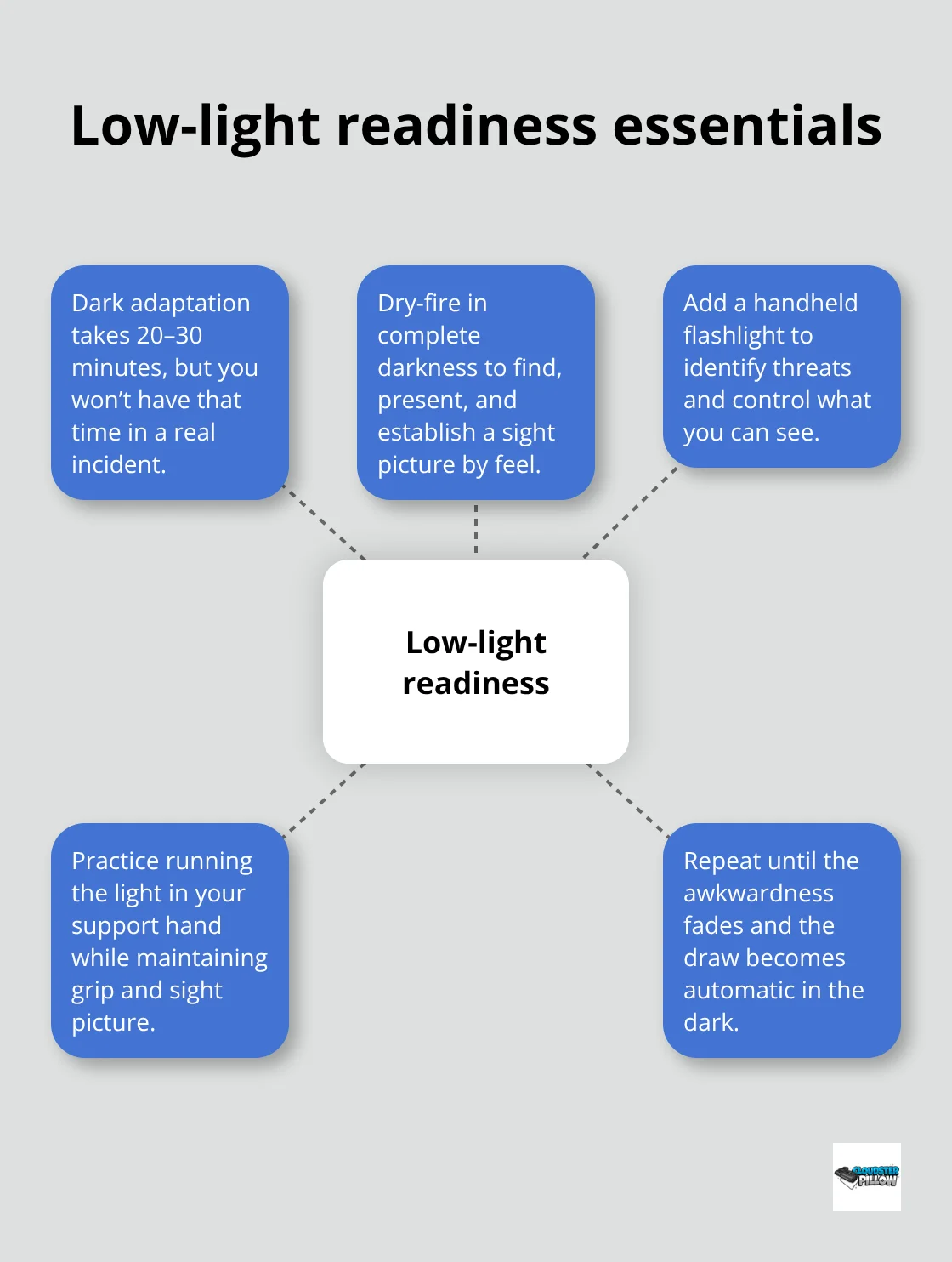
Low-light training separates carriers who’ve genuinely prepared from those who’ve only prepared for ideal conditions.
Your eyes need 20 to 30 minutes to fully adjust to darkness, but you won’t have that luxury during a home invasion. You’ll be moving from sleep, disoriented, with pupils still contracted from indoor lighting. Dry-fire practice in darkness teaches your hands to find your gun, present it, and establish a sight picture without relying on what you see. Start by drawing in a completely dark room with your firearm unloaded and verified multiple times. Your hands will search initially-that’s normal and exactly why you need to practice this way. After 20 repetitions in darkness, your draw becomes automatic regardless of lighting conditions.
Add a small flashlight to your practice routine and learn to operate it alongside your pistol. Most carriers never train with a light, then fumble with one during an actual incident. The flashlight serves two purposes: identifying threats and controlling what you can see, which prevents your pupils from dilating toward threats you haven’t yet identified. Practice holding the light in your support hand while maintaining a proper grip and sight picture. This takes deliberate repetition and feels awkward initially-exactly why it matters to practice now rather than discover the problem during an emergency.
Consistency in Carry Setup Determines Your Response
Your carry consistency directly determines whether you actually have access to your firearm when threats emerge. Carriers who switch between different holsters, carry positions, or even different firearms create cognitive load that undermines readiness. Your brain and body need one setup-the same gun, same holster, same position, every single day. When you carry identically every day, your draw becomes truly automatic. You know the exact distance your hand travels. You know the precise angle your elbow must move. You know how your holster releases your gun.
Carriers who rotate between appendix carry one day and strong-side carry another day create inconsistency that shows up immediately under pressure. Your muscle memory becomes muddled. Your hand searches for your gun in slightly different locations. These milliseconds of confusion can determine outcomes. The other critical mistake is treating home defense as something separate from everyday carry. Carriers who keep their gun secured away from their body during normal hours-setting it aside while cooking, changing clothes, or settling in for the evening-train themselves to be unprepared during the exact moments when most home invasions occur.
You’re most vulnerable at home, yet many carriers unconsciously prioritize comfort over readiness by removing their gun during these hours. The solution is simple: carry the same way at home that you carry in public. If your current setup causes enough discomfort that you remove it indoors, your setup is the problem, not your commitment. A comfortable, reliable holster system that works for extended wear keeps you armed throughout your home without constant adjustment or irritation. That’s where the Cloudster Pillow comes in-designed specifically to provide the comfort and concealment you need for all-day carry, so you stay armed without compromise.
Position-Specific Drills Build Real-World Readiness
Most carriers never practice drawing and engaging from the positions where they’ll actually be during a home defense situation. You won’t be standing. You’ll be lying in bed, sitting on the couch, or moving through a hallway. Yet carriers spend 99 percent of their practice time standing at the range.
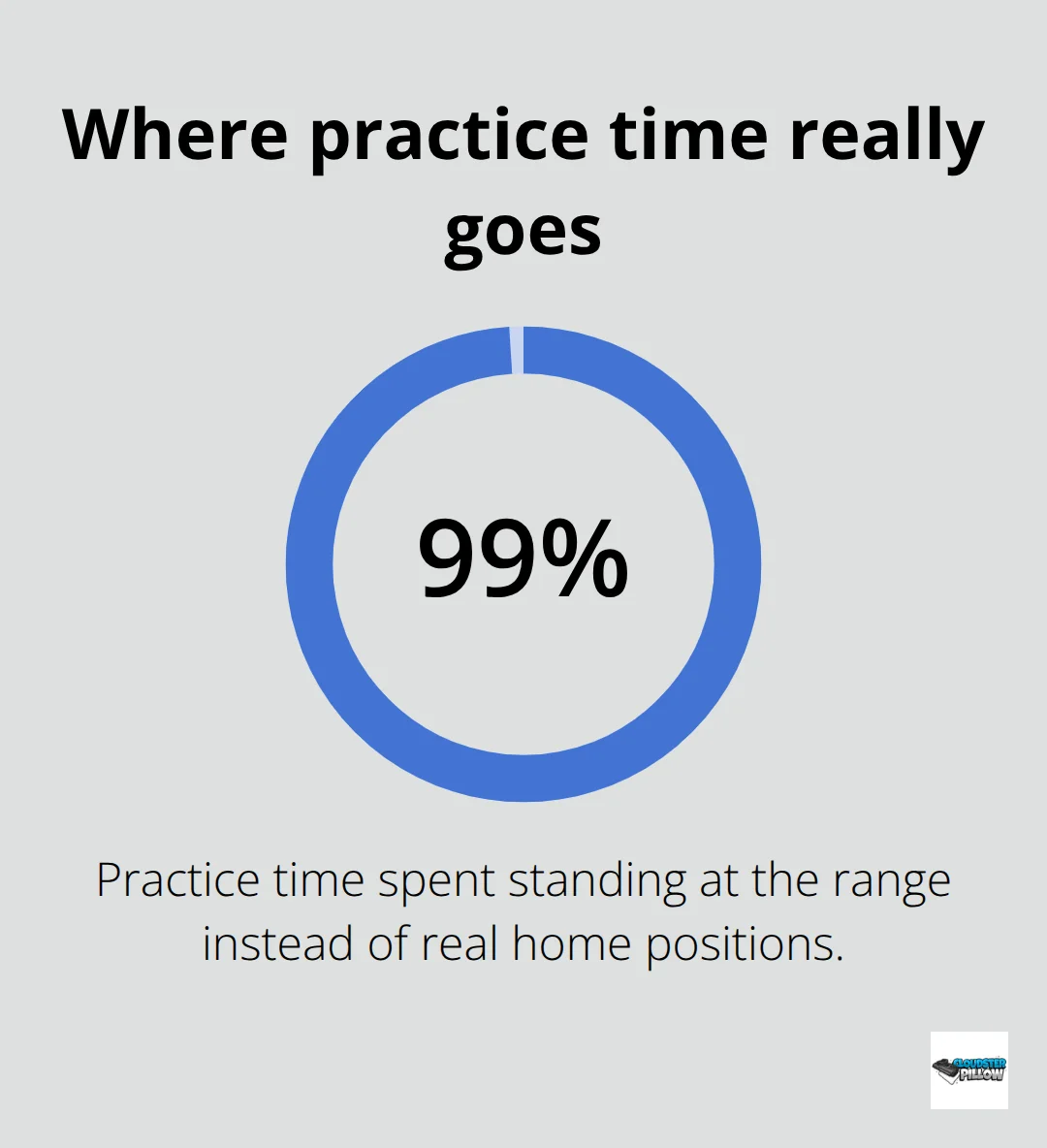
Position-specific dry-fire drills from seated positions on your couch train your draw from the exact angle and distance you’ll face at night. Practice from the edge of your bed with your eyes closed, simulating waking from sleep. Practice moving through your home and drawing from different rooms.
These position-specific drills feel awkward because they’re unfamiliar, but that unfamiliarity is precisely why they matter. Ten draws from your bed in darkness will teach you more about your actual readiness than fifty draws standing at the range. The carriers who perform well in home defense situations are the ones who’ve already executed these movements hundreds of times during normal practice, not the ones hoping they’ll figure it out under pressure.
Final Thoughts
Your home defense guns only work when you actually carry them every single day. Comfort determines whether you keep your firearm on your body during the hours when threats are most likely, and consistency determines whether your muscle memory activates under pressure. Carriers who struggle with their setup unconsciously remove their gun during evening hours, telling themselves they’ll grab it if needed, but that moment arrives differently than they imagined.
The carriers who perform well in actual situations solved this problem long ago. They carry the same way every single day because their setup feels natural, they’ve drawn from bed a hundred times in darkness, and they know their home layout without thinking. A comfortable, reliable holster system designed for all-day wear keeps you armed without the irritation that leads carriers to abandon their firearms when home.
Your next step is straightforward: pick one position-seated on your couch or lying in bed-and practice your draw from that position in darkness this week. Ten repetitions will teach you more about your actual readiness than a month of standing range practice, and the Cloudster Pillow holster wedge enhances concealment and comfort for AIWB and IWB carry, helping you maintain consistent carry throughout your day and night without irritation.
