
Carry Techniques and Optimization
Everyday Concealment Comfort Hacks: Quick Wins For All Day Confidence
Carrying a concealed firearm all day shouldn’t mean sacrificing comfort. Most CCW carriers deal with pressure points, shifting holsters, and that nagging awareness of their gun throughout the day-but it doesn’t have to be this way.
We at Cloudster Pillow know that real carry comfort hacks make the difference between ditching your gun at home and carrying with genuine confidence. This guide walks you through proven strategies to eliminate discomfort and stay armed without the constant adjustment.
Understand Your Body’s Pressure Points
Where Your Body Pushes Back
Your body tells you exactly where a holster doesn’t fit. The appendix position digs into your lower abdomen when you sit, especially during long car rides. The 3-5 o’clock position creates pressure on your hip bone and the soft tissue above your belt line. The small of the back presses against your spine when you lean back in a chair.
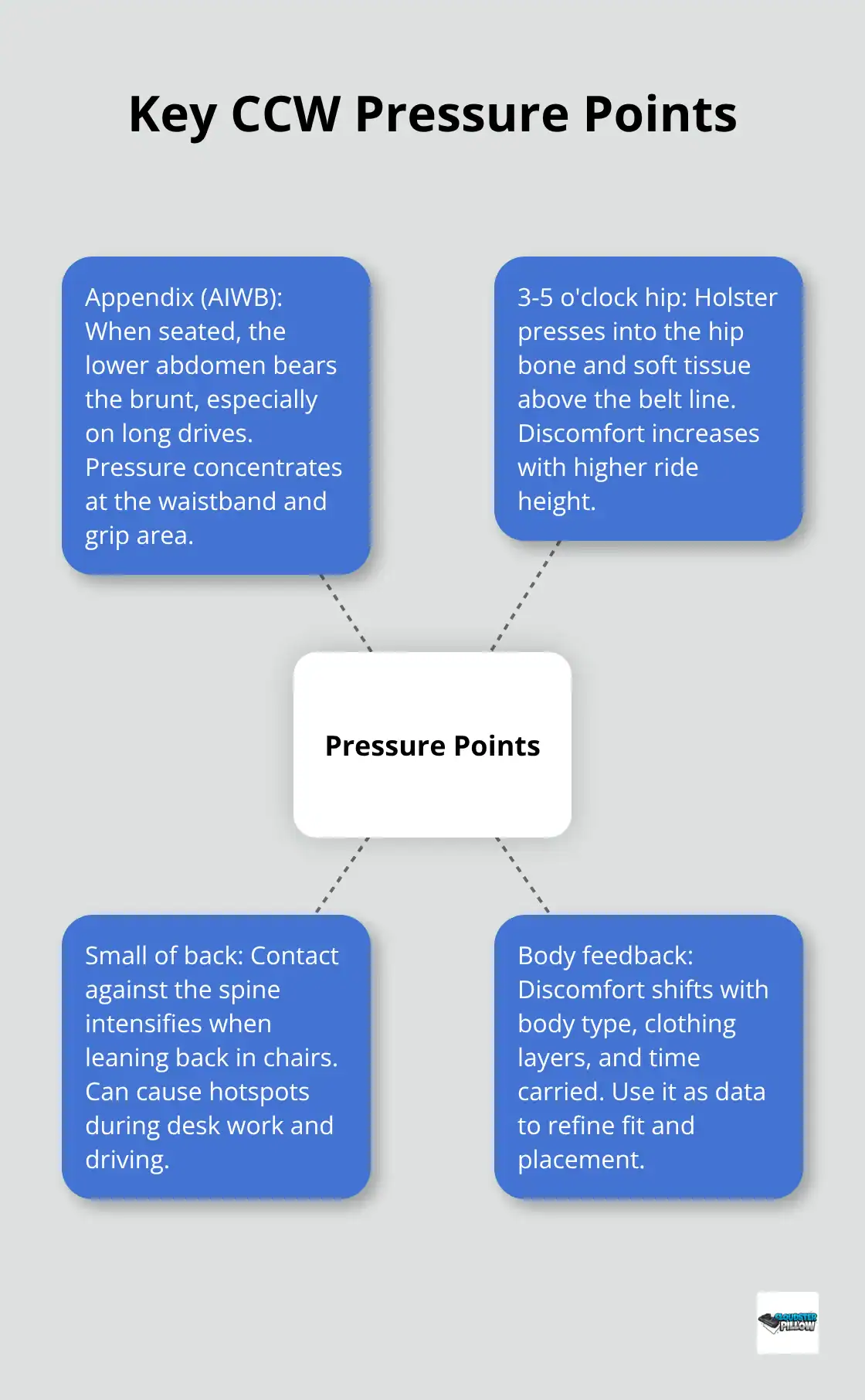
These aren’t random complaints-they’re feedback from specific anatomical pressure points that shift based on your body type, clothing layers, and how long you’ve been carrying. Understand your body’s pressure podints by testing carry positions with minimal clothing layers to identify where discomfort originates.
How Standard Holsters Create Gaps
Standard holsters leave gaps between the holster and your body because manufacturers build them for average body shapes. That gap lets the holster shift forward, backward, or rotate slightly throughout the day, which multiplies pressure on one spot instead of distributing it across a wider surface. A holster that rides too high digs into your ribs. One that sits too low presses against your hip bone. Cant-the forward tilt of your firearm-matters tremendously. Proper cant helps with concealment and seated draws, but incorrect cant for your specific body creates a pressure point at the grip or trigger guard.
Why Ride Height and Cant Matter Most
Ride height and cant adjustments offer cheap wins, yet most carriers never experiment with them. The real issue is that no standard holster perfectly matches your unique body geometry, and small gaps compound into all-day discomfort. Addressing pressure points starts with identifying exactly where your body pushes back, then using targeted solutions to fill those gaps and distribute pressure evenly across a larger area rather than concentrate force on one sensitive spot. This foundation sets you up for the quick fixes that actually work.
Fix Your Holster Setup Without Buying New Gear
Adjust Cant and Ride Height for Your Body
The fastest path to all-day comfort starts with your existing holster. Most carriers never adjust cant or ride height because they assume these settings are locked in stone, but they’re not. A Glock 48 in a FDO Industries holster can feel completely different with just a 5-degree cant adjustment or a quarter-inch shift in ride height. Test one variable at a time over a full day of wear, including sitting in your car for extended periods, since that’s where most appendix carriers report the worst discomfort.
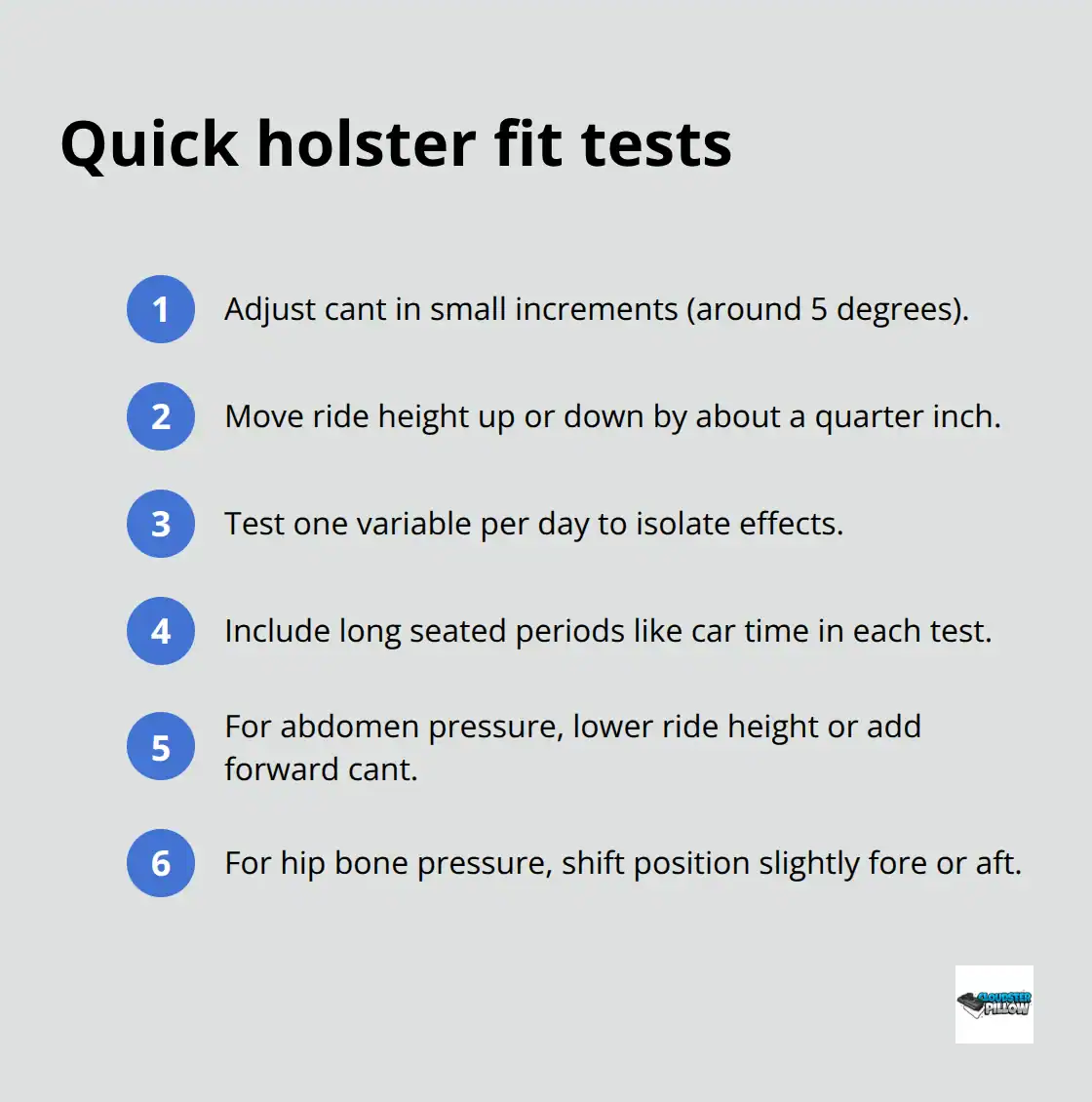
If your holster digs into your lower abdomen when seated, lower the ride height slightly or increase the cant forward to 20-25 degrees. If hip bone pressure is your problem, shift the gun position a few inches forward or behind your hip bone to spread pressure across softer tissue instead of bone. The goal isn’t perfection on the first try-it’s finding the sweet spot for your specific body through deliberate testing.
Choose a Belt That Prevents Sagging
Your belt matters far more than most carriers realize. A standard dress belt or casual belt has zero support structure, which means your holster sags throughout the day and creates shifting that multiplies pressure on single points. A proper CCW belt with reinforced cores and micro-adjustable buckles prevents that sag completely. Kore Essentials and Hanks belts are industry standards because they maintain tension without requiring constant tightening. Once you have solid belt support, your holster stays exactly where you positioned it, which eliminates one of the biggest hidden causes of all-day discomfort.
Select Clothing That Conceals and Supports
Clothing choices amplify or destroy everything you’ve done with your holster and belt. Avoid standard t-shirts entirely-they’re too thin and create visible printing even with excellent gear underneath. Opt for polos, button-ups, or purpose-built holster shirts with belt loops to accommodate a sturdy gun belt and deep, secure pockets. Size up by one waist size in pants to accommodate your IWB holster without forcing your waistband to sit higher or lower than designed. Loose-fitting, patterned tops conceal carry shape far better than fitted or solid-color shirts. The combination of proper cant, a stiff belt, and thoughtful clothing creates the foundation for real comfort that lasts an entire day. These adjustments work because they address the root cause of discomfort-pressure concentration-rather than mask the symptoms with temporary fixes.
Build Comfort Into Your Daily Carry Routine
Rotate Your Carry Position Throughout the Day
Most carriers stick with one carry position and watch discomfort worsen over time. Your body adapts to pressure, which means the same setup that felt tolerable in week one becomes genuinely painful by week three. Rotating your carry position throughout the day prevents this adaptation and spreads pressure across different anatomical points instead of hammering the same spot repeatedly. If you carry appendix in the morning during your commute, switch to 3-5 o’clock when you sit at a desk for hours.
If you’re in the car most of the afternoon, move to small of the back or crossdraw during evening activities. This isn’t about weakness or inconsistency-it’s about smart pressure management. Real carriers on the CCW subreddit report that appendix carry causes the most discomfort during extended sitting, especially in vehicles, which is exactly why position rotation works. A Glock 48 that digs into your abdomen at 2 PM feels completely different when you shift it to your hip at 4 PM.
Strengthen Your Core for Better Weight Distribution
Your core strength directly impacts how well your body distributes the weight of your firearm and holster throughout the day. Carriers with stronger abdominal and lower back muscles experience less fatigue and pressure concentration because their posture stays upright and stable instead of collapsing forward or slouching to one side. You don’t need intense training-basic core work like planks, dead bugs, or farmer’s carries creates measurable improvement in carrying comfort.
Stronger core muscles also improve your draw from seated positions and make appendix carry significantly more comfortable during long drives since your torso maintains proper alignment instead of folding forward onto your waistband. This foundation supports everything else you do to optimize your carry setup.
Establish a Consistent Daily Routine
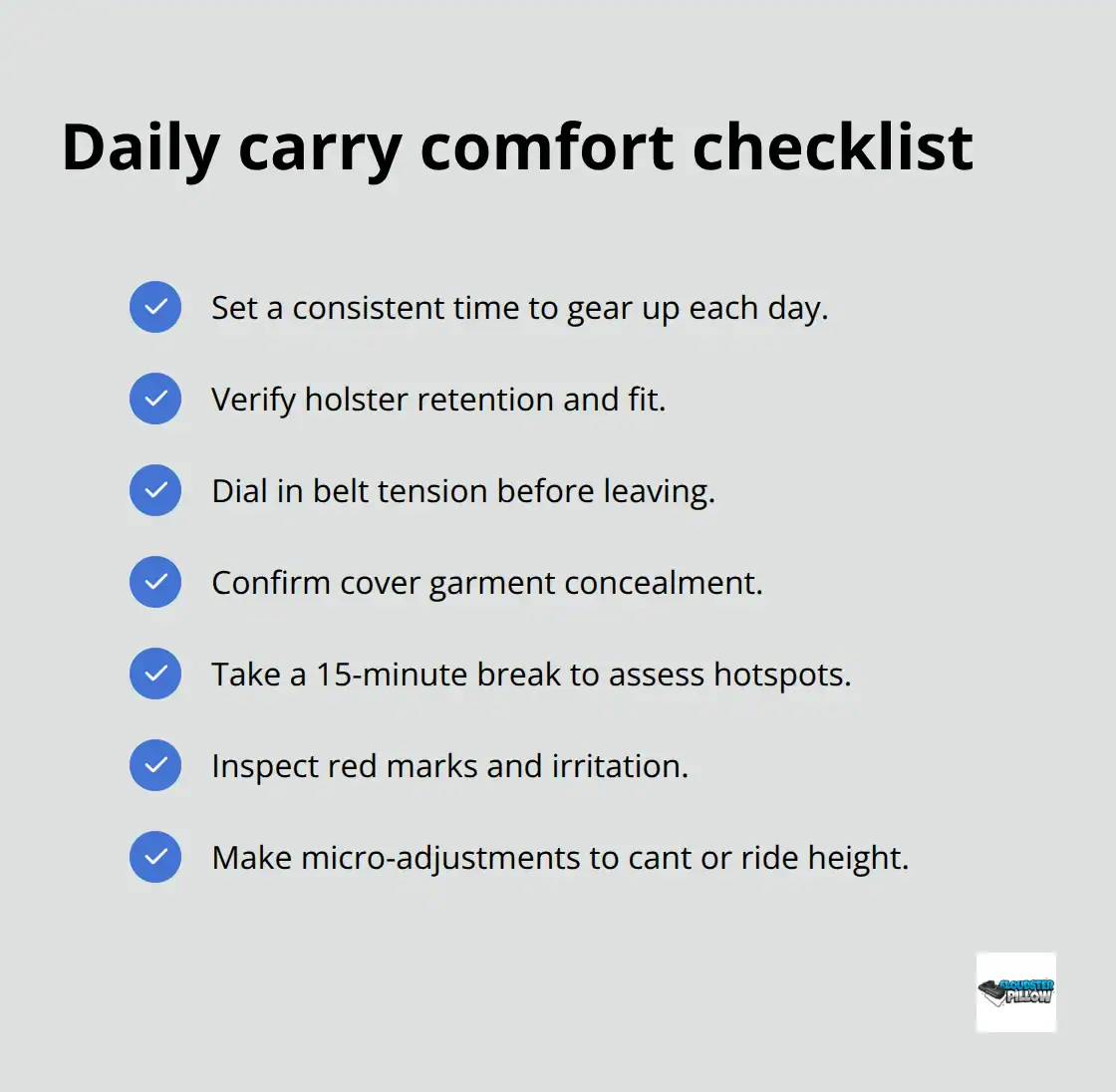
Treat concealed carry like part of your daily system, not something you improvise each morning. Set a specific time to put on your holster, check retention and fit, adjust your belt tension, and verify your clothing covers your setup completely. This takes three minutes but eliminates the mid-day discoveries that your holster shifted, your shirt rode up, or your belt loosened.
Carriers who follow a consistent routine report fewer pressure point complaints because they catch fit issues before they compound into all-day discomfort. Your routine should also include a designated break time-even just 15 minutes without your holster-where you assess any red marks, irritation, or areas where pressure concentrated. This feedback loop lets you make micro-adjustments to cant, ride height, or clothing before they become real problems.
Successful all-day carry isn’t about willpower or toughness; it’s about building systems that work with your body instead of fighting it.
Final Thoughts
Comfort forms the foundation of consistency in concealed carry, and carriers who experience pressure points eventually stop carrying altogether. The carry comfort hacks outlined in this guide prove that small, deliberate adjustments eliminate discomfort without expensive gear replacements or complete setup overhauls. Your body is unique, and no standard holster perfectly matches your specific geometry-gaps between your body and holster concentrate pressure on single points instead of distributing it across a wider surface.
Real carriers report measurable improvement when they rotate carry positions, strengthen their core, and invest in proper belt support. A Glock 48 that digs into your abdomen at 2 PM feels completely different when you shift it to your hip at 4 PM or adjust your cant forward by just a few degrees. These adjustments work because they address the root cause of discomfort-pressure concentration-rather than mask symptoms with temporary fixes.
We at Cloudster Pillow designed our holster wedge specifically for everyday carriers who refuse to compromise between comfort and readiness. Our solution enhances all-day concealment for AIWB and IWB holsters without replacing your entire setup, and practical comfort solutions exist that work with your body instead of against it.
