
Firearms Training
Real Life Carry Practice: Training That Becomes Habit
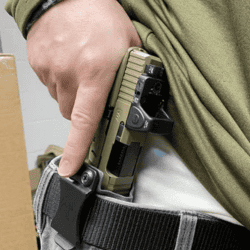
 Most concealed carriers train at the range once a month, then carry the rest of the time without practicing. That gap between training and real life carry practice is where bad habits form.
At Cloudster Pillow, we’ve seen firsthand how carriers who build daily practice into their routine develop faster reflexes and better decision-making. The difference between occasional training and consistent habit is measurable in how quickly you can respond when it matters.
Why Daily Practice Builds Real Carry Confidence
Your draw speed matters far less than your draw consistency. Most carriers practice their presentation once a month at the range, then carry for thirty days without touching their holster. Research on habit formation shows that repetition converts complex motor skills into automatic responses-the kind that work when adrenaline spikes and your brain enters survival mode. A carrier who practices their draw five times a week for two minutes will develop faster reflexes than someone who shoots fifty rounds monthly and does nothing in between. The difference isn’t dramatic after one week, but after three months the gap becomes measurable. Your nervous system needs frequent, low-stress repetition to build the neural pathways that fire automatically during a real threat.
Practice with your actual carry setup
Dry fire drills at home accomplish consistent practice without ammunition costs. You must practice with the exact holster, belt, and clothing you actually carry in-not a different setup at the range. If you switch between an inside-the-waistband holster and appendix carry depending on your outfit, practice both positions regularly so your muscle memory doesn’t get confused.
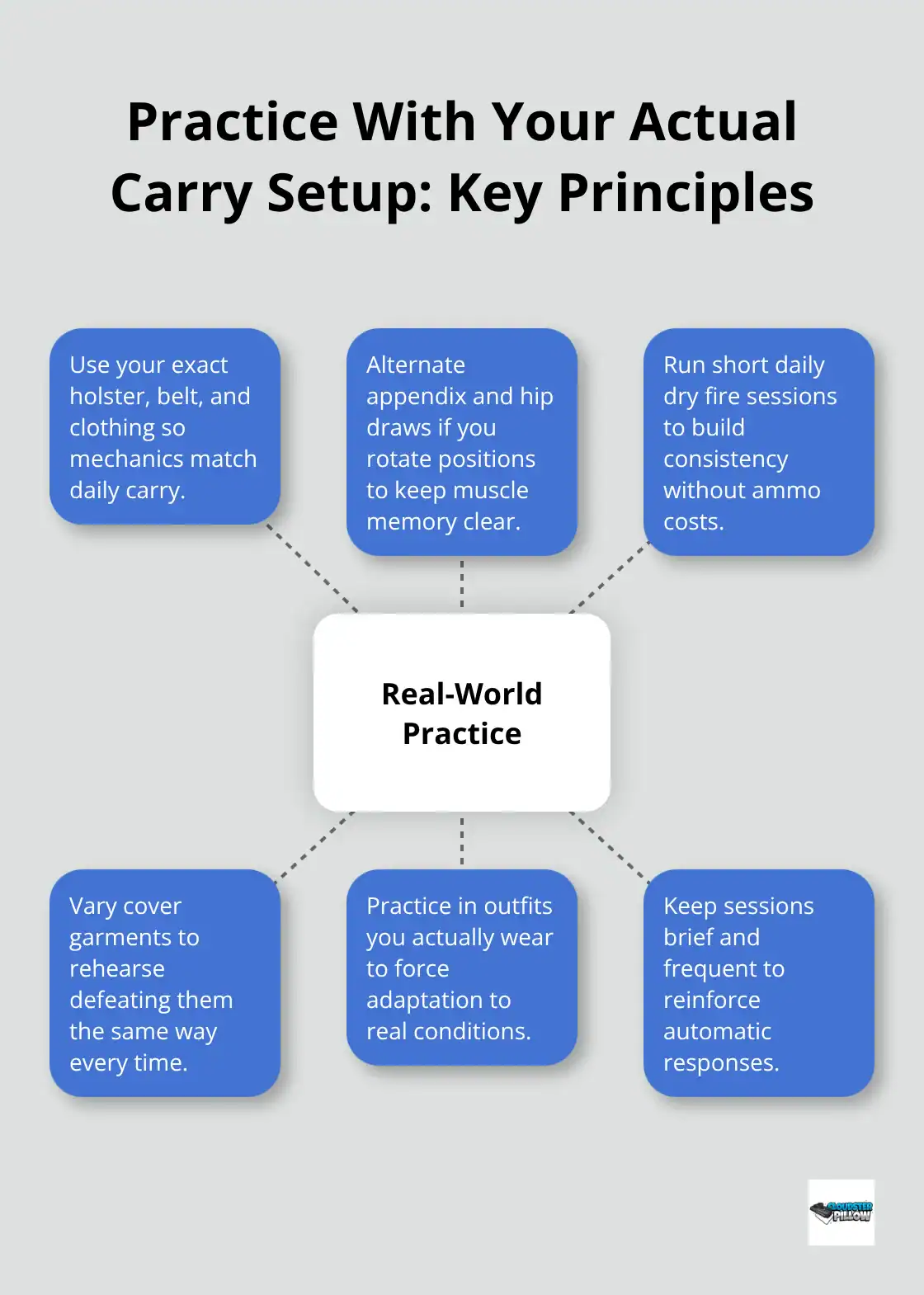
One carrier might practice their appendix draw while wearing a t-shirt one day, then practice from their hip in a button-up shirt the next. That variation forces your brain to adapt to real-world conditions instead of a single rehearsed scenario.
Situational awareness starts before the draw
Concealed carry means staying mentally present throughout your day, not just when danger appears. Most carriers default to scanning their environment only when something feels off-but that delay costs critical seconds. Your brain needs to process new information under stress, but when you’ve already identified potential threats through routine observation, your response time accelerates. Walk into a coffee shop and immediately note exits, the number of people, and anyone displaying aggressive body language. This habit takes seconds and requires no gear changes. Practice noticing details during daily errands: how many people are armed, what’s blocking your exit, where crowds form. Your concealed carry training should include this mental component as much as your draw practice. When you develop a consistent routine of environmental scanning, your decision-making accelerates when a real situation develops. Stress hormones flood your system and limit your cognitive capacity, but habits bypass conscious thought entirely. That’s why research emphasizes that freeze responses happen when people haven’t trained under realistic stress conditions. You cannot think your way out of a threat quickly enough-you must have trained your responses so thoroughly that they activate without deliberation.
Comfort determines whether you carry tomorrow
A holster that digs into your ribs at the end of a long day won’t get worn tomorrow. Carriers often abandon their carry setup because discomfort compounds over hours, especially when seated at a desk or driving. The best practice routine means nothing if your holster leaves you with bruises by evening. Invest in a quality gun belt designed to distribute weight evenly across your waistband rather than concentrating pressure at a single point. If you carry appendix, pressure directly against your abdomen becomes a real issue during extended sitting. Many carriers add a holster wedge to redirect pressure and improve concealment simultaneously. Small adjustments to your carry system often make the difference between a habit you maintain and one you abandon. Test your setup during a full workday-not just during a quick range visit-to identify comfort problems before they sabotage your practice routine. Consistency in carry practice depends on consistency in comfort, which depends on honest assessment of your actual daily routine and clothing.
What happens when comfort fails
Discomfort doesn’t just reduce your willingness to carry-it actively undermines your training progress. A carrier who removes their holster after eight hours because of pain loses the repetition that builds muscle memory. That missing practice day compounds across weeks and months, widening the gap between your training and your actual readiness. The solution isn’t to accept discomfort as part of carrying; it’s to fix the root cause. Whether that means upgrading your belt, adjusting your holster position, or adding support accessories, the investment pays dividends in consistency. Your practice routine only works if you actually wear your carry setup every single day.
Training Methods That Actually Stick
Dry fire practice at home forms the foundation of consistent carry readiness, but most carriers skip it because they think it requires formal training sessions. The reality is simpler: consistent dry fire practice outperforms a single monthly range session. Start by clearing your firearm completely-remove the magazine, lock the slide back on a semi-auto, visually inspect the chamber twice, and keep ammunition in a separate room. Many carriers make the mistake of keeping ammo nearby during dry fire, which defeats the safety protocol. Once your weapon is cleared, practice your draw from the exact holster and clothing you wear daily. If you carry appendix, practice appendix draws. If you wear a cover garment, practice defeating it the same way every time.
Building Affordable Range Skills
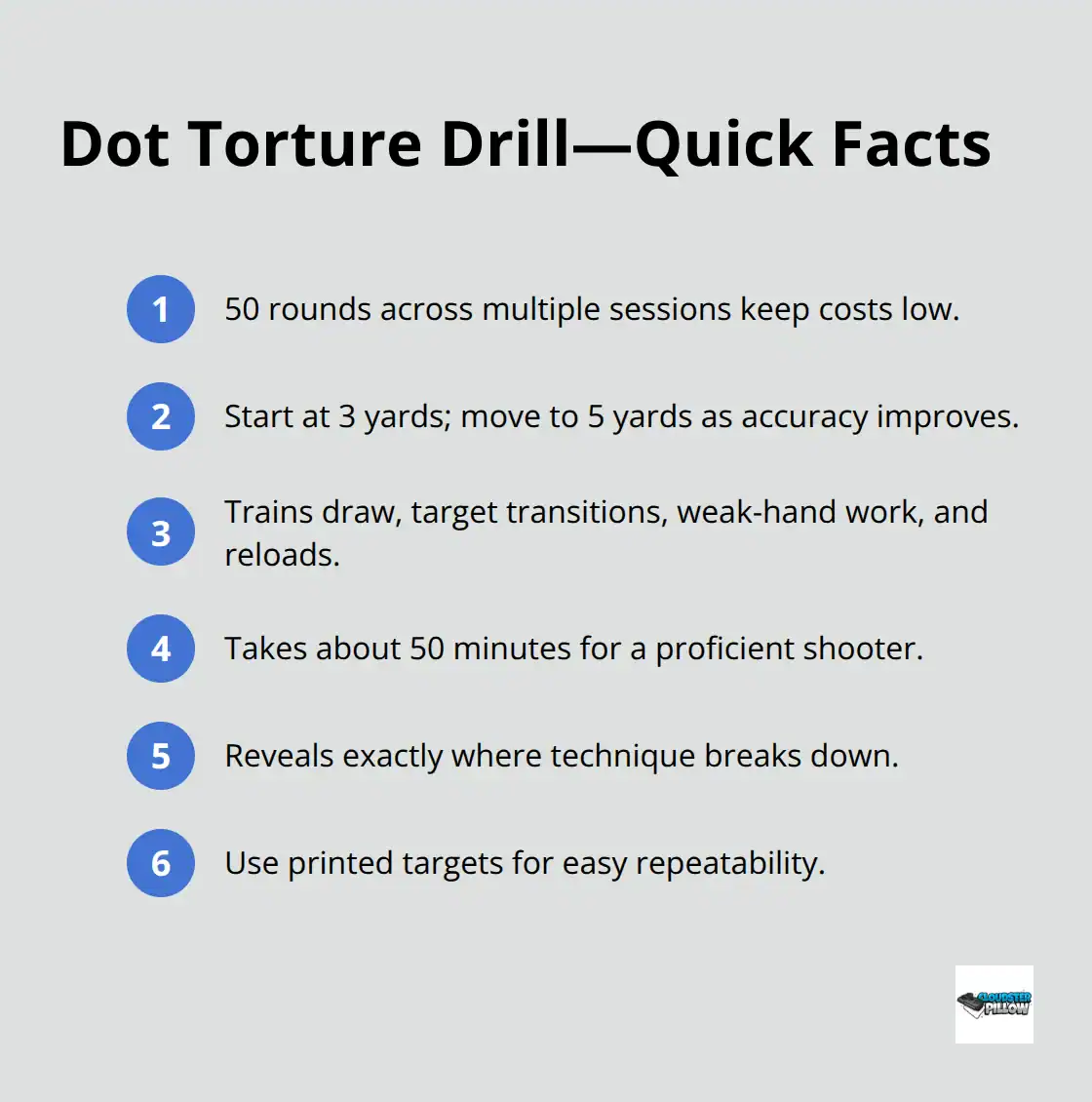
The Dot Torture drill uses printed targets and requires only 50 rounds of ammunition across multiple sessions, making it affordable for regular range training. Set up targets at three yards initially, then move back to five yards as your accuracy improves. This drill isolates the fundamental skills-drawing, transitioning between targets, weak-hand engagement, and reloads-that matter in real defensive situations. A proficient shooter completes the Dot Torture drill in roughly 50 minutes, and the data from your performance reveals exactly where your technique breaks down.
Testing Your Carry System Under Stress
Range training serves a different purpose than dry fire: it confirms your setup functions under stress and identifies problems that only appear when adrenaline rises. Most carriers never test their carry system under realistic conditions until they actually need it. Shoot at least one training session monthly where you practice drawing from your carry holster, not from an open range holster. Time your draws with a shot timer-professional instructors often use par times for a safe, accurate shot from concealment. Your actual carry position feels different than a range setup, and your draw speed will likely be slower initially. That’s not a failure; it’s valuable data showing exactly what you need to practice.
Practicing Between Range Sessions
Between range sessions, incorporate dry fire daily, practice your presentation while seated (since most people spend their day sitting), and occasionally practice your draw while wearing different clothing to ensure consistency across your wardrobe. The key is building repetition without making practice feel like a chore. A carrier who practices daily develops better habits than someone who blocks out an hour monthly and then abandons practice for weeks. This consistent approach reveals which aspects of your carry setup actually work in your daily life and which ones create friction. When you identify discomfort or awkward movements during these practice sessions, you gain the chance to adjust your holster position, upgrade your belt, or add support accessories before those problems sabotage your entire training routine. The next chapter explores how to recognize and fix these common setup mistakes that derail even the most committed carriers.
Where Your Training Plan Falls Apart
Most carriers train with a range holster, then carry with an appendix rig, then practice in a t-shirt but carry under a button-up shirt. This mismatch between training and actual carry is the single biggest reason practice fails to improve real-world readiness. Your draw speed at the range means nothing if your actual carry holster positions the gun differently, your daily clothing defeats your presentation differently, or your body position during seated practice doesn’t match how you sit in your car.
A carrier who shoots the Dot Torture drill from an open range holster at three yards develops speed that evaporates the moment they practice from their actual appendix holster in a cover garment. The neural pathways you build during training are specific to the exact conditions you train under. Train in shorts and a t-shirt, then carry all day in a tucked business shirt, and your muscle memory doesn’t transfer. This isn’t a minor inconvenience-it’s the difference between a trained response and a completely untested one when stress arrives.
The solution is non-negotiable: practice exclusively with your actual holster, your real carry position, and the clothing you actually wear during your daily life. If you rotate between appendix and hip carry depending on your outfit, you must practice both positions regularly. If you wear different shirt types throughout your week, practice your draw under each one. Your training only matters if it matches your actual carry setup.
Comfort adjustments determine whether you carry tomorrow
Discomfort during practice reveals exactly where your carry setup will fail during daily wear. A holster position that feels fine for a ten-minute range session becomes unbearable after eight hours of sitting at a desk or driving. Many carriers ignore these warning signs during practice, then abandon their carry setup within days because pain compounds. This is backwards.
Use your practice sessions to identify exactly where your holster creates pressure, where your belt distributes weight unevenly, or where your appendix position becomes painful when seated. Once you identify the problem, fix it before your next practice day. Adding a holster wedge redirects pressure away from your abdomen and improves concealment simultaneously-a change that costs nothing but transforms whether you actually carry tomorrow. Small adjustments like this often determine whether your practice routine survives contact with real life.
Test your complete setup during full workdays, not just quick range visits, so you catch problems while you can still fix them. A carrier who practices with an uncomfortable setup will eventually quit practicing entirely, which guarantees your training progress stops.
Real movement patterns matter more than range drills
Range drills test accuracy, but your daily carry involves constant movement your range practice never addresses. You sit down, stand up, bend to pick things up, reach across your body, and drive with your holster pressed against a car seat. None of these movements are part of the Dot Torture drill or standard range practice.
A holster that works standing at a range might dig into your ribs when you sit, shift position when you bend, or print visibly when you reach across your body. Your actual carry practice should include seated draws from your car, presentations while bending to retrieve something, and movement patterns that match your real daily routine. Practice your draw while wearing your actual work clothes and sitting the way you sit at your desk. Practice from your car seat with your seatbelt on, since that’s how most people carry most of the time.
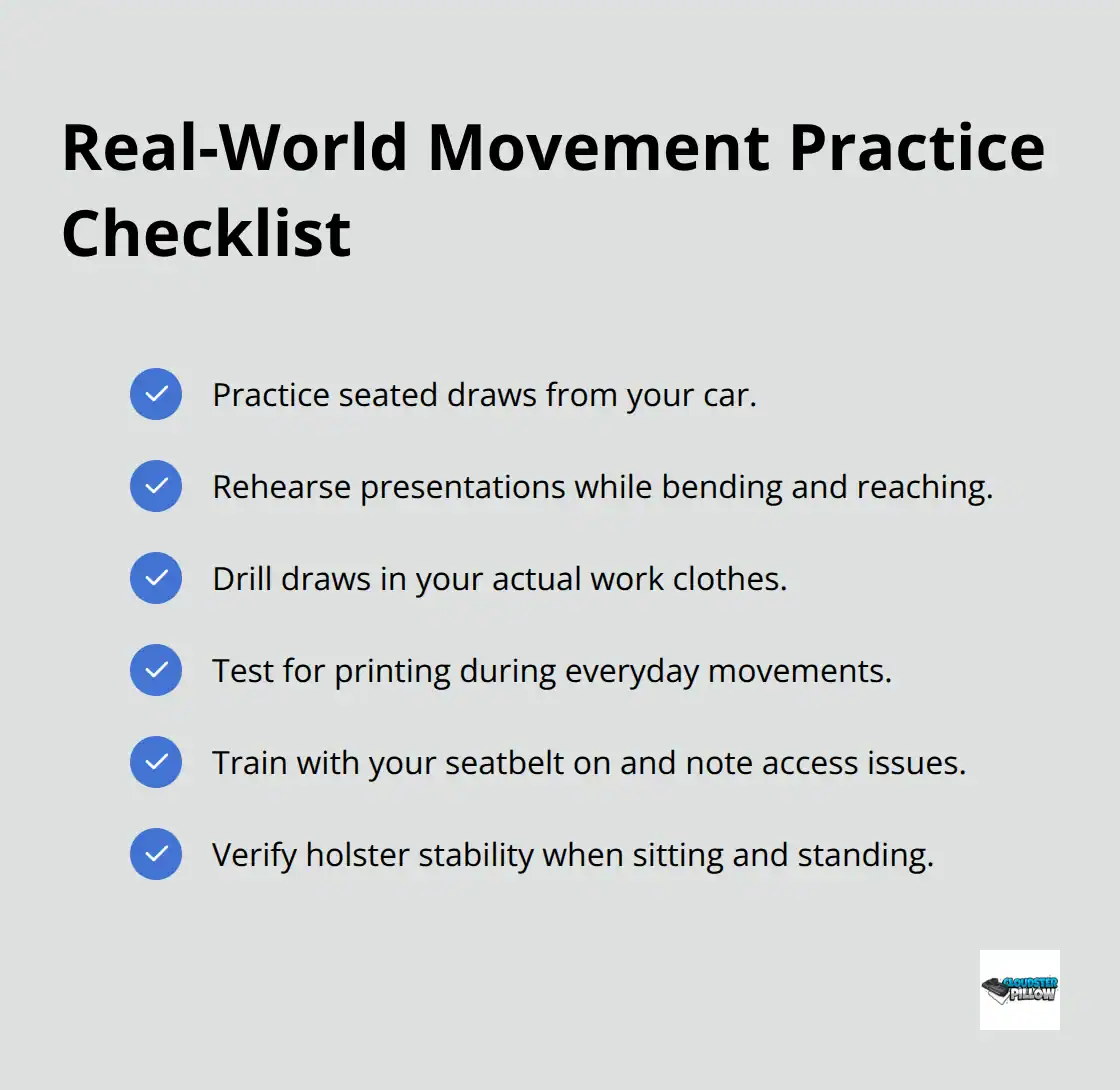
This real-world practice reveals whether your holster position actually works in your life or just works at the range. Many carriers discover during this honest assessment that their appendix setup doesn’t function well when seated, their hip carry prints under their actual wardrobe, or their belt doesn’t distribute weight evenly during extended wear. These discoveries are valuable because they let you adjust your setup before bad habits form. Your training is only as good as its relevance to the actual conditions you’ll face.
Final Thoughts
Consistent practice transforms your carry experience from occasional range visits into genuine readiness. When you practice daily with your actual holster, clothing, and carry position, your nervous system builds automatic responses that function under stress. The gap between monthly training and real life carry practice closes when you commit to repetition, and that commitment pays measurable dividends in how quickly you respond when it matters.
Your practice routine only survives if your carry setup feels comfortable enough to wear every single day. Discomfort sabotages consistency faster than any other factor, which is why identifying and fixing pressure points during practice sessions matters more than shooting perfect scores at the range. A carrier who practices with an uncomfortable holster will eventually abandon the entire routine, guaranteeing that training progress stops. Small changes often transform whether you actually carry tomorrow-adding support to your holster, upgrading your belt, or adjusting your carry position can mean the difference between a habit that sticks and one that fails.
Start with daily dry fire practice using your actual carry setup, test your system during full workdays, and adjust your gear based on what you discover. We at Cloudster Pillow understand that comfort determines consistency, which is why our holster wedge enhances all-day concealment for both AIWB and IWB carriers. When your gear works with your body instead of against it, your real life carry practice becomes sustainable.

Pingback: Everyday Carry Mindset Tips: Training Your Mind for Real Life CCW