
Carry Techniques and Optimization
All Day Concealment Comfort: Everyday Solutions For Carriers
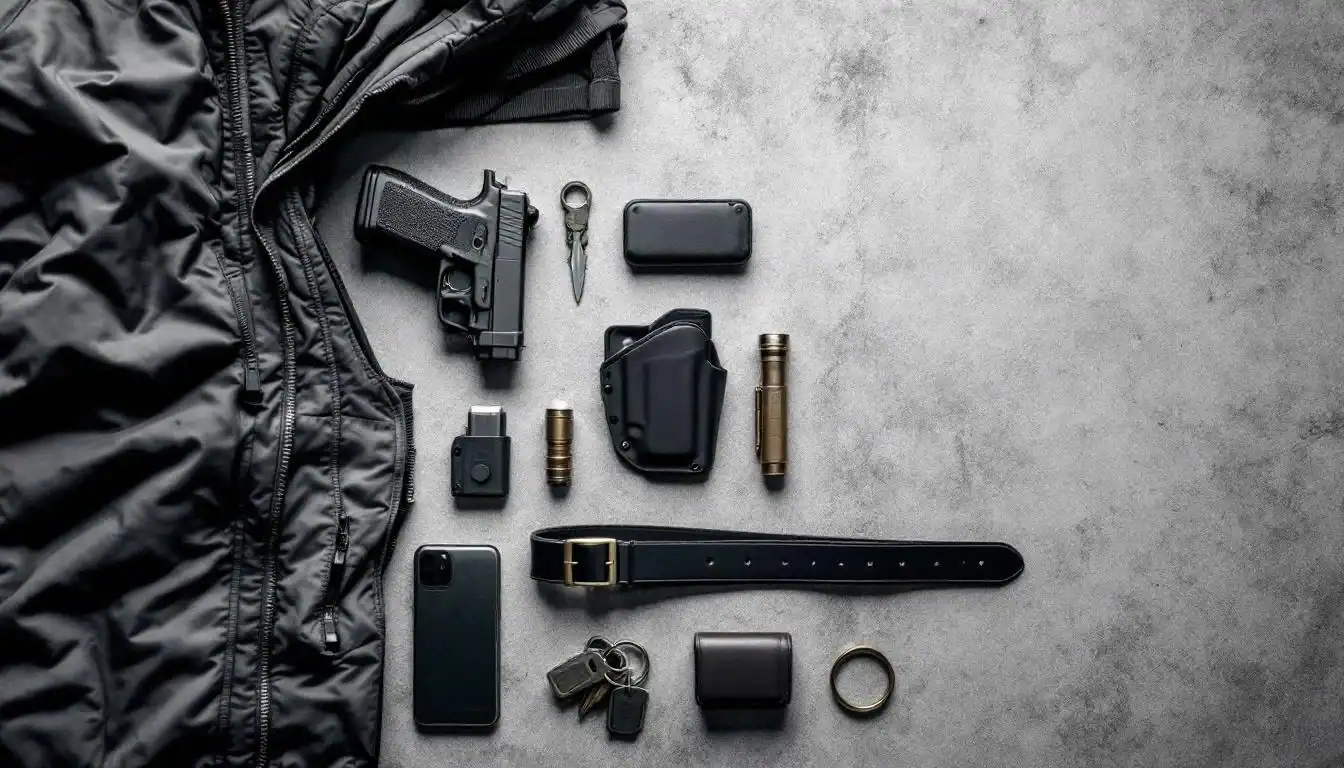
Carrying a concealed weapon all day shouldn’t mean sacrificing comfort. Most CCW carriers struggle with pressure points, printing, and fatigue that gradually erodes their confidence and consistency.
At Cloudster Pillow, we’ve seen firsthand how the right adjustments transform your carry experience. This guide walks you through practical solutions that work in real life, not just in theory.
Why Comfort Determines Your Carry Consistency
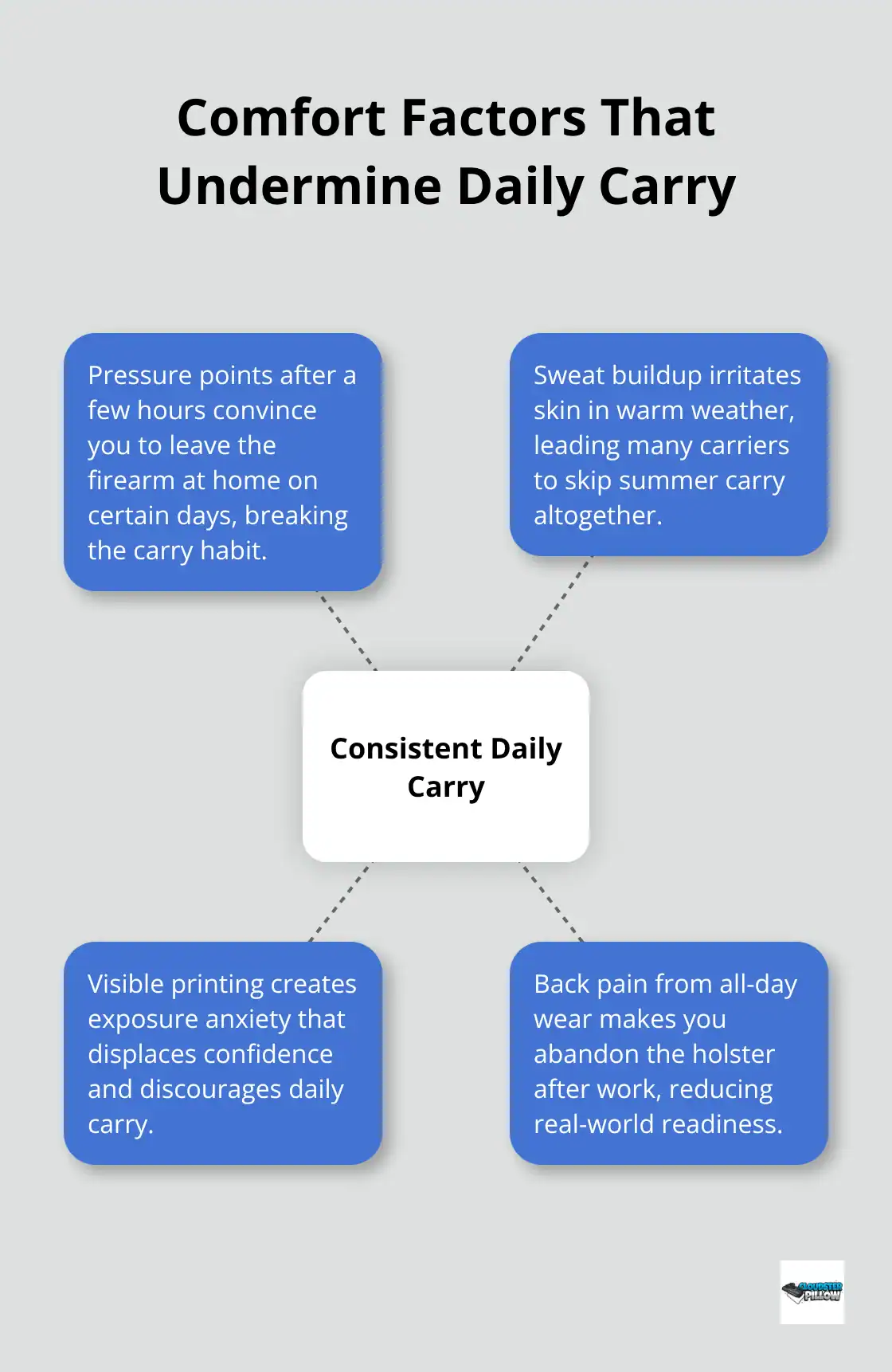
Discomfort doesn’t just make carrying annoying-it actively undermines your decision to carry every single day. Research shows that comfort influences their choice of carry position. When your holster creates pressure points after three hours, you start leaving it at home on certain days. When sweat buildup irritates your skin, you skip carrying during summer. When your setup prints visibly, anxiety about exposure replaces confidence about protection. These aren’t minor inconveniences; they’re the exact reasons carriers become inconsistent. The FBI notes that the average self-defense situation lasts around three seconds, which means your firearm only matters if you’re actually carrying it. A holster that causes back pain at the end of the workday won’t be worn consistently, and an inconsistent carrier has zero defensive capability when it matters most.
How Physical Discomfort Erodes Carry Habits
Your body sends clear signals when your setup fails. Pressure points that develop after a few hours of wear train you to avoid carrying on certain days. Skin irritation from sweat and friction makes you reach for alternatives during warm months. Hip and back pain from improper positioning gradually convinces you that carrying isn’t worth the physical toll. Each time you leave your firearm at home to escape discomfort, you reinforce the habit of inconsistent carry. The problem compounds because your defensive capability depends entirely on having your firearm with you-and you can’t protect yourself with a gun left in a drawer.
Mental Confidence Flows from Stable Positioning
Your positioning and gear choices affect how you perform under pressure far more than most carriers realize. When your holster rides too high or too low, your draw speed suffers because your muscle memory trains on an unstable platform. When your appendix carry setup creates discomfort while seated, you unconsciously adjust your posture to relieve pressure, which degrades your situational awareness and makes you less observant of your surroundings. A proper all-day concealment setup-one that maintains consistent ride height, uses appropriate cant angle for your body type, and incorporates comfort accessories-removes these distractions entirely.
Training Performance Improves with the Right Setup
Instructors regularly observe that carriers who switch to properly fitted holsters with wedges and comfort pads demonstrate faster, more consistent draws because they’ve trained without compensating for discomfort. The mental confidence that comes from knowing your setup won’t fail you or cause pain translates directly into better decision-making during training and genuine situations. Your body remembers whether your carry system felt secure and stable, and that physical memory becomes the foundation for reliable performance when stress levels spike. These improvements happen not because you’ve changed your firearm or your technique, but because you’ve eliminated the friction between your body and your gear. This foundation of physical comfort and mental confidence sets the stage for exploring the practical solutions that transform your daily carry experience.
Finding Your Ideal All-Day Concealment Position
Your carry position determines everything that follows. Most carriers assume they must choose between speed and concealment, but that false choice disappears once you match your position to your actual body mechanics and daily routine. A National Shooting Sports Foundation study found that concealed carriers have varying preferences for carry positions, yet this preference often reflects poor inside-the-waistband setup rather than genuine superiority. Appendix carry positions your firearm at roughly 1 o’clock, enabling sub-two-second draws with practice while keeping the grip close to your body for exceptional concealment. The tradeoff involves seated comfort, which you solve through ride height adjustment and cant angle tuning, not through abandoning the position entirely.
Match Your Position to Your Daily Activities
Strong-side inside-the-waistband at 3 to 4 o’clock works better if you spend significant time seated, driving, or working at a desk, since your thigh doesn’t compress the holster when you sit. Your body type matters more than you think. Larger frames naturally conceal full-size pistols at 3 to 4 o’clock without printing, while slimmer builds often achieve better results with appendix carry and subcompact pistols because the narrower profile disappears against your centerline. Test your position by wearing your loaded holster for an entire workday, then sit, bend, reach, and drive to identify where printing occurs. If your shirt lifts and reveals the grip when you reach overhead, your ride height sits too high. If your draw requires excessive arm movement, your cant angle needs adjustment. These aren’t permanent problems-they’re setup variables you control through simple modifications.
Clothing Choices Amplify or Eliminate Concealment Weaknesses
Your clothing choices either amplify or eliminate every concealment weakness your position creates. Tight-fitting shirts turn even quality setups into visible bumps because fabric clings to every contour of your holster and firearm. Move up one full size in everyday shirts and you gain breathing room that conceals without looking oversized or sloppy. Dark colors and busy patterns hide printing far better than light solids, which is why seasoned carriers rotate between charcoal, navy, black, and patterned options. Untucked styles work better than appendix carry since fabric drapes naturally over the grip, while strong-side carry benefits from slightly longer cuts that cover the holster completely when your arms hang at rest.
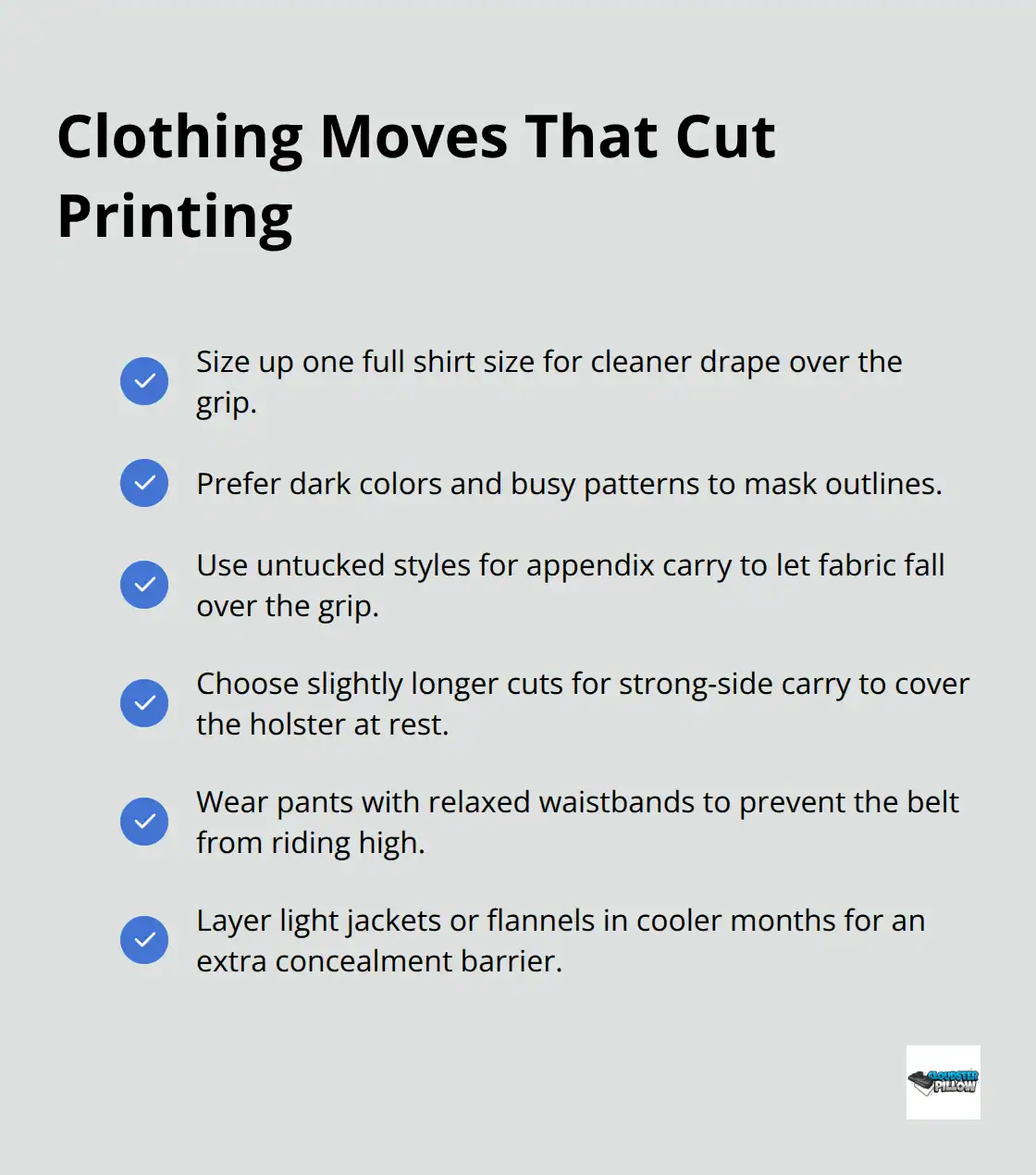
Pants with relaxed waistbands prevent the belt from riding too high and pushing your holster into visibility, and you avoid compression that irritates your hip during extended wear. Layering in cooler months provides an unexpected advantage: a light jacket or flannel shirt over your primary shirt creates an extra concealment barrier that disappears in warmer weather without changing your holster or carry position.
Manage Heat, Moisture, and Pressure Points
Heat and moisture management directly impact your consistency during summer months. Sweat guards on holsters protect your firearm from body oils and sweat that can cause rust on slides, screws, and magazine releases, and ventilation channels reduce moisture buildup when temperatures climb. Undershirts designed for moisture management keep sweat from pooling against your skin and creating the irritation that drives inconsistent carry. A holster wedge creates airspace between your body and the holster, reducing heat transfer and allowing sweat to evaporate rather than accumulate. A quality gun belt with a steel or Kydex core prevents your holster from shifting throughout the day and eliminates the pressure points that develop when your setup drifts during movement. Holster pads and wedges bring your grip closer to your body for tighter concealment while simultaneously reducing the pressure intensity on any single point. These accessories transform uncomfortable setups into all-day solutions without requiring you to purchase an entirely new holster system.
The right position, clothing strategy, and comfort accessories work together to create a setup that feels natural throughout your day. Once you establish this foundation, your attention shifts to the specific comfort issues that emerge during extended wear-problems that have straightforward fixes when you know where to look. Discover how the Cloudster Pillow holster wedge enhances both comfort and concealment for all-day carry.
Solving Printing and Discomfort
Eliminate Printing Through Ride Height and Cant Angle
Printing happens when your holster or firearm outline becomes visible through clothing, and it ranks as the single biggest reason carriers abandon their setup within the first month. The problem isn’t your holster or your firearm-it’s the combination of ride height, cant angle, grip position, and clothing that creates visibility. Most carriers adjust one variable and ignore the others, which guarantees failure.
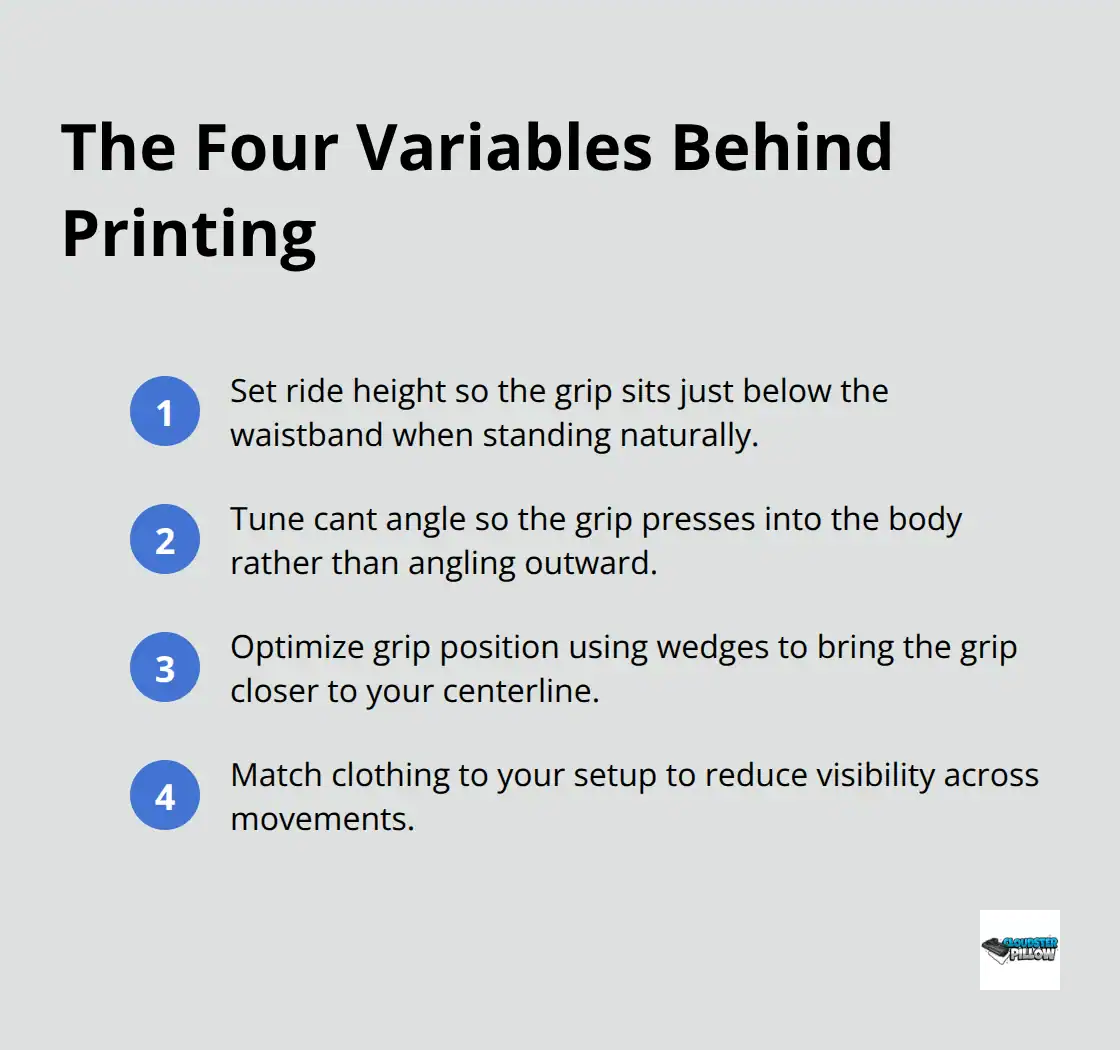
Your ride height determines how much of the grip sits above your waistband. Too-high positioning prints immediately when you bend or reach. Adjust your holster so the grip sits just barely below your waistband when standing naturally, then test by sitting in your car, reaching overhead, and bending forward to confirm nothing shows. Cant angle-the forward or backward tilt of your holster-directly affects whether your grip presses into your body or angles outward. Ride height and cant angle adjustment for concealment requires finding your personal balance, since what works for one body type may not work for another.
The only way to find your angle is to wear your loaded holster for several hours and observe where the grip presses against your body versus where it angles away. Grip position matters more than most carriers realize. A holster wedge brings your grip closer to your centerline, reducing the distance between your body and the gun, which transforms how effectively your clothing conceals the profile.
Distribute Weight Properly to Prevent Back and Hip Pain
Back and hip pain during extended wear usually stems from either an oversized firearm for your frame or improper belt support. A loaded compact pistol weighs 25 to 27 ounces, and distributing that weight across a poor-quality belt or narrow holster creates concentrated pressure that builds into real pain by mid-afternoon.
Upgrade to a gun belt with steel or Kydex core for weight distribution that spreads the weight across your entire waistband rather than concentrating it on a single pressure point. This simple change eliminates the localized discomfort that forces carriers to remove their holster halfway through the day. The belt becomes the foundation of your entire setup-without it, even the best holster fails to deliver all-day comfort.
Master Heat and Moisture Control for Summer Carry
Heat and moisture management separates carriers who stay consistent through summer from those who abandon carry during warm months. Sweat buildup creates two problems: corrosion on your firearm’s internal components and skin irritation that makes wearing your holster genuinely painful.
Holster ventilation channels for sweat management allow air circulation around the gun, and moisture-wicking undershirts keep sweat from pooling against your skin. A holster wedge creates airspace between your body and the holster, which reduces heat transfer and allows sweat to evaporate rather than accumulate against your skin (this is especially important in humid climates where traditional setups fail completely). Test your summer setup for three consecutive weeks of actual hot weather before deciding it works-what feels acceptable in air conditioning fails completely when temperatures climb above 85 degrees and humidity spikes.
Final Thoughts
All-day carry comfort emerges through systematic adjustments that address friction between your body, your gear, and your daily routine. The carriers who succeed test their setup in real conditions, identify what causes discomfort, and make targeted changes that eliminate the problem without overhauling their entire system. Small adjustments compound into better carry habits-upgrading your belt reduces pressure points, adjusting ride height eliminates printing, and adding a holster wedge creates airspace that transforms summer carry from unbearable to manageable.
Your personal comfort solution matters more than following someone else’s setup. What works for a larger frame at 3 o’clock may fail completely for a slimmer build at appendix carry, and what feels acceptable during winter testing becomes intolerable when summer humidity arrives. The only way forward involves honest assessment of where your current setup fails, targeted experimentation with specific variables, and commitment to testing changes under real conditions before deciding they work.
We at Cloudster Pillow built our holster wedge specifically for carriers frustrated with discomfort that prevents consistent all day carry. Your carry consistency depends on comfort, and comfort depends on addressing the specific problems your body and your routine create. Explore how our holster wedge enhances both comfort and concealment for your all-day carry setup.

Pingback: Layering Tips for Weather Carry Clothing and Concealment
Pingback: All Day Comfort for Everyday Carry Confidence