
Articles and Blogs, Holster Gear
How Stiff Should a CCW Belt Actually Be?
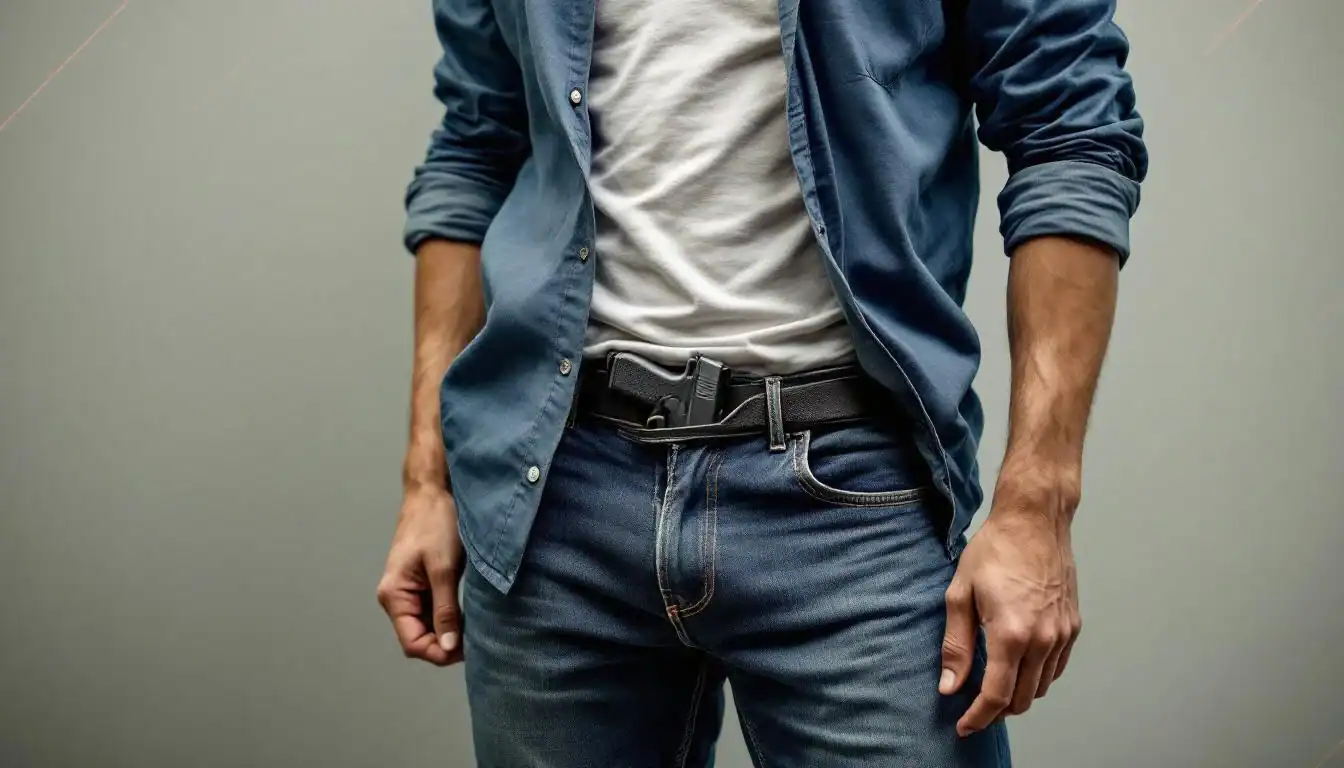
Ask any veteran concealed carrier how stiff should a CCW belt be, and you will usually get the same reflexive answer: “As stiff as you can possibly find.” It is well-meaning advice, and for a beginner graduating from a flimsy department-store belt, it is directionally correct—but it is also incomplete, and in some cases actively harmful to your comfort and concealment.
A standard fashion belt is undeniably terrible for concealed carry. But swinging the pendulum to the absolute extreme can be just as bad. If a belt is too stiff, it stops acting like an article of clothing and starts acting like a hula hoop wrapped around your waist. Here is how to find the balance that keeps a loaded firearm locked in place without turning your daily carry into an exercise in self-inflicted punishment.
How Stiff Should a CCW Belt Be? Two Axes, Two Answers
The secret to a perfect CCW belt is understanding that “stiffness” is not a single number. A good gun belt is stiff in one direction and pliable in another, and the engineers who design quality belts treat those as two independent measurements.
1. Vertical Rigidity (The Y-Axis)
This is where you want maximum stiffness. Vertical rigidity dictates how well the belt resists sagging under the weight of a loaded firearm. If you hold the belt out in front of you by the buckle, a good gun belt should stay roughly horizontal rather than flopping straight down toward the floor. High vertical rigidity prevents your gun from dragging your pants down, stops the holster mouth from tilting, and keeps the grip from rolling outward and printing against your cover garment. If you also fight printing at the grip, a Holster Wedge Guide setup paired with a properly rigid belt is the two-part fix that most carriers miss.
2. Horizontal Flexibility (The X-Axis)
This is where ultra-stiff belts fail. Horizontal flexibility dictates how well the belt wraps around the unique curves of your waist. If a belt is overly stiff horizontally—think rigid scuba-webbing duty belts—it will not contour to your hips. Instead, it creates visible gaps between your body and your pants, destroys concealment, and grinds against your iliac crest until you cannot wait to take it off.
The “Power Core” Solution
The only way to achieve high vertical rigidity combined with high horizontal flexibility is through multi-material engineering—specifically, laminating materials with very different mechanical properties into a single belt.
Premium belts, such as those made by Kore Essentials, use a proprietary reinforced polymer “Power Core” sandwiched between layers of top-grain leather or tactical nylon. Much like a structural I-beam, this core resists bending in the loaded (vertical) direction while still allowing the flat layers to flex around your waist. The result is a belt that halts vertical sag under a full-size pistol but still contours to your body instead of fighting it.
So, How Stiff Should a CCW Belt Actually Be?
A belt that feels like a steel hoop is miserable to wear for eight hours a day, and a belt that flops like a strip of ribbon is useless for carrying a firearm. The honest answer to how stiff should a CCW belt be is this: vertically rigid enough that your holstered pistol does not make the belt dip or twist, and horizontally flexible enough that you forget you are wearing it by mid-morning. Look for a belt engineered with an internal core that supports the gun without fighting your body.
Shop our curated selection of vertically rigid, horizontally flexible Kore Gun Belts here.
Once the belt itself is dialed in, the fastest way to kill residual hot spots and printing is a dedicated foam wedge—take a look at the Cloudster Pillow to finish off a genuinely comfortable carry setup. Curious about sizing and track systems? Read our Complete Guide to Choosing an EDC Belt.

Pingback: Best CCW Belt for Your Body Type & Outfit (2026)