
Articles and Blogs, Gun Belt
The Best Gun Belts for Heavy Firearms (1.5″ vs 1.75″)
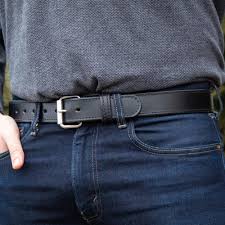
The best gun belts for heavy firearms do one job above all others: they refuse to fold under weight. If you have moved past a micro-compact polymer 9mm and strap on a full-size, double-stack pistol—a Glock 17, a Sig P320, or a steel-framed 1911—your belt is no longer a wardrobe accessory. It is a structural load-bearing component. You are no longer supporting 20 ounces of weight; you are supporting upwards of three pounds of dense steel and lead, hour after hour, against the soft tissue of your hip.
When shooters start evaluating gun belts for heavy firearms seriously, the conversation almost always narrows to two dimensions: 1.5-inch widths versus 1.75-inch widths. The choice between them touches wardrobe, concealment, holster compatibility, and long-term comfort. Here is how to choose the right foundation for a heavy EDC setup.
The 1.5-inch Standard: The Universal Choice
The 1.5-inch belt is the undisputed standard of the concealed carry industry. Almost every commercial IWB and OWB holster on the market ships from the factory with 1.5-inch clips or loops, which means your accessory ecosystem—mag carriers, medical pouches, flashlights—will all be cross-compatible out of the box.
- The Pros: A 1.5-inch belt threads through the belt loops of roughly 99% of civilian clothing, from tailored suit pants to standard denim jeans. It strikes an excellent balance between discretion and support, and it is by far the easiest width to dress around in a professional environment.
- The Cons: With a genuinely heavy firearm, a low-quality 1.5-inch belt will still sag or roll under sustained load, causing the holster to tilt outward and print against your cover garment. Pairing a stiff belt with a proper Holster Wedge Guide setup is the single most effective way to counteract that tilt and keep a heavy pistol tucked tightly against the body all day.
The 1.75-inch Tactical Option: Maximum Support for Heavy Firearms
Stepping up to 1.75 inches delivers a substantial increase in vertical rigidity and weight distribution. For duty belts and range use, it is the gold standard.
- The Pros: The wider footprint spreads the load of a full-size pistol across a larger portion of your hip, making a three-pound gun feel meaningfully lighter at the end of a long day. It also resists belt roll better than almost anything on the civilian market.
- The Cons: It reads as unmistakably tactical, which can destroy deep concealment. A 1.75-inch belt will not pass through the belt loops of standard dress pants or many modern slim-fit jeans, effectively restricting your wardrobe to cargo pants, work pants, or dedicated tactical apparel. You will also need to confirm that every holster and pouch you own is specifically cut for 1.75 inches.
Material Matters: Leather vs. Tactical Webbing
If you are carrying a heavy firearm on a 1.5-inch belt, internal construction is what separates a working gun belt from a glorified pants-holder. The key is stiffness along the belt’s vertical axis, which is a function of material choice and layering.
A top-grain leather belt with a reinforced polymer core (like the Kore Essentials leather series) can easily support a full-size pistol while still reading as a standard dress belt across a conference table. If you want absolute maximum rigidity without jumping to a 1.75-inch width, tactical nylon webbing is the superior choice. Unlike vegetable-tanned leather, nylon does not stretch or creep over time, which means your heavy firearm stays pinned exactly where you indexed it on the draw.
Safe Handling Comes First
No belt, holster, or wedge replaces fundamental safety habits. Before you obsess over belt widths, make sure your daily carry routine follows the NRA’s rules of safe gun handling—muzzle discipline and trigger-finger discipline matter far more than any piece of gear you buy.
The Verdict on Gun Belts for Heavy Firearms
If you carry a heavy firearm and live in tactical or outdoor clothing full time, a 1.75-inch belt offers unmatched support. But for the vast majority of civilian concealed carriers moving a full-size pistol through an office, a school pickup line, and a grocery store in the same day, a 1.5-inch reinforced ratcheting belt provides the ideal blend of heavy-duty support and wardrobe flexibility.
Shop our curated selection of 1.5-inch reinforced Kore Gun Belts today.
Once the belt is dialed in, the next upgrade for all-day comfort under a heavy pistol is a dedicated foam wedge—check out the Cloudster Pillow to kill hot spots and eliminate printing at the grip. Need more help finalizing your EDC foundation? Read our master guide: How to Choose the Perfect Gun Belt for Everyday Carry.
