
Concealed Carry Firearms, Holster Wedge, Holsters and Gear Recommendations, IWB Holster Wedge, Uncategorized
Holster Wedge vs No Wedge: Does It Really Make a Difference for CCW?
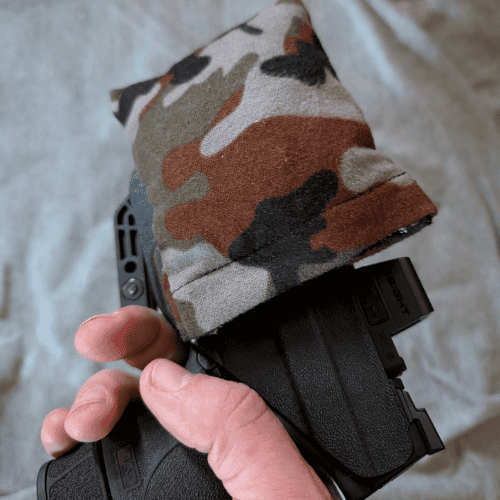
Holster Wedge vs No Wedge: What Changes?
If you carry a concealed firearm with an IWB holster, you have probably heard about holster wedges and wondered whether they are worth adding to your setup. The short answer is yes — a wedge makes a measurable difference in both concealment and comfort. But the details matter, and understanding exactly what a wedge does will help you decide if it belongs in your carry system.
This guide breaks down the holster wedge vs no wedge question in real-world terms — concealment, comfort, and stability — so you can make an informed decision. Already sold on adding one? See our best holster wedge comparison for the top wedges and pillows tested head-to-head, including the Vedder wedge.
What Does a Holster Wedge Actually Do?
A holster wedge is a foam or rubber pad that attaches to the body-facing side of your IWB holster. It creates a leverage point that rotates the grip of your firearm inward toward your body. Without a wedge, the holster sits flat against your torso, which often allows the grip to cant outward and print through clothing.
The wedge pushes the muzzle end of the holster away from your body, which naturally tucks the grip closer in. Think of it like a doorstop — the wedge creates an angle that forces the holster into a better position for concealment.
Carrying Without a Wedge: What to Expect
Many concealed carriers start without a wedge and deal with these common issues:
- Grip printing: The top of the pistol grip pushes outward against your shirt, especially when bending forward or reaching overhead. This is the number one concealment problem for IWB carriers.
- Muzzle pressure: The muzzle end of the holster digs into your thigh or groin area, particularly in AIWB carry. Over a full day, this creates discomfort and hot spots.
- Holster shifting: Without a wedge creating friction against your body, the holster can shift and rotate throughout the day. This means you constantly readjust your carry position.
- Flat profile issues: A flat holster against a curved body leaves gaps. These gaps allow the holster to move and reduce the stability of your entire setup.
Carrying With a Wedge: The Difference
Adding a wedge to your holster changes the carry experience significantly:
- Reduced printing: The grip tucks inward, making your firearm virtually invisible under a T-shirt. Most carriers report a dramatic improvement in concealment after adding a wedge.
- Eliminated pressure points: The wedge redistributes pressure across a wider surface area. Instead of the holster edge digging into one spot, the foam cushion spreads the load evenly.
- Improved stability: The wedge creates additional friction between the holster and your body, preventing shifting and rotation. Your holster stays where you put it.
- Better body conformity: A wedge fills the gap between a flat holster shell and your curved body, creating a custom fit that improves both comfort and concealment.
Holster Wedge vs No Wedge: Side-by-Side Comparison
| Factor | Without Wedge | With Wedge |
|---|---|---|
| Grip concealment | Grip tends to print | Grip tucks inward |
| Comfort (all-day) | Pressure points develop | Pressure distributed evenly |
| Holster stability | Can shift during movement | Stays locked in position |
| Body conformity | Flat shell vs curved body | Fills gaps, custom fit |
| Draw speed | Consistent | Consistent (no change) |
| Setup complexity | Simple | 5-minute installation |
| Cost | No additional cost | $10 – $25 |
When a Wedge Makes the Biggest Difference
Not every carry situation benefits equally from a wedge. Here are the scenarios where a wedge provides the most noticeable improvement:
AIWB (Appendix) Carry
Appendix carry benefits the most from a wedge. The position places the grip directly against your midsection where printing is most visible. A wedge at the muzzle end of the holster rotates the grip inward and eliminates the pressure point against your lower abdomen. If you carry a Glock 19 or Sig P365 in the appendix position, a wedge is nearly essential.
Larger Firearms
Compact and full-size pistols with longer grips (Glock 19, Glock 17, Smith and Wesson M&P, Springfield Hellcat Pro) benefit more than micro-compacts. The longer the grip, the more leverage a wedge can create.
Lighter Clothing
In summer months when you are wearing a single-layer T-shirt, a wedge can mean the difference between concealed and exposed. Heavier jackets and flannels can mask printing without a wedge, but a T-shirt shows everything.
All-Day Carry
If you carry for 8 or more hours per day, the comfort improvement from a wedge becomes significant. The pressure redistribution prevents the fatigue and soreness that develops from extended carry without padding.
When You Might Not Need a Wedge
There are situations where a wedge provides minimal benefit:
- OWB carry: Outside-the-waistband holsters sit differently against your body and rarely benefit from a wedge.
- Heavy cover garments: If you always wear a jacket or untucked flannel, printing may not be an issue even without a wedge.
- Pocket carry: Small pocket holsters for firearms like the Ruger LCP do not use wedges.
- Already perfect fit: Some holster and body combinations naturally sit well without modification. If your setup is already comfortable and concealed, you may not need to change anything.
Best Holster Wedge Options
If you decide a wedge is right for your setup, here are the top options:
| Wedge | Material | Best For | Price Range |
|---|---|---|---|
| Cloudster Pillow | Memory foam with neoprene | All-day comfort, any IWB holster | $$ |
| Phlster Wedge Rx | Closed-cell foam | Modular, adjustable setups | $$ |
| Mastermind Tactics Pillow | Foam pillow | Budget-friendly option | $ |
| Vedder Wedge | Rubber | Vedder holster owners | $ |
| Tier 1 Concealed Wedge | Foam | Tier 1 holster owners | $$ |
The Cloudster Pillow uses memory foam that conforms to your body over time, creating a personalized fit. This makes it particularly effective for all-day carry where comfort is a priority.
How to Test the Difference Yourself
The best way to settle the holster wedge vs no wedge question for yourself is to test it:
- Carry without a wedge for one day — Note where you feel pressure, how often you adjust your holster, and whether you notice printing in a mirror.
- Add a wedge and carry for one day — Use the same holster, same position, same clothing. Note the differences.
- Compare comfort at the end of each day — Most carriers immediately notice less fatigue and fewer pressure points with the wedge installed.
- Check concealment in a mirror — Wear a fitted T-shirt and compare how visible the grip outline is with and without the wedge.
Frequently Asked Questions
Does a holster wedge affect draw speed?
No. A properly installed wedge does not interfere with your draw stroke. The wedge sits on the back of the holster shell, away from the firearm and holster mouth.
Will a wedge work with any IWB holster?
Most wedges attach with Velcro or adhesive and work with any Kydex or hybrid IWB holster. Leather holsters may not provide a good mounting surface for adhesive-backed wedges.
How long does a holster wedge last?
Standard foam wedges last 6 to 12 months with daily carry. Memory foam options like the Cloudster Pillow typically last longer because the material maintains its shape better over time.
Can a wedge make concealment worse?
Only if you use a wedge that is too thick for your body type and holster. An oversized wedge can push the holster too far from your body, creating a different kind of printing. Start with a medium thickness and adjust from there.
The Verdict: Is a Holster Wedge Worth It?
When it comes to holster wedge vs no wedge, the answer for most IWB concealed carriers is clear: a holster wedge is one of the best upgrades you can make. The improvement in concealment and comfort is noticeable from day one, the cost is minimal, and installation takes less than five minutes. If you carry AIWB or carry for extended periods, a wedge moves from a nice-to-have to a near-necessity.
The Cloudster Pillow is designed specifically for this purpose — to bridge the gap between your holster and your body for a more comfortable, more concealed carry experience.
Ready to see the difference for yourself? Browse our holster wedge collection and feel what a holster wedge can do for your everyday carry.
