
Carry Techniques and Optimization, Concealed Carry Clothing, Holster Wedge
Best Concealed Carry Clothing for Every Season: What to Wear Year-Round
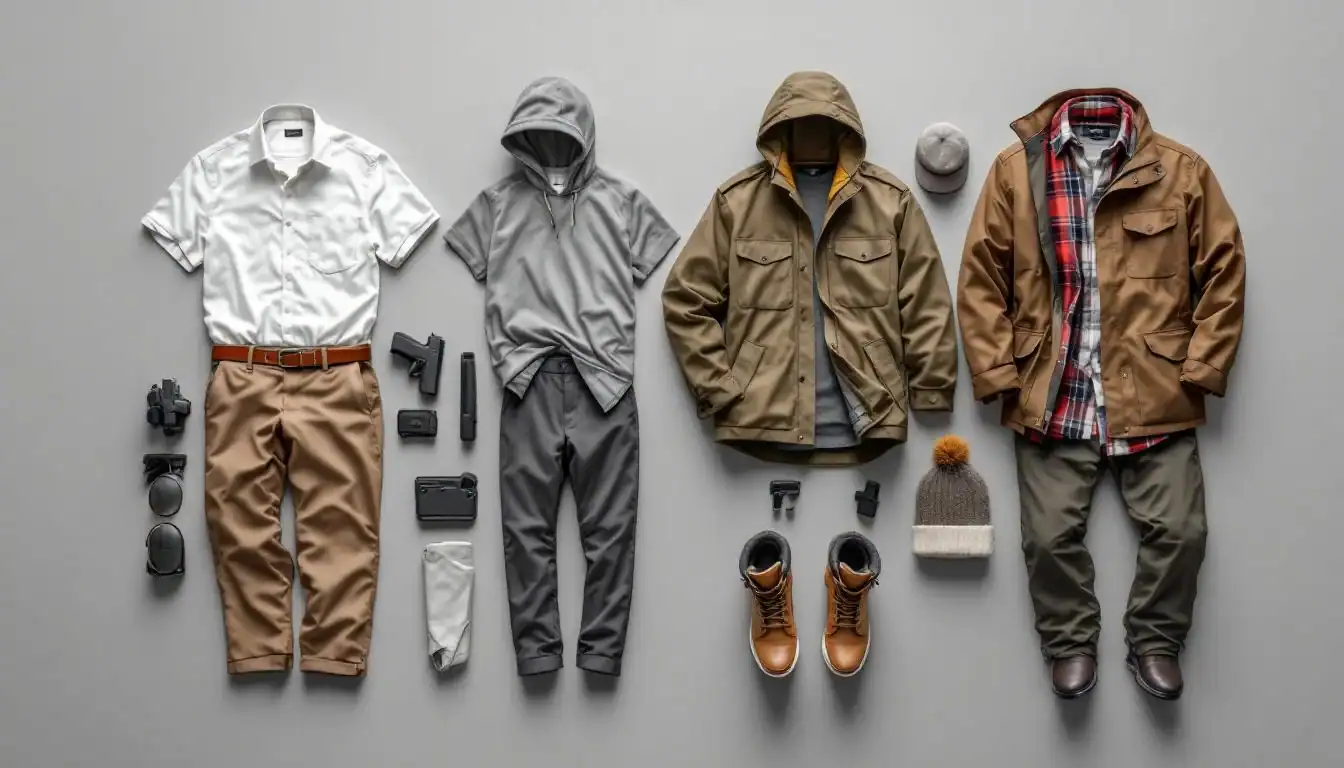
Choosing the right concealed carry clothing for each season keeps your firearm hidden, accessible, and comfortable all year. Your holster, gun belt, and wardrobe must work as a system—and that system changes with the weather.
Whether you carry in the humid summers of Texas, the brutal winters of the Midwest, or the unpredictable spring transitions across the Southeast, this guide covers exactly what to wear for concealed carry in every season. For a complete breakdown of holster comfort and setup, see our holster wedge guide for IWB and appendix carry.
Best Concealed Carry Clothing for Summer
Pick Moisture-Wicking Fabrics That Prevent Printing
Summer heat makes fabric selection critical. Moisture-wicking materials like merino wool blends and performance synthetics dry fast and resist the cling that exposes your firearm’s outline. Cotton holds sweat and sticks to your body, creating visible printing under even a loose shirt. Dark colors, patterns, and matte finishes break up your silhouette better than light solids or glossy fabrics. Performance shirts designed for CCW use offer breathable construction and a relaxed fit around the midsection—exactly where you need it most for IWB carry.
Layer Strategically in Warm Weather
Layering in summer sounds counterintuitive, but a lightweight open button-down over a breathable base layer provides excellent concealment without trapping heat. The outer layer disrupts the outline of your firearm and holster while allowing airflow. Loose-fitting shirts that drape away from the body prevent printing far more effectively than tight options. A rigid gun belt is even more important in summer, since sweat can shift your holster position throughout the day.
Optimize Your Holster Setup for Hot Weather
Appendix carry remains the fastest-access position in warm weather. Adding a holster wedge like the Cloudster Pillow reduces hotspots and pushes the grip tighter against your body, minimizing printing under thinner summer fabrics. That matters on range days, hikes, or all-day carry in states like Arizona, Florida, or Georgia where heat is relentless.
Concealed Carry Clothing for Winter: Stay Armed and Accessible
Why Winter Creates Unique Carry Challenges
Heavy winter layers conceal well but work against quick access. Bulky coats, base layers, and mid-layers obstruct your draw path. Most IWB setups designed for summer don’t function well under winter clothing, forcing you to rethink your entire carry strategy when temperatures drop.
Tactical Outerwear That Supports Concealed Carry
Winter carry demands outerwear with built-in holster access—quick-release zippers, internal holster pockets, or split-front designs. Brands like 5.11 Tactical, Viktos, and FirstSpear engineer jackets specifically for armed professionals and everyday carriers. Fit matters more in winter than any other season: too baggy creates movement and printing, too tight restricts your draw and creates uncomfortable pressure against your holster. Many online retailers offer 30-day returns, so you can test fit before committing to a winter CCW jacket.
Adjust Your Carry Position for Cold Weather
Appendix carry becomes impractical under heavy winter layers because accessing your firearm through multiple clothing layers takes too long. Waist-level carry aligned with a jacket pocket or a shoulder holster tucked under your outer layer provides faster, more reliable access when bundled up. An elasticized cuff on your jacket prevents sleeve interference during your draw. Keeping the top of your CCW jacket unzipped lets you access a shoulder holster quickly when fully layered.
Test Your Winter Setup Before You Commit
Test your winter carry setup on shorter outings before relying on it for full days. Many carriers try to force their summer IWB setup into winter by adding layers, which creates slow draws, unreliable retention, and constant printing. Purpose-built positioning that pairs a shoulder or waist holster with a concealed carry jacket is usually the best cold-weather solution.
Spring and Fall Concealed Carry Clothing: Managing Temperature Swings
Why Transitional Seasons Demand Flexibility
Spring and fall force you to adapt quickly. Temperatures can swing 20–30°F between morning and afternoon, and you can’t predict whether you’ll need a jacket at 7 AM or shed every layer by noon. This unpredictability demands a clothing system that adapts without forcing you to change your entire holster setup. Versatile pieces that layer on and off easily while maintaining concealment and quick access are essential.
Build a Flexible Layering System
Start with a moisture-wicking base layer year-round. In spring and fall, add a lightweight mid-layer like thin fleece or synthetic insulation that packs small enough for a daypack. Merino wool base layers regulate temperature better than cotton or pure synthetics when conditions fluctuate throughout the day. When temperatures climb, removing the mid-layer leaves your breathable base and outer shirt—giving you layered concealment without excess weight.
Maintain Draw Access as Layers Change
Your IWB setup works on warmer spring and fall days. Adding a light jacket or flannel over your standard summer carry provides the concealment boost you need for cooler mornings without forcing a complete gear change. Many carriers find that a vest works better than a jacket during transitional seasons because it adds concealment and core warmth without restricting arm movement or creating sleeve interference during your draw.
Keep Your Belt and Holster Consistent Across Seasons
A quality gun belt becomes more important in transitional seasons because your outer clothing changes throughout the day. A loose or unstable belt causes your holster to shift. Adding a Cloudster Pillow holster wedge helps manage printing when you layer up for cooler mornings, and provides the same comfort when you strip down to a base layer during warm afternoons.
Concealed Carry Clothing FAQ
What is the best fabric for concealed carry clothing?
Moisture-wicking synthetics and merino wool blends work best for concealed carry. They dry quickly, resist fabric cling that causes printing, and regulate temperature across seasons. Avoid pure cotton, which absorbs sweat and sticks to your body, outlining your firearm.
Can you conceal carry in summer with just a T-shirt?
Yes, if you choose the right shirt and holster setup. A dark-colored, loose-fitting performance T-shirt paired with a properly adjusted IWB holster and a holster wedge can effectively conceal a compact firearm in summer.
How do you conceal carry in winter without losing quick access?
Switch to a shoulder holster or waist-level carry position that sits outside your base layers, and wear a CCW-specific jacket with quick-release access. Test your draw time with your full winter layers before relying on the setup.
What is the best concealed carry clothing for spring and fall?
A moisture-wicking base layer with a removable mid-layer and a flannel or vest on top provides the most flexibility. This system lets you add or remove layers without changing your holster position or compromising concealment.
Does a holster wedge help with printing in all seasons?
Yes. A holster wedge pushes the grip of your firearm closer to your body, reducing printing regardless of what you wear over it. The Cloudster Pillow works the same way in summer heat, winter cold, and everything in between. Learn more in our complete holster wedge guide.
Year-Round Concealed Carry Starts With the Right Setup
The carriers who stay most comfortable year-round test their setup in realistic conditions and accept that their gear must adapt with the seasons. Summer demands breathable fabrics and appendix carry. Winter requires tactical outerwear and repositioned holsters. Spring and fall reward flexibility.
When your clothing works with your holster instead of against it, concealment becomes second nature. A quality gun belt, the right seasonal clothing, and a Cloudster Pillow holster wedge address printing and comfort across every season—so you can focus on training and readiness instead of constantly adjusting your gear.
