
CCW Awareness & Mindset, CCW Courses and Tips, Holster Wedge, Home Defense, IWB Holster Wedge
Home Defense CCW Tips: Protecting Your Family and Gear
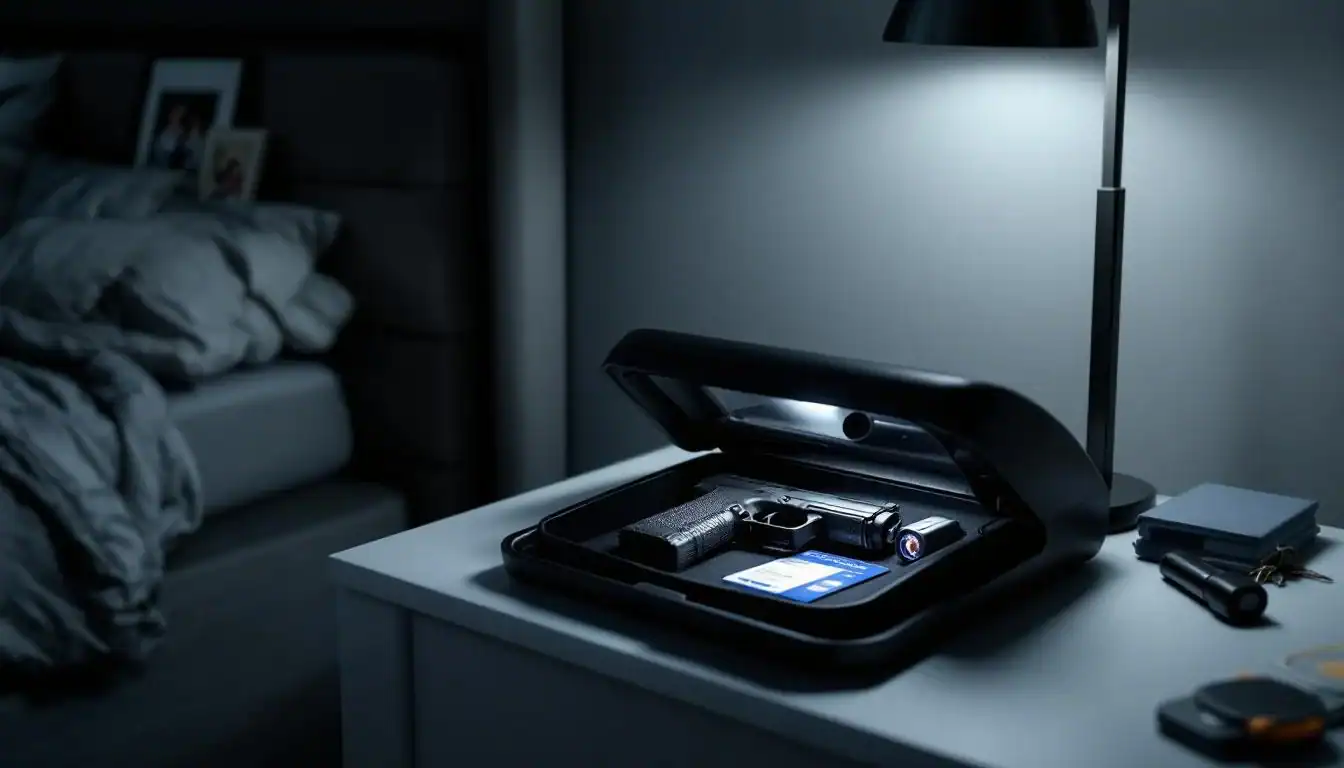
Your home is your sanctuary, and protecting it requires more than just owning a firearm. You need the right legal foundation, secure storage, and consistent training to handle real emergencies. Implementing effective home defense CCW tips can help ensure you are prepared.
Home defense CCW tips go beyond gear—they’re about building a complete system that keeps your family safe while giving you genuine confidence. This guide covers the laws, storage solutions, and mindset shifts that separate prepared carriers from those just hoping for the best. When it comes to maintaining carry readiness at home, your holster setup matters just as much as your storage system. For a complete look at optimizing your IWB comfort, see our Holster Wedge Guide.
In this guide, we will explore essential home defense CCW tips that every responsible gun owner should know.
What Are Your Legal Protections When Defending Your Home?
Your state’s self-defense laws determine how far you can legally go to protect your family and property. Most states give you significantly more latitude at home than in public. Home defense CCW tips often highlight Castle Doctrine laws, which eliminate your duty to retreat inside your own residence and establish that you have the right to use force, including lethal force, against an intruder without first attempting to escape.
Know Your State’s Specific Requirements
The specifics vary dramatically across jurisdictions. Florida law presumes you acted reasonably if someone forcibly enters your home. Texas requires that the intruder commits or attempts to commit a felony or aggravated assault. California imposes additional restrictions, requiring proportional force in many situations. You must know your exact state’s requirements because using force against someone who merely trespasses could expose you to criminal prosecution and civil liability. Your concealed carry permit typically applies inside your home, but some states impose additional restrictions on how you can store or carry your firearm on your own property, particularly around family members.
Knowing the home defense CCW tips relevant to your state ensures you are well-prepared in any self-defense situation.
Storage Requirements and Family Safety Laws
Several states require you to lock firearms away when children are present, while others have no such mandate. The American Bar Association recommends consulting your state’s attorney general website or a local firearms attorney to understand your specific protections. The difference between legal self-defense and criminal charges often comes down to whether the threat was immediate and whether the intruder had the apparent ability to cause serious bodily harm or death.
Insurance and Liability Protection
Many carriers overlook that homeowner’s insurance may not cover liability from a defensive shooting. Review your coverage and consider self-defense liability insurance through companies that specifically underwrite armed homeowners. This step protects your financial security if you ever face civil suits following a defensive incident.
Documenting your legal position is crucial. This includes keeping written records of your state and local self-defense laws, including key home defense CCW tips. Photograph your home’s entry points, security measures, and layout to establish your defensive preparations if you ever need to justify your actions legally.
Keep written records of your state and local self-defense laws in an accessible location, including your state statute number and a summary from your attorney. Photograph your home’s entry points, security measures, and layout to establish your defensive preparations if you ever need to justify your actions legally. Store this documentation alongside your insurance policies and contact information for a firearms attorney you’ve already identified.
How to Store Your Home Defense Gun Safely and Accessibly
The tension between keeping your firearm accessible during an emergency and keeping it secure from unauthorized hands defines home defense storage. Your home is different from public carry because you control the environment, know who has access, and can optimize for speed without the same concealment constraints. The goal: reach your primary firearm in under 10 seconds while ensuring children or visitors cannot access it unsupervised.
For effective home defense CCW tips, consider how your firearm’s accessibility impacts your response time during emergencies.
Bedside and Primary Defense Positions
Your nightstand represents your most critical storage location because most home invasions statistically occur at night. A quality biometric safe with a 1–2 second unlock time sets the industry standard, eliminating fumbling with combination locks or key safes. Test your biometric safe monthly by attempting unlocks with different fingers and in low-light conditions. Your backup firearm, if you keep one, should go in a secondary safe in a different room.
Organizing Spare Ammunition and Gear
Store ammunition separately from your firearm in a locked container. Keep one loaded magazine in your bedside safe with your firearm and store additional loaded magazines in your ammunition box. Rotate magazines every 6–12 months to maintain spring reliability. Position a light source within arm’s reach of your primary defensive position because you cannot engage a threat you cannot identify. Keep your phone within arm’s reach so you can call 911 immediately after securing your firearm.
Secondary Storage for Daytime and Common Areas
If you carry at home during the day, implementing home defense CCW tips means using your carry holster as your storage method while you’re awake and active.
Comfort and Accessibility During Transitions
The transition between carrying and storing your firearm throughout the day creates friction that many carriers overlook. A comfortable holster that you actually want to wear all day reduces the temptation to remove your firearm prematurely and store it unsecurely. Many everyday carriers find that improving their holster comfort—through a Cloudster Pillow holster wedge for AIWB and IWB carry—eliminates the urge to constantly adjust or remove their firearm, keeping it secured on their body rather than scattered throughout the home. The memory foam and soft fabric cover prevent the hot spots and pressure points that make home carry feel like a burden.
Comfort is key, and home defense CCW tips often suggest choosing a holster that you want to wear all day.
Building Real Awareness and Response Skills at Home
Your home feels familiar, which is exactly why most carriers fail at situational awareness inside it. Familiarity breeds complacency—you stop noticing the shadows cast by streetlights through your windows and miss the subtle shift in your dog’s behavior that signals something’s wrong. Treat your home like an unfamiliar space for one full day: walk every room and note entry points, sightlines from windows, where an intruder could hide, and which routes lead to safety for your family members.
Map Your Home’s Defensive Layout
Document the lighting conditions at different times—dawn, midday, evening, night—because an intruder’s approach looks different under each condition. Identify defensive positions where you have cover and can see multiple entry points simultaneously. Whether you live in a single-story ranch in suburban Phoenix, a two-story colonial in the Atlanta suburbs, or a compact apartment in Denver, your layout dictates your defensive strategy.
Have a specific conversation with your family: if an intruder enters, certain members move to a predetermined safe room while others call 911. Discussing home defense CCW tips as a family ensures everyone knows their roles.
Have a specific conversation with your family: if an intruder enters, certain members move to a predetermined safe room while others call 911. A bathroom on the ground floor with a lock and a window works well for children because it offers both security and an escape route. Assign specific roles: one person calls 911, another moves vulnerable family members to safety, and you address the threat.
Practice Static Drills Before Live Scenarios
Start with static drills in low-stress conditions—practice moving from your bedroom to your safe room in darkness, retrieving your firearm from its secure location with one hand while holding a flashlight, and speaking the 911 call you’d actually make.
Review these essential home defense CCW tips to ensure everyone in your household is prepared.
Train at Home Defense Distances
Schedule range time specifically for home defense distances—most home confrontations occur within 7 yards, yet most carriers train exclusively at 25 yards. Practice drawing from your carry holster, shoot at targets representing multiple threats in a single room, and transition between targets while moving backward toward an exit. Your training must include stress inoculation—practice defensive responses with elevated heart rate and adrenaline to simulate real conditions.
Eliminate Friction in Your Daily Home Carry
Your comfort level carrying at home directly impacts your willingness to train consistently and respond decisively. A holster that digs into your ribs or prints visibly creates resentment that undermines your entire home defense system—you’ll remove it prematurely and store it unsecurely. The Cloudster Pillow holster wedge uses memory foam wrapped in a soft fabric cover to improve concealment and reduce printing, ensuring consistent preparedness without physical discomfort. Available in four sizes (Mini, Standard, Deluxe, and Monster), it works with any IWB holster so your home carry setup feels as natural as your daily routine. For the full guide on eliminating IWB discomfort, read our Holster Wedge Guide.
Putting Your Home Defense CCW System Together
Incorporate these home defense CCW tips into your routine to enhance your family’s safety.
Home defense CCW tips work only when you integrate three equally important elements: legal knowledge, secure storage, and consistent training. Skipping any one creates dangerous gaps that undermine your entire preparedness strategy. You might own the perfect firearm and know your state’s self-defense laws perfectly, but if your storage system takes 30 seconds to access, you’ve already lost critical seconds during an actual emergency.
The carriers who actually protect their families are the ones who’ve honestly assessed their home layout, established clear roles for family members, and committed to regular practice that builds real muscle memory. Comfort directly impacts consistency, and consistency determines whether your home defense system actually functions when needed.
When your carry setup feels natural throughout the day—thanks to a comfortable holster wedge that eliminates pain and printing—you maintain the readiness that transforms preparation from theoretical to practical. Start with your legal foundation, establish your storage system, then commit to training that builds real confidence.
Home Defense CCW FAQ: Your Resource for Home Defense CCW Tips
Do I need a CCW permit to carry at home?
In most states, you do not need a CCW permit to carry a firearm inside your own home. However, some states have specific rules about how firearms must be stored when children are present. Check your state’s laws to confirm, and always prioritize secure storage when not actively carrying.
Understanding home defense CCW tips is essential for responsible firearm ownership.
What is the best way to store a home defense gun?
A biometric bedside safe with a 1–2 second unlock time provides the best balance of security and accessibility. Place it within arm’s reach of your sleeping position. During the day, carry on your body with a comfortable IWB setup—a holster wedge like the Cloudster Pillow makes all-day home carry practical and pain-free.
How does holster comfort affect home defense readiness?
Investing time in learning home defense CCW tips can save lives.
An uncomfortable holster creates friction that leads you to remove your firearm prematurely and store it unsecurely. A comfortable setup—including a quality holster wedge—keeps your gun on your body where it’s immediately accessible, which is the most secure and fastest-access option during a home emergency.
What distances should I train at for home defense?
Most home defense confrontations occur within 7 yards. Train at 3–7 yard distances, practice drawing from concealment, and include stress inoculation drills to simulate real conditions. Many ranges offer dedicated home defense courses that focus on close-range scenarios.
Is it legal to shoot an intruder in my home?
In states with Castle Doctrine laws, you generally have the right to use lethal force against an intruder who forcibly enters your home. Familiarity with home defense CCW tips can provide clarity on your rights and responsibilities.
