
Articles and Blogs, Carry Techniques and Optimization, Holster Wedge, Holsters and Gear Recommendations
Holster Width Adjustments for Comfort and Concealment
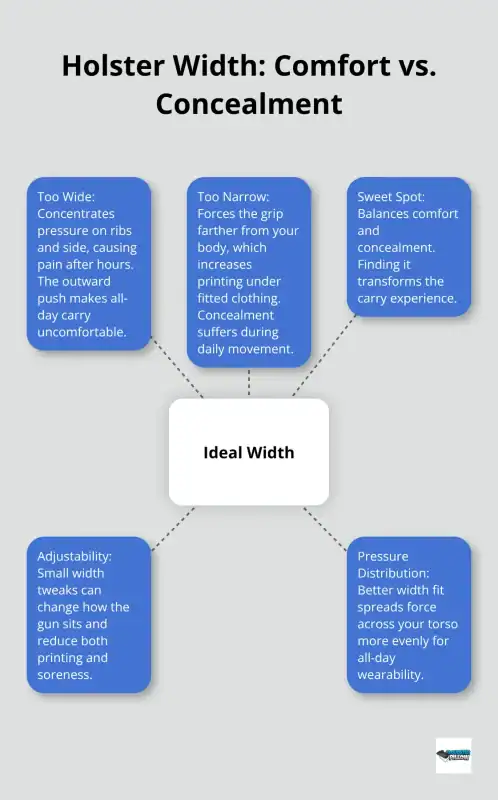
Most CCW carriers struggle with holster fit because they don’t realize how much width impacts comfort and concealment. A holster that’s too wide digs into your ribs, while one that’s too narrow prints like a neon sign under your shirt.
At Cloudster Pillow, we’ve seen firsthand how holster width adjustments transform someone’s carry experience from painful to practical. This guide walks you through finding your ideal width and making simple tweaks that actually work.
Why Holster Width Actually Matters
The width of your holster directly determines how force distributes across your torso when you carry all day. A holster that spans too wide pushes outward against your ribs and side, concentrating pressure into specific points that become painful after a few hours. Conversely, a holster that’s too narrow creates a different problem-it forces the grip to sit further from your body, which immediately increases printing under fitted clothing. Most carriers don’t realize width is adjustable, so they either suffer through discomfort or abandon their carry setup entirely. The sweet spot exists somewhere between these extremes, and finding it transforms your entire experience.
Pressure distribution matters because your body isn’t designed to support concentrated force in small areas for extended periods. When weight spreads across a larger surface area, your muscles and bones handle it far more efficiently. A properly-widthed holster feels almost invisible after a few hours of wear because the load sits naturally against your frame rather than digging in.
This is why all-day wearability depends so heavily on width-comfort isn’t a luxury, it’s what makes consistent carry actually possible.
How Width Affects What Shows Under Your Shirt
A wider holster creates a larger footprint against your body, which seems counterintuitive for concealment but actually matters less than how the holster positions your gun. What matters far more is whether the grip protrudes outward. A narrower holster can push the gun further from your body if it’s not designed correctly, while a wider holster that hugs your side properly stays concealed under a t-shirt. The real issue emerges when width forces the grip to angle away from your ribs-that’s when printing becomes unavoidable regardless of clothing.
Test your current setup by sitting, bending, and reaching while checking for telltale bulges at 3 and 4 o’clock positions. These movements reveal whether your width setting actually works for your body and wardrobe.
Common Width Problems You’ll Actually Experience
Rib soreness is the most common complaint we hear from carriers using wide holsters. The pain typically develops on the side where you carry, appearing as a dull ache after hours of wear. Hip flexor discomfort follows when width forces the holster to sit too far from your body, creating leverage that pulls on your hip joint during normal movement.
Printing happens consistently with narrow holsters because they can’t maintain proper contact with your torso. If you experience any of these issues, width adjustment should be your first troubleshooting step before considering a complete holster replacement. The good news is that most of these problems respond quickly to simple modifications you can make yourself-which is exactly what the next section covers.
Finding Your Ideal Width
Your body type determines which width actually works, and this isn’t a guessing game. Thinner carriers need narrower holsters because their ribcage sits closer to the surface, making even standard widths feel like they’re pushing outward. Heavier carriers can tolerate wider holsters because ribcage geometry and pressure distribution varies across body types. The practical approach is to measure your holster’s contact surface at the widest point where it touches your body, then compare that against your natural frame width. If your holster spans wider than your torso naturally allows, you’ll experience rib pressure regardless of how tight you wear it.
How Clothing Shapes Your Width Tolerance
Clothing dictates your width tolerance more than most carriers realize. Fitted shirts and athletic wear demand narrower holsters because even slight outward angles create visible bulges. Loose-fitting clothing and untucked polos let you get away with slightly wider profiles since fabric naturally drapes and conceals. Test your current setup by wearing your tightest shirt, then your most common carry outfit, and assess where printing appears at different positions throughout the day. This real-world testing reveals whether your width works across your actual wardrobe.
Modifying Width Without Starting Over
Most holster systems allow width adjustment through simple mechanical changes that take minutes at home. Kydex holsters respond well to adding padding along the sides using adhesive-backed foam or neoprene strips, which effectively narrows the contact surface against your ribs. Leather holsters can be reshaped through careful heat application to the sides, though this requires caution to avoid damaging the material. Adjustable holster systems with modular shells let you swap components to achieve different widths without purchasing entirely new gear.
The most practical solution involves adding claw attachments or wedge attachment effectiveness to push the grip inward rather than outward, which reduces printing without changing the holster’s actual width. Wedges let you customize thickness and placement within seconds using Velcro, so you can adapt your setup between outfits or throughout the day without tools.
Width and Actual Concealment Results
Grip printing during everyday movements matters far more than barrel printing, and width adjustments that push the grip closer to your body solve most visibility problems. A holster’s width becomes irrelevant if the gun sits flush against your ribs, but it becomes a real problem if width forces the grip to angle away from your torso. Testing for printing requires movement, not just standing in front of a mirror. Sit in your car, bend forward, reach for objects overhead, and walk around your home. These everyday movements reveal whether your width setting keeps the gun concealed during actual activity.
Many carriers discover their width works fine standing still but fails completely when they sit down because the holster shifts outward. Adjust your ride height or cant angle if width alone doesn’t solve printing, since these factors work together. A holster riding too high or too low compounds width problems by changing how the grip protrudes. The goal is achieving a setup where the widest part of your holster contacts your body at the exact points where your torso naturally protrudes, creating zero gaps that let the gun angle away from your frame.
Once you’ve identified your ideal width and tested it through real-world movement, the next step involves fine-tuning those adjustments to lock in both comfort and concealment for your specific body and wardrobe. The Cloudster Pillow holster wedge makes this process seamless by offering adjustable thickness and secure Velcro attachment, letting you dial in your perfect width without replacing your entire holster setup.
Practical Testing and Adjustments for Your Holster Width
Test Your Width in Real Movement
Start your width assessment where most carriers fail: not in front of a mirror, but during actual daily activities. Stand still in your normal carry position and your setup might look perfect, but sit in your car seat and the holster shifts outward, or bend forward to pick something up and suddenly the grip angles away from your body. These movements reveal whether your width truly works. Spend time through your typical day-sitting at a desk, reaching for objects on high shelves, walking, and bending-while checking for printing at the 3 and 4 o’clock positions. Use your phone camera to photograph yourself from the side during these movements if you’re unsure. The bulge that appears when you sit down is usually your actual problem, not the one you see standing still. Document which movements cause printing and which positions feel uncomfortable. This data becomes your baseline for what needs adjustment.
Make Adjustments You Control Without New Gear
The fastest path forward involves modifications that take minutes and cost almost nothing. If your holster digs into your ribs, add quarter-inch adhesive-backed neoprene foam to the sides where contact feels worst-this narrows the effective width by pushing your torso slightly away from the hard shell. Test with one side first, then mirror it if needed. For printing problems from narrow holsters pushing the gun outward, attach a holster wedge or claw using Velcro to push the grip inward toward your body. Adjustable wedge options let you dial in the exact amount of inward pressure your setup needs without permanent modifications. Start with a thin wedge and add thickness until printing stops during your movement tests, then wear that configuration for a full week to confirm comfort holds up during real carry. If your holster uses adjustable retention screws, tighten them incrementally (usually a quarter-turn at a time) to see if increased retention changes how the gun sits in the shell and affects printing. Ride height adjustments matter too: if your holster rides too high, the grip protrudes more; too low, and the muzzle creates printing at your belt line. Try positioning your holster between three-quarters inch and one-and-a-quarter inches below the belt.
When DIY Adjustments Aren’t Enough
Professional fitting assistance makes sense when your width problems persist after two weeks of consistent adjustments and testing. A professional holster fitter assesses your actual body geometry rather than relying on standard sizing, measuring your ribcage width and torso depth to recommend specific modifications tailored to your frame. Gun ranges and tactical gear stores often offer this service for $25 to $75 and can physically test different width configurations on your body with your actual firearm. This investment pays off if you’ve already spent $100+ on a quality holster and simply need the right width rather than a complete replacement. Some custom holster makers offer lifetime adjustments, so contact your holster manufacturer before paying for outside fitting-they may adjust width free or for minimal cost. If your holster is damaged or truly incompatible with your body, that’s when replacement makes sense rather than endless adjustments.
Final Thoughts
Holster width adjustments transform your carry experience from uncomfortable to sustainable, but only when you test during real movement instead of standing in front of a mirror. A holster that’s too wide creates rib pressure that builds throughout the day, while one that’s too narrow forces your grip to angle away from your body and print constantly. Start by adding thin neoprene padding to the sides if rib soreness is your main complaint, or attach a wedge if printing is the problem-most width issues respond to these simple modifications within two weeks.
Your current setup probably needs only minor tweaks rather than complete replacement. If your adjustments haven’t solved the issue after two weeks of consistent testing, professional fitting from a local gun range or tactical gear store costs $25 to $75 and provides personalized recommendations based on your actual body geometry. Contact your holster manufacturer first, since many offer lifetime adjustments at no cost or minimal expense.
The Cloudster Pillow holster wedge simplifies width adjustments by offering adjustable thickness and secure Velcro attachment that adapts to your body and wardrobe changes throughout the day. Whether you carry AIWB or IWB, this practical solution delivers comfort and concealment without replacing your existing setup.
Comfort matters as much as preparation.
If holster pressure points are wrecking your carry comfort, an adjustable shredded-foam pillow lets you tune fill until the wedge sits exactly right.
