
CCW Awareness & Mindset, CCW Training, Firearms Training
Emergency Preparedness Mindset: Train for Unseen Situations
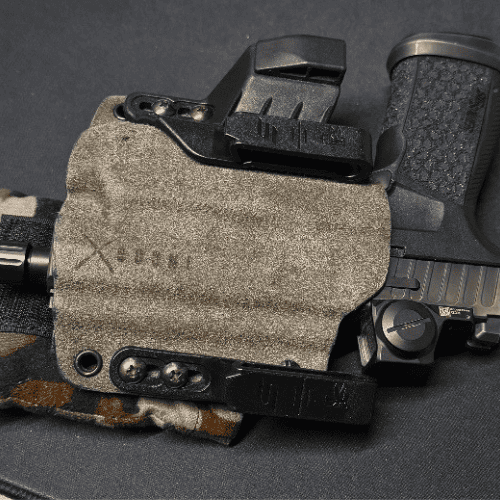
Your emergency preparedness mindset determines how you’ll respond when seconds count. Most people focus on buying gear and checking boxes, but the real foundation is mental readiness.
[toc]At Cloudster Pillow, we know that carrying a firearm means preparing for situations you hope never happen. Whether you’re a CCW carrier in Southern California, Texas, or anywhere in the U.S., this post breaks down how to build the emergency preparedness mindset that keeps you sharp when it matters most.
Mental Preparation for Emergency Situations
Your Stress Response Under Pressure
Your body’s stress response activates within milliseconds of a threat, flooding your system with adrenaline and cortisol before your conscious mind catches up. This isn’t weakness — it’s biology. The American Psychological Association notes that stress hormones sharpen certain abilities like tunnel vision and reaction speed, but they also impair fine motor control, peripheral awareness, and logical thinking. The fix isn’t to eliminate stress; it’s to recognize what happens to your body and practice functioning through it. Developing an emergency preparedness mindset starts with understanding these biological responses.
Research shows that people trained in high-stress scenarios maintain cardiovascular stability and clearer cognition than untrained individuals facing identical threats. Start by identifying your personal stress triggers and deliberately expose yourself to them in controlled settings. A simple drill involves drawing your firearm repeatedly while your heart rate is elevated from sprinting or doing pushups. This builds stress inoculation: your brain stops treating elevated heart rate as a signal of danger and starts treating it as a normal operating condition.
Building Real Confidence Through Live Training
Confidence built on theory evaporates the moment reality diverges from the classroom. The only confidence that holds is confidence earned through repetition under conditions that resemble actual threats. FEMA recommends scenario-based drills regularly, putting you in unfamiliar positions — drawing from a seated position, from retention during movement, or while managing an unexpected obstacle. This kind of training strengthens your emergency preparedness mindset over time.
Muscle memory alone isn’t enough; you need decision memory. Take a specific high-stress situation you might face and mentally rehearse the exact steps you’d take, including communication with family members and law enforcement. Family drills where everyone practices their role reduce panic and response time significantly.
Making Decisions When Time Collapses
Decision-making under extreme time pressure requires pre-decided rules. Establish clear decision trees before emergencies: if someone forces entry while you’re home, do you shelter in place or move? If you encounter a threat while carrying, what verbal de-escalation will you attempt? What are your legal boundaries under your state’s self-defense laws?
Know your state’s castle doctrine and stand-your-ground laws now, and understand exactly what actions are legally defensible in your area. For California carriers, understanding Penal Code 198.5 (Castle Doctrine) and the state’s specific duty-to-retreat nuances is essential. Practice these decision points repeatedly through scenario training so that when pressure arrives, your brain retrieves a pre-made decision rather than attempting to create one. This is the core of any effective emergency preparedness mindset.
This mental foundation prepares you for the training methods that transform theory into actual readiness. When your mind is sharp and your body is prepared, comfort matters too — that’s where a quality holster wedge comes in, keeping your IWB holster stable and comfortable during extended carry so you can focus on what matters.
Training Methods That Build Emergency Readiness
Scenario-Based Training Transforms Theory Into Action
Scenario-based training forces you to make real decisions under realistic stress, transforming theory into muscle memory far more effectively than repetitive drills at the range. Start with your highest-probability threats: an intruder entering your home at night, a confrontation while you’re seated in a vehicle, a threat while you’re with family members who need protection.
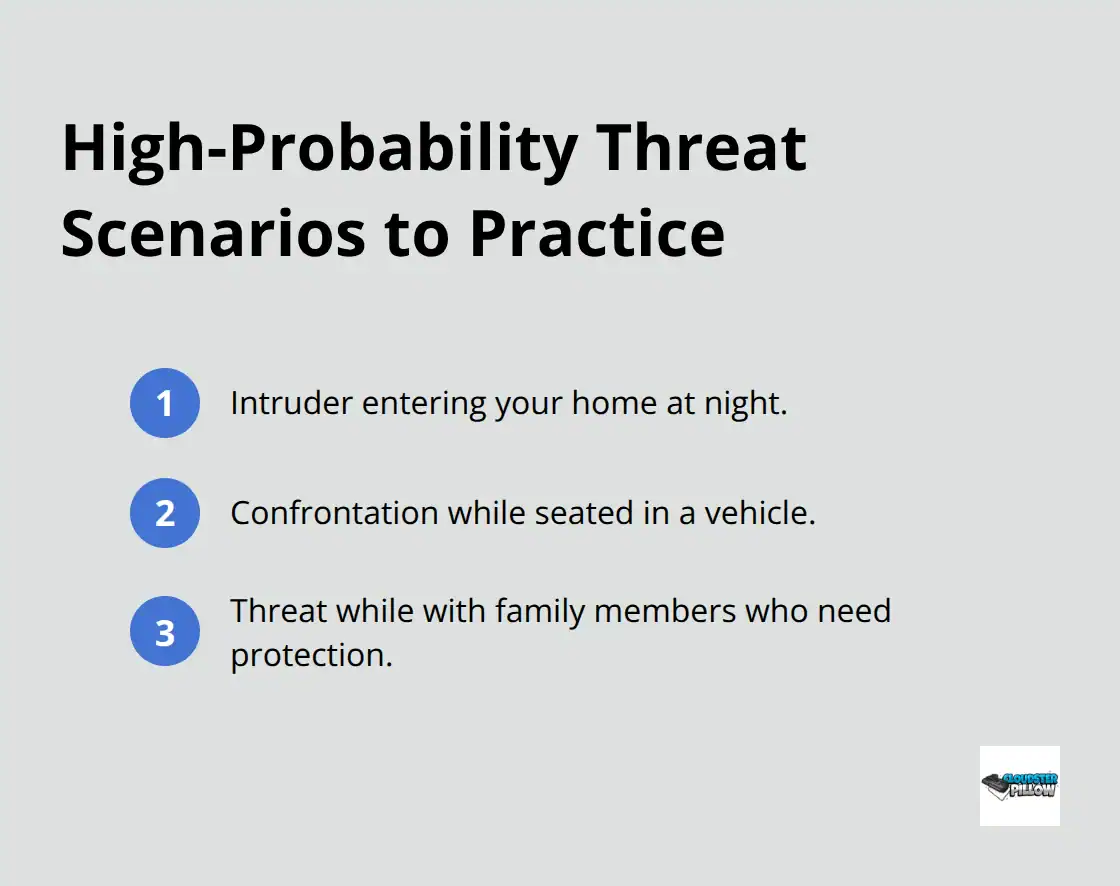
People who train in varied conditions maintain decision clarity significantly better than those who practice identical sequences repeatedly.
Practice Across Unpredictable Conditions
Practice drawing from retention while moving backward, from a seated position at a dinner table, and while verbally de-escalating a threat simultaneously. Building situational awareness during these drills ensures you’re not just reacting physically but also reading environmental cues that precede threats. Every drill reinforces your emergency preparedness mindset and sharpens your ability to respond under pressure.
Consistency Beats Intensity Over Time
Real competence requires consistent repetition across months, not intensive training bursts. A monthly 30-minute scenario drill with a training partner or family members produces exponentially more value than an annual tactical course. Track what happens in real-world incidents involving armed citizens and study how trained versus untrained carriers responded.
Learn From Real-World Incidents and Outcomes
Learning from others’ experiences means studying actual incidents, not hypothetical scenarios. Read after-action reports from defensive shooting incidents and analyze what worked and what failed.
Consistency in training, combined with realistic stress exposure and learning from real-world outcomes, builds readiness that actually functions when pressure arrives. Many carriers discover that training with your chosen holster builds the muscle memory that emergency situations demand. An effective emergency preparedness mindset requires this kind of ongoing commitment to realistic practice.
Common Mistakes in Emergency Preparedness Training
Equipment Cannot Replace Decision-Making
Most carriers invest heavily in equipment without investing in the mental framework that makes equipment functional. A carrier with three guns but no scenario training will perform worse than a carrier with one gun and monthly scenario drills. Start training immediately with whatever gear you currently own rather than waiting until you’ve purchased the perfect setup.
Psychological Readiness Determines Performance Under Pressure
Most carriers skip the uncomfortable work of psychological preparation because it produces no visible results until an actual emergency occurs. Research has shown that mental rehearsal activates the same neural pathways as physical practice, making it a legitimate training method. Building your emergency preparedness mindset through visualization is just as important as range time.
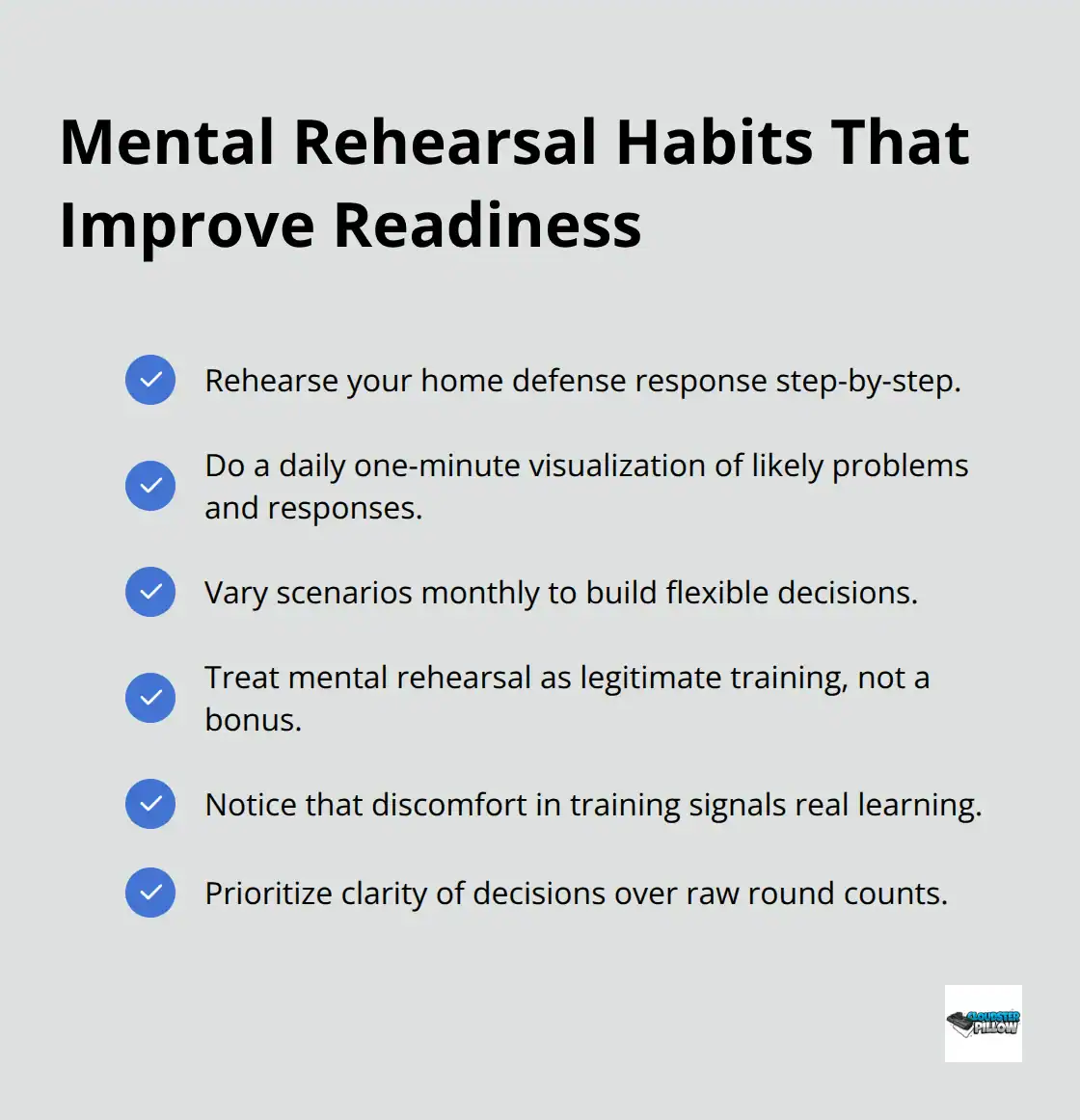
Avoidance of Difficulty Guarantees Failure
Training that feels easy is training that won’t transfer to real emergencies. Training that incorporates difficulty intentionally transfers to actual performance. Practice drawing after sprinting, making decisions while your training partner shouts distractions, and moving through your home in darkness.
Consistency Over Time Beats Sporadic Intensity
A 30-minute uncomfortable scenario drill monthly, conducted for a year, produces exponentially more readiness than a single intensive tactical course. You’ll maintain this consistency far more effectively when carrying doesn’t create physical discomfort. That’s why many serious carriers optimize their comfort with the Cloudster Pillow holster wedge, allowing them to focus on training frequency rather than gear-related distractions.
Frequently Asked Questions
How do I build an emergency preparedness mindset for concealed carry?
Start with three commitments: scenario training with your current equipment, incorporating difficulty into drills so your nervous system functions under stress, and maintaining consistency across months. A 30-minute monthly scenario drill produces more readiness than a single intensive course.
Why is mental training more important than gear for CCW carriers?
Research shows mental rehearsal activates the same neural pathways as physical practice. A carrier who has mentally rehearsed their response fifty times will react faster and more clearly than one who has only practiced at the range. Your holster setup and gear support your training, but your emergency preparedness mindset determines performance.
What are the best drills for emergency preparedness training?
Prioritize scenario-based drills that simulate real threats: home intrusion response at night, vehicle confrontations, and threats while with family. Practice drawing with elevated heart rate, making decisions under distractions, and navigating your home in darkness. Vary conditions monthly for flexible responses.
Final Thoughts
Your emergency preparedness mindset determines everything when a threat arrives. A carrier with premium gear but no mental preparation will freeze under pressure, while a carrier with modest equipment and consistent scenario training will act decisively.
Building this mindset requires starting scenario training immediately, incorporating difficulty intentionally, and maintaining consistency across months rather than pursuing sporadic intensity.
We at Cloudster Pillow designed our holster wedge specifically for carriers who refuse to compromise between comfort and preparedness. Our solution enhances concealment and comfort for AIWB and IWB holsters, allowing you to focus on training frequency rather than gear-related distractions.
