
AIWB, IWB Holster Wedge
IWB Comfort Fixes: Real World Solutions That Work
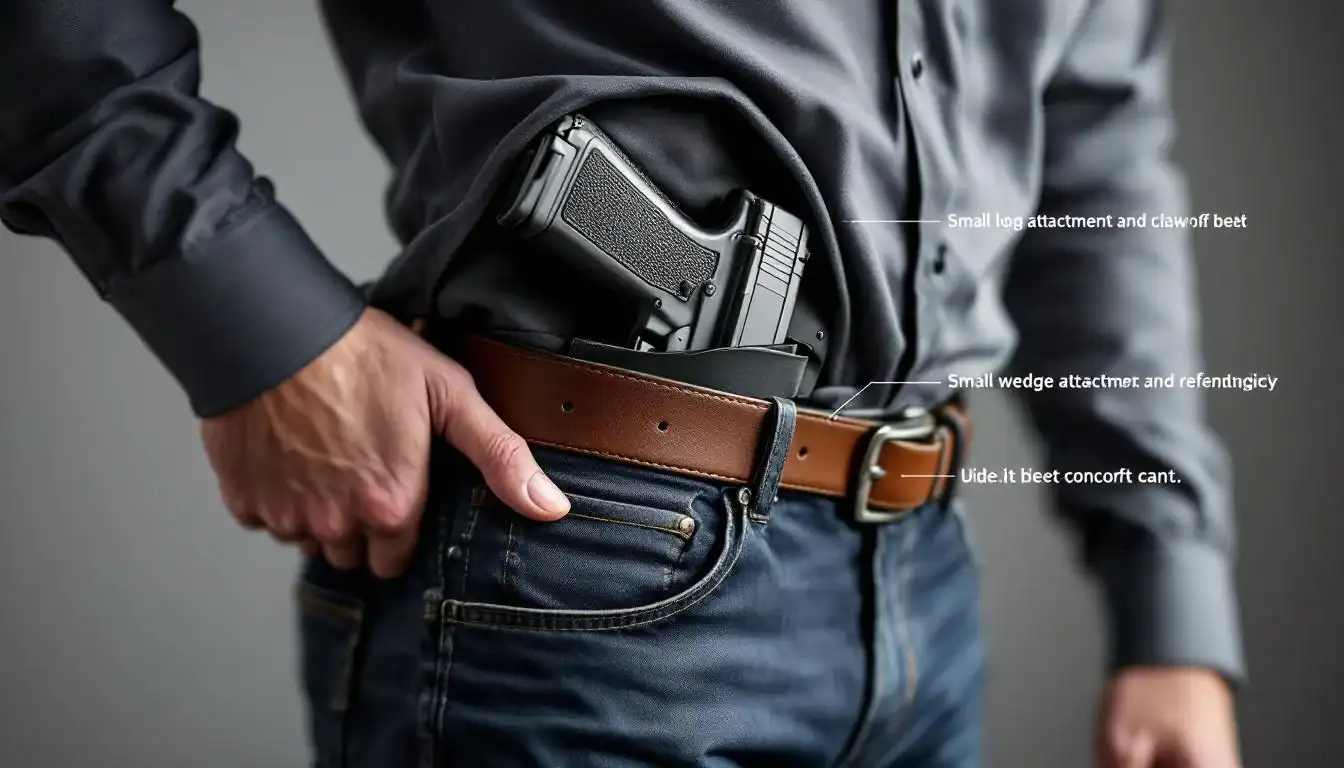
IWB Comfort with IWB holsters should feel invisible against your body, not like a constant source of pain. Yet most carriers deal with pressure points, sweat buildup, and the constant fear of printing.
We at Cloudster Pillow know these problems well because our community shares them every single day. The good news is that real solutions exist, and they don’t require buying an entirely new setup.
Why Your IWB Setup Digs In
The moment you strap on an IWB holster, your body starts sending signals that something isn’t right. That pressure point on your pelvic bone during a long workday, the raw skin after sitting in your car for two hours, the sweat pooling under the holster during summer-these aren’t character-building experiences. They’re design failures meeting your specific anatomy. Most carriers assume the problem is the holster itself, but that’s only part of the story. The real issue is how your body shape, the holster’s geometry, and your carry position collide into a pressure point that worsens the longer you sit. A Glock 48 in an appendix position places the barrel directly into the crease between your abdomen and leg. Sit down, and that pressure intensifies. Stand up, and it shifts. Your pelvic bone becomes the focal point of all that force, especially if you carry closer to your body for better concealment.
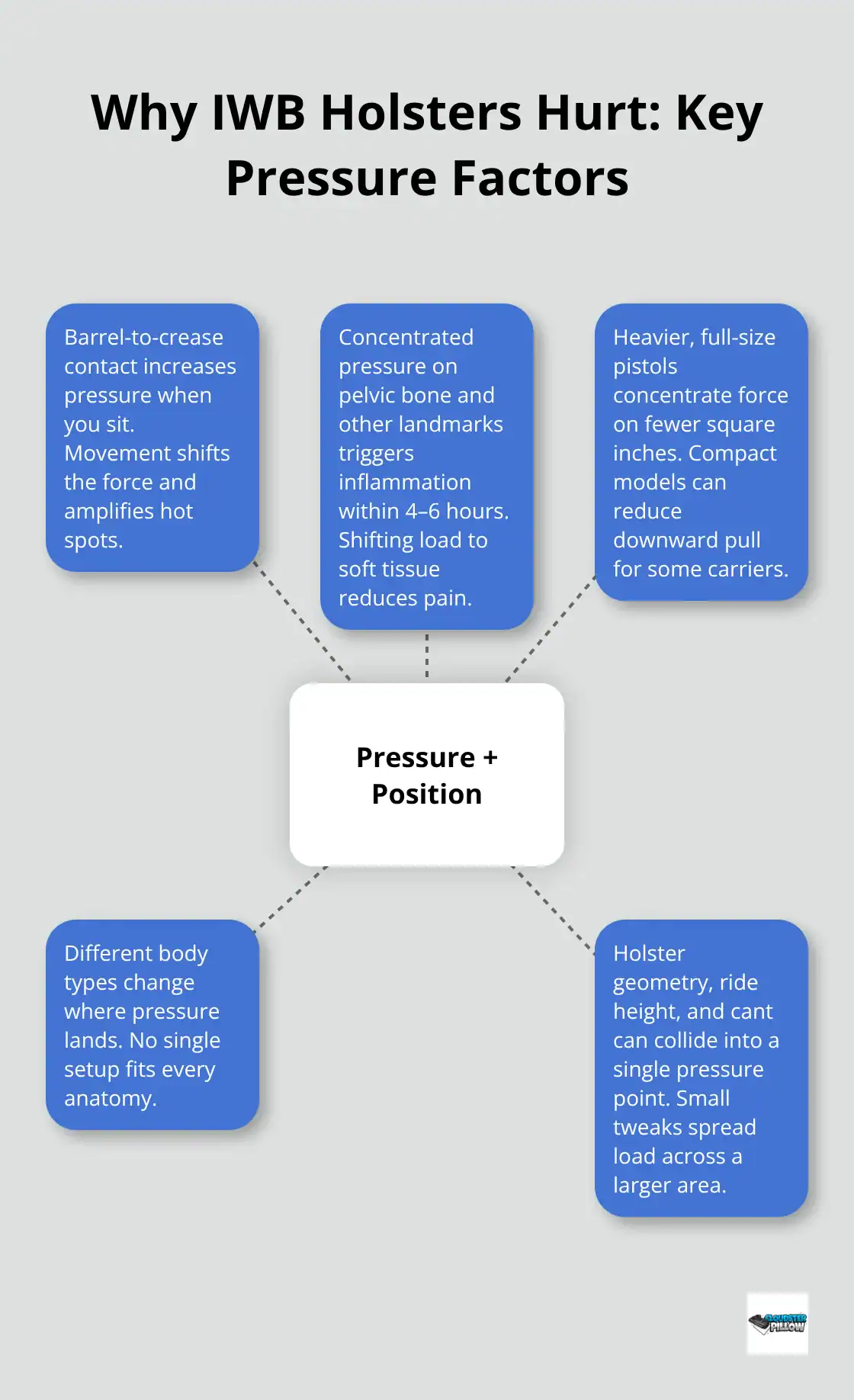
Research shows that concentrated pressure on bone landmarks causes inflammation and discomfort within 4–6 hours of continuous contact. Most IWB carriers hit that threshold by mid-afternoon.
The Barrel Position Problem
Where the barrel sits relative to your leg and groin matters far more than most holster reviews mention. Many carriers position the barrel over the groin in photos, which looks tactical but creates a sensitivity and pressure point that makes sitting unbearable. Moving the barrel slightly-even a quarter inch-shifts pressure from bone to soft tissue, which tolerates load distribution far better. The issue compounds when you carry a full-size pistol like a Glock 19 or Glock 17. Heavier guns pull downward harder, concentrating force on fewer square inches of skin. Smaller guns like the Glock 43x reduce that load, which is why some carriers report better all-day comfort with compact models. Your body type matters too. A lean build distributes pressure differently than a larger frame, and a dad bod shifts the pressure point entirely. No single holster height or cant angle works universally because your rib cage, hip position, and leg anatomy are unique. That’s why real carriers test ride height and cant adjustments obsessively-they hunt for the sweet spot where pressure spreads across a larger area instead of concentrating on bone.
Sweat, Heat, and the Moisture Trap
IWB holsters trap moisture against your skin daily, and that environment breeds discomfort. Kydex doesn’t breathe. Hybrid holsters with leather backing absorb sweat instead of releasing it. The combination of heat, moisture, and friction causes skin irritation that feels worse than the pressure points alone. Carriers who switch to looser waistbands or baggier pants hoping for relief discover that clothing adjustments don’t fix the core problem-the holster itself still creates a sealed pocket against your body. A thin rubber or plastic paddle added to the barrel section spreads pressure over a slightly larger area, but it doesn’t solve the moisture issue. Some carriers use wedges to modify how the holster sits, shifting pressure away from sensitive spots. The real game-changer is a holster design that lifts slightly away from your body instead of pressing flat against it, creating airflow and reducing that trapped-sweat sensation. Most off-the-shelf holsters fail at this because manufacturers design for average body types, not for your specific measurements. That’s why so many carriers with well-reviewed holsters still report discomfort-the reviews came from people with different anatomy.
What Separates Comfort from Compromise
The carriers who solve their IWB discomfort don’t replace their entire setup. Instead, they adjust what they already own. Ride height changes and cant adjustments transform IWB holster comfort. Adding a wedge or padding to your existing holster transforms how pressure distributes across your body without forcing you to buy new gear. The carriers stuck in the discomfort cycle are the ones who assume their holster is the problem and buy another one, only to face the same pressure points with a different brand. Your anatomy doesn’t change when you switch holsters. The real solution requires testing small modifications to your current setup, then moving to the next chapter where we show you exactly which adjustments work for real carriers in real situations.
Fine-Tuning Your Holster Position
Most carriers assume their holster is permanently uncomfortable, but the real issue is that they’ve never tested how small position changes transform the entire experience. Cant angle and ride height are the two controls you actually have, and adjusting them costs nothing.
Cant Angle: The Forward or Backward Tilt
Cant refers to the forward or backward tilt of your holster, and even small shifts move pressure away from bone landmarks onto softer tissue that tolerates load better. A holster tilted too far forward digs the barrel into your groin during sitting, while one tilted backward pushes the grip into your ribs. The sweet spot sits somewhere between those extremes, but your anatomy determines exactly where.
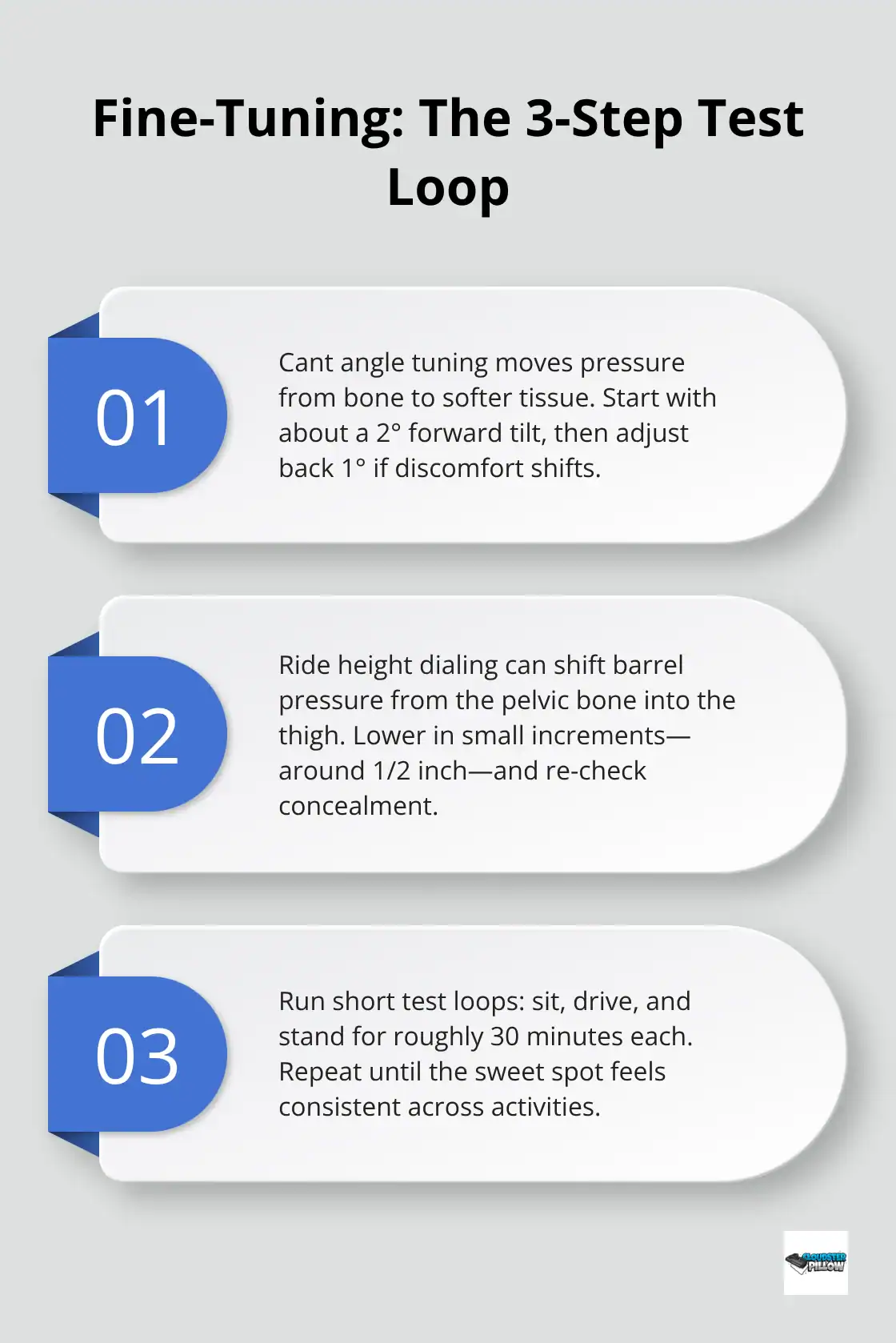
Start by loosening your belt slightly and tilting your holster forward by 2 degrees, then sit in your car for 30 minutes and assess pressure points. If discomfort shifts to your abdomen, tilt it back 1 degree. This iterative testing takes an afternoon but reveals the exact cant your body prefers.
Ride Height: Moving Pressure Off the Pelvic Bone
Ride height determines how high or low the grip sits relative to your waistband, and lowering it by a half-inch often eliminates pelvic bone pressure because the barrel shifts into your thigh instead of directly onto bone. The carriers who solved their IWB problems spent two weeks testing small adjustments rather than buying a third holster.
Wedges Spread Pressure Across Larger Surface Area
Adding a wedge to your existing holster redistributes pressure across a larger surface area, which is why real carriers swear by this modification. A wedge sits between your body and the holster, tilting the grip away from your torso and lifting the barrel slightly, creating both concealment and comfort improvements simultaneously. This single addition transforms how your holster interacts with your body without requiring replacement of your entire setup.
Belt Selection Anchors Everything in Place
Your belt selection matters more than most carriers realize because a weak belt allows your holster to sag and shift throughout the day, creating new pressure points every few hours. A rigid gun belt anchors your holster in one position, eliminating the micro-movements that cause friction and skin irritation. The right belt distributes tension differently than traditional leather, reducing pressure on your hip during extended sitting.
Clothing Works Only After Position Optimization
Clothing adjustments work only after your holster position is optimized, not before. Looser waistbands and baggier pants might hide printing, but they won’t fix the pressure point digging into your pelvic bone. Once your cant, ride height, and wedge are dialed in, then you can wear normal-fitting clothes because your holster finally sits in a position that your body tolerates for eight hours straight. The next chapter shows you how real carriers tested these modifications and which combinations produced the fastest results.
What Real Carriers Actually Changed
A Glock 48 carrier from Maryland’s r/MDGuns community spent over a decade carrying IWB before admitting the setup caused enough pain to prevent consistent daily wear. That carrier wasn’t alone. Pressure on the pelvic bone remained constant regardless of belt choice, clothing adjustments, or even dropping 23 pounds from 190 to 167 pounds. The carrier tested a Shield, a Glock 43x, a Glock 19, and a Glock 17, assuming a smaller or larger gun would solve the problem. None did.
The Holster Brand Trap
Moving to different holster brands including Alien Gear, OTG, Tenicor Velo, and JM Kydex models produced the same result: pain that prevented all-day carry. This pattern revealed a critical truth that most carriers miss. Your anatomy doesn’t change when you buy a new holster. The real solution required testing the exact cant angle and ride height that shifted pressure from bone to soft tissue, then adding a wedge to spread remaining force across a larger surface area. These modifications cost almost nothing but produced results that thousands of dollars in new holster purchases could not deliver.
The Turning Point: Modification Over Replacement
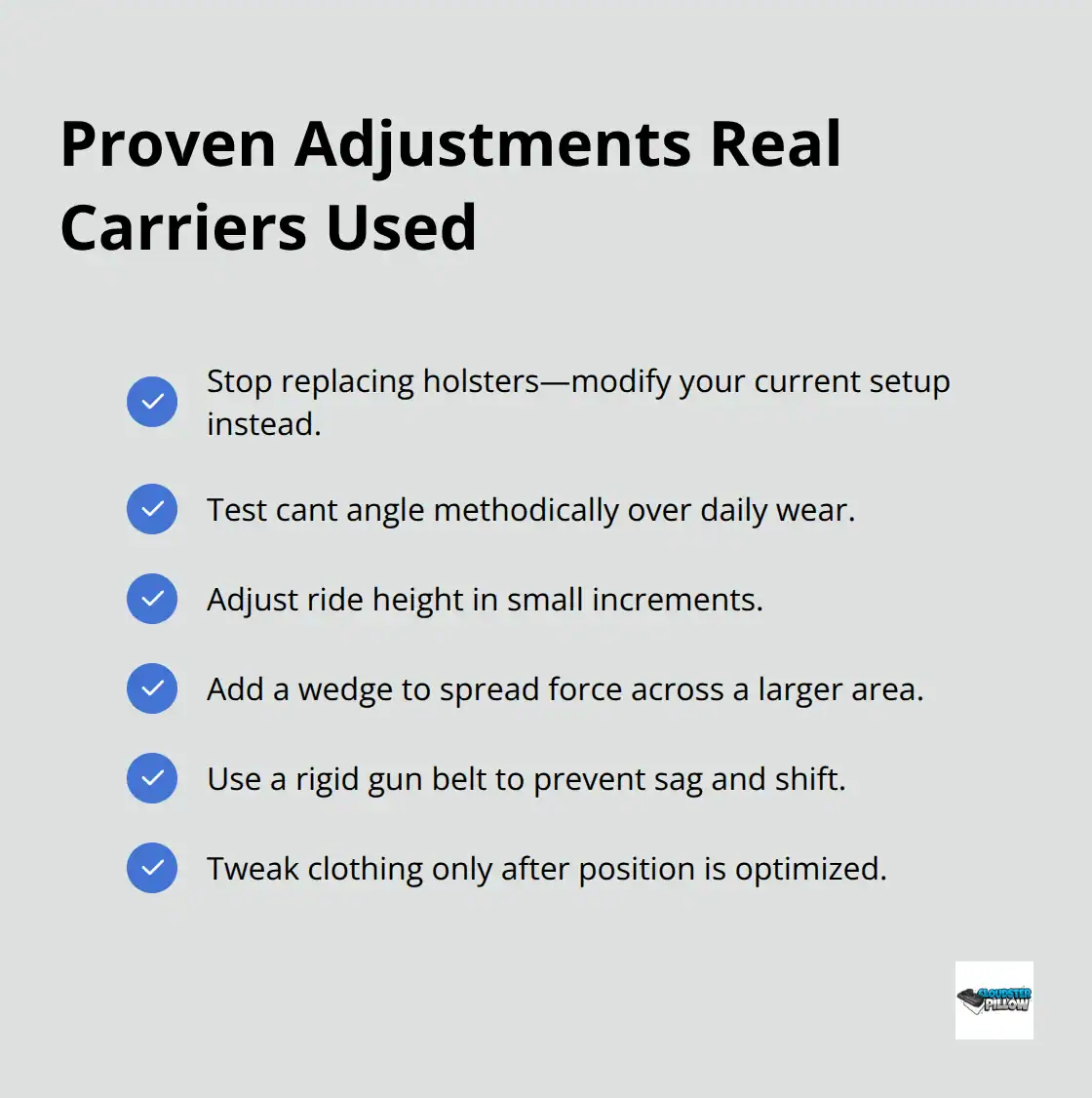
The Maryland carrier stopped replacing holsters and started modifying the existing setup through ride height adjustments and wedge additions. That single shift in approach transformed the problem from unsolvable to manageable. Another carrier reported that hiking their belt up while sitting provided only temporary relief, confirming what the previous chapter explained: clothing and belt adjustments alone cannot fix a holster position problem.
What Successful Carriers Actually Did
The carriers who achieved consistent all-day comfort shared one trait: they tested small adjustments systematically rather than assuming their anatomy was the problem. A Glock 43x in a Tier 1 Concealed AIWB holster remained the only bearable option for the Maryland carrier after years of testing, yet even that setup required a wedge addition to reach true all-day comfort. Vedder Holsters reports that customers who adjust ride height by as little as half an inch eliminate pressure points that new holster purchases could not fix, and their 30-day money-back guarantee reflects confidence that position adjustments outperform gear replacement.
How Position Optimization Changed Everything
Once these carriers positioned their existing holster correctly through cant and ride height testing, then added a wedge to distribute pressure, their clothing choices finally worked. Looser waistbands and baggier pants became optional rather than mandatory. A sturdy gun belt anchored the holster in place, eliminating micro-movements that created new pressure points throughout the day. These carriers confirmed what the previous chapter explained in theory: your comfort improves dramatically when you optimize the holster you already own.
Final Thoughts
IWB comfort doesn’t require buying your fourth holster. The carriers who stopped struggling all discovered the same truth: small adjustments to your existing setup produce faster results than gear replacement ever will. A half-inch change in ride height eliminates pelvic bone pressure, a two-degree cant adjustment moves force from bone to soft tissue, and a wedge spreads concentrated pressure across a larger surface area. These modifications work because they address the actual problem instead of chasing it through endless holster purchases.
Real carriers tested this approach systematically and confirmed what theory predicted: your anatomy doesn’t change when you buy new gear, but your IWB comfort changes dramatically when you optimize the holster you already own. The Maryland carrier who spent over a decade in pain finally achieved all-day comfort by adjusting position and adding a wedge to an existing holster, not by replacing it. That pattern repeats across every carrier community because the solution is universal even though your specific adjustments are unique to your body.
Start by testing cant and ride height adjustments over two weeks, then add a holster wedge to distribute pressure across a larger area. We at Cloudster Pillow built our holster wedge specifically for carriers tired of pain preventing consistent daily carry, and your comfort matters because consistent practice requires gear that doesn’t punish you for wearing it all day.
