
Carry Techniques and Optimization, CCW Awareness & Mindset, Firearm Tips and Tricks, IWB Holster Wedge
Real World Concealment Challenges: Lessons From Everyday Carriers

Most CCW carriers face the same problem: they stop carrying because something doesn’t work. Maybe the gun digs into their ribs after eight hours, or it prints through their shirt, or their favorite jeans suddenly feel off-limits.
Real world concealment challenges aren’t abstract. They’re the friction points that keep people from staying armed when it matters most. At Cloudster Pillow, we’ve learned that the gap between wanting to carry and actually carrying consistently comes down to three things: comfort, training, and gear that actually fits your life.
This post breaks down what everyday carriers are really dealing with and how to fix it.
Why Comfort Stops You From Carrying Daily
The Discomfort Problem Is Real
The moment your holster setup stops being comfortable, you stop carrying. This isn’t a character flaw-it’s human nature.
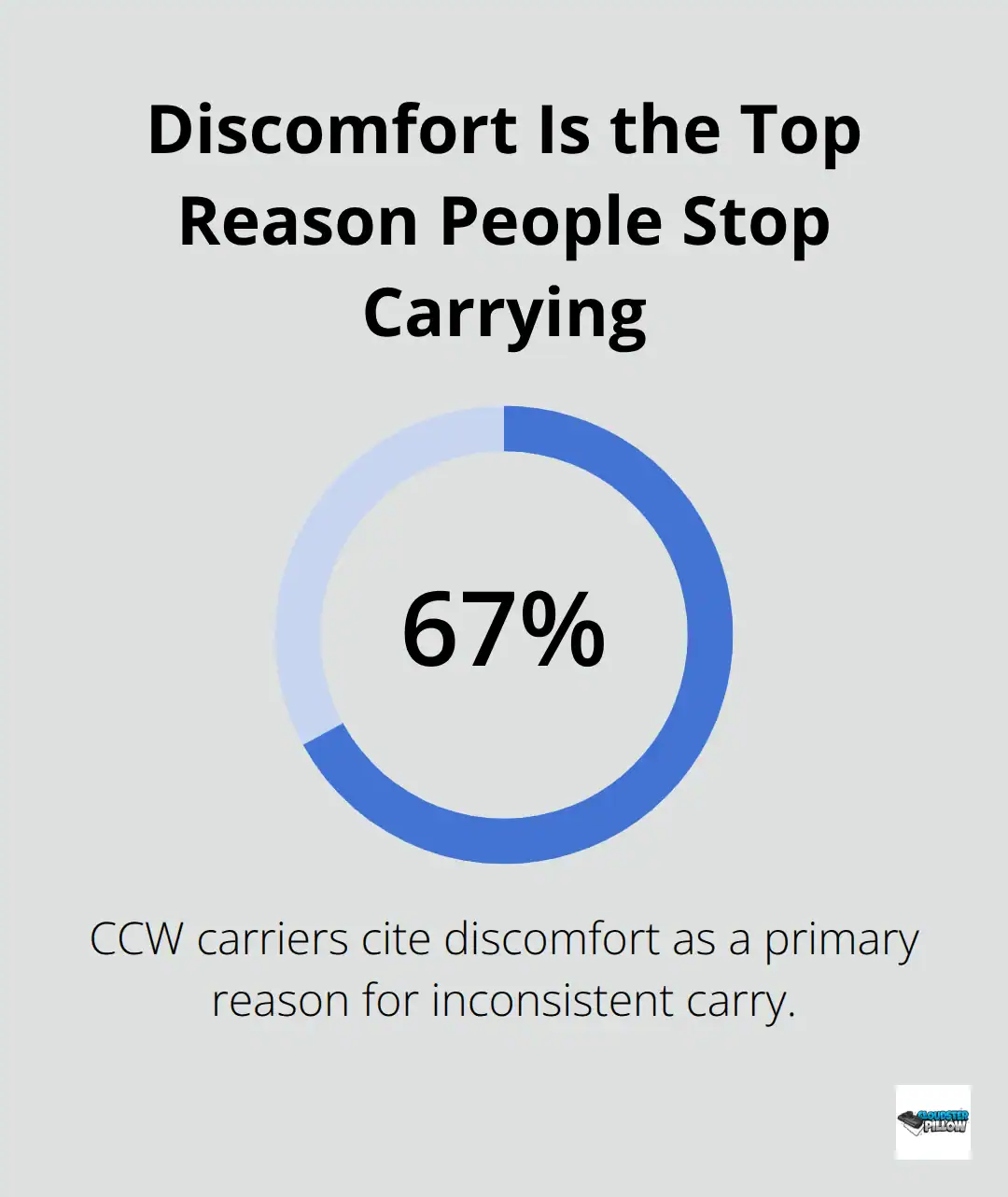
A survey of CCW permit holders found that 67% of CCW carriers report discomfort as a primary reason for inconsistent carry, ranking higher than legal concerns or accessibility issues. When your gun digs into your ribs after eight hours or prints through your shirt, your body sends a clear message: find another solution or leave it at home.
How Seated Positions Expose Your Setup
Long sits reveal what standing concealment hides. Appendix carry users experience thigh contact and friction when seated for extended periods, while behind-the-back positions push the holster into your spine during desk work or driving. Pocket carry keeps the gun accessible but rides up uncomfortably or prints noticeably when you bend. The seat type matters too-office chairs, car seats, and benches apply different pressure angles to your holster. Real-world carriers test their setups during actual daily tasks before committing. You need to drive for an hour, sit at a desk, then stand and move around. If printing occurs during any of these activities, your holster ride height or cant needs adjustment. Smaller caliber firearms like the .380 in pocket carry appeal specifically because they reduce discomfort during long seated periods, even though they sacrifice some stopping power. The trade-off is real, and everyday carriers accept it because a gun you don’t wear is useless.
Clothing Works For You or Against You
Clothing becomes a weapon against your setup or a solution for it. Loose shirts and layering hide appendix carry far better than tight t-shirts, while tucked-in business casual demands a holster designed for IWB positions. Ride height and cant adjustments directly impact both concealment and comfort. A holster sitting too high prints at the belt line; too low and it digs into your hip bone during sitting. Holster wedges and concealment devices reduce printing for AIWB carries by altering the holster’s angle and promoting grip comfort. Many carriers rotate between AIWB and IWB depending on daily wardrobe and mission, accepting that no single setup works perfectly for every scenario.
Test Before You Adjust
The best approach involves real-world testing in your actual environment-not at the range, but in your car, at your desk, in your daily clothes. If your current setup causes pain after eight hours, adjust the cant or ride height before replacing the entire holster. Small mechanical changes often solve what new equipment can’t fix. This is where many carriers discover that their holster choice was sound, but the fit needed refinement. Once you nail the comfort equation, you move into the next critical phase: making sure you can actually access and deploy your firearm when it matters.
Training That Matters When It Counts
Practice Builds the Muscle Memory That Works Under Stress
Comfort and gear solve half the equation. The other half is knowing how to access your firearm reliably under stress, and that only happens through deliberate practice. Most carriers shoot at the range once or twice a year, then expect their body to remember the draw when adrenaline spikes. Real-world readiness demands something different. Cheaper practice translates to more repetitions, and more repetitions build the muscle memory that works when your thinking brain shuts down.
Seated Draws Matter More Than Standing Precision
Draws from seated positions matter far more than standing precision shooting because you spend most of your day sitting-in your car, at a desk, on a bench. Start with 50 draws from your daily carry position each week, focusing on consistency rather than speed. Time comes later.
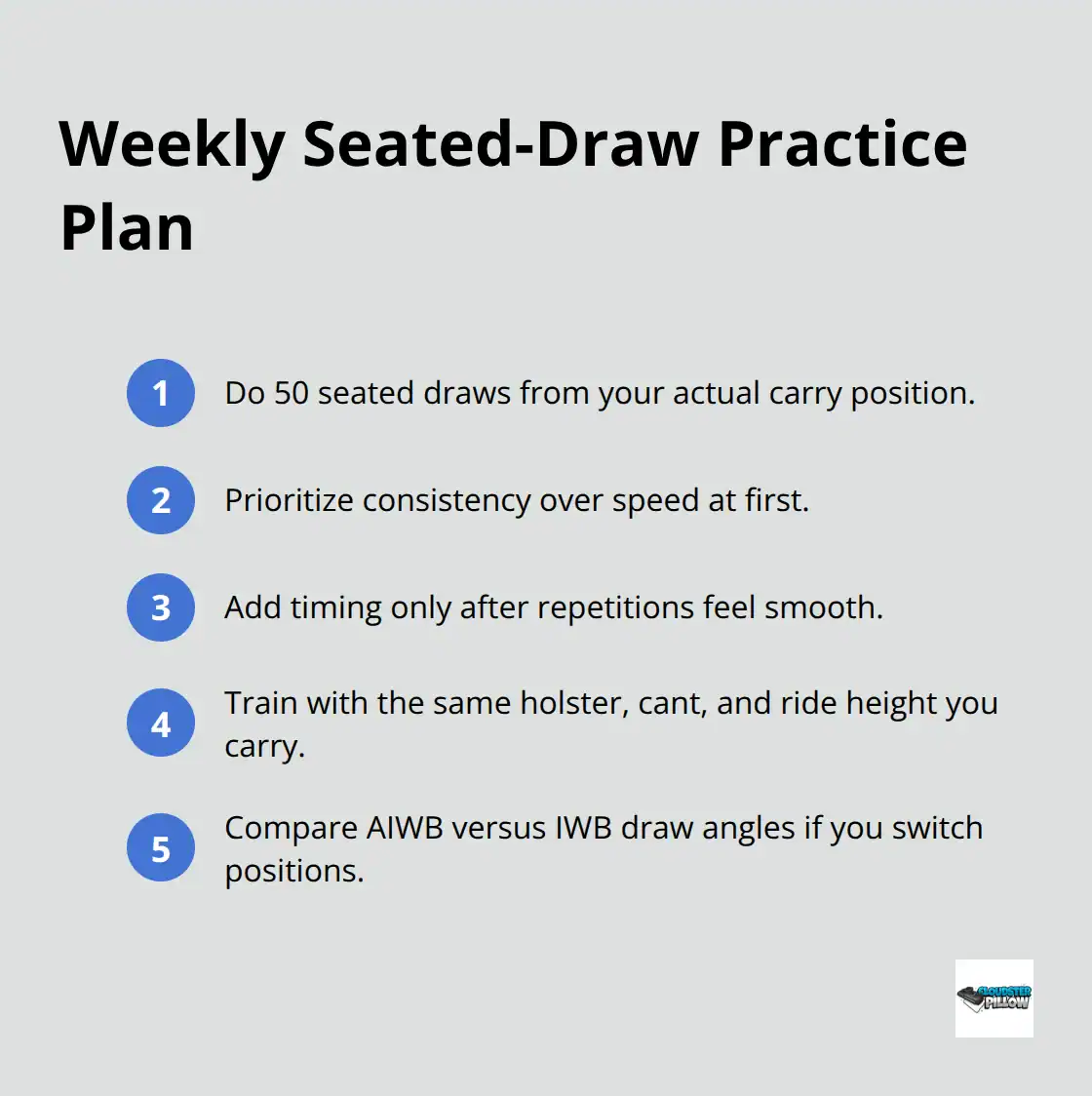
Your holster’s cant and ride height directly affect draw speed and safety, so train with the exact setup you carry daily-not a different holster at the range. If you carry AIWB, your draw angle differs significantly from IWB, and your body needs to know the difference. Many carriers train appendix carry but actually carry strong-side IWB, creating a dangerous mismatch between muscle memory and reality.
Situational Awareness Prevents Confrontations Before They Start
Situational awareness builds habits that prevent confrontations before they start. The Cooper Color Code defines four mental states of alertness, with Yellow being the recommended baseline for everyday carry. Yellow means relaxed but alert: you scan for exits, watch hands instead of faces, and notice behavioral changes in people around you. Stay in Yellow automatically by positioning yourself with a direct view of entry points, using walls or barriers for support, and mentally noting escape routes in any space you enter. This becomes automatic after weeks of deliberate practice, reducing anxiety rather than increasing it.
De-Escalation Works Better Than Any Firearm
When confrontation approaches, de-escalation works far better than any firearm. Calm tone, visible hands, space creation, and non-provocative language stop most escalations before they develop. Your gun exists as a last resort after every other option fails. If you must draw, you’ve already lost the preferred outcome. That mindset-that carrying is about avoiding danger, not winning fights-separates consistent carriers from those who quit after their first uncomfortable week. The carriers who stay armed long-term understand that training isn’t just about marksmanship; it’s about the mental framework that keeps you safe before your hand ever touches your holster.
This foundation of practice and awareness sets the stage for selecting gear that actually supports your training and lifestyle, which is where most carriers discover that small adjustments to their existing setup solve problems they thought required complete replacement.
Gear That Actually Solves Real Problems
Your holster choice determines whether you carry consistently or leave your gun at home. The right setup matches your body type, daily wardrobe, and actual carry position-not the position you think you should use. Compact and subcompact pistols work well for appendix carry because they don’t create excessive bulk at your waistline, while full-size frames often feel more natural in strong-side IWB positions around the 3 to 5 o’clock area. The Glock 19 Gen 5 MOS dominates beginner recommendations because it balances versatility for both home defense and concealed carry with proven reliability after extensive testing, making it a baseline for comparing how different holsters perform with similar firearms. Start with a full-size holster for home defense to maximize your grip and sight radius, then shift to a compact model only if concealment becomes your primary constraint. Most carriers who quit do so because they chose a holster based on online reviews rather than testing it in their actual daily environment-sitting in their car, at their desk, in their preferred clothing. A holster that feels fine at the range for 30 minutes will betray you during an eight-hour workday.
Small Adjustments Beat New Equipment
Small mechanical changes often solve problems that new equipment cannot fix. Holster wedges work by lightly pressing against your abdomen to draw the top of your gun closer to your body, making it easier to conceal. A quality wedge adjusts the cant-the angle at which your holster leans away from your body-to match your body’s unique contours rather than forcing your body to adapt to a generic design. For appendix carry, wedges push the grip inward, hiding it under loose clothing and preventing the telltale bulge that broadcasts your carry status. Behind-the-back positions benefit from wedges that reduce spine contact during desk work and driving, addressing one of the most common complaints from IWB carriers. Before investing in a new holster, adjust your cant and ride height, add a quality wedge if needed, and test the results during actual daily activities. This approach costs significantly less than buying multiple holsters while solving the same comfort and concealment problems.
Appendix Carry Demands the Right Conditions
Appendix carry excels at concealment under casual clothing like t-shirts and hoodies when paired with purpose-built holsters and concealment aids, but struggles during long sits and driving when the gun may dig into your abdomen. The position delivers superior concealment and faster front-draw accessibility in standing, walking scenarios. However, if you spend eight hours driving or sitting at a desk, this setup creates real friction that no amount of training fixes. Test appendix carry during your actual daily routine-not at the range-before committing to it as your permanent setup. Many carriers rotate between appendix and strong-side IWB depending on their daily wardrobe and mission, rather than forcing themselves into one setup year-round.
Strong-Side IWB Prioritizes All-Day Comfort
IWB at strong-side distributes pressure along your waistband more naturally during sitting and moving, making it superior for all-day comfort, though it requires slightly looser or tucked clothing to prevent printing. This position works exceptionally well for carriers who spend significant time seated or driving.
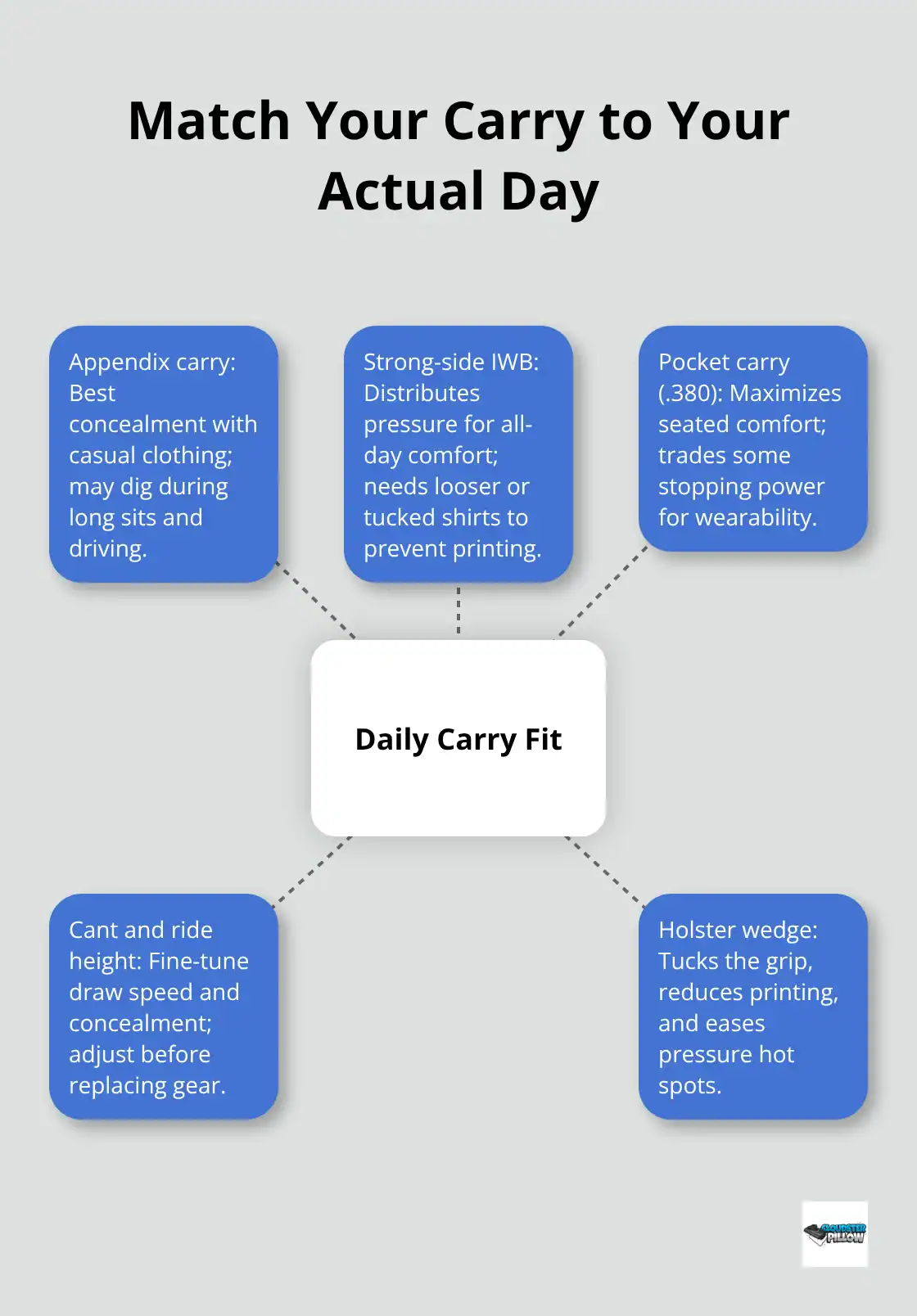
The cant and ride height adjustments directly impact both concealment and comfort during these extended periods. Pocket carry of a .380 appeals to everyday carriers specifically for comfort during long seated periods, accepting reduced stopping power in exchange for the gun they’ll actually wear consistently. This trade-off reflects real-world priorities: a firearm you carry every day outperforms a more powerful gun left at home.
Match Your Position to Your Actual Day
The critical step involves testing your chosen position during your actual daily routine before committing to it as your permanent setup. If your day involves frequent standing, walking, and casual clothing, appendix carry with a wedge delivers superior concealment. Conversely, if your schedule centers on desk work, driving, or professional attire, strong-side IWB with proper cant and ride height adjustments outperforms appendix carry regardless of how concealable appendix theoretically is. Your body type, firearm size, and daily mission determine what works-not internet forums or what works for someone else. Test your setup in your car, at your desk, in your preferred clothing. Only then will you know whether your holster choice actually supports your life.
Final Thoughts
The carriers who stay armed consistently solve their real world concealment challenges through honest testing and small, practical adjustments rather than expensive gear or fancy credentials. Comfort, training, and gear work together-skip any one of them and you’ll leave your firearm at home within weeks. Your holster fits your body, your cant and ride height support both comfort and concealment, and your training matches your actual carry position, so carrying becomes natural.
Real carrier experiences reveal a clear pattern: the problem isn’t usually your holster choice or your firearm, but the mismatch between your setup and your actual daily life. You test your carry position during your real routine, not at the range, and you practice draws from seated positions because that’s where you spend most of your day. You build situational awareness habits until they become automatic, reducing anxiety instead of creating it, and you accept that de-escalation works better than any firearm.
Small mechanical adjustments often solve problems that new equipment cannot fix, and a quality holster wedge adjusts the angle at which your holster sits, drawing your firearm closer to your body and hiding it under your clothing without forcing you to buy an entirely new system. We at Cloudster Pillow designed our holster wedge specifically for everyday carriers facing these real challenges, and our holster wedge collection helps you find the comfort and concealment solution that fits your carry setup and your life.
Frequently Asked Questions About Real World Concealment Challenges
Why do most CCW carriers stop carrying consistently?
Most CCW carriers stop carrying because of physical discomfort. Surveys show 67% cite discomfort as the primary reason, followed by printing concerns and holster fit issues. The fix usually involves adjusting cant and ride height, or adding a holster wedge rather than replacing the entire setup.
What is the best solution for holster printing?
A holster wedge is the most effective solution for IWB printing. It tilts the grip of your firearm inward toward your body, hiding it under clothing without requiring a new holster. Read our complete holster wedge guide to learn how to choose the right size and position for your carry setup.
Is appendix carry or strong-side IWB better for all-day comfort?
Strong-side IWB typically offers better all-day comfort for carriers who sit or drive for extended periods. Appendix carry excels for those who stand and walk most of the day. The key is testing your setup during your actual daily routine, not just at the range.
How do I stop my holster from digging into my hip?
Adjust the ride height and cant first. If the holster still digs in, add a foam holster wedge between the holster and your body. A quality wedge redistributes pressure and tilts the firearm away from pressure points, solving most discomfort issues without buying new gear. See the holster wedge setup guide for step-by-step instructions.
