
Gun Belt
The Best Concealed Carry Belt Is the One You Forget You’re Wearing
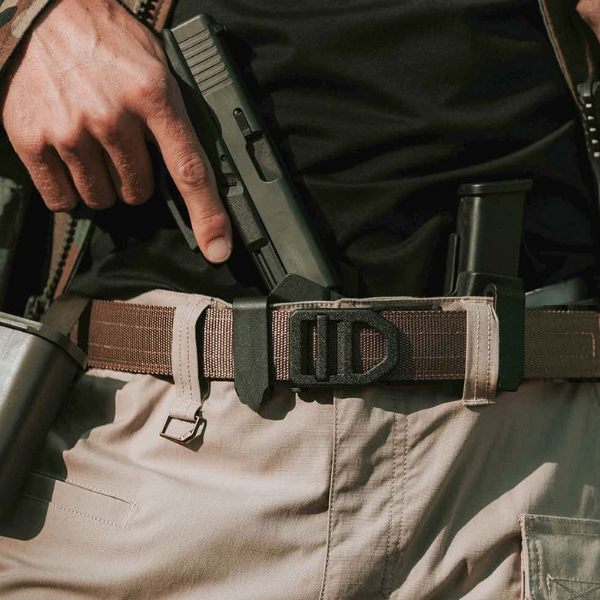
I’ve worn a concealed carry belt almost every day for years — through summer t-shirts, winter layers, twelve-hour drives, and more range days than I can count. In that time I’ve owned belts that were beautifully made and still came off the second I got home, and I’ve owned belts I genuinely stopped noticing by about week two.
That gap is the whole subject of this page. Almost everything written about the best concealed carry belt is written about hardware: buckle mechanisms, core inserts, tensile ratings, thread counts. Those things matter, but only because of what they do to your day. A belt is the one piece of gear you wear for sixteen straight hours, and the one you’re most likely to quietly give up on.
So I’m going to walk through the same technical questions everyone else covers — stiffness, ratchets, leather versus nylon, sizing — but I’m going to judge every one of them by a single standard: what does this do to you at hour twelve, with a loaded holster hanging off it?
Are Concealed Carry Belts Worth It?
Yes, if you carry every day. A regular belt folds and twists under the weight of a holstered pistol, so the holster tips out, the grip prints and the gun sags as the day goes on. A purpose-built gun belt stays stiff, holds the holster flat against you and keeps the whole rig where you set it. The Kore ratcheting belts I carry micro-adjust in small steps instead of fixed holes, so you can let them out a click when you sit down. You cut the strap to size at home, and once a belt is cut it’s final sale, so measure first.
What is the best concealed carry belt?
The best concealed carry belt is a purpose-built 1.5″ belt that’s rigid enough to hold a holstered pistol flat against your body without folding, and adjustable finely enough that you can dial in the tension as your day changes. Stiffness alone isn’t the answer — a belt stiff enough to hold a gun but too coarse to adjust is exactly the belt that ends up in a drawer. You want rigidity and micro-adjustment, because comfort under load is a function of both.
You’ll see the same question searched as the best gun belt for concealed carry, and it’s the same answer either way — “gun belt” and “carry belt” describe one product.
Everything below is why.
Why Your Belt Matters More Than Your Holster
This is the part people get backwards, and I did too for about my first year of carrying.
When a carry setup is uncomfortable, the holster gets blamed. It’s the thing touching you, it’s the thing with edges, so it’s the obvious suspect. I bought three holsters chasing a comfort problem that a holster was never going to solve.
Here’s what’s actually happening. Your holster doesn’t hold your gun — your belt does. The holster just wraps it. Every ounce of that pistol is hanging off the belt, and the belt is what decides whether that weight stays pinned flat against your body or gets to move around.
On a soft belt, the weight wins. The belt sags at the holster, rolls outward at the top edge, and the gun levers away from your body. Now you’ve got a grip pressing into your side, a muzzle end digging into your thigh, and printing you keep checking in every reflective surface you pass. You will feel all of that as “this holster is uncomfortable.” It isn’t. It’s the belt failing to do its one job.
Put the identical holster and the identical gun on a proper belt and the whole rig goes quiet. The gun sits where you put it. It doesn’t shift when you sit down or twist to grab something out of the back seat. That’s the reason I tell people looking for the best concealed carry belt to fix the belt before they buy another holster — a good belt makes a mediocre holster tolerable, and a bad belt makes a great holster miserable. (If you’re still sorting out the holster side of that equation, I went through my IWB holster picks separately.)
What Makes a Good Belt — The Honest Version
I’ll be straight about something: a fair number of products sold as “gun belts” are regular belts with tactical-sounding names. There’s no standard, nothing to enforce, and the word costs nothing to put on a label.
Here’s what actually separates a real one.
A stiffener that runs the full length. A genuine gun belt has a rigid layer built into it — usually a polymer or spring-steel core sandwiched between the outer layers, or in a leather belt, two layers bonded together. That core is what resists rolling. Without it you have a nice-looking strap.
Vertical rigidity, not board-flat stiffness. This is the distinction that separates a comfortable belt from an uncomfortable one, and it’s the one most people miss. You want a belt that won’t fold downward under the weight of a gun, while still wrapping around your waist. A belt that’s stiff in every direction is a hoop, and a hoop fights you every time you sit, bend, or drive. The belts I’ve kept are rigid vertically and still willing to curve — there’s a whole piece on finding that balance point if you want the detail.
Real thickness at a real width. 1.5″ is the sweet spot for concealed carry — it fits standard belt loops, matches nearly every holster clip made, and puts enough surface area against you to spread the load. 1.75″ gives more support but stops fitting normal pants. If you’re carrying something genuinely heavy, that trade-off deserves its own look.
Hardware that doesn’t shift. The buckle has to lock and stay locked. A buckle that creeps a quarter inch over the course of a morning is a gun that’s moved a quarter inch.
And the honest one: it has to be adjustable enough to live in. This is the criterion almost nobody lists, and it’s the one that decides whether the belt is still on you in six months. Your waist is not the same size at 8am and 8pm. It isn’t the same size before and after lunch, sitting versus standing, or in jeans versus slacks. A belt you can only set in one-inch jumps will be too tight or too loose for most of your day. That’s not a small annoyance — that’s the mechanism by which good belts get abandoned.
If you’re evaluating the best concealed carry belt for you, weigh that last point as heavily as the core. Rigidity is what makes a belt work. Adjustability is what makes you keep wearing it.
Gun Belt vs Regular Belt: What’s the Difference?
A gun belt has a rigid internal stiffener that keeps a holstered firearm from pulling the belt out of shape; a regular belt doesn’t. That’s the entire difference, and it’s the reason a regular belt can’t be substituted — a dress belt will sag, roll, and let the gun shift the moment you put real weight on it.
Everything else follows from that. A regular belt is designed to hold your pants up, which takes almost no structural work. Add a pistol, a holster, and a spare magazine and you’ve roughly quadrupled the load on a strap that was never engineered for it. The belt deforms around the holster, and every problem in the section above starts.
You’ll sometimes hear that a thick, high-quality leather dress belt is “good enough.” It’s better than a floppy one, but it isn’t the same thing — a single layer of leather stretches and softens under sustained load, and it’ll take a permanent bend where your holster rides. I pulled apart exactly how and why a normal leather belt gives out if you want to see the failure mode up close.
The practical answer: if you carry a firearm on your waist, you need a belt built for it. This is the cheapest meaningful upgrade in a carry setup, and it’s usually the one that fixes the complaint you thought was about something else. It’s also the first thing I’d tell anyone just starting out.
What Is an EDC Belt?
“EDC belt” and “concealed carry belt” mean nearly the same thing: an everyday belt built stiff enough to hold a loaded holster in place all day without sagging or rolling. Some people use “EDC belt” more broadly for any carry-ready everyday belt that also handles a knife, light or spare magazine, but you’re shopping for the same qualities either way:
- Stiffness, so the holster can’t tip outward and print
- A width that matches your holster clips and belt loops, usually 1.5 inches for everyday IWB carry
- Fine adjustment, so you can let it out when you sit and snug it when you stand (see ratchet vs traditional belts)
- A buckle that sits flat, so it doesn’t dig in when you sit
- Leather or nylon to suit how you dress
Everything below applies to choosing an EDC belt.
Ratchet vs Traditional Buckle
This is where the comfort argument gets concrete, and it’s the section I’d read first if I were shopping today.
A traditional belt has holes — typically five, an inch apart. That means you get five possible sizes, and your actual comfortable waist size at any given moment is very often between two of them. One hole is snug enough to feel like a band around your ribs by mid-afternoon. The next one out lets the gun sag and start moving. There’s no in-between, so you pick the lesser annoyance and live with it. Every single day.
A ratchet belt has no holes at all. The strap is a track, and the buckle locks into a position roughly every quarter inch — Kore publishes over 40 sizing positions in 1/4″ increments — instead of five. In practice you’re not choosing between “too tight” and “too loose” anymore. You’re landing on the setting that’s actually right.
The part I didn’t expect until I lived with one: you loosen it a notch after lunch without re-threading anything. One squeeze of the buckle lever, ease off a quarter inch, done — while seated, without untucking a shirt, without the whole production of unbuckling a belt in public with a gun on it. Then you snug it back up when you stand. That single behavior is most of why a ratchet belt disappears and a traditional one doesn’t. I wrote up what that micro-adjustment actually feels like day to day separately, because it’s the detail that convinces people.
I want to be fair about the trade-offs, because this isn’t free. A ratchet buckle is a mechanism, and mechanisms can fail where a prong and a hole basically can’t. The buckle is bulkier and more visible than a slim dress buckle, so it reads a little more “tactical” under a tucked shirt. And the strap is cut to your size at setup, which means you get it right once.
I still run ratchets, and micro-adjustment is the single biggest reason. But if you want a traditional buckle, buy a properly built one — the buckle style isn’t what makes a belt a gun belt. (Full head-to-head breakdown here.)
Leather vs Nylon
There’s no winner here, and anyone who tells you otherwise is selling one of them. They fail in different directions, and which one is right depends entirely on what you wear.
Leather dresses up. It’s the belt that works with slacks, a button-down, a sport coat — anywhere a nylon belt would announce itself. Good leather gun belts are built as two bonded layers, and they wear in rather than out; the belts I’ve had longest are leather. The costs are honest ones: leather is heavier, it doesn’t love getting soaked, and it takes a few weeks to break in before it stops feeling like a plank. It also holds a set — after enough months it remembers where your holster sits, which is either character or a flaw depending on your mood.
Nylon is lighter, cheaper, completely indifferent to weather, and rigid immediately with no break-in. If you’re in jeans and a t-shirt, working outdoors, or you want the stiffest option per dollar, nylon wins outright. The cost is that it looks like what it is. A nylon belt under a tucked dress shirt is a tell, and it never gets softer or nicer with age the way leather does — it just eventually wears out.
The way I’d actually decide: what are you wearing to work? Slacks and a collar, buy leather. Jeans, cargos, or a uniform, buy nylon. If you split the difference, leather is the one that covers both situations acceptably, which is why it’s the more common single-belt answer.
Both can be excellent. Neither is the best concealed carry belt in the abstract — the best one is the one that matches your clothes, because a belt that doesn’t work with your wardrobe is a belt you’ll stop wearing, and comfort you don’t wear is worth nothing. Body type matters here too, and I broke that down by build.
One more thing before gear: know your local carry laws — the NRA-ILA state gun law summaries are a solid starting point.
The Belts I Actually Carry and Sell
Straight disclosure: I’m a Kore Essentials dealer, and these are for sale on this site. I’d rather say that plainly up front than bury it. I sell them because I wore them first — the micro-adjustment in section 4 is the reason, and it’s the same reason I keep recommending them to people who ask me in person.
These are the gun belts for concealed carry I actually keep in rotation. Every belt below is a 1.5″ ratchet belt, cut to size, with the buckle sold as part of the set. Kore covers them with a one-year warranty against defects. Here’s the current lineup by material — or browse the full belt category.
Buffalo leather — $69.95–$79.95. The dressiest and the most durable of the leather options. Available in Black, Brown, Tan, and Coffee. This is what I reach for when I need the belt to look like a belt.
ArmorTek leather — $59.95–$69.95. A more weather-tolerant leather finish at a lower price, in Black, Brown, and Tan. The best value in the leather line if you want leather you don’t have to baby.
Basketweave — $59.95–$69.95. Duty-style texture, leather build. If you wear a uniform, this is the one that matches.
Carbon fiber pattern — $59.95–$69.95. The most modern-looking of the set, and the one that reads least like a gun belt to people who don’t know what they’re looking at.
Tactical nylon — $69.95–$79.95. The stiffest option, in Black, Gray, Coyote, Ranger Green, and Tan. Jeans-and-t-shirt carry, range use, or anywhere weather is a factor.
Here’s the whole line side by side, which is the fastest way to narrow it down:
| Belt type | Options | Price | Sizes | Look | Best for |
|---|---|---|---|---|---|
| Tactical nylon | 5 colors | From $69.95 | 24″–54″ | Low-profile tactical | Daily EDC, range days |
| Buffalo leather | 4 colors | From $69.95 | 24″–44″ | Dress / business casual | Office carry |
| ArmorTek leather | 3 colors | From $59.95 | 24″–44″ and 44″–54″ | Dress, tougher finish | Hard daily wear |
| Basketweave | 1 | From $59.95 | One strap, cut to fit | Classic duty | Uniform / traditional |
| Carbon fiber | 1 | From $59.95 | One strap, cut to fit | Modern textured | Understated look |
Every belt comes with your choice of 14 buckle styles. Prices are “from” because one buckle — the X4 stainless — runs $10 more than the other thirteen; every other buckle is the base price.
If you want the full rundown on how the line is built and which buckle pairs with what, that’s all in the Kore belt guide.
I’ll also name the alternatives honestly, because you’re going to find them anyway: Nexbelt makes a comparable ratchet belt, Hanks builds a well-regarded traditional leather belt, and Tenicor’s is a favorite among appendix carriers. I don’t sell those and I’m not going to pretend they’re bad. I sell the one I wear.
Kore vs Nexbelt
Nexbelt also makes a 1.5″ ratchet gun belt, so here are the two side by side, using only what each company publishes for its black nylon 1.5″ belt. Where a cell says “not listed,” the maker’s product page doesn’t give that number.
| Kore X-Series Black Tactical Nylon 1.5″ | Nexbelt Titan Black EDC Ratchet Belt 1.5″ | |
|---|---|---|
| Width | 1.5″ | 1.5″ |
| Thickness | 5 mm | Near 3/16″ |
| Waist range | 24″–54″ (an EXL 54″–72″ size is also offered) | Up to a 50″ waist (Nexbelt sells separate XL versions) |
| Adjustment | 40+ positions in 1/4″ steps | Ratchet; step size not listed on this belt’s page |
| Load rating | Up to 10 lbs, IWB, OWB or appendix | Not listed |
| Stiffener | Power-Core center | High-density microfiber strap |
| Buckle hold | Set screws (hex wrench included) | Two stainless steel set screws in the clasp |
| Warranty | 1-year manufacturer’s warranty | Not listed on this belt’s page |
On paper they’re close: both are 1.5″ nylon ratchet belts with set-screw buckles, and both makers describe cutting the strap to fit your waist. The published differences are that Kore lists a wider size range on one strap, a load rating and a position count, and the Titan’s page doesn’t list those numbers. I sell Kore and not Nexbelt, so weigh my take with that in mind; the micro-adjustment covered above is why I carry Kore. Whichever you buy, measure before you trim, because Kore doesn’t refund cut belts and cut belts are final sale here too.
Sizing
Ratchet belts are sized differently than hole-punched belts, and getting this wrong is the most common ordering mistake I see. It’s worth slowing down here, because the best concealed carry belt ordered in the wrong size is just an expensive belt that doesn’t fit.
Don’t order your pants size. Pants sizing is not belt sizing.
Measure a belt you already own that fits. Lay it flat and measure from the fold at the buckle to the hole you actually use. That number in inches is your size. If you’re between sizes, size up — the strap gets cut down at setup, so extra length is trimmable and missing length is not.
Account for how you carry. Inside-the-waistband carry adds roughly the thickness of the holster and gun to your effective waist. If you carry IWB, add an inch to what you measured.
Cut it once, carefully. The strap is trimmed to size during setup, and a cut strap can’t be uncut — measure twice before you trim. There’s a step-by-step sizing walkthrough here that covers the whole process in more detail than this section can.
The Full Comfort Setup
The belt is the foundation, but it isn’t the whole comfort picture. Once the belt stops the gun from moving, the two things I’d look at next are the pressure point where the holster’s edge meets your body, and where your spare magazine lives. I run a Cloudster Pillow wedge behind my holster to soften that contact point, and I moved my spare mag off my beltline entirely with a pocket carrier — which frees up the crowded real estate on the strong side. Neither is a substitute for a proper belt; they’re what you add after the belt is right, and together they’re most of the difference between carrying every day and meaning to. Start with the best concealed carry belt you can put on your waist, then fix what’s left. (More on building out the rest of an EDC setup here.)
Concealed Carry Belt FAQ
What is the best concealed carry belt?
The best concealed carry belt is a purpose-built 1.5″ belt with a full-length rigid stiffener and fine adjustment — rigid enough that a holstered pistol can’t pull it out of shape, and adjustable enough that you can match it to your waist as it changes through the day. Material choice comes down to your wardrobe rather than performance: leather for dress clothes, nylon for jeans and outdoor work.
Is a gun belt worth it for concealed carry?
Yes, and it’s usually the highest-impact upgrade in a carry setup. A gun belt is what keeps a holstered pistol pinned flat against your body instead of sagging and rolling outward. Most complaints people blame on a holster — printing, the grip poking out, the gun shifting when you sit — are actually the belt failing under load.
What is the difference between a gun belt and a regular belt?
A gun belt has a rigid internal stiffener running its full length that resists folding under the weight of a firearm. A regular belt doesn’t. A regular belt is built to hold up pants, and it will sag and deform where the holster rides once you add a gun’s weight to it.
Can I use a regular belt for concealed carry?
You can, but it works poorly and gets worse over time. A single-layer belt stretches under sustained load and takes a permanent bend at the holster. A thick, stiff dress belt is better than a flimsy one, but it isn’t built in layers the way a purpose-made belt is, so it can’t hold its shape long-term.
What is the most comfortable belt for all-day carry?
The most comfortable belt is a rigid one you can adjust finely. Rigidity keeps the gun from moving; fine adjustment lets you match the belt to how your waist actually changes over a day. A ratchet belt with roughly quarter-inch adjustment positions solves the “between two holes” problem that makes traditional belts uncomfortable by mid-afternoon.
What makes a good gun belt?
A full-length rigid stiffener, vertical rigidity without hoop-like stiffness, a 1.5″ width that fits standard loops and holster clips, hardware that locks and stays locked, and enough adjustability to stay comfortable across a full day.
What is the best material for a gun belt?
Leather if you wear slacks or a collared shirt; nylon if you wear jeans, work outdoors, or want maximum stiffness per dollar. Leather looks better and ages well but is heavier and needs break-in. Nylon is lighter, weatherproof, and rigid immediately, but it always looks tactical.
Does a gun belt make a difference?
A significant one. The same holster and firearm behave completely differently on a proper belt — the gun stops shifting when you sit or turn, printing drops, and the pressure points that make people give up on carrying largely go away.
How do I size a ratchet belt?
Measure an existing belt that fits, from the fold at the buckle to the hole you use, and order that measurement — not your pants size. Add about an inch if you carry inside the waistband. If you’re between sizes, size up, since the strap is cut down at setup and a cut strap can’t be uncut.
What width belt is best for concealed carry?
1.5 inches. It’s the width nearly every IWB and OWB holster clip is molded for, it fits standard belt loops, and it spreads the load enough to stay comfortable. Wider belts give more support but stop fitting normal pants and won’t seat properly in most holster clips.
Is Kore or Nexbelt better?
Both are 1.5″ ratchet gun belts with straps you cut to fit, so the choice comes down to the published specs and the buckle you like. For their black nylon belts, Kore lists a 24″–54″ waist range, a 10 lb load rating and 40+ quarter-inch positions, while Nexbelt’s Titan page lists a 50″ maximum waist and no load rating. I’m a Kore dealer, so that’s the one I sell.

Pingback: Ratcheting Gun Belts vs. Traditional Belts: Which is More Secure?
Pingback: Why a Regular Leather Belt Fails for Concealed Carry
Pingback: Best Men's Ratchet Belt for EDC & Concealed Carry (2026)
Pingback: Best AIWB Holster 2026: 7 Picks That Don't Dig or Print
Pingback: Everyday Carry Gear Upgrades: Small Improvements, Big Comfort Gains
Pingback: Premium Leather EDC Gear Worth the Investment
Pingback: Appendix Carry Comfort for Women: Setup Guide (Holster Wedge Tips)
Pingback: Solving Front Carry Issues: Addressing Appendix Carry Problems
Pingback: Best Holster for Fat Guys: IWB & AIWB Comfort Picks (2026)
Pingback: Top 5 Best Concealed Carry Gear Picks for 2026
Pingback: Holster Wedge Kit Pillow: Solving Grip Kick with Muzzle-End Torque
Pingback: Cloudster Pillow: The Appendix Carry Holster Wedge Pillow
Pingback: Leather Duty Belt: Fit, Load Rating & Comfort
Pingback: ArmorTek vs Buffalo Leather Gun Belt
Pingback: Best Sig P365 Holster (2026): IWB, Appendix & Comfort
Pingback: Micro Adjust Gun Belt: Best Fit for Daily Carry
Pingback: Best Glock for Concealed Carry 2026: G19, G43X & G26 Ranked
Pingback: Kore Belt Sizing: Cut-to-Size Guide (Measure Once, Cut Once)
Pingback: All day CCW comfort: Simple Ways to Stay Comfortable
Pingback: Holster Pain? 4 Causes and How to Fix Each One
Pingback: Best AIWB Setup for Glock 19: Appendix Carry & Wedge Guide
Pingback: Best Sig P365 XMACRO Holster: How to Choose + 2 Picks (2026)
Pingback: Best Concealed Carry Pants for Men (2026): What Matters + 2 Picks
Pingback: Best Glock 26 IWB Holster (2026): What to Look For + Top Picks
Pingback: What Is EDC? Everyday Carry Gear Meaning & Kit Basics
Pingback: Battle Belt Setup: What Goes on the Belt (2026)