
CCW Guns, Concealed Carry Firearms
Compact Defense Pistols: Choosing The Right Everyday Carry Option
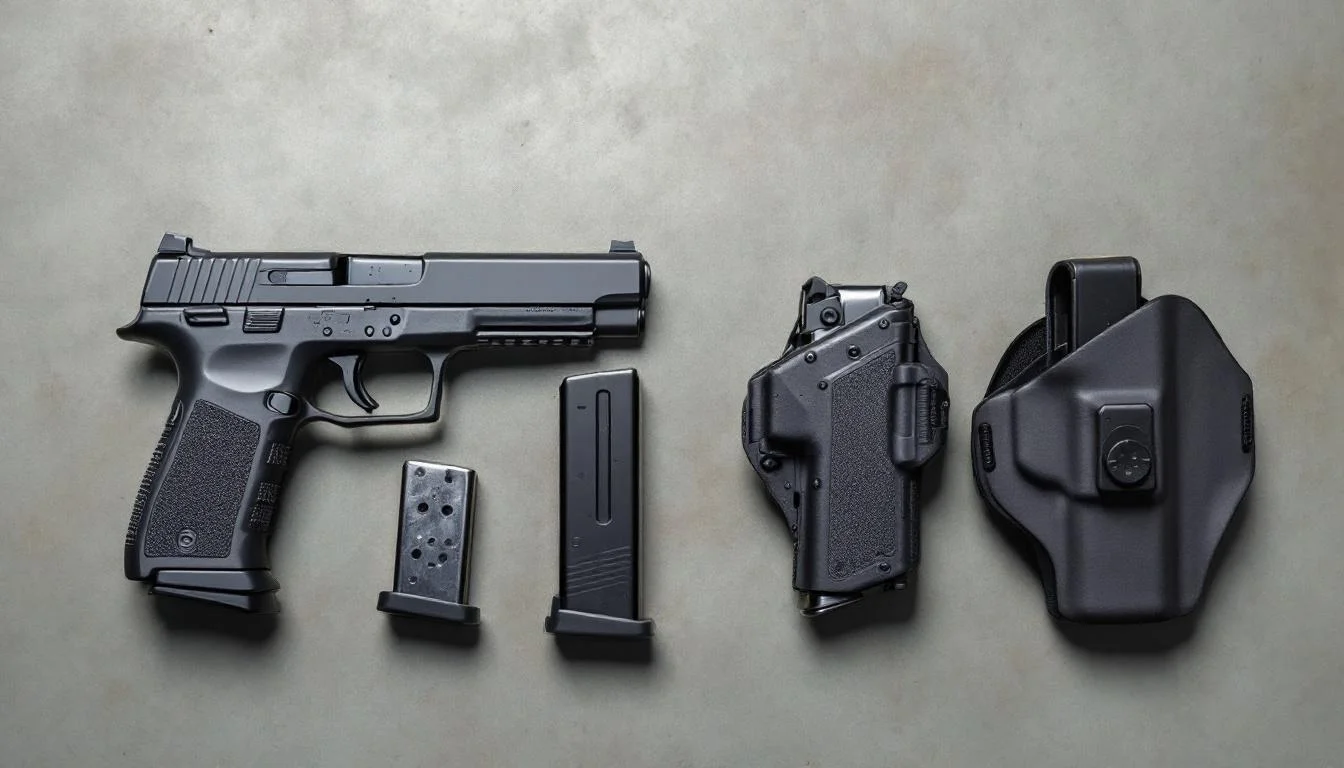
compact carry pistols
Picking the right compact carry pistol is one of the most important decisions you’ll make as a CCW holder. The wrong choice leads to discomfort, poor performance, and abandoned carry habits.
We at Cloudster Pillow know that comfort and capability aren’t mutually exclusive. This guide walks you through the features that matter, the models worth considering, and the training that transforms your compact pistol into a reliable defensive tool.
What Makes a Compact Pistol Actually Reliable
Test Your Carry Ammunition Thoroughly
Reliability under stress separates carry guns from range toys. A compact pistol must function flawlessly with defensive ammunition, not just target rounds. Test your carry ammo in your own handgun with at least 500 rounds before depending on it, according to ammunition expert Jim Gilliland. This isn’t optional-a flawless box of ammo is non-negotiable. Many carriers load their compact pistol and assume it will work. That assumption costs lives. Feed your exact defensive load through your exact gun repeatedly. Watch for failures to feed, failures to eject, or failures to fire.
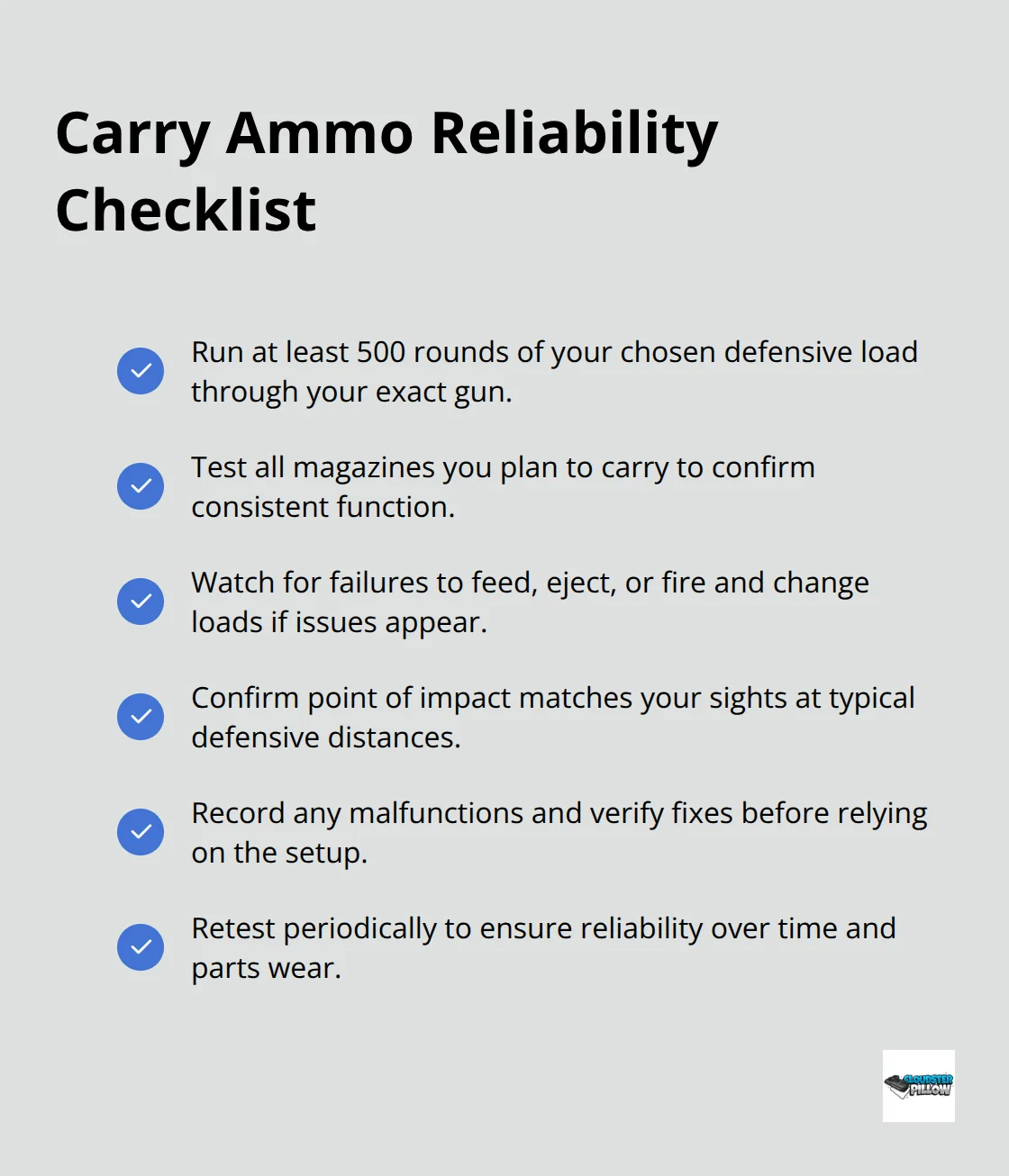
If your Sig P365, Hellcat, or Glock 19 stumbles on your chosen ammunition, that round doesn’t work for you. Period.
Fit Your Hand First, Everything Else Second
Ergonomics matter equally to raw reliability. A pistol that doesn’t fit your hand creates tension, slower draws, and poor grip security. The Glock 19 offers a comfortable, full grip for most hand sizes, while the P365 XL accommodates larger hands better than the standard P365. Conversely, the Hellcat’s aggressive grip texture aids control and security for those with smaller or weaker hands. Spend time at a rental range or borrow from a trusted friend. Feel how each pistol sits in your palm. Does your thumb reach the safety or slide release naturally? Can you work the trigger without shifting your grip? A poor fit means poor performance when it matters.
Trigger Quality Determines Your Accuracy
Trigger quality directly impacts accuracy and confidence. A crisp, predictable trigger breaks at a known weight and resets cleanly. The Hellcat’s trigger is notably responsive, while the Glock 19’s stock trigger feels heavy to many shooters. The CZ P10C’s flat-faced trigger and undercut trigger guard reduce finger fatigue and improve shot placement. Short reset performance matters in defensive scenarios-the faster your trigger resets, the faster you can place follow-up shots. Test triggers before purchase. A heavy, creepy trigger teaches bad habits and slows your strings. A crisp trigger rewards proper technique and builds confidence.
Match Your Ammunition to Your Barrel Length
Ammunition choice compounds trigger performance. Modern defensive loads from Speer’s Gold Dot line are engineered for reliable expansion in short barrels, delivering consistent energy transfer and penetration through clothing. Bullet construction and design matter more than velocity alone. A slow-moving round that expands reliably outperforms a fast round that fails to open. Your compact pistol’s short barrel demands ammunition designed for it-Gold Dot Short Barrel ammunition expands reliably in barrels as short as 1.9 inches while reducing felt recoil. Skip the velocity chasing. Pick ammunition that performs in your gun. Once you’ve selected a reliable pistol that fits your hand and paired it with ammunition that functions flawlessly in your specific firearm, the next step is understanding which models deliver these qualities in real-world carry scenarios.
The Pistols That Actually Work for Daily Carry
Single-Stack Designs: Maximum Concealment, Real Capacity
The Sig P365 transformed compact carry by fitting 10+1 rounds into a frame barely larger than single-stack designs and capacity in compact pistols from a decade ago. Its modular fire-control unit allows you to swap grip sizes to match your hand, and the P365 XL extends the grip for better control without sacrificing concealability. The standard P365 weighs about 17.8 oz with a 3.1-inch barrel and 1-inch width, making it genuinely pocket-friendly. The Hellcat OSP competes directly with similar dimensions and an 11+1 capacity, but its aggressive grip texture and optics-ready design from the factory appeal to carriers who want day-one red dot compatibility. For pure slimness, the Glock 43X delivers a 10+1 capacity in an incredibly thin profile, though you sacrifice the capacity bump that makes the P365 so attractive.
Double-Stack Options: Capacity Without Bulk
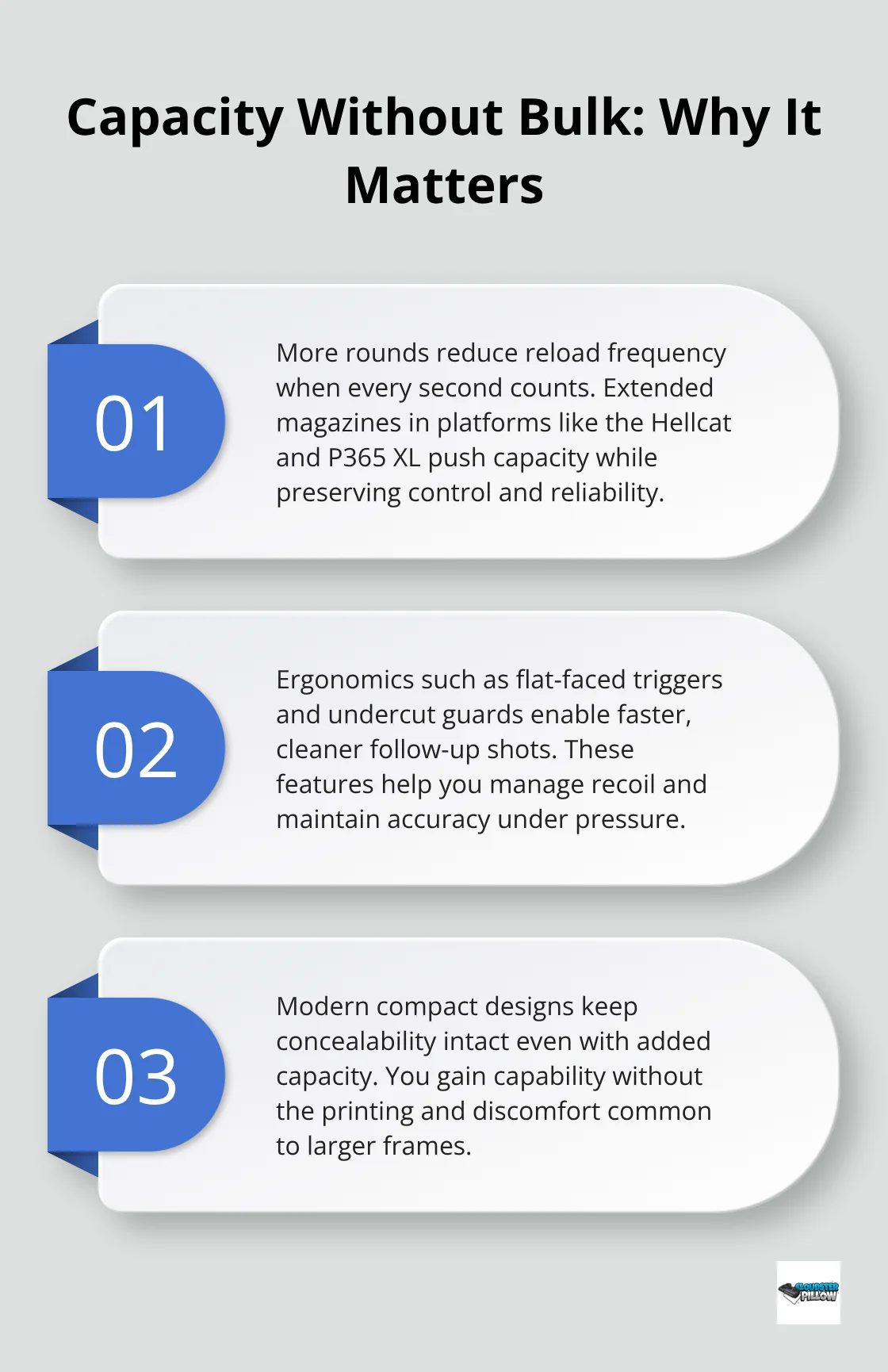
The CZ P10C sits slightly larger at 7.3 inches overall and 26 ounces, but its flat-faced trigger and undercut trigger guard reward proper technique with faster follow-up shots. If you need more firepower without bulk, the Hellcat accepts extended magazines that push capacity to 15 rounds, and the P365 XL with extended mags reaches similar numbers. These aren’t theoretical advantages-higher capacity directly reduces reload frequency in defensive situations, and modern compact designs prove you don’t sacrifice concealability to get there.
Hammer-Fired Platforms: A Different Philosophy
Hammer-fired platforms versus striker-fired pistols for concealed carry offer different approaches entirely. The Equalizer’s hammer-fired design and 10+1 capacity in 9mm appeal to carriers who struggle with slide manipulation or prefer manual control, weighing 22.9 oz with a 3.68-inch barrel. Ruger’s LCR revolvers eliminate striker-fired complexity with only 5–6 rounds and a heavier double-action trigger, but the simplicity and reliability convince some carriers that fewer rounds matter less than absolute dependability. Striker-fired platforms dominate compact carry because they’re faster to deploy, lighter, and easier to maintain, but hammer-fired options deserve consideration if hand strength, reliability concerns, or personal preference pull you that direction.
Finding Your Fit: The Real Decision
The real decision isn’t striker versus hammer-it’s whether the specific pistol fits your hand, your carry method, and your commitment to training with it. Your compact pistol only works if you’ll actually carry it daily and shoot it regularly. Once you’ve selected a model that matches your hand size and carry style, the next critical step involves matching that pistol to your holster setup and body position, which directly impacts both concealment and your ability to draw quickly when you need it most.
Training Your Compact Pistol for Real Situations
Selecting the right compact pistol means nothing without the skills to deploy it effectively. Most carriers shoot their defensive pistol once or twice after purchase, then assume muscle memory will activate when needed. That assumption fails under stress. Your compact pistol demands a training approach tailored to its size, recoil characteristics, and the distances where self-defense actually occurs. Defensive shootings happen fast-the average encounter unfolds in seconds, not minutes-so your practice must reflect reality, not target-range fantasy.
Understanding Recoil and Sight Radius
Compact pistols, especially single-stack designs like the P365 or Hellcat, generate snappier recoil than full-size frames because they weigh less and have shorter sight radiuses. This reality shapes everything: your grip pressure, your sight alignment, and your follow-up shot speed. Training your compact pistol for real situations means understanding that most defensive encounters occur at close range where you can place accurate shots without perfect sight picture-your target is large, and adrenaline heightens focus. Train to get your sights on target quickly, press the trigger with a smooth press (not a jab), and reset for the next shot.
Building Muscle Memory Through Dry Fire
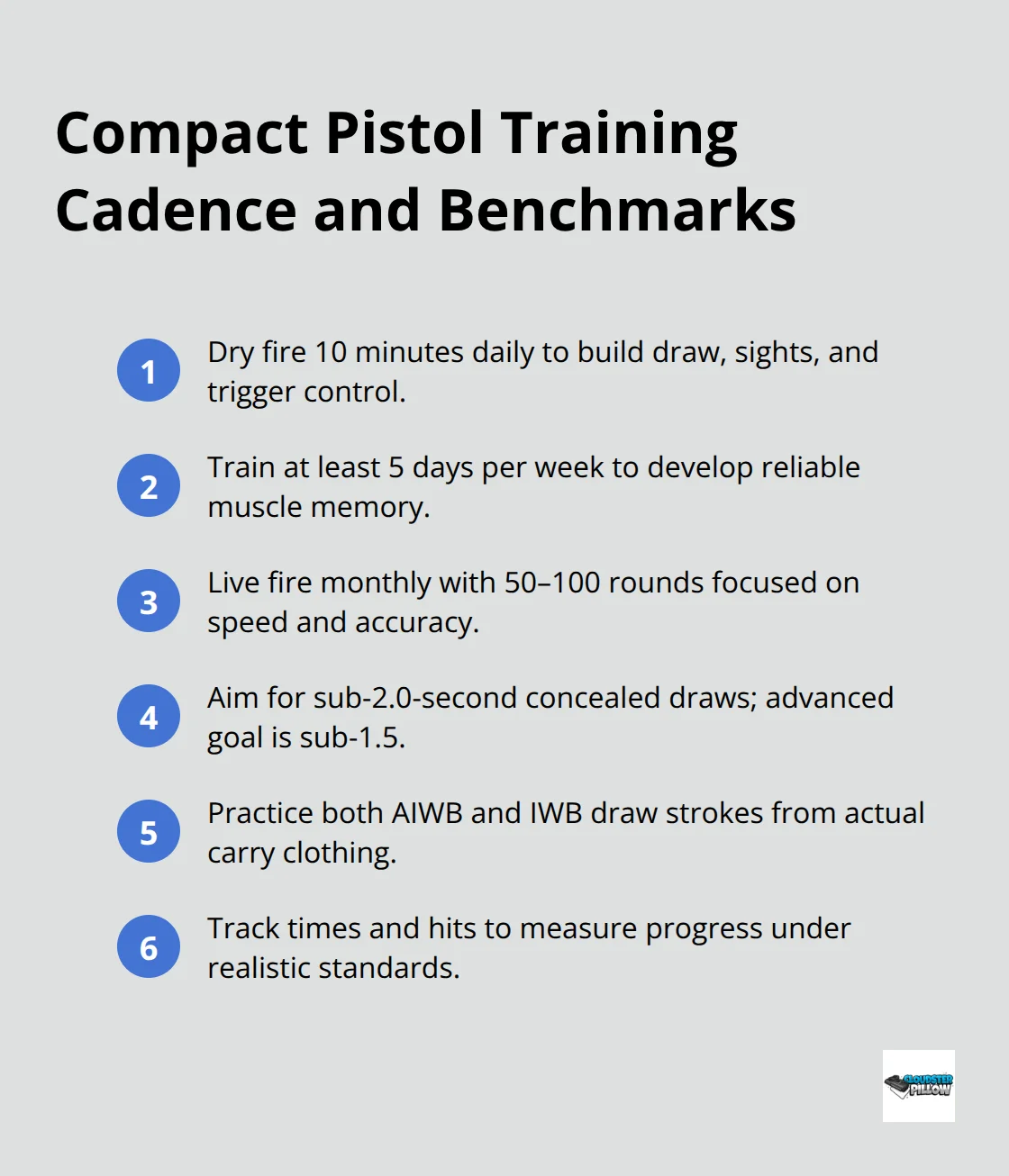
Dry fire drills build reflexive accuracy without ammunition cost. Spend 10 minutes daily working your draw from your actual holster, establishing sight picture, and practicing trigger resets. Do this 5 days a week, and you’ll develop reflexive accuracy that transfers directly to live fire. Live ammunition practice should happen monthly at minimum-50 to 100 rounds focused on speed and accuracy from your typical carry position and distance.
Mastering Your Draw from Concealment
Drawing from concealment separates trained carriers from casual gun owners. Your holster position, body positioning, and clothing all affect draw speed and safety. If you carry appendix inside-the-waistband (AIWB), your draw begins with a high elbow and forward hip drive that clears the holster mouth while your hand moves straight to the grip. This motion takes practice to execute smoothly without flagging your body or bystanders. If you carry traditional inside-the-waistband (IWB) at 3 o’clock, your draw involves a slight forward lean, a clean grip acquisition, and a smooth presentation upward and outward.
Both positions demand dry fire practice in your actual clothing because baggy shirts, jackets, and holster wedges all affect draw speed and consistency. Practice your draw 20 to 30 times during each training session before moving to live fire. Time yourself-you should draw and fire an accurate shot from concealment in under 2 seconds, and skilled carriers manage sub-1.5-second draws. This speed isn’t theoretical; it’s measurable and achievable through focused repetition.
Identifying and Fixing Form Breakdowns
Once you’ve built draw speed and basic accuracy, rotate your practice to address weak points. Grip pressure and trigger control are key to managing recoil and accuracy. If your follow-up shots drift high, your grip pressure is slipping. If your first shot is accurate but your second shot misses, you’re jerking the trigger. If you’re slow from concealment, your draw path is inefficient. Identify these problems during dry fire, then fix them with live ammunition. Your compact pistol’s short sight radius means minor form breakdowns produce large misses downrange, so precision in technique directly translates to accuracy under pressure.
Final Thoughts
Your compact carry pistol only works if you carry it daily and train with it consistently. The best firearm in the world sits useless in a nightstand drawer, so select a pistol you’ll actually want to carry every single day based on your lifestyle, body type, and typical clothing. If you work in business casual and sit at a desk, an IWB holster at 3 o’clock with a Glock 19 or CZ P10C works well, while appendix carry with a P365 or Hellcat makes sense if you move constantly and need speed.
Comfort directly impacts carry consistency, and a pistol that digs into your ribs or prints under your shirt gets left behind. Compact carry pistols demand proper support, and accessories like holster wedges reduce printing and improve all-day comfort without replacing your entire setup. We at Cloudster Pillow designed our holster wedge specifically for carriers who want comfort without compromise, enhancing concealment for both AIWB and IWB positions so you stay focused on training instead of adjusting your gear.
Your training commitment separates serious carriers from casual gun owners, and monthly range sessions combined with weekly dry fire drills build the reflexive accuracy that matters when adrenaline floods your system. Your compact carry pistol demands more precision than larger frames because its short sight radius punishes poor technique, so invest in training courses and test your defensive ammunition in your specific firearm before depending on it. Discover how to maximize your carry comfort at Cloudster Pillow’s holster wedge collection.
