
Uncategorized
IWB Holster Fit Guide: Get the Most Comfort and Security
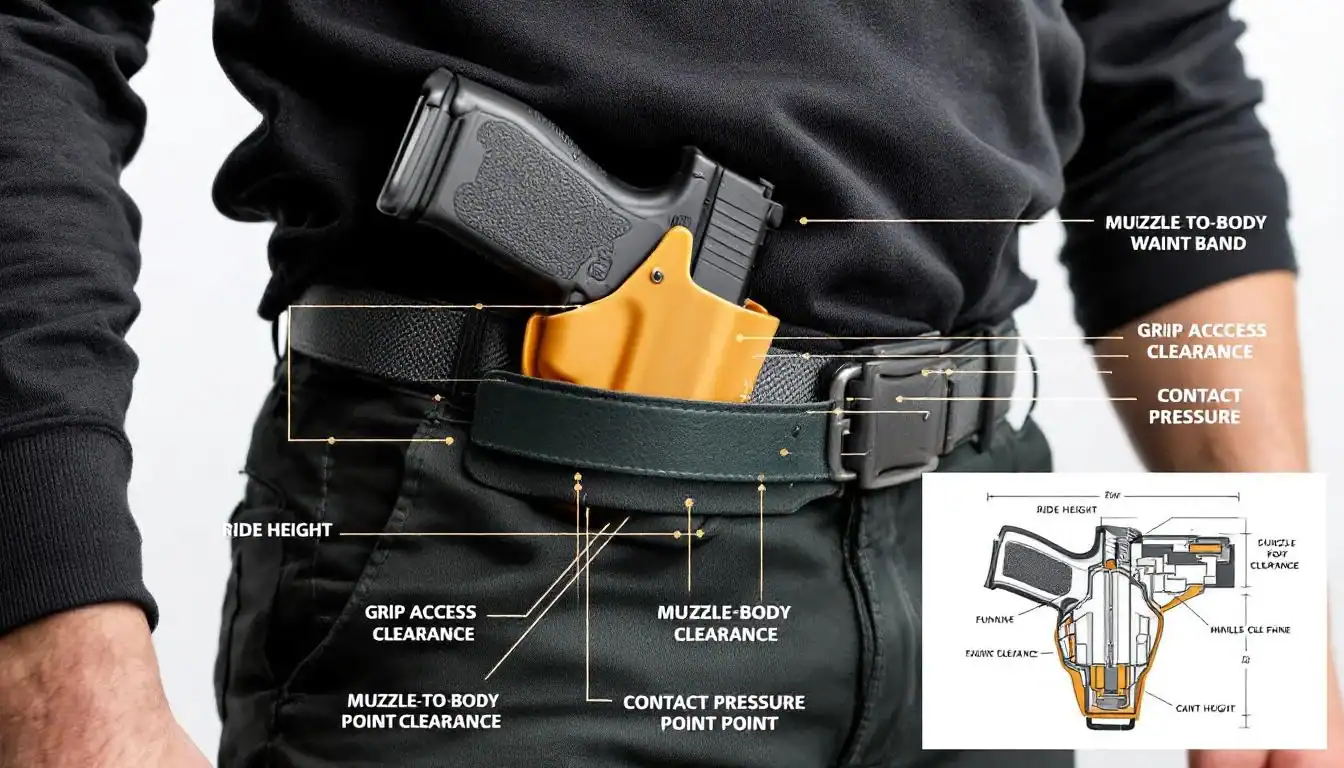
Your IWB holster fit guide starts here. Most carriers struggle with comfort because they haven’t optimized their setup, but small adjustments make a massive difference in how your gun sits and feels throughout the day.
At Cloudster Pillow, we’ve seen firsthand how the right fit transforms your carry experience. This guide walks you through finding your ideal setup, fixing common problems, and enhancing what you already own.
What Actually Makes an IWB Holster Fit Right
Match Your Exact Firearm and Light Configuration
A proper IWB holster fit depends on three non-negotiable elements: your exact pistol model, your exact weapon-mounted light model if you use one, and your body type. Most carriers fail by purchasing a holster based on brand name alone, then wondering why it feels loose or prints through their shirt. The holster shell must match your slide length, trigger guard shape, frame width, and rail profile precisely. Small differences matter-a Glock 19 and a Glock 43X require completely different holsters, and adding a Streamlight TLR-7 to your setup changes everything about how the holster retains your gun. If your holster doesn’t grip the firearm with minimal movement and provide full trigger guard coverage, you’ve got a safety problem, not just a comfort problem.
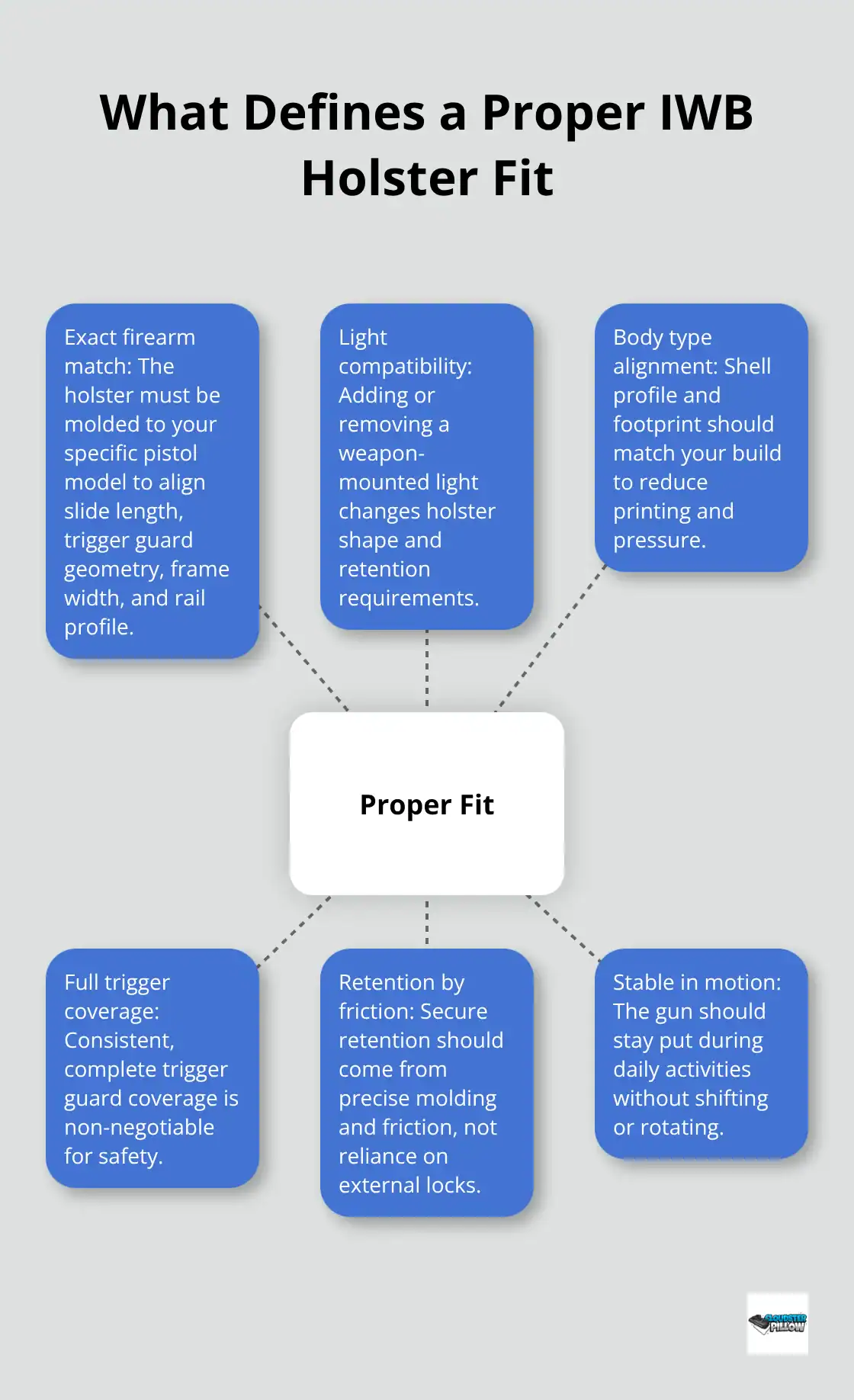
Retention should come from proper friction and fit, not from hoping a locking mechanism will save you during dynamic movement or training drills. When the fit is correct, your gun stays put during daily activities-sitting, bending, climbing stairs, driving-without shifting or rotating inside the waistband.
Identify Common Fit Problems and Their Root Causes
Fit issues stem directly from mismatches between your holster and your specific setup. Printing happens when the grip outline shows through clothing, usually because the holster is too wide for your body type, the ride height sits too high, or the cant angle forces the grip away from your body. Pressure points and hot spots develop when the holster shell digs into your side or hip because it wasn’t designed for your frame size or because the cant and ride height weren’t adjusted for how you carry. A poorly fitting holster can cause the trigger guard to wear down or lose coverage over time, which is a serious safety issue that most carriers don’t catch until damage occurs. Positioning matters equally-cant affects both your draw angle and how much the grip sticks out, while ride height determines whether the gun sits too high and prints or too low and becomes hard to access.
Adjust for Your Body Type and Carry Style
Carriers with athletic builds benefit from narrow-profile shells and minimal footprint designs, while stockier frames need winged backers and adjustable ride height to distribute weight and reduce irritation. Getting these details right transforms your carry from something you tolerate to something that actually works for how you move and dress every day. The next step involves testing different positions and making fine adjustments to your cant and ride height-two changes that have the biggest impact on both comfort and concealment.
Dialing In Cant and Ride Height for Your Body
Understand How Cant and Ride Height Control Your Comfort
Cant and ride height deliver the fastest, most noticeable improvements to comfort and concealment. Cant is the forward or backward angle of your holster-measured in degrees-and it directly controls how the grip points relative to your body and clothing. A neutral cant (zero degrees) works for some carriers, but most benefit from a slight forward cant between 15 and 20 degrees, which rotates the grip toward your body and reduces printing significantly. Ride height determines how high or low the gun sits on your waistband; too high and the grip prints above your shirt, too low and you sacrifice draw speed and accessibility.
Match Adjustments to Your Body Type
Your body type should guide these adjustments. Athletic carriers with narrow frames thrive with a lower ride height and neutral to slightly forward cant, which minimizes the grip’s footprint and keeps everything tucked tight. Stockier builds need a higher ride height paired with a forward cant to push the grip inward, distributing pressure across a wider area of your side rather than concentrating it on one hot spot.
Make Incremental Adjustments and Test Them
Start with the manufacturer’s default settings, then adjust incrementally-most quality holsters allow cant adjustments and multiple ride height positions through simple screw changes. After adjusting, wear your holster for at least 30 minutes during normal movement: sitting, standing, bending, and reaching. If the grip digs in or printing appears, adjust cant forward by five degrees or raise the ride height slightly.
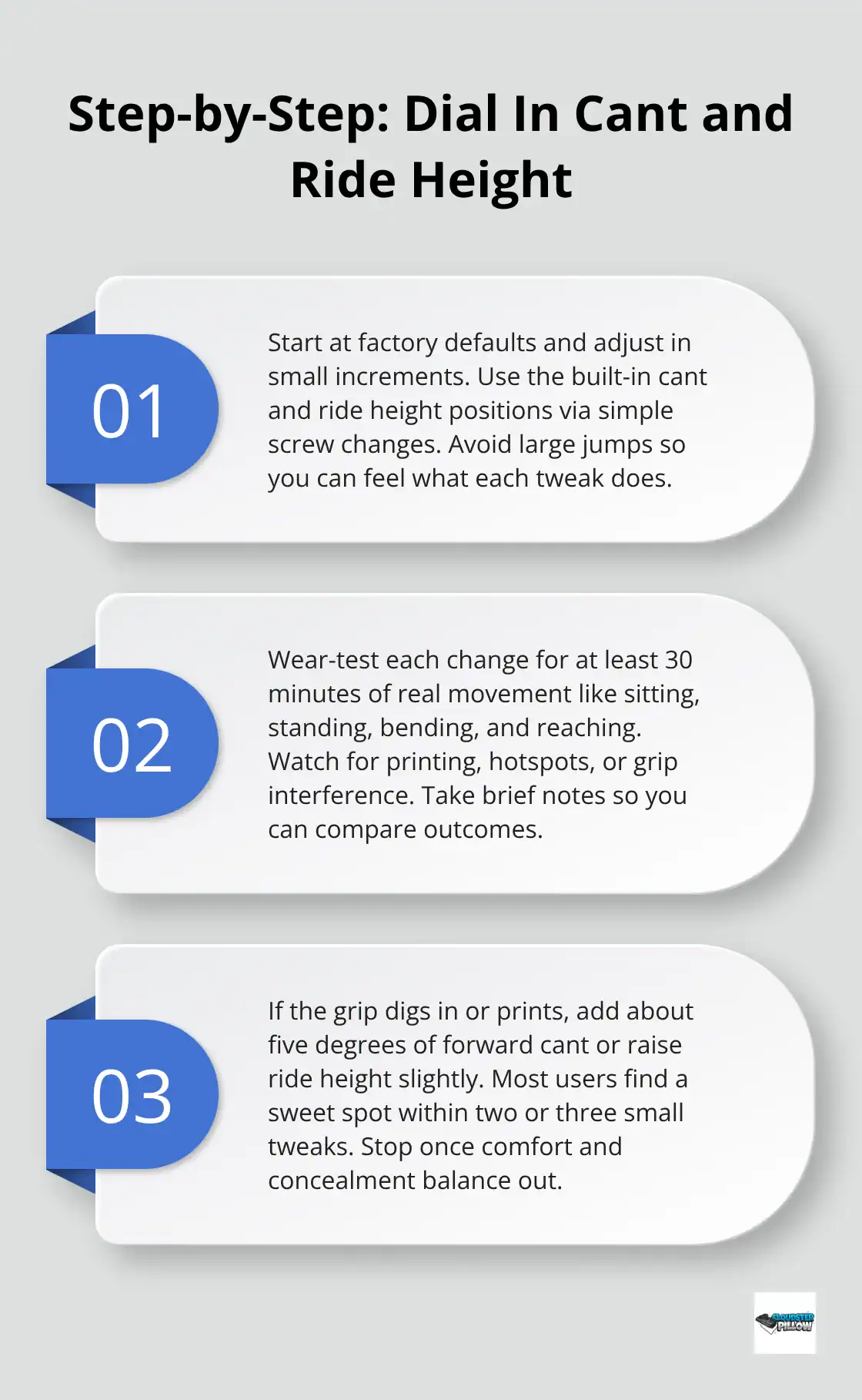
Most carriers find their sweet spot within two or three small tweaks rather than dramatic overhauls.
Position Your Holster Where Your Body Feels Natural
Testing different positions on your waistband reveals where your body naturally accommodates the gun and holster. Most IWB carriers default to strong-side hip carry around the 3 o’clock position, but your exact placement matters more than the general zone. Some people find that moving the holster one inch forward or backward changes comfort dramatically because it aligns the grip with the natural curves of their ribcage and hip. Spend a full day at each position before moving it; your body needs time to adapt, and first-impression discomfort often disappears after a few hours of wear.
Break In Your Holster With Consistent Daily Wear
When breaking in your holster, expect the Kydex shell to feel stiff initially-this is normal and actually ensures proper retention. Wear it daily for a week before deciding whether adjustments are needed, because Kydex is a rigid thermoplastic that maintains its exact molded shape permanently, and pressure points often diminish with consistent wear. If hot spots persist after 7 to 10 days of daily carry, that’s your signal to adjust cant, ride height, or position. A proper IWB setup shouldn’t require suffering through weeks of discomfort; if pain continues beyond two weeks despite adjustments, the holster itself may not match your body type or firearm configuration, and exploring alternatives makes sense rather than forcing a bad fit. Once you’ve dialed in your cant and ride height, you’re ready to address the remaining comfort gaps-and that’s where targeted enhancements come into play.
Boost Comfort and Concealment Without Buying a New Holster
How Holster Wedges Solve Printing and Pressure Points
If you’ve dialed in your cant and ride height but still experience printing or pressure points, a holster wedge offers the fastest fix without replacing your entire setup. A holster wedge is a small foam device designed to reduce printing and increase comfort while concealed carrying. This dual function addresses the two biggest remaining comfort complaints: the grip printing through clothing because it angles away from your body, and localized pressure points where the hard holster shell contacts your side or hip throughout the day.
Understanding Wedge Sizing and Selection
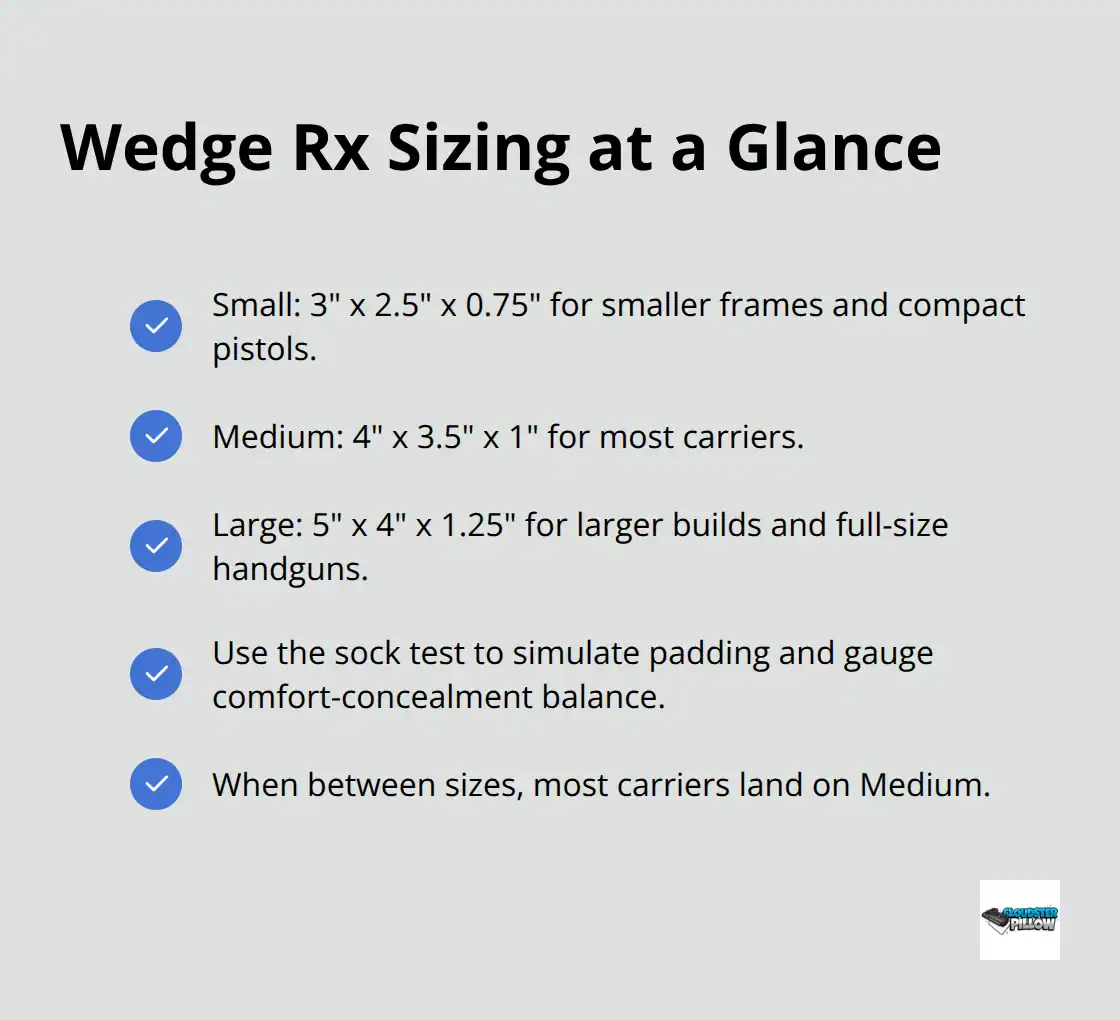
PHLster’s Wedge Rx comes in three sizes. Small is 3 inches long, 2.5 inches wide and 0.75 inches thick; Medium is 4 by 3.5 by 1 inch; Large is 5 by 4 by 1.25 inches. PHLster says smaller people and smaller guns should generally choose the Small, larger people and proportionally larger guns the Large, and that Medium is in between. Its sizing test: fold up a sock, place it under your holster, see how much padding solves your comfort or concealment problem, then select the wedge with the closest thickness.
Installation and Immediate Benefits
Installation uses Velcro attachment with no tools required, and the wedge mounts on the outside of your Kydex or polymer holster shell without modifying your existing setup. Pressure points develop because a bare Kydex shell concentrates force on a small area, especially during sitting when your ribcage and hip compress the holster against your body. The orthotic-grade foam in a quality wedge distributes that pressure across a larger surface, reducing hot spots that would otherwise force you to remove your holster or adjust your position repeatedly.
How Asymmetrical Design Reduces Printing
Asymmetrical wedges push the grip inward more effectively than simple flat padding, which means you eliminate printing without raising your ride height or increasing cant further. If you carry a weapon-mounted light, ensure your wedge accommodates the light’s profile without creating gaps around the trigger guard. Testing the fit after adding a wedge takes about 30 minutes of normal movement to confirm the improvement, and most carriers report noticeable relief within the first day of daily wear.
Cost-Effective Enhancement Over Replacement
Fine-tuning your existing holster with a wedge costs far less than replacing it and delivers faster results than waiting weeks for a new holster to arrive and break in. The Cloudster Pillow is designed to work with most existing IWB and appendix holsters, allowing you to upgrade comfort and concealment without replacing your entire system.
Final Thoughts
Your IWB holster fit guide reaches its end, but your optimization work continues through consistent testing and small refinements. The carriers who achieve the most comfort and security aren’t those with the most expensive gear-they’re the ones who matched their holster to their exact firearm, adjusted cant and ride height for their body type, and addressed remaining pressure points with targeted solutions. These adjustments compound over weeks and months of daily carry, transforming a setup that felt awkward into one that feels natural.
Moving your holster one inch forward or backward, adjusting cant by five degrees, or raising ride height slightly eliminates printing and hot spots that seemed permanent. Your personalized carry solution exists within your current setup, and a quality holster wedge bridges any final gap without requiring a complete replacement. We at Cloudster Pillow designed our wedge to work with most existing IWB and appendix holsters, allowing you to enhance comfort and concealment while keeping the holster you already trust (the orthotic-grade foam distributes pressure across a wider area, and asymmetrical design pushes the grip inward to eliminate printing).
Start with what you own, test methodically, and adjust incrementally to complete your personalized solution. Explore our holster wedge collection to enhance your carry comfort today.

Pingback: Holster Width Adjustments for CCW | Cloudster Pillow Guide